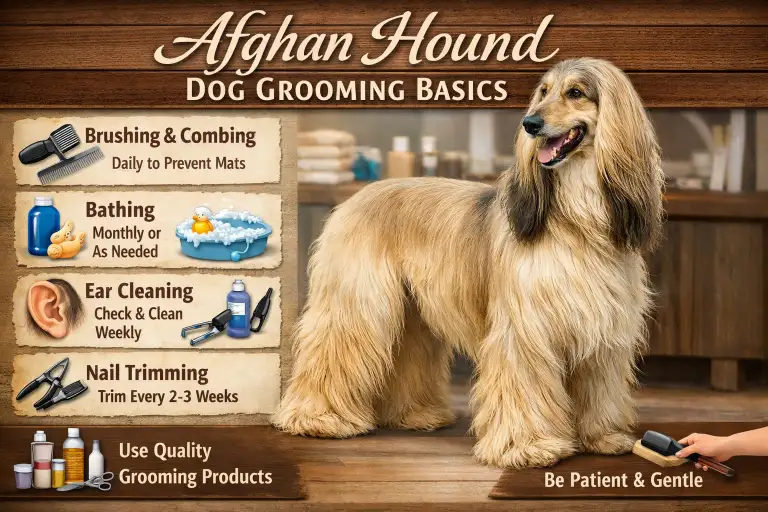
Afghan Hounds are renowned for their long, silky coats and elegant appearance, but maintaining that beauty requires consistent and proper grooming. Grooming is not just about aesthetics — it’s essential for your dog’s comfort, health, and overall well-being. A well-groomed Afghan Hound is less likely to develop mats, skin irritation, or infections, and regular handling during grooming helps you spot health issues early.
Grooming also strengthens the bond between you and your dog. Regular brushing, bathing, and care sessions give your Afghan Hound a positive experience, especially when introduced gently from puppyhood. Moreover, it reduces shedding, keeps the coat shiny, and ensures your dog feels comfortable and confident in both everyday life and show settings.
What this guide will help you do
This guide will teach you how to:
- Understand your Afghan Hound’s coat type and how it affects grooming needs
- Perform a complete at-home grooming routine, including brushing, bathing, and drying
- Handle extra care tasks such as nail trimming, ear cleaning, and dental hygiene
- Avoid common grooming mistakes and know when to seek professional help
- Maintain a safe, healthy, and beautiful coat year-round
How grooming affects comfort, coat health, and behavior
Proper grooming helps your Afghan Hound:
- Stay comfortable by preventing painful mats and tangles
- Reduce skin irritation, odor, and hot spots
- Maintain a healthy hair growth cycle and prevent coat thinning
- Encourage good behavior through gentle handling and routine
- Minimize stress during professional grooming sessions
Quick Overview: Why Grooming Afghan Hounds Matters
| Benefit | Why It Matters |
|---|---|
| Comfort | Prevents mats, tangles, and skin irritation |
| Coat Health | Reduces shedding, keeps hair silky and shiny |
| Early Problem Detection | Spot skin, ear, or coat issues early |
| Behavior & Bonding | Encourages positive handling experiences |
| Odor Control | Keeps coat clean and fresh |
Afghan Hound Coat Characteristics and Grooming Implications
Afghan Hounds have one of the most beautiful and unique coats in the dog world. Their hair is long, silky, and fine, with a dense undercoat that helps keep them warm. This coat type looks stunning but requires more attention than most other breeds. Knowing the coat’s features will help you groom your Afghan Hound safely and effectively.
Coat type: long, silky, fine, and dense undercoat
- Long hair: The coat flows elegantly but can tangle and mat easily, especially behind ears, under arms, and on the tail plume.
- Silky texture: Gentle brushing is needed to avoid hair breakage.
- Fine hair: Hair can trap dirt and oil, so regular cleaning is important.
- Dense undercoat: Protects against cold, but it can hold moisture and mats if not dried well after baths.
How coat type affects shedding, tangling, and matting
- Afghan Hounds shed moderately, but hair can get caught in the long topcoat, causing small mats that grow if ignored.
- Tangling is most common in areas with friction, like behind the ears, armpits, and tail plume.
- Mats can lead to skin irritation, discomfort, and even infections if not handled quickly.
Grooming frequency recommendations for Afghan Hounds
Grooming Frequency by Coat Area
| Coat | Brushing | Bathing | Detangling | Notes |
|---|---|---|---|---|
| Body | Daily | Every 2–3 weeks | As needed | Focus on undercoat and sides |
| Ears | Daily | Every 3–4 weeks | As needed | Check behind ears for mats |
| Tail / Plume | Daily | Every 2–3 weeks | As needed | Use detangling spray before brushing |
| Legs & Feet | Daily | Every 2–3 weeks | As needed | Prevent tangles around joints |
| Face & Neck | Gentle daily brushing | Every 3–4 weeks | As needed | Use soft brush to avoid breakage |
Tips:
- Use gentle strokes to avoid pulling hair.
- Start brushing at the tips and slowly work toward the roots to prevent mats.
- Use a detangling spray on problem areas before brushing.
Core Grooming Routine at Home
Grooming your Afghan Hound at home can be simple if you follow the right steps. The key is to have the right tools, know how often to groom, and work gently and consistently. Regular home grooming prevents mats, keeps the coat shiny, and makes bath time and professional grooming easier.
Essential grooming tools and products for Afghan Hounds
Recommended Grooming Tools & Products
| Tool / Product | Purpose | Tips |
|---|---|---|
| Pin Brush | Detangles long coat | Use gentle strokes from tip to root |
| Slicker Brush | Remove loose hair and small mats | Be careful not to scratch skin |
| Undercoat Rake | Prevent matting in dense areas | Use slowly to avoid hair breakage |
| Wide-tooth Comb | Finishing brush and parting coat | Comb after brushing |
| Detangling Spray | Helps remove knots | Spray lightly on mats before brushing |
| Dog-safe Shampoo | Clean coat gently | Sulfate-free, suitable for dog skin pH |
| Conditioner | Reduce tangles and static | Optional after shampoo |
| High-velocity Dryer | Fast and safe drying | Keep temperature moderate to avoid burns |
Bathing Afghan Hounds
- Frequency: Every 2–3 weeks is ideal for Afghan Hounds.
- Shampoo: Use dog-specific, gentle shampoo to protect skin and coat.
- Steps:
- Brush coat lightly before bath to remove tangles.
- Wet hair completely and apply shampoo, working from neck to tail.
- Rinse thoroughly to avoid residue, which can cause irritation.
- Apply conditioner if needed, especially on long, silky areas.
- Towel dry gently and use a high-velocity dryer to prevent mats.
Step-by-Step Grooming Routine
| Step | Action | Frequency | Notes |
|---|---|---|---|
| Brush | Pin + slicker brush | Daily | Focus on body, ears, tail |
| Comb | Wide-tooth comb | After brushing | Check for hidden mats |
| Bath | Gentle shampoo | Every 2–3 weeks | Avoid over-bathing |
| Dry | Towel + dryer | After bath | Keep hair straight and prevent mats |
| Detangle | Detangling spray if needed | As required | Work gently on mats |
Tips:
- Always start at hair tips and work toward roots to prevent pulling.
- Pay special attention to ears, underarms, tail, and leg feathering, as these areas mat easily.
- Make grooming a positive experience with treats and praise.
Extra Care: Nails, Ears, Teeth, and Skin Health
Besides brushing and bathing, Afghan Hounds need extra care to stay healthy. Nails, ears, teeth, and skin all require attention to prevent pain, infections, and discomfort. A simple routine can keep your dog safe and happy.
Nail trimming basics and safety tips
- Check nails every 2–3 weeks and trim as needed.
- Use dog nail clippers or a grinder.
- Avoid cutting the quick (the blood vessel inside the nail).
- If unsure, trim a little at a time or ask a groomer for guidance.
Ear cleaning without irritation
- Afghan Hounds have long ears that trap moisture and dirt.
- Clean weekly using a dog-safe ear cleaner and cotton balls.
- Never insert cotton swabs deep into the ear canal.
- Look for redness, odor, or discharge — these are signs to see a vet.
Dental hygiene essentials
- Brush teeth 2–3 times per week with dog toothpaste.
- Dental chews and toys help reduce plaque.
- Check gums for redness or swelling, which could indicate infection.
Skin and coat health monitoring
- Look for red spots, dryness, or flaking, especially under mats.
- Afghan Hounds can develop hot spots if mats trap moisture.
- Early detection prevents infections and keeps the coat healthy.
Extra Care Checklist
| Care Task | How Often | Tools | Tips / Warnings |
|---|---|---|---|
| Nail trimming | Every 3–4 weeks | Nail clippers, grinder | Avoid cutting quick |
| Ear cleaning | Weekly | Dog-safe solution, cotton | Prevent infections |
| Dental care | 2–3 times per week | Dog toothbrush, toothpaste | Never use human toothpaste |
| Skin check | Weekly | Hands & eyes | Look for mats, redness, irritation |
Tips:
- Combine these tasks with brushing or bathing to save time.
- Reward your dog with treats to make extra care enjoyable.
- Always check sensitive areas, like under the ears and between toes, for mats or skin issues.
Special Situations and Safety Considerations
Afghan Hounds need special attention in certain situations. Puppies, seniors, and seasonal changes affect how you groom them. Knowing when to groom at home and when to see a professional helps keep your dog safe and comfortable.
Grooming puppies, adults, and senior Afghan Hounds
- Puppies: Short sessions, gentle handling, and positive reinforcement. Avoid long grooming sessions that can stress them.
- Adults: Can handle longer sessions, but still go slow in sensitive areas like ears and tail plume.
- Seniors: Use softer brushes, check joints, and avoid slippery surfaces during baths.
Seasonal grooming and managing heavy shedding periods
- Afghan Hounds shed more in spring and fall.
- Brush daily during shedding seasons to prevent mats.
- Keep the coat clean and dry to prevent skin irritation.
Home grooming vs professional grooming
- Home grooming: Brushing, bathing, nail trimming, ear cleaning, and dental care.
- Professional grooming: Full coat maintenance, trimming, detangling severe mats, show preparation.
- When mats are large, or your dog is anxious, a professional groomer is safer.
Common grooming mistakes to avoid and key safety rules
- Skipping regular brushing, causing mats and skin problems.
- Over-bathing, which dries out skin and coat.
- Using human shampoos or harsh products.
- Cutting nails too short or damaging the quick.
- Pulling on mats aggressively instead of detangling gently.
Special Grooming Scenarios & Tips
| Scenario | Key Tips | Safety Notes |
|---|---|---|
| Puppy grooming | Short sessions, gentle handling | Avoid harsh brushes |
| Senior dogs | Softer brushes, check joints | Avoid slippery tubs |
| Heavy shedding season | Brush daily | Prevent mats in undercoat |
| Professional grooming | Full bath, blow-dry, trim | Use licensed groomer |
For more detailed information on Afghan Hound care and breed-specific tips, you can visit the American Kennel Club (AKC) Afghan Hound breed page: https://www.akc.org/dog-breeds/afghan-hound/

Ata Ur Rehman is the founder of Pet Age in Human Years Calculator, an educational platform that provides age conversion charts and lifespan guides for dogs, cats, birds, and other companion animals. His work focuses on helping pet owners understand how animal ages translate into human years using commonly accepted age conversion formulas and published lifespan averages.
The website compiles breed and species lifespan data from kennel clubs, breed organizations, and general animal lifespan studies to present simple and easy-to-understand guides for pet owners worldwide.
This website was created to centralize animal age conversion charts into one easy reference platform for pet owners.