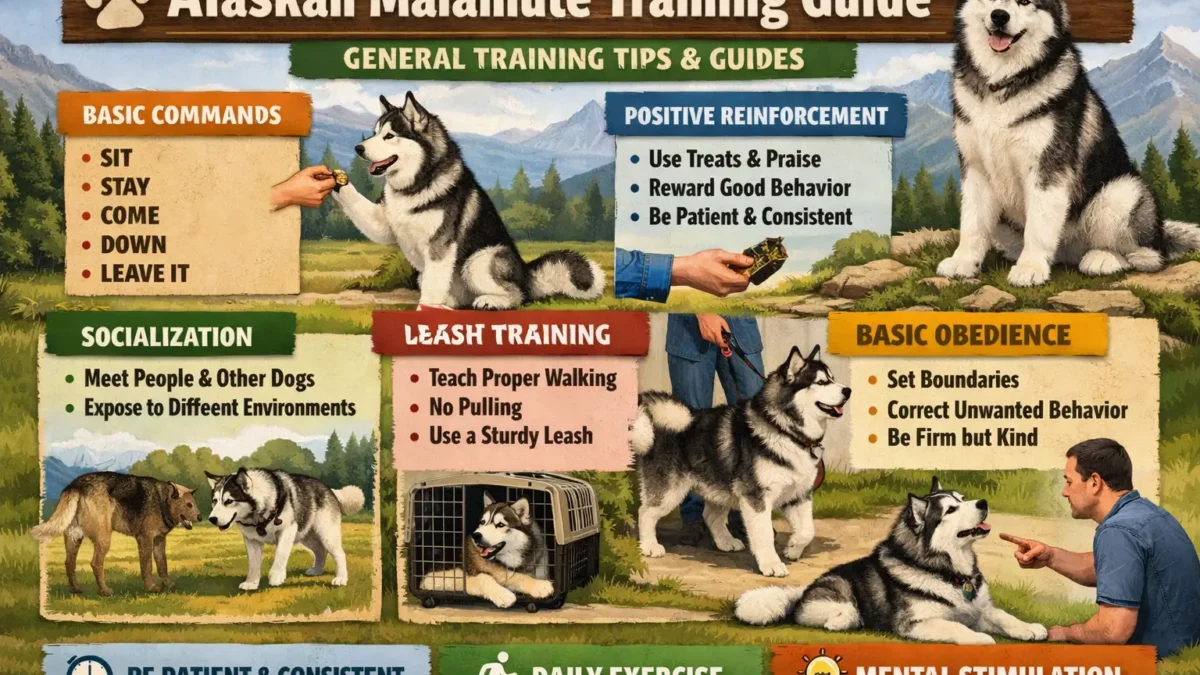
Alaskan Malamute Dog General Training Guide
Alaskan Malamutes are large, intelligent, and independent dogs. They are strong-willed and full of energy, which makes training very important. A well-trained Malamute is safer, happier, and easier to live with, while an untrained one can develop habits like pulling on the leash, digging, escaping, or ignoring commands.
Training is not just about obedience—it’s also about bonding, mental stimulation, and managing your dog’s energy. Whether you are a first-time Malamute owner or have experience with other breeds, understanding how to train this strong and clever dog will make life easier for both you and your Malamute.
Quick Breed Snapshot
| Trait | Details |
|---|---|
| Size | Large, 75–85 lbs (male), 65–75 lbs (female) |
| Energy | Very high, requires daily exercise |
| Temperament | Intelligent, independent, stubborn |
| Life Expectancy | 10–14 years |
| Training Difficulty | Moderate to high, needs consistency |
Training a Malamute takes patience and consistency. This guide will help you understand why training matters, how your Malamute thinks, step-by-step training methods, how to solve common problems, and when to seek professional help.
Understanding Malamute Behavior and Psychology
Alaskan Malamutes are smart, independent dogs. They think for themselves, which can make them stubborn at times. They are pack animals, so they like structure, clear rules, and consistent leadership from their owners.
Malamutes have very high energy and need both physical exercise and mental stimulation every day. Without it, they may dig, escape, or get bored and destructive. Understanding why your Malamute behaves a certain way helps you train them more effectively and prevent problems.
Some common triggers for bad behavior include:
- Boredom – Not enough walks or playtime
- Separation anxiety – Being alone too long
- Fear or stress – New people, loud noises, or unfamiliar environments
Training works best when you understand simple dog learning principles like operant conditioning. This means rewarding good behavior immediately and consistently, and gently redirecting unwanted behavior. Positive reinforcement is the most effective way to train a Malamute because punishment can make them stubborn or anxious.
Behavior Signals & What They Mean
| Behavior | Possible Cause | Training Tip |
|---|---|---|
| Digging | Boredom | Give extra walks, puzzle toys, or digging areas |
| Pulling on leash | High energy / excitement | Short training sessions, reward calm walking |
| Ignoring commands | Stubbornness | Use high-value treats, repeat commands consistently |
| Jumping on guests | Excitement | Teach “sit” before greeting, structured introductions |
By noticing these signals early, you can prevent small problems from becoming big issues. Knowing what motivates your Malamute—like treats, play, or praise—will help you shape their behavior successfully.
Step-by-Step Training Guide for Alaskan Malamutes
Training an Alaskan Malamute works best when you break it into short, consistent sessions. Malamutes have a lot of energy, but their attention span is limited, so aim for 5–15 minutes per session, a few times each day. Use high-value rewards like treats, praise, or play to motivate them.
Here’s a simple plan to teach basic commands and behaviors:
Training Commands Checklist
| Command | Steps | Reward | Expected Timeline |
|---|---|---|---|
| Sit | Hold a treat above their nose, move it slightly back, say “Sit” | Treat + praise | 1–2 weeks |
| Stay | Ask for “Sit”, hold hand up, step back slowly | Treat + praise | 2–3 weeks |
| Come / Recall | Call your dog’s name, use long leash at first | High-value treat | 3–4 weeks |
| Leave it | Place item in front, cover with hand, say “Leave it” | Treat + praise | 2–3 weeks |
| Leash Walking | Stop when pulling, reward calm walking | Treat + verbal praise | 2–4 weeks |
Tips for Success
- Puppies vs Adults: Puppies need shorter, more frequent sessions, while adults can handle slightly longer sessions.
- Environment: Start in a quiet space with few distractions, then gradually add new environments.
- Consistency: Use the same commands, gestures, and rewards every time.
- Household Scenarios: If you have children or other pets, include them gradually in training to teach proper social behavior.
Following this step-by-step guide will help your Malamute learn commands faster and reduce common problem behaviors.
Common Problems and Solutions
Even with the best training, Alaskan Malamutes can show challenging behaviors. Knowing the most common problems and how to fix them makes training easier and keeps your dog happy.
Problem vs Solution Quick Reference
| Problem | Solution |
|---|---|
| Pulling on leash | Use a front-clip harness, stop-and-go method, reward calm walking |
| Digging / Escaping | Give extra exercise, provide puzzle toys, secure the yard |
| Ignoring commands | Use high-value treats, keep sessions short, repeat commands consistently |
| Jumping on guests | Teach “Sit” before greeting, structured introductions |
| Overexcitement / hyperactivity | Short training sessions, mental stimulation, calm praise |
Tips for success
- Consistency is key: Always use the same cues and rewards.
- High-energy or anxious dogs: Add extra walks, play sessions, and puzzle toys to burn energy.
- Timing matters: Reward immediately when your dog performs the correct behavior.
- Short sessions work best: Avoid long sessions that make your Malamute bored or frustrated.
When to Seek Professional Help
Sometimes, despite all your efforts, you might need help from a professional. If your Alaskan Malamute is showing signs of serious behavioral problems, it’s important to get expert advice before the situation gets worse.
When to get help:
- Aggression: If your dog is showing signs of aggression toward people or other pets, a professional trainer or behaviorist is essential.
- Severe fear: If your Malamute is terrified of people, noises, or new situations, a trainer can help desensitize them to these fears.
- Extreme separation anxiety: If your dog can’t be left alone without destructive behavior, a professional will help with safe coping strategies.
- Persistent bad habits: If behaviors like pulling, digging, or ignoring commands aren’t improving after weeks of consistent training, it’s time for professional advice.
Professional help options:
- Certified dog trainers: They can help with basic obedience, leash training, and correcting behavior problems.
- Veterinary behaviorists: These professionals specialize in treating complex issues like severe anxiety or aggression.
- Group classes or private sessions: Depending on your Malamute’s needs, group classes can help with socialization, while private sessions may be needed for specific behavior issues.
Tips for choosing a professional:
- Look for certified trainers or veterinary behaviorists with experience in working with large breeds like the Malamute.
- Ask about positive reinforcement techniques rather than punishment-based methods.
- Be prepared to commit to a training plan that fits your dog’s needs.
Getting the right professional help will help correct serious behavior problems and ensure a happy, healthy relationship with your Malamute.
For more expert advice on Alaskan Malamute training and behavior, check out the American Kennel Club’s Alaskan Malamute Training Resources.