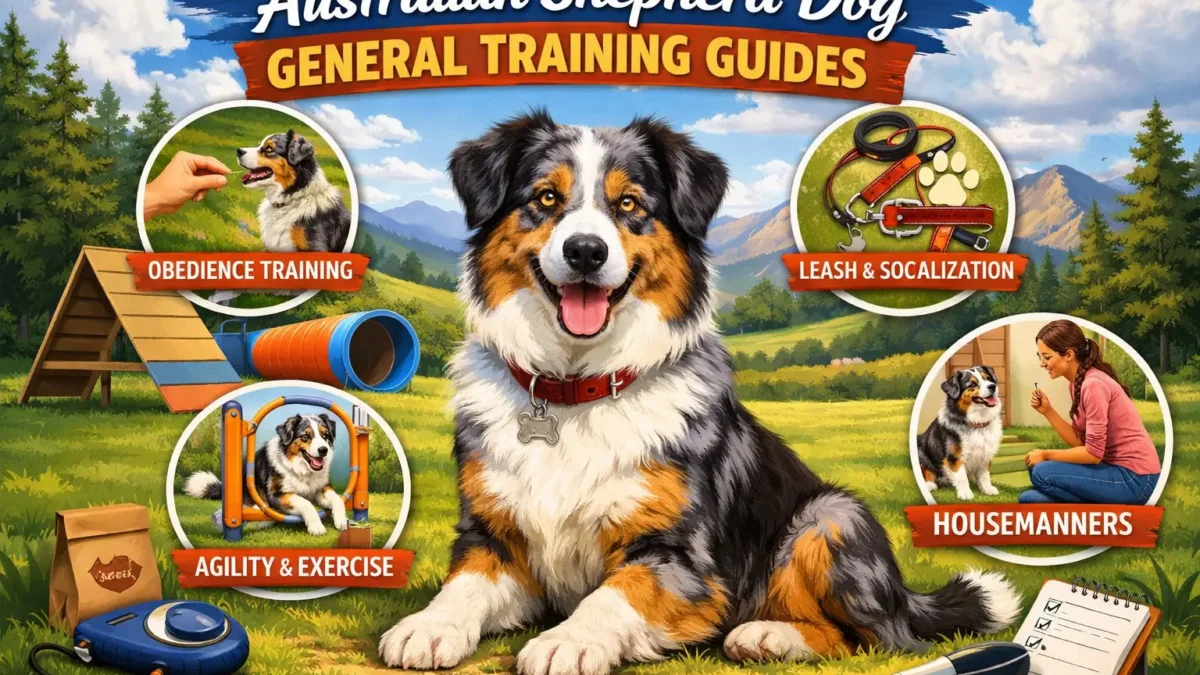
“Complete Guide to Training Your Australian Shepherd: Tips, Techniques, and Troubleshooting”
The Australian Shepherd is a highly intelligent and energetic dog breed, known for its herding instincts and quick learning ability. However, these traits can also lead to challenges if not properly managed through training. Whether you’re a first-time dog owner or an experienced handler, this guide will help you understand how to effectively train your Australian Shepherd, ensuring a well-behaved and happy companion.
Training your Australian Shepherd is not only important for your dog’s well-being but also for the harmony of your household. This breed thrives on mental and physical stimulation, and without proper training, they can easily become bored, leading to destructive behaviors such as chewing, digging, or excessive barking. Well-trained Aussies are not only more enjoyable to live with but also safer in various situations, especially given their herding instincts.
In this guide, we’ll explore the key principles of training your Australian Shepherd, offering practical tips, step-by-step instructions, and solutions to common behavior issues. Whether you’re looking to teach basic commands, improve recall, or manage your dog’s high energy levels, this guide will provide the tools you need for success.
Understanding the Behavior of Your Australian Shepherd
Before you start training, it’s important to understand the natural behaviors of an Australian Shepherd. These dogs are known for their intelligence, high energy, and strong herding instincts. Knowing what drives your Aussie will help you train them more effectively.
Australian Shepherds are very smart, which makes them quick learners. They can pick up new commands or tricks faster than many other breeds. However, their intelligence can also make them easily bored. If they aren’t mentally stimulated, they may engage in destructive behaviors, like chewing furniture or barking excessively.
One of the key traits of the Australian Shepherd is their herding instinct. This means they have a natural desire to chase and control the movement of other animals (or even people!). While this can be great for herding livestock, it can cause problems in your home, especially if your dog starts trying to herd children, other pets, or even cars. Understanding this instinct helps you manage it through training.
Energy levels are another important factor. Australian Shepherds are extremely active dogs and need plenty of physical exercise. A tired Aussie is a happy Aussie. If they don’t get enough exercise, they may become restless, anxious, or misbehave.
By understanding these core traits—intelligence, herding instinct, and energy—you’ll be in a better position to train your Australian Shepherd. You can create a training plan that keeps them mentally and physically stimulated, helping prevent unwanted behaviors and making training sessions more successful.
Step-by-Step Training Methods for Australian Shepherds
Training your Australian Shepherd can be a fun and rewarding experience. Since they are very intelligent and eager to please, training them can be fast and effective.
Basic Commands
Start with the basics. Australian Shepherds are quick learners, so teaching commands like sit, stay, come, and down should be the first step. These commands are essential for good behavior and help keep your dog safe.
- Sit: Hold a treat above your dog’s head and move it back toward their tail. This will naturally make them sit. As soon as their bottom hits the floor, say sit and give them the treat.
- Stay: Start by having your dog sit. Once they’re sitting, hold your hand up like a stop sign and say stay. Slowly back away, and if they stay in place, reward them with a treat.
- Come: To teach your dog to come to you, squat down and call their name with a happy tone, followed by come. When they come, reward them with praise and treats.
- Down: Hold a treat in front of their nose and slowly move it toward the floor. Once their chest touches the ground, say down and give them the treat.
Training Tips
- Keep training sessions short but regular. About 10 to 15 minutes each day works well.
- Always use positive reinforcement. Praise your dog and give them treats when they do the right thing.
- Be patient. Sometimes it takes a few tries for your Aussie to get the command.
Advanced Training
Once your dog has mastered the basics, you can start working on more advanced skills. Australian Shepherds love to be challenged, so this is where you can make training fun and rewarding.
- Leash Training: Start by walking your dog on a leash in a calm area. Use treats to encourage your dog to walk beside you without pulling.
- Recall: Teaching your dog to come when called is important, especially if you plan to let them off-leash. Practice in a safe area and always reward them when they return to you.
- Behavior Shaping: If your dog is doing something you want to encourage (like staying calm in a new situation), reward them each time they show that behavior. This helps them learn what you expect.
Training Sessions and Timing
Keep each training session short and fun. Since Australian Shepherds are very energetic, they need physical exercise along with mental challenges. Training should not feel like a long chore, but more like a quick play session where they get to learn and be rewarded.
Training Checklist
| Training Stage | Description | Duration | Frequency |
|---|---|---|---|
| Basic Commands | Sit, Stay, Come, Down | 1-2 weeks | Daily (10 mins) |
| Leash Training | Walk calmly on leash | 2-3 weeks | Daily (10-15 mins) |
| Recall Training | Teach them to come when called | 2-3 weeks | 3-4 times/week |
| Advanced Commands | Teach tricks or other complex commands | 3-4 weeks | Daily (5-10 mins) |
Troubleshooting Common Training Issues
Even with consistent training, Australian Shepherds can have some common behavior problems. Understanding why these problems happen and how to fix them makes training easier and your dog happier.
Excessive Barking
Australian Shepherds are alert dogs and can bark a lot if bored or anxious. To reduce barking, make sure they get enough exercise and mental stimulation. Teach the quiet command by rewarding them when they stop barking on cue.
Leash Pulling
Many Aussies pull on the leash because they are energetic and excited. To fix this, stop walking when they pull, wait until the leash is loose, and then continue. Reward them for walking calmly beside you.
Jumping on People
Jumping is often a sign of excitement. Teach your dog to sit when greeting people. Only give attention or treats when all four paws are on the ground.
Herding Behavior
Aussies may try to herd children, other pets, or even moving objects. Redirect this energy with a toy, ball, or structured game. Reward them for focusing on you instead of herding.
Distracted or Stubborn Dogs
Some Aussies get easily distracted, especially in busy areas. Train in low-distraction environments first and gradually increase distractions. Keep sessions short to maintain focus.
Common Problems & Fixes Table
| Problem | Likely Cause | Solution |
|---|---|---|
| Excessive Barking | Boredom, anxiety | Exercise, mental games, teach quiet |
| Leash Pulling | Excitement, lack of leash training | Stop walking, reward calm walking |
| Jumping on People | Excitement, attention seeking | Teach sit for greetings |
| Herding Behavior | Natural instinct | Redirect to toys, reward focus |
| Distracted/Stubborn | High energy or environment stimuli | Short sessions, low-distraction training |
By using these solutions, most behavior issues can be managed at home. Consistency and patience are key.
When to Seek Professional Help
While most training can be done at home, some situations need help from a professional trainer or behaviorist. Knowing when to get help can prevent small problems from becoming bigger ones.
Aggression
If your Australian Shepherd shows aggression toward people or other pets, it’s important to get professional help immediately. Aggression can include growling, lunging, or biting. A certified behaviorist can help manage and reduce these behaviors safely.
Severe Anxiety or Fear
Some Aussies may show extreme fear, hiding, trembling, or refusing to interact with people or other animals. Professional guidance can help them become confident and calm in stressful situations.
Uncontrollable Hyperactivity
Even with regular exercise, some Australian Shepherds may be too energetic to manage safely at home. A trainer can create structured routines and mental exercises to help them focus.
Difficulty Learning Commands
If your dog seems stuck and cannot learn basic commands despite consistent training, a professional trainer can offer new methods and personalized guidance.
Signs It’s Time to Seek Professional Help Table
| Behavior Issue | Red Flag for Professional Help | Recommended Action |
|---|---|---|
| Aggression | Growling, lunging, biting | Consult a certified behaviorist |
| Severe Anxiety | Trembling, hiding, extreme fear | Professional behavior guidance |
| Fear-Based Behaviors | Avoiding people, sudden aggression | Behaviorist socialization help |
| Extreme Hyperactivity | Uncontrollable energy, destruction | Structured training plan |
| Stalled Training | Cannot learn basic commands | Professional trainer advice |
Getting professional help early can make training safer and more effective for both you and your Australian Shepherd.
For more expert tips on dog training techniques and behavior science, you can visit the American Kennel Club’s guide on dog training and obedience.