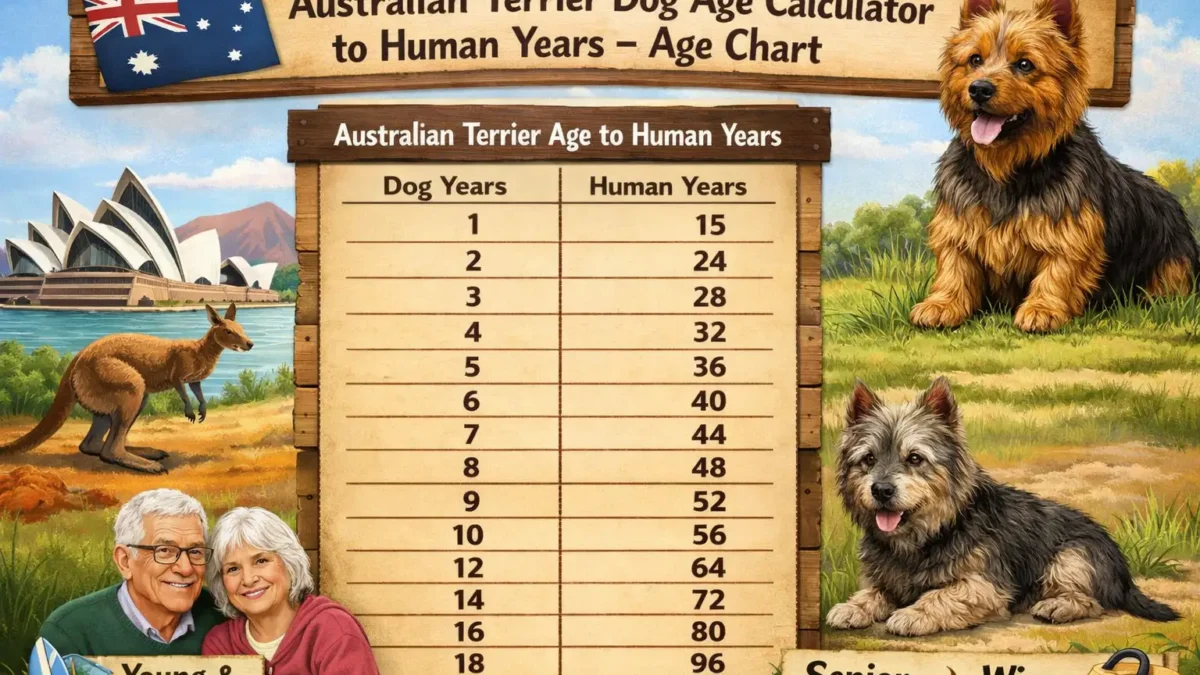
Australian Terrier Dog Age Calculator to Human Years – Age Chart
Many dog owners still hear that one dog year equals seven human years, but this rule is outdated and inaccurate—especially for small breeds like the Australian Terrier.
Australian Terriers age much faster than humans during their first year of life, then slow down as they reach adulthood. A one-year-old Australian Terrier is already similar to a teenager or young adult in human years. After that early growth phase, aging becomes more gradual and steady.
Because Australian Terriers are a small, long-lived breed, they usually age more slowly in their adult and senior years compared to large or giant dogs. This is why using a simple “7-year rule” can seriously misrepresent their true age, health stage, and care needs.
Understanding how Australian Terrier dog years compare to human years helps you:
- Judge your dog’s real life stage more accurately
- Know when to adjust food, exercise, and vet care
- Spot early signs of aging before problems develop
This guide uses a breed-appropriate, modern age-conversion approach that reflects how Australian Terriers actually grow and age—not outdated myths.
Australian Terrier Age Calculator Explained
An Australian Terrier age calculator helps convert your dog’s age into human years using a more accurate method than the old 7-year rule.
Australian Terriers are a small breed, and small dogs age differently than large dogs. They grow very fast as puppies, then slow down as adults. This calculator is designed to match that natural aging pattern.
Here is how the calculator works, in simple terms:
- The first year counts as many human years because puppies grow fast
- The second year adds fewer human years than the first
- After that, each year adds human years more slowly
- Senior years are counted carefully to reflect aging changes
How Aging Speed Changes in Australian Terriers
| Dog Age Range | How Aging Works | What It Means |
|---|---|---|
| 0–1 year | Very fast aging | Puppy grows into a young adult |
| 1–2 years | Slowing growth | Body finishes maturing |
| 3–7 years | Slow, steady aging | Prime adult years |
| 8+ years | Gradual senior aging | Higher health monitoring needed |
This approach gives a more realistic human-age estimate, especially for adult and senior Australian Terriers. It helps owners understand when their dog is entering a new life stage and what care changes may be needed.
Australian Terrier Age Chart: Dog Years to Human Years
The age chart below shows how Australian Terrier dog years compare to human years. It is based on modern dog-aging research and small-breed aging patterns, not the old 7-year rule.
Use this chart to quickly find your dog’s human age equivalent and understand their life stage.
Australian Terrier Dog Age to Human Age Chart
| Australian Terrier Age | Human Age Equivalent | Life Stage |
|---|---|---|
| 2 months | 3 years | Puppy |
| 6 months | 10 years | Puppy |
| 1 year | 15 years | Young adult |
| 2 years | 24 years | Adult |
| 3 years | 28 years | Adult |
| 4 years | 32 years | Adult |
| 5 years | 36 years | Adult |
| 6 years | 40 years | Adult |
| 7 years | 44 years | Mature adult |
| 8 years | 48 years | Senior |
| 9 years | 52 years | Senior |
| 10 years | 56 years | Senior |
| 11 years | 60 years | Senior |
| 12 years | 64 years | Senior |
| 13 years | 68 years | Senior |
| 14 years | 72 years | Senior |
| 15 years | 76 years | Senior |
Important things to know when using this chart:
- Australian Terriers age fast in the first year, then slow down
- Adult years add fewer human years than puppy years
- Most Australian Terriers are considered senior around 8 years old
- Individual health, diet, and care can affect aging speed
This chart gives a clear estimate, but it is not exact. Your dog’s real age can feel younger or older depending on lifestyle and health.
Australian Terrier Life Stages by Age
Australian Terriers go through clear life stages as they grow. Knowing your dog’s life stage helps you understand their behavior, energy level, and health needs.
The table below shows the main life stages, age ranges, and what most owners can expect.
Australian Terrier Life Stages Table
| Life Stage | Age Range | What to Expect |
|---|---|---|
| Puppy | 0–12 months | Fast growth, high energy, learning basic skills |
| Young adult | 1–2 years | Body matures, energy still high, training improves |
| Adult | 3–7 years | Stable behavior, strong health, peak fitness |
| Senior | 8+ years | Slower movement, more rest, age-related changes |
Here’s what these stages mean in simple terms:
- Puppies learn quickly but need patience, training, and vet visits
- Adult Australian Terriers are confident, active, and alert
- Senior dogs may sleep more and move slower, but still enjoy play
- Aging happens gradually, not overnight
Signs that your Australian Terrier may be entering senior years include:
- Less energy during walks
- Stiffer joints after rest
- More naps during the day
- Changes in hearing or vision
Understanding these stages helps you adjust food, exercise, and care at the right time.
How to Help an Australian Terrier Age Healthily
Helping your Australian Terrier age well is about daily care, healthy habits, and regular vet visits. Small dogs often live longer, but good care makes a big difference in how healthy those extra years are.
The table below shows simple care tips by age stage to keep your dog comfortable and active.
Healthy Aging Care Guide for Australian Terriers
| Age Stage | Nutrition Focus | Exercise Needs | Vet Care Priority |
|---|---|---|---|
| Puppy | High-quality puppy food | Short play sessions | Vaccines, growth checks |
| Adult | Balanced diet, healthy weight | Daily walks and play | Yearly checkups |
| Senior | Easy-to-digest food | Gentle walks, light play | Blood tests, joint checks |
Easy ways to support healthy aging:
- Keep your dog at a healthy weight to protect joints
- Continue daily exercise, but adjust speed and distance
- Brush teeth often to prevent dental disease
- Visit the vet regularly, even if your dog seems fine
- Watch for small changes in movement, appetite, or behavior
Senior Australian Terriers may still enjoy walks and games, but they need more rest and comfort. Soft bedding, warm sleeping areas, and calm routines can help a lot.
How to Help an Australian Terrier Age Healthily
Helping your Australian Terrier age well is about daily care, healthy habits, and regular vet visits. Small dogs often live longer, but good care makes a big difference in how healthy those extra years are.
The table below shows simple care tips by age stage to keep your dog comfortable and active.
Healthy Aging Care Guide for Australian Terriers
| Age Stage | Nutrition Focus | Exercise Needs | Vet Care Priority |
|---|---|---|---|
| Puppy | High-quality puppy food | Short play sessions | Vaccines, growth checks |
| Adult | Balanced diet, healthy weight | Daily walks and play | Yearly checkups |
| Senior | Easy-to-digest food | Gentle walks, light play | Blood tests, joint checks |
Easy ways to support healthy aging:
- Keep your dog at a healthy weight to protect joints
- Continue daily exercise, but adjust speed and distance
- Brush teeth often to prevent dental disease
- Visit the vet regularly, even if your dog seems fine
- Watch for small changes in movement, appetite, or behavior
Senior Australian Terriers may still enjoy walks and games, but they need more rest and comfort. Soft bedding, warm sleeping areas, and calm routines can help a lot.
For more breed-specific health and lifespan information, you can also visit the American Kennel Club Australian Terrier breed profile, which provides trusted insights on breed traits, care, and longevity based on established kennel data.