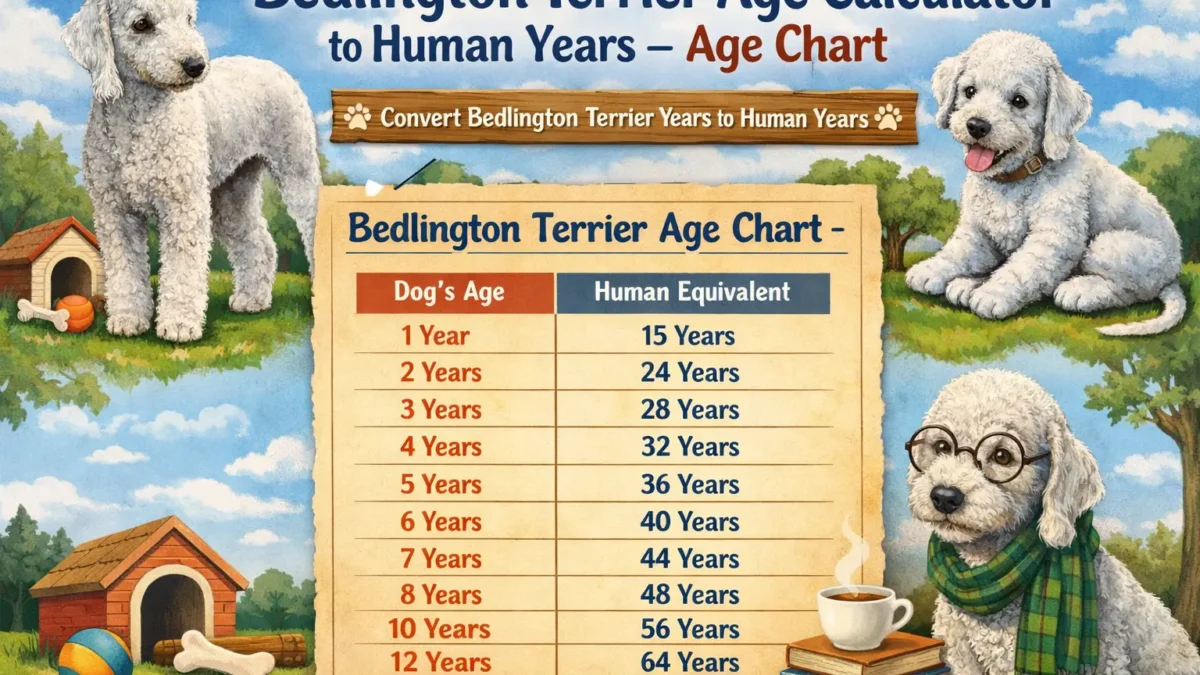
Bedlington Terrier Age Calculator: Convert Dog Years to Human Years
When it comes to understanding how dogs age, there are common misconceptions that need to be addressed. One of the most prevalent myths is the “1 dog year = 7 human years” rule. While this rule may seem simple, it doesn’t take into account the complexity of dog aging. Dogs, including Bedlington Terriers, age at a much faster rate in their early years, and this rate of aging slows down as they mature.
Why the “1 Dog Year = 7 Human Years” Formula Is Inaccurate
The “7-year rule” for converting dog years to human years is an oversimplification. In reality, dogs age much more quickly in their first few years of life. For example, a 1-year-old Bedlington Terrier is equivalent to a 15-year-old human, while a 2-year-old Bedlington Terrier is roughly equivalent to a 24-year-old human. The aging process slows down after that, especially in smaller breeds like the Bedlington Terrier.
This oversimplified rule also fails to account for the differences in aging among dog breeds. Smaller breeds like the Bedlington Terrier tend to live longer and age more slowly than larger breeds. The way a Bedlington Terrier ages can be drastically different from how a larger dog, such as a Great Dane, ages. Therefore, it’s essential to look at breed-specific aging data rather than relying on the 7-year formula.
Bedlington Terrier’s Aging Process: How They Age Compared to Humans
Bedlington Terriers are a small breed, and like most small dogs, they experience slower aging after their initial rapid growth phase. Their age in human years can be roughly determined by considering their size, breed-specific characteristics, and their life stages. For instance, Bedlington Terriers are considered puppies until around 2 years of age, at which point they reach adulthood. Their adult years (2 to 7 years) are marked by stability and maturity, after which they transition into seniority at around 7 years of age.
As they age, you may notice physical and behavioral changes in your Bedlington Terrier. These changes can include slower movement, graying fur, and potential changes in temperament. Recognizing these signs of aging early can help you make the right choices for their care as they move into their senior years.
Differences in Aging for Small Breeds Like the Bedlington Terrier
One of the most significant factors influencing the aging process is a dog’s size. Small breeds like the Bedlington Terrier generally live longer than larger breeds, and their aging process is slower compared to that of large dogs. While a larger breed may be considered senior at 5-6 years old, a small breed like the Bedlington Terrier may not show signs of aging until closer to 7 years of age.
Bedlington Terrier Human Age Conversion Formula
To make it easier for you to understand how old your Bedlington Terrier is in human years, we’ve created a simple conversion guide. This will show you how to calculate your dog’s age in a way that makes sense. You’ll see how the first few years of their life are like rapid growth years for humans, and how their aging slows down after that. Let’s dive into it!
How to Calculate Your Bedlington Terrier’s Age in Human Years
The first thing to understand is that dogs age much faster in their early years. The first year of a Bedlington Terrier’s life is like the first 15 human years. By the time they turn 2 years old, they are about 24 human years old. After the second year, the aging slows down.
For example, if you have a 3-year-old Bedlington Terrier, they are around 29 in human years. From here on, each year for a Bedlington Terrier is about 4 human years. So, a 4-year-old Bedlington Terrier would be around 33 human years old.
Bedlington Terrier Age to Human Years Conversion Chart
To make things even clearer, here’s a Bedlington Terrier Age to Human Years Conversion Chart. This will help you quickly see how your dog’s age compares to human years.
| Bedlington Terrier Age (Dog Years) | Human Age Equivalent (Years) |
|---|---|
| 1 Year | 15 Years |
| 2 Years | 24 Years |
| 3 Years | 29 Years |
| 4 Years | 33 Years |
| 5 Years | 37 Years |
| 6 Years | 41 Years |
| 7 Years | 45 Years |
| 8 Years | 49 Years |
| 9 Years | 53 Years |
| 10 Years | 57 Years |
This table shows how your Bedlington Terrier’s age moves forward as they grow. You can use this chart to get an idea of what their age is in human terms. For example, if your Bedlington Terrier is 6 years old, they are approximately 41 in human years.
Real Examples: How Old Is a 5-Year-Old Bedlington Terrier in Human Years?
Let’s make it more practical with an example. If your Bedlington Terrier is 5 years old, you can look at the chart and see that they would be around 37 years old in human years. This helps you better understand where your dog is in their life stage and how they are aging compared to humans.
Bedlington Terrier Life Stages: From Puppy to Senior
Just like humans, Bedlington Terriers go through different stages as they grow older. These stages can be broken down into puppy, adult, and senior years. In this we will explain what to expect at each stage and how to take care of your dog as they age.
Puppy Stage: 0 to 2 Years
The first two years of your Bedlington Terrier’s life are the puppy years. During this time, they grow quickly and develop both physically and mentally. They go through several important milestones like:
- Teething: At around 4 months old, puppies will start losing their baby teeth and growing adult teeth.
- Socialization: Around 3 to 6 months, puppies begin learning how to interact with other dogs and people.
- Training: This is the best time to start basic training and housebreaking. Puppies are quick to learn, and positive reinforcement works best.
Adult Stage: 2 to 7 Years
Once your Bedlington Terrier turns 2, they are considered an adult. This is the time when they are fully grown, active, and in their prime. Most Bedlington Terriers are healthy, energetic, and playful during this stage. They are ready for regular exercise, walks, and playtime.
- Health and Wellness: Adult dogs are generally at their healthiest. It’s important to continue providing a balanced diet and exercise to keep them fit.
- Behavior: Their behavior may become more stable as they mature, but they still enjoy playing and being active.
- Training: Continue reinforcing training commands and good habits. Bedlington Terriers are smart and learn quickly.
Senior Stage: 7 Years and Older
When your Bedlington Terrier reaches around 7 years old, they are considered a senior dog. This is when you may start to notice some changes in their health and behavior. Senior dogs typically slow down a bit, and you might notice:
- Slower Movement: They may not run as fast as they used to and could spend more time resting.
- Gray Fur: Like humans, older dogs start to develop gray hair, especially around their muzzle.
- Health Concerns: Senior dogs are more likely to develop health problems like arthritis, dental issues, and vision or hearing loss. Regular vet check-ups are very important at this stage.
How to Care for Your Bedlington Terrier at Each Stage
At every life stage, it’s important to adjust how you care for your dog. For puppies, it’s all about training, socialization, and growth. For adults, focus on maintaining their health with exercise, good nutrition, and regular vet visits. For seniors, keep their lifestyle comfortable, provide joint supplements if needed, and monitor their health closely.
The Science of Dog Aging: Epigenetics and Breed Lifespan
Understanding how your Bedlington Terrier ages goes beyond just counting the years. There’s actual science behind how dogs age, and it can be quite different from how humans age. In this we will explain how the science of aging works for dogs, especially for small breeds like the Bedlington Terrier. We will also look at some recent studies that help us understand dog aging better.
The 2019 Epigenetic Study and Its Impact on Dog Aging
In 2019, researchers conducted a groundbreaking study on dog aging using a method called epigenetics. This study looked at how the DNA of dogs changes as they age. It showed that dogs don’t age in a straight line — their aging process actually follows a curve that changes over time. This new understanding means that the old idea of dogs aging “7 years for every human year” isn’t accurate.
For example, dogs age very quickly in their first few years, but after that, their aging slows down. This study helps explain why small breeds like Bedlington Terriers don’t age as quickly as larger dogs. It also gives us a better way to calculate a dog’s true age in human terms.
How Bedlington Terrier’s Size Affects Their Lifespan and Aging Process
Size is one of the most important factors that affect how long a dog lives and how quickly they age. Small breeds like the Bedlington Terrier tend to live longer and age slower than larger breeds. Large dogs, such as Great Danes, may age faster and have a shorter lifespan compared to small dogs like Bedlington Terriers.
Small dogs usually live between 12 to 16 years, while large dogs might only live 7 to 10 years. This difference in lifespan is because smaller dogs have slower metabolisms, which means they age more slowly than large dogs.
Why Smaller Breeds Tend to Live Longer and Age Differently
Smaller dogs like the Bedlington Terrier tend to have longer lifespans compared to larger breeds. This is partly because smaller dogs reach their full size faster and stop growing earlier than larger dogs. Larger dogs keep growing for a longer time, which uses up more energy and leads to faster aging.
Also, smaller dogs generally have fewer health problems as they get older. They are less likely to develop joint issues, heart problems, and other conditions that affect large breeds. Because of this, small breeds like Bedlington Terriers often remain healthier and more active later in life.
How to Help Your Bedlington Terrier Age Healthily
As your Bedlington Terrier gets older, it’s important to take extra care to keep them healthy and happy. Aging dogs need some special attention, but with the right diet, exercise, and veterinary care, they can live a long and comfortable life. In this , we will give you some easy-to-follow tips on how to care for your senior Bedlington Terrier.
Nutrition, Exercise, and Mental Enrichment for Aging Dogs
Just like humans, dogs need the right food and exercise as they age. For senior Bedlington Terriers, it’s important to provide them with a balanced diet that supports their health.
- Nutrition: As your dog gets older, their metabolism slows down, so they may not need as many calories. Senior dog food is specially designed with the right nutrients to keep your dog healthy, including joint support, healthy fats, and fewer calories. You might also want to consult your vet about adding supplements like omega-3s for joint health or vitamins to support their immune system.
- Exercise: Even though your Bedlington Terrier may not be as active as they were when they were younger, regular exercise is still important. Short walks, light playtime, and gentle stretching can help keep their muscles and joints strong.
- Mental Stimulation: Older dogs may experience cognitive decline, just like humans. To keep their minds sharp, try giving them puzzle toys, teaching new tricks, or providing interactive play. This will help your dog stay mentally active and happy.
Preventive Care for Senior Bedlington Terriers
Senior dogs are more likely to develop health issues, so regular vet check-ups are essential. Your vet can help catch any problems early, like arthritis, dental disease, or heart issues. Here are a few things to keep in mind:
- Regular Vet Visits: It’s important to bring your senior Bedlington Terrier to the vet at least once a year for a check-up. Your vet may recommend blood tests, dental exams, or other screenings to catch health problems early.
- Vaccinations and Parasite Control: Older dogs still need their vaccinations, and it’s also important to keep up with flea, tick, and heartworm prevention.
- Joint and Bone Health: As Bedlington Terriers age, they may develop arthritis or joint pain. Talk to your vet about joint supplements or treatments to help keep your dog comfortable.
How Spaying/Neutering Impacts Lifespan and Aging
If your Bedlington Terrier is spayed or neutered, they may live longer. Spaying and neutering can help prevent certain health problems, like cancers of the reproductive organs. It can also lower the risk of behavioral problems and some diseases. However, it’s important to talk to your vet about the right time to spay or neuter your dog to ensure the best long-term health benefits.
FAQs About Bedlington Terrier Aging and Age Calculator
In this we’ll answer some of the most common questions that dog owners have about their Bedlington Terriers as they age. Whether you’re a first-time dog owner or have had dogs for years, these answers will help you understand your dog’s aging process and how to take the best care of them.
How old is my Bedlington Terrier in human years?
To find out how old your Bedlington Terrier is in human years, simply use the age conversion chart we shared earlier. For example, if your Bedlington Terrier is 5 years old, they would be approximately 37 years old in human terms. The first two years of a dog’s life count for more human years, and after that, each dog year equals about 4 human years for a Bedlington Terrier.
When is my Bedlington Terrier considered a senior?
Most Bedlington Terriers are considered seniors around the age of 7. While smaller breeds like the Bedlington Terrier can often stay healthy and active into their senior years, it’s important to keep an eye on them as they age. You may notice changes in their energy levels, behavior, and health after they reach the senior stage. Regular vet visits become even more important as your dog enters their golden years.
What are the signs of aging in a Bedlington Terrier?
As your Bedlington Terrier gets older, you might notice a few changes in their physical appearance and behavior. Some signs of aging include:
- Slower movement or reluctance to jump or climb stairs.
- Graying fur, especially around the face.
- Less interest in play or exercise.
- Changes in appetite or eating habits.
- Trouble hearing or seeing clearly.
- Behavioral changes, such as confusion or irritability.
Does neutering or spaying affect my dog’s lifespan?
Yes, neutering or spaying your Bedlington Terrier can positively impact their lifespan. It can help prevent certain cancers and infections and may also reduce the risk of behavioral problems. It’s best to talk to your vet about the right time to spay or neuter your dog, as this can help them live a longer, healthier life.
How can I keep my senior Bedlington Terrier happy?
To help your senior Bedlington Terrier enjoy their golden years, focus on a balanced diet, regular gentle exercise, and mental stimulation. Provide them with a comfortable place to rest and ensure that they have regular check-ups with the vet to address any health issues. Keeping up with these care routines will help your dog stay happy and healthy.
For more information on how to care for your aging dog and ensure they stay healthy, check out the American Kennel Club’s Senior Dog Care Tips.