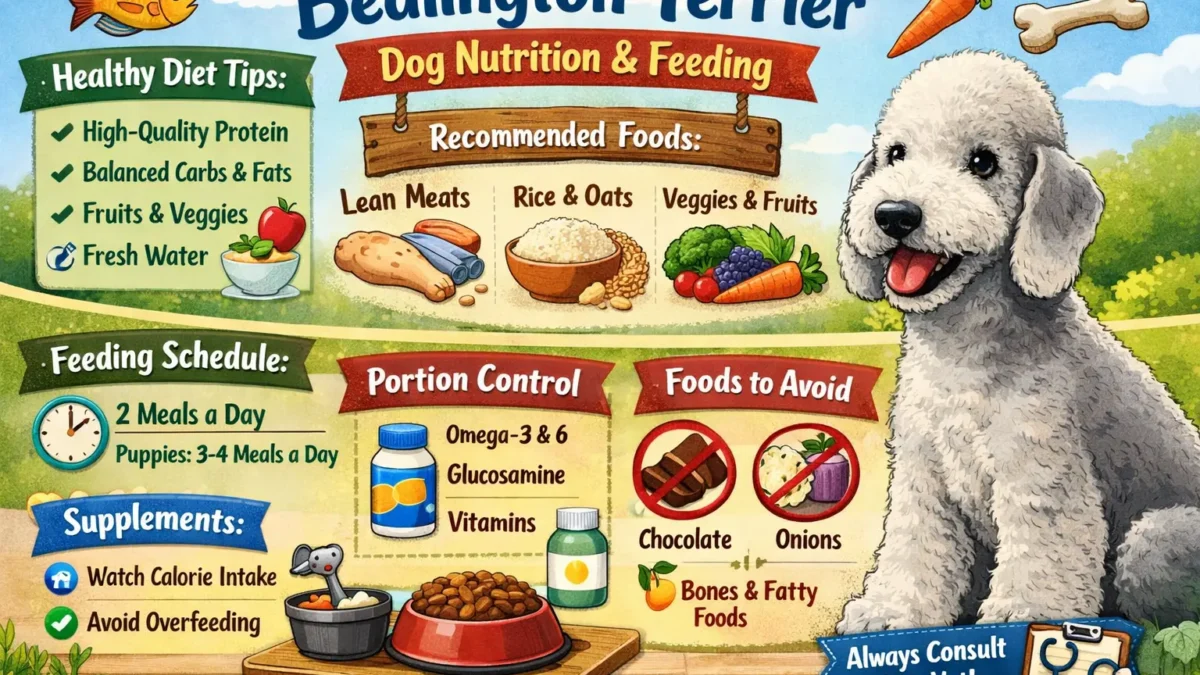
The Ultimate Guide to Bedlington Terrier Nutrition and Feeding
As a Bedlington Terrier owner, understanding your dog’s nutritional needs is essential for ensuring a long, healthy life. This guide will provide you with practical, expert-backed advice on what to feed your Bedlington Terrier, how much to feed them, and the best feeding practices to suit their specific health and lifestyle needs. Whether you’re a first-time dog owner or an experienced handler, you’ll find essential information that caters to every stage of your Bedlington’s life.
Why proper nutrition is crucial for Bedlington Terriers
Proper nutrition goes beyond just keeping your dog full; it directly impacts their health, energy, behavior, and longevity. Bedlington Terriers, with their unique characteristics, require a balanced diet tailored to their size, energy levels, and potential breed-specific health concerns, such as sensitivities to certain foods. Whether your dog is a playful puppy, a steady adult, or a more relaxed senior, the right nutrition supports their immune system, promotes a shiny coat, maintains a healthy weight, and supports overall well-being.
Core Nutritional Needs for Bedlington Terriers
Macronutrient Breakdown
Bedlington Terriers need a well-balanced diet that includes three main types of nutrients: protein, fats, and carbohydrates. These nutrients are called macronutrients and are important for your dog’s energy, growth, and overall health.
- Protein: Protein is the building block for muscles, organs, and tissues. Bedlington Terriers need protein to stay strong and healthy. A good amount of protein in their diet helps with energy and repair of cells. Look for high-quality protein sources like chicken, turkey, or fish.
- Fats: Fats are a great source of energy and help keep your dog’s skin and coat shiny. Fats also help your dog absorb certain vitamins. Look for healthy fats like those found in fish oils and chicken fat.
- Carbohydrates: Carbs give your dog quick energy. Whole grains like brown rice, oats, and sweet potatoes are good sources of carbohydrates for your Bedlington Terrier. Avoid too many simple carbs like corn or wheat, as they can lead to weight gain.
Macronutrient Requirements for Bedlington Terriers
| Nutrient | Recommended Percentage | Example Sources |
|---|---|---|
| Protein | 18% – 30% | Chicken, turkey, fish |
| Fats | 8% – 15% | Fish oil, chicken fat |
| Carbohydrates | 30% – 50% | Sweet potatoes, brown rice |
Micronutrients
Micronutrients are vitamins and minerals that help your Bedlington Terrier stay healthy. Even though they are needed in smaller amounts, these nutrients are still very important.
- Vitamins: Vitamins like A, D, and E are important for your dog’s immune system, skin, and bones. Bedlington Terriers, in particular, benefit from Vitamin A for their skin and coat.
- Minerals: Minerals like calcium and phosphorus are needed to keep your dog’s bones and teeth strong. Iron helps with oxygen transport in the blood. Copper is also important for Bedlington Terriers because they are prone to copper storage disease, a condition where copper builds up in their liver.
Essential Micronutrients for Bedlington Terriers
| Vitamin/Mineral | Importance | Source |
|---|---|---|
| Vitamin A | Supports healthy skin and coat | Carrots, liver, eggs |
| Calcium | Keeps bones and teeth strong | Dairy, bones, fish |
| Copper | Helps with iron absorption, liver health | Organ meats, seafood |
Hydration and Water Intake
Along with food, water is crucial for your dog’s health. Make sure your Bedlington Terrier always has access to fresh water. Water helps with digestion, keeps their body temperature regulated, and supports overall health. A good rule of thumb is that your dog should drink about 1 ounce of water per pound of body weight each day.
How Much to Feed & Feeding Frequency
Portion Sizes for Bedlington Terriers
It’s important to know how much food to give your Bedlington Terrier. Giving them the right amount of food helps keep them healthy and at a good weight. The amount of food you give depends on their age, size, and how active they are.
For example:
- Puppies: They need more food because they are growing. A typical puppy may need around 1 to 1.5 cups of food per day, split into three meals.
- Adults: An adult Bedlington Terrier typically needs about 1 to 1.5 cups of food per day, depending on their activity level. Active dogs need more food, while less active ones need a bit less.
- Seniors: Older dogs often eat less since they’re less active. They might need around 1 cup of food per day.
Recommended Portion Sizes by Weight and Age
| Age | Weight Range | Portion Size per Day |
|---|---|---|
| Puppy (0-12 months) | 10-16 lbs | 1 – 1.5 cups |
| Adult (1-7 years) | 10-16 lbs | 1 – 1.5 cups |
| Senior (7+ years) | 10-16 lbs | 1 cup |
Caloric Needs and Body Condition Score
Every dog has different calorie needs, depending on their size and activity level. To help manage their weight, you should check their body condition regularly. A healthy Bedlington Terrier should have a slim waist and feel slightly ribby but not too skinny.
Here’s how to estimate the calories your dog needs:
- Active Dogs: Dogs that run and play a lot will need more calories, around 30-35 calories per pound of body weight.
- Less Active Dogs: If your dog is more of a couch potato, they may only need around 20-25 calories per pound of body weight.
Daily Caloric Needs by Weight
| Weight (lbs) | Active Dog (calories/day) | Less Active Dog (calories/day) |
|---|---|---|
| 10 lbs | 300 – 350 | 200 – 250 |
| 12 lbs | 360 – 420 | 240 – 300 |
| 14 lbs | 420 – 490 | 280 – 350 |
Feeding Schedule
It’s important to feed your Bedlington Terrier at the right times each day. Puppies need more frequent meals, while adults and seniors can stick to a regular schedule. Here’s a simple feeding guide:
- Puppies: 3 meals per day until they are about 6 months old.
- Adults: 2 meals per day, usually in the morning and evening.
- Seniors: 2 meals per day, but watch their weight and adjust if needed.
Choosing the Right Type of Food for Bedlington Terriers
Overview of Food Types
When it comes to feeding your Bedlington Terrier, there are several types of dog food to choose from. Each type has its own benefits and drawbacks, so it’s important to know what works best for your dog.
- Kibble (Dry Food): This is the most common type of dog food. It’s easy to store and convenient to serve. Kibble helps keep your dog’s teeth clean, but make sure to choose a high-quality brand that’s full of nutrients.
- Raw Food: Some owners choose to feed their dogs a raw food diet, which consists of raw meat, vegetables, and bones. Raw food can be more natural, but it’s important to make sure it’s balanced properly and safe for your dog.
- Canned Food (Wet Food): Wet food is often easier for dogs to eat and is good for dogs who need more moisture in their diet. It can be more expensive and less convenient than kibble, but it can be a good option for some dogs.
- Fresh Food: This is food made from fresh ingredients and often delivered to your door. It can be expensive, but it’s made with whole ingredients and may be easier for your dog to digest.
- Freeze-Dried Food: Freeze-dried food is lightweight, easy to store, and retains many nutrients. It’s a good option for active dogs or when traveling, but can be more expensive than kibble.
- Homemade Food: Some owners prefer cooking for their dogs. Homemade meals can be healthy if prepared properly, but it’s important to make sure they’re balanced and meet all of your dog’s nutritional needs.
Comparison of Food Types (Kibble, Raw, Fresh, etc.)
| Food Type | Pros | Cons |
|---|---|---|
| Kibble | Easy to store, helps with teeth cleaning | Can be less tasty, may not be as fresh |
| Raw | Natural, high in protein | Needs careful preparation, risk of bacteria |
| Wet (Canned) | Easy to eat, good for hydration | More expensive, can be messy |
| Fresh | Whole ingredients, easy to digest | Expensive, requires refrigeration |
| Freeze-Dried | Nutrient-rich, portable | Expensive, needs to be rehydrated |
| Homemade | Control over ingredients, fresh food | Time-consuming, needs balancing |
Food Recommendations
When choosing the best food for your Bedlington Terrier, it’s important to consider their age, size, and health. For example:
- Puppies: They need more protein for growth. Look for food labeled “puppy food” to make sure it meets their needs.
- Adults: Adult Bedlington Terriers should have a balanced diet with moderate protein and fat. Choose a high-quality dog food that supports their energy levels.
- Seniors: Older dogs may need food that’s lower in fat and calories. Look for senior dog food that supports joint health and digestion.
Best Dog Foods for Bedlington Terriers
| Life Stage | Recommended Food Types | Examples of Brands/Ingredients |
|---|---|---|
| Puppy | High-protein, puppy-formulated food | Royal Canin, Hill’s Science Diet |
| Adult | Balanced protein and fat | Blue Buffalo, Nutro |
| Senior | Lower fat, joint support | Wellness CORE, Nutro Ultra |
Safe and Unsafe Foods
There are some foods that are safe and healthy for Bedlington Terriers, and others that can be harmful. It’s important to know what your dog can and can’t eat.
- Safe Foods: Many fruits and vegetables, like carrots, apples, and blueberries, are good for dogs in small amounts. Lean meats, such as chicken and turkey, are also healthy options.
- Toxic Foods: There are some foods you should never give to your dog, such as chocolate, grapes, raisins, onions, garlic, and alcohol. These can make your dog very sick and should be kept out of their reach.
Safe vs. Toxic Foods for Bedlington Terriers
| Safe Foods | Toxic Foods |
|---|---|
| Carrots, Apples, Blueberries | Chocolate, Grapes, Raisins |
| Chicken, Turkey | Onions, Garlic, Alcohol |
| Sweet Potatoes, Rice | Xylitol (found in sugar-free gum) |
Special Diets, Common Problems, and FAQs
Special Diets
Some Bedlington Terriers may need a special diet due to health issues like allergies, sensitivities, or weight problems. Here are some common conditions and the types of food that can help manage them:
- Food Allergies: Bedlington Terriers can sometimes have food allergies, which may cause itchy skin, upset stomachs, or diarrhea. Common allergens include beef, dairy, and wheat. If your dog has allergies, choose a food with limited ingredients or one made specifically for food sensitivities.
- Sensitive Stomach: If your Bedlington Terrier has a sensitive stomach, you might need to choose a food that is easy to digest. Look for food with high-quality protein sources like chicken or fish and fewer grains like rice or oats.
- Weight Management: Some Bedlington Terriers may struggle with weight gain. If your dog is getting a bit too heavy, a lower-fat diet with fewer calories can help. Make sure to combine this with regular exercise.
Special Diets for Bedlington Terriers
| Condition | Recommended Diet | Example Foods |
|---|---|---|
| Food Allergies | Limited ingredient food | Hill’s Prescription Diet, Blue Buffalo Basics |
| Sensitive Stomach | Easily digestible food | Royal Canin, Nutro Ultra |
| Weight Management | Low-fat, low-calorie food | Wellness CORE, Hill’s Science Diet Light |
Common Feeding Mistakes
Even experienced dog owners can make mistakes when feeding their Bedlington Terrier. Here are some common feeding errors and how to avoid them:
- Overfeeding: Giving your dog too much food can lead to weight gain and other health problems. Stick to the recommended portion sizes and adjust based on your dog’s activity level.
- Not Measuring Food: It can be easy to guess how much food to give, but it’s better to measure it out. This helps prevent overfeeding or underfeeding.
- Sudden Food Changes: Changing your dog’s food too quickly can cause digestive issues, like diarrhea or vomiting. When switching foods, do it gradually over a week to help your dog’s stomach adjust.
Frequently Asked Questions
Here are some common questions Bedlington Terrier owners often ask about feeding:
- How often should I feed my Bedlington Terrier?
Puppies should be fed 3 times a day, adults twice a day, and seniors twice a day with smaller portions. - Can I feed my Bedlington Terrier human food?
Some human foods are safe for Bedlington Terriers in small amounts, such as carrots and lean meats. However, avoid giving them toxic foods like chocolate or grapes. - How can I help my Bedlington Terrier lose weight?
If your dog is overweight, feed them a balanced, low-fat diet and make sure they get regular exercise. Consult your vet if you’re concerned about their weight.
Conclusion and Final Tips
Taking care of your Bedlington Terrier’s nutrition is an important part of being a responsible pet owner. By understanding their nutritional needs and providing the right food, you can help your dog stay healthy, active, and happy throughout their life. Always remember that every dog is different, so make sure to adjust their diet as needed based on their age, weight, and activity level.
Key Takeaways:
- Choose the Right Food: Pick food that suits your dog’s age, health, and lifestyle. Whether it’s kibble, raw food, or canned food, make sure it provides the nutrients your dog needs.
- Monitor Portion Sizes: Use the recommended portion sizes as a guide. Overfeeding or underfeeding can lead to health problems.
- Consult Your Vet: If you have any concerns about your dog’s diet or if they have special dietary needs, consult with a veterinarian.
Feeding your Bedlington Terrier the right food is one of the best ways to ensure they live a long, healthy life. Keep an eye on their weight, adjust their food as they age, and provide plenty of fresh water. With the right nutrition, your Bedlington Terrier will thrive!
For more information on dog nutrition and how to choose the best food for your pet, check out the American Kennel Club’s official guide on dog nutrition here.