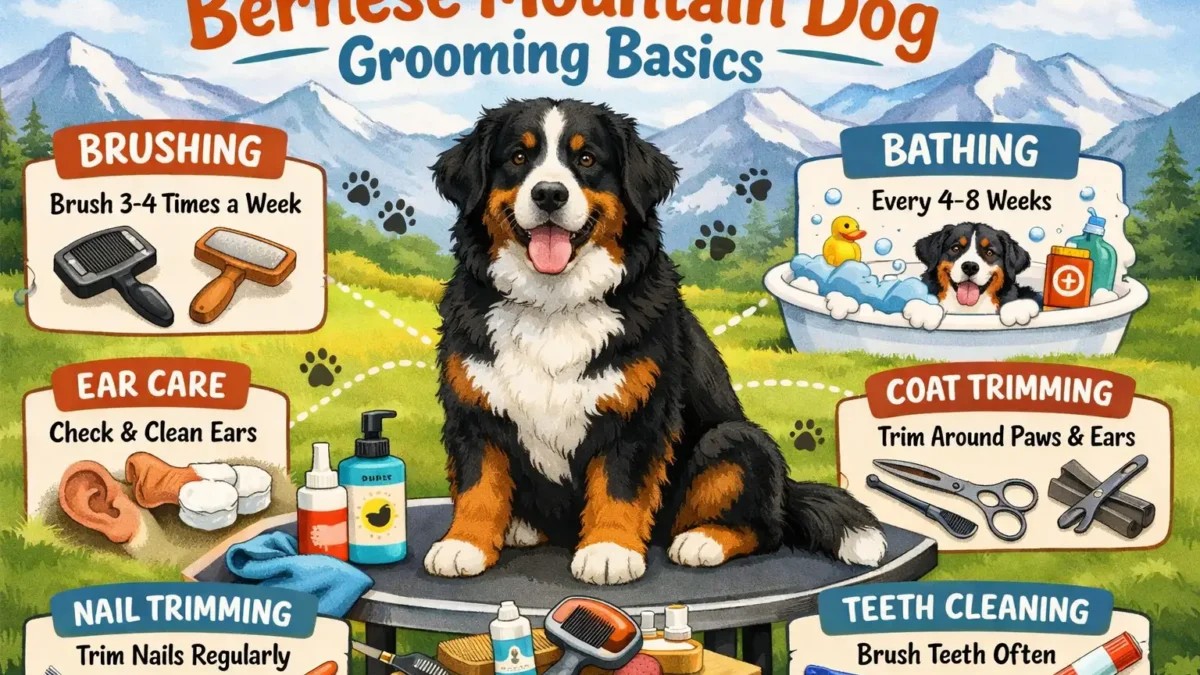
Bernese Mountain Dog Grooming Basics: Essential Tips for Coat Care
Grooming a Bernese Mountain Dog isn’t about keeping them “pretty” — it’s a core part of maintaining their health, comfort, and long-term coat quality. As a large, heavy, double-coated breed, Bernese Mountain Dogs place very different demands on grooming than short-coated or single-coat dogs, and skipping proper care often leads to problems that owners don’t notice until they’re serious.
Regular grooming helps manage heavy shedding, prevents painful matting, supports skin barrier health, and allows you to catch early warning signs like hot spots, yeast overgrowth, parasites, or joint discomfort. In a breed prone to dense undercoat buildup, poor grooming can trap moisture and debris against the skin, creating the perfect environment for irritation and infection.
Grooming also directly affects your dog’s comfort and mobility. Mats commonly form behind the ears, under the armpits, along the feathering, and around the collar area. These mats pull on the skin with every step, restrict airflow, and can even bruise the skin underneath. On large dogs like Bernese Mountain Dogs, this discomfort often shows up as restlessness, reluctance to lie down, or resistance to being touched — signs owners may mistake for behavioral issues rather than grooming-related pain.
From a behavioral and bonding standpoint, consistent grooming builds trust. When brushing, nail trimming, and bathing are introduced calmly and routinely, Bernese Mountain Dogs are far less likely to become anxious or defensive during care. This is especially important given their size and strength; cooperative handling isn’t just more pleasant, it’s safer for both dog and owner.
Finally, grooming is one of the most effective ways to spot health changes early. Feeling the skin and coat regularly helps you notice lumps, sore spots, changes in coat texture, unusual odors, or areas of heat and tenderness — often before they become veterinary emergencies.
Understanding the Bernese Mountain Dog Double Coat
Bernese Mountain Dogs have a double coat, which means they have two layers of fur that work together to protect their body. This coat is beautiful, but it needs the right care to stay healthy.
The topcoat is the longer, slightly coarse hair you see on the outside. It helps protect your dog from dirt, sun, and moisture. The undercoat is soft, thick, and very dense. Its job is to keep your dog warm in cold weather and cool in warmer months by trapping air close to the skin.
Because of this coat type, Bernese Mountain Dogs shed a lot, especially in spring and fall. During these times, large amounts of loose undercoat come out. If this hair is not brushed out, it can tangle, trap moisture, and form painful mats close to the skin.
Matting is most common:
- Behind the ears
- Under the front legs
- Around the neck and collar
- Along the chest and feathering on the legs
Another important thing to understand is that shaving a Bernese Mountain Dog is not safe or helpful. Their coat helps control body temperature. When it is shaved, the coat often grows back uneven, thinner, or patchy, and the skin becomes more sensitive to heat, sunburn, and irritation.
To make this easier to understand, here is a simple breakdown of the Bernese Mountain Dog coat:
| Coat Layer | What It Does | Grooming Impact | Common Mistakes |
|---|---|---|---|
| Topcoat | Protects from dirt, sun, and water | Needs regular brushing to stay smooth | Cutting too short or shaving |
| Undercoat | Insulates and controls body temperature | Must be brushed out, especially during shedding | Skipping brushing during coat blow |
| Full Coat | Works together for comfort and health | Needs steady care year-round | Thinking shedding means poor health |
Understanding how this coat works helps you groom smarter, not harder. When you care for both layers correctly, your dog sheds less around the house, feels more comfortable, and has healthier skin.
Essential Bernese Mountain Dog Grooming Routine at Home
Grooming a Bernese Mountain Dog at home does not need to be hard or confusing. The key is doing a few simple tasks on a regular schedule. Short, steady grooming sessions work better than long sessions done only once in a while.
Because this breed has a thick double coat, brushing is the most important part of the routine. Bathing, nail care, and drying also matter, but they should support brushing — not replace it.
How often you should groom
Use this table as a simple guide. You can adjust slightly based on how active your dog is and how much they shed.
| Grooming Task | Normal Weeks | Heavy Shedding Season |
|---|---|---|
| Brushing | 2–3 times per week | Daily or every other day |
| Bathing | Every 6–8 weeks | Every 6–8 weeks |
| Nail trimming | Every 3–4 weeks | Every 3–4 weeks |
| Ear cleaning | Every 2–4 weeks | Every 2–4 weeks |
| Teeth brushing | 2–3 times per week | 2–3 times per week |
Brushing and shedding control
Brushing removes loose undercoat before it falls on your floors or turns into mats. Always brush down to the skin, not just the top layer of fur. Work slowly and gently, especially behind the ears and under the legs.
During shedding season, you may notice clumps of soft hair coming out. This is normal. Regular brushing helps your dog feel cooler and more comfortable.
Bathing and drying basics
Bernese Mountain Dogs do not need frequent baths. Too many baths can dry out their skin. When you do bathe your dog:
- Use warm (not hot) water
- Use a dog shampoo made for sensitive skin
- Rinse very well to remove all soap
Drying is just as important as bathing. A damp undercoat can cause skin problems. Towel dry first, then use a dryer on low heat if your dog is comfortable with it.
Grooming tools you actually need
You do not need many tools, but you do need the right ones.
| Tool | What It’s Used For | Why It Matters |
|---|---|---|
| Slicker brush | Removes loose hair and small tangles | Helps prevent mats |
| Undercoat rake | Pulls out thick undercoat | Reduces heavy shedding |
| Wide-tooth comb | Checks for missed tangles | Finds hidden mats |
| Dog shampoo | Cleans coat and skin | Protects natural skin oils |
| Nail clippers or grinder | Trims nails safely | Prevents joint stress |
| Towels or low-heat dryer | Dries the coat fully | Prevents skin issues |
Keeping your routine simple and steady is the best way to keep your Bernese Mountain Dog clean, comfortable, and healthy.
Nail, Ear, Teeth, and Skin Care for Bernese Mountain Dogs
These grooming steps are smaller than brushing, but they are just as important. When they are skipped, dogs can feel pain, get infections, or have trouble walking and eating. Keeping these areas clean helps your Bernese Mountain Dog stay comfortable and healthy.
Nails should not touch the floor when your dog is standing still. Long nails can cause pain in the feet and legs, especially in a large, heavy dog like a Bernese Mountain Dog. Trim a little at a time, or use a nail grinder if your dog is nervous about clippers.
Ears need regular checking because Bernese Mountain Dogs have floppy ears. This shape can trap moisture and dirt inside. Clean only the part you can see. Never push anything deep into the ear.
Teeth care is often forgotten, but it matters. Poor dental care can lead to bad breath, gum disease, and pain. Even brushing a few times a week makes a big difference.
Skin checks should be part of every grooming session. Use your hands and eyes to look for changes. Thick fur can hide problems until they get serious.
Here is a simple care guide you can follow at home:
| Care Area | How Often | What to Do | Warning Signs |
|---|---|---|---|
| Nails | Every 3–4 weeks | Trim or grind slowly | Limping, clicking on floor |
| Ears | Every 2–4 weeks | Clean gently with dog ear cleaner | Redness, bad smell, head shaking |
| Teeth | 2–3 times per week | Brush with dog toothpaste | Bad breath, red gums |
| Skin | Weekly check | Feel and look through coat | Hot spots, scabs, hair loss |
Some skin and coat problems are common in this breed. Catching them early can save your dog pain and vet visits.
| Common Issue | Early Signs | Grooming Link | When to Get Help |
|---|---|---|---|
| Hot spots | Red, wet patches | Wet coat, trapped undercoat | If area grows or smells |
| Allergies | Itching, licking | Dirty or irritated skin | If itching is constant |
| Yeast | Musty smell | Moist ears or skin | If smell returns quickly |
| Matting | Tight clumps of fur | Skipped brushing | If mats reach the skin |
Regular care of nails, ears, teeth, and skin keeps small problems from turning into big ones. These steps also help your dog stay calm and comfortable during grooming.
Grooming Mistakes, Seasonal Care, and When to Use a Professional Groomer
Many grooming problems happen not because owners don’t care, but because they don’t know what to avoid. Bernese Mountain Dogs have special grooming needs, and small mistakes can cause big problems over time.
One of the biggest mistakes is shaving the coat. A Bernese Mountain Dog’s coat helps control body temperature. Shaving can make them hotter, not cooler, and can damage how the coat grows back. Another common mistake is skipping brushing, especially during shedding season. This leads to painful mats that often need to be shaved out by a groomer.
Over-bathing is also a problem. Bathing too often can dry out the skin and cause itching. Always rinse well and dry fully, because a damp undercoat can lead to skin infections.
Seasonal grooming is very important for this breed. In spring and fall, Bernese Mountain Dogs “blow” their coat, meaning large amounts of undercoat fall out. During these times, grooming needs increase.
| Season | What Happens | Grooming Focus |
|---|---|---|
| Spring | Heavy shedding | Daily brushing, undercoat removal |
| Summer | Lighter coat | Regular brushing, skin checks |
| Fall | Coat thickens | Frequent brushing, mat prevention |
| Winter | Dense coat | Keep coat clean and dry |
Puppies, adults, and senior dogs also need different care. Puppies need short, gentle sessions to learn grooming is safe. Adult dogs need steady routines. Senior dogs may need slower sessions, softer brushing, and more joint support while standing.
Home grooming works well for regular care, but professional groomers are very helpful in certain cases.
| Situation | Home Grooming | Professional Groomer |
|---|---|---|
| Light brushing | Yes | Optional |
| Heavy shedding | Limited | Recommended |
| Tight mats | No | Yes |
| Nail trimming fear | Sometimes | Yes |
| Full coat clean-up | No | Yes |
A professional groomer has tools and training to safely handle heavy coats, thick undercoat, and large dogs. This is especially helpful during shedding season or if grooming has been missed for a while.
With the right routine, most Bernese Mountain Dogs stay clean, comfortable, and healthy. This guide has now covered the full grooming basics, from coat care to safety and seasonal needs.
For official breed information and care guidance, you can also visit the American Kennel Club Bernese Mountain Dog breed page, which offers trusted details on breed traits, coat type, and general care recommendations.