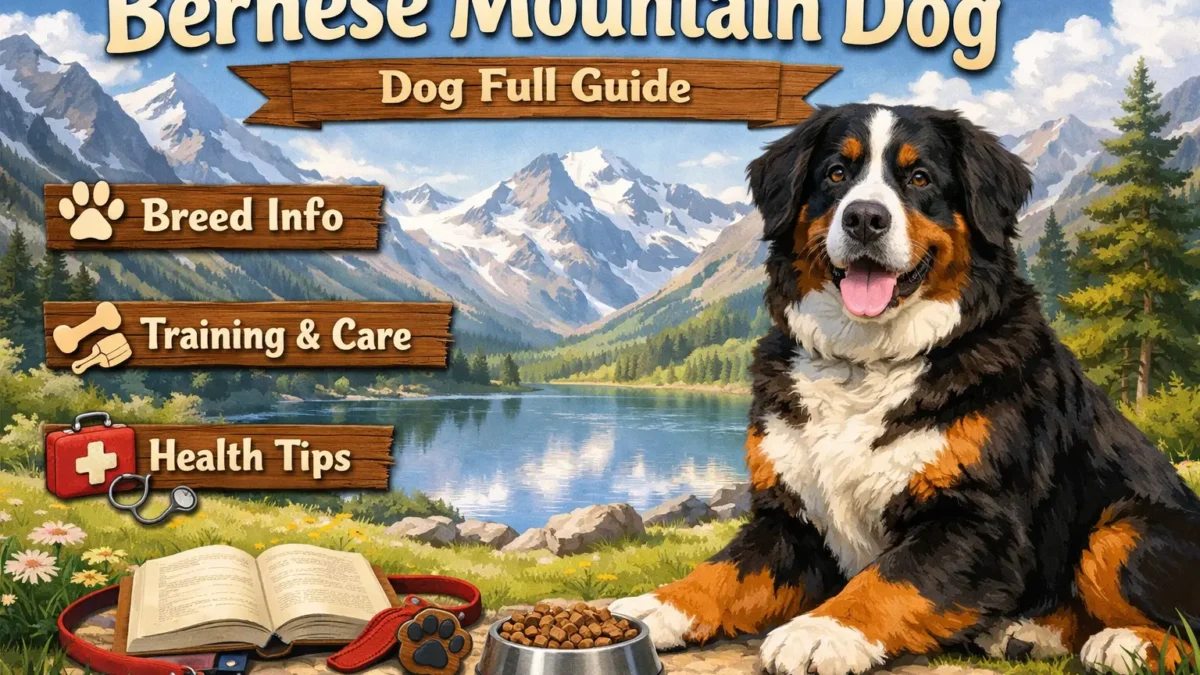
Complete Guide to Bernese Mountain Dog: Temperament, Size, Grooming & More
The Bernese Mountain Dog is best known as a gentle giant—calm, affectionate, and deeply people-oriented—but that simple label doesn’t fully capture what living with one is actually like. This breed was developed to work closely with humans on Swiss farms, and that history still shows up today in their emotional sensitivity, loyalty, and strong desire to stay near their people. Berners are not independent yard dogs or aloof guardians; they are relationship-driven companions that thrive on inclusion in everyday family life.
Bernese Mountain Dog Temperament Snapshot
| Trait | Level | What This Means in Real Life |
|---|---|---|
| Affection | High | Forms strong emotional bonds and prefers to be near family members |
| Energy Level | Moderate | Calm indoors but enjoys daily walks and outdoor activities |
| Sensitivity | High | Responds poorly to harsh correction; thrives on gentle, consistent handling |
| Stranger Friendliness | Moderate | Usually reserved at first, warms up once they sense no threat |
| Child Friendliness | High | Patient and tolerant, but size requires supervision with small children |
| Watchdog Instinct | Moderate | Will alert to unfamiliar sounds or people without being aggressive |
| Independence | Low | Often described as “velcro dogs” that want to stay close to their owners |
In real homes, Bernese Mountain Dogs are typically calm and steady indoors, often content to lounge near their favorite person. Many owners are surprised by just how closely their Berner wants to stay involved—following from room to room, resting a head on a knee, or quietly positioning themselves where they can see everyone. This clinginess isn’t anxiety by default; it’s a byproduct of a breed designed to work with people, not apart from them.
With family members, Berners are exceptionally gentle and emotionally intuitive. They often adjust their behavior based on the energy of the household, becoming playful outdoors but soft and careful inside. Around children, their patience is a major strength, though their large size means accidental bumps are possible, especially during adolescence. Supervision and early manners training are important, not because the breed is rough, but because they are powerful without realizing it.
With strangers, Bernese Mountain Dogs tend to be politely reserved rather than overly friendly or suspicious. They may stand back and observe at first, positioning themselves between their family and a newcomer, but true aggression is uncommon when the dog is well bred and properly socialized. Most warm up quickly once they sense calm, friendly intent.
In multi-pet households, Berners are usually tolerant and social with other dogs, especially when raised together. They generally have a low prey drive compared to many working breeds, though individual personalities vary. Their biggest challenge around smaller pets is not chase instinct but size and spatial awareness—something that improves with maturity and guidance.
One of the most important realities to understand is that Bernese Mountain Dogs mature slowly, both physically and emotionally. Adolescence can feel long, with moments of clumsiness, selective listening, and boundary testing. Owners who expect instant adult behavior often misjudge the breed. Those who approach ownership with patience are usually rewarded with a deeply loyal, steady, and emotionally rich companion.
Size, Appearance, and Shedding: How Big Bernese Mountain Dogs Get
Bernese Mountain Dogs are large, heavy dogs, and their size is one of the first things people notice. Many new owners underestimate just how big and strong this breed becomes as an adult. Knowing their size early helps you prepare your home, budget, and daily routine.
Bernese Mountain Dog Size & Growth Overview
| Sex | Height (at shoulder) | Weight Range | When They Fully Mature |
|---|---|---|---|
| Male | 25–27.5 inches | 85–115 lbs | Around 2.5 to 3 years |
| Female | 23–26 inches | 70–95 lbs | Around 2 to 2.5 years |
Bernese Mountain Dogs grow slowly. They may look big by one year old, but their bones, joints, and muscles are still developing. Many owners are surprised to learn that Berners do not fully mature until close to three years of age. This slow growth is normal for large working breeds and is one reason why careful exercise and training matter early on.
In appearance, Berners have a strong, solid body with a wide chest, sturdy legs, and a calm, confident posture. They are powerful dogs, but they move in a smooth, relaxed way rather than fast or sharp motions. Their expression is soft and friendly, often described as kind or gentle.
The breed is famous for its tricolor coat:
- Deep black body
- Rich rust markings above the eyes, on the legs, and cheeks
- Clean white markings on the chest, face, and sometimes the tail tip
Their coat is thick and designed to protect them from cold weather. This makes them very comfortable in cooler climates, but it also means shedding is a real part of life with a Berner.
Coat and Shedding Reality Check
| Feature | What to Expect |
|---|---|
| Coat Type | Long, thick double coat |
| Shedding Level | Moderate year-round, heavy seasonal shedding |
| Brushing Needs | 2–3 times per week (daily during shedding seasons) |
| Heat Tolerance | Low – sensitive to hot and humid weather |
| Cold Tolerance | High – built for cold climates |
Bernese Mountain Dogs shed all year, with heavier shedding in spring and fall when they lose their undercoat. This is not a low-shedding breed. Regular brushing helps control loose hair and keeps the coat healthy, but hair on furniture and clothing is normal.
Because of their thick coat and large size, Berners do not handle heat well. In warm climates, owners must be careful with exercise, provide shade, and avoid outdoor activity during hot parts of the day. In cooler weather, however, this breed is in its element and often becomes more active and playful.
Understanding the true size, coat, and shedding needs of a Bernese Mountain Dog helps prevent common surprises. These dogs are beautiful and impressive, but they require space, grooming time, and climate awareness to stay comfortable and healthy.
Exercise Needs and Daily Life: Activity Level, Lifestyle Fit, and Mental Stimulation
Bernese Mountain Dogs are not high-energy dogs, but they are also not couch-only dogs. They need daily movement and mental activity to stay healthy and happy. Many people think big dogs need very little exercise, but Berners still need regular walks and things to keep their minds busy.
The key is moderate, steady exercise, not intense or long workouts. This breed was made for working all day at a calm pace, not running fast for long periods.
Daily Exercise Needs by Life Stage
| Life Stage | Physical Exercise | Mental Stimulation | Important Notes |
|---|---|---|---|
| Puppy | Short walks, gentle play | Basic training, simple games | Avoid running, jumping, or stairs |
| Adult | 45–60 minutes daily | Training, scent games, tasks | Consistency is more important than speed |
| Senior | Short, easy walks | Calm mental games | Focus on comfort and joint health |
As puppies, Bernese Mountain Dogs must be protected from too much exercise. Their joints grow slowly, and hard activity can cause long-term damage. Short walks, play in the yard, and simple training are enough at this age.
Adult Berners enjoy daily walks, relaxed hikes, and outdoor time with their family. They often like activities where they can work with people, such as obedience training, light pulling tasks, or scent games. They are happiest when they feel useful and included.
Mental exercise is just as important as physical exercise. Without it, Bernese Mountain Dogs can become bored. Boredom often shows up as:
- Chewing household items
- Digging in the yard
- Ignoring commands
- Following owners everywhere for attention
In daily life, Bernese Mountain Dogs do best in homes where they are part of normal routines. They enjoy calm mornings, regular walks, family time in the evening, and quiet rest periods. They do not do well when left alone for long hours every day.
Apartment living can work only if owners are very committed to daily walks and mental stimulation. A house with a yard is easier, but the yard alone is not enough. Berners still need walks, interaction, and attention.
Active owners who enjoy hiking, walking, or outdoor time often find this breed a great match. Very busy owners or people who are away most of the day may struggle, because Bernese Mountain Dogs need time, presence, and connection, not just space.
When their exercise needs are met, Berners are calm, relaxed, and well-behaved at home. When their needs are ignored, problems usually come from boredom—not bad behavior.
Training and Care Basics: Trainability, Grooming Needs, and Common Owner Challenges
Bernese Mountain Dogs are smart, gentle, and willing to learn, but they are not fast learners like some working breeds. They learn best with patience, calm voices, and clear rules. This breed is very sensitive to tone. Harsh words or punishment can make them shut down or become unsure.
Most Berners want to please their owners, but they also mature slowly. This means training can take longer, especially during the teenage stage. Consistency matters more than strict control.
Training and Care Quick Facts
| Area | What to Expect |
|---|---|
| Trainability | Moderate to high with patience |
| Learning Speed | Steady, not fast |
| Sensitivity | Very sensitive to harsh tone |
| Best Training Style | Positive, calm, reward-based |
| Grooming Effort | Moderate to high |
| Common Challenges | Jumping, leash pulling, slow maturity |
Basic training should start early, especially manners like walking on a leash, sitting calmly, and not jumping on people. Because Bernese Mountain Dogs grow into large, powerful adults, small behavior problems can become big problems if ignored.
Grooming is a regular part of life with this breed. Their long, thick coat needs brushing several times a week to prevent loose hair and tangles. During shedding seasons, daily brushing is often needed. Bathing is only required when they get dirty, but brushing should never be skipped.
Care also includes:
- Regular nail trimming to protect joints
- Ear cleaning to prevent infections
- Teeth brushing or dental chews for oral health
Many first-time owners make mistakes that lead to frustration. These mistakes are common but easy to avoid.
Common Owner Mistakes vs Better Approach
| Common Mistake | Why It Causes Problems | Better Choice |
|---|---|---|
| Using harsh correction | Makes the dog fearful or confused | Calm voice and rewards |
| Over-exercising puppies | Can damage growing joints | Short, gentle activities |
| Skipping early training | Harder to control later due to size | Start manners training early |
| Inconsistent rules | Confuses the dog | Same rules every day |
| Ignoring grooming | Leads to matting and heavy shedding | Regular brushing routine |
Daily care and training should feel calm and predictable. Bernese Mountain Dogs do best when they know what is expected and feel safe with their people. When treated with kindness and structure, they become loyal, polite, and deeply loving companions.
Health, Lifespan, and Cost to Own: What Prospective Owners Must Know
Before bringing home a Bernese Mountain Dog, it is very important to understand their health risks, lifespan, and costs. This breed is loving and loyal, but ownership comes with serious responsibilities. Knowing the facts early helps families make better decisions and avoid heartbreak later.
Common Health Risks and Recommended Screenings
| Health Issue | Risk Level | What Owners Should Know |
|---|---|---|
| Cancer | High | One of the leading causes of early death in the breed |
| Hip Dysplasia | Moderate to High | Can affect movement and comfort |
| Elbow Dysplasia | Moderate | Often shows as limping or stiffness |
| Bloat (GDV) | Moderate | Life-threatening emergency in large dogs |
| Joint Problems | High | Large size puts stress on bones and joints |
Bernese Mountain Dogs have a shorter lifespan compared to many other breeds. Most live between 6 to 8 years, though some live longer with good care and genetics. This shorter lifespan is mainly linked to a high rate of cancer and joint problems.
Good breeders test their dogs for hip and elbow health and track cancer history in bloodlines. Regular vet visits, healthy weight, and early screening can help improve quality of life, even if they cannot prevent every problem.
Cost to Own a Bernese Mountain Dog (Breed-Specific)
| Expense Type | What to Expect |
|---|---|
| Puppy Price | Often high from responsible breeders |
| Food Costs | Higher due to large size |
| Grooming Costs | Moderate to high (tools or professional grooming) |
| Vet Care | Higher risk of medical expenses |
| Insurance | Strongly recommended for this breed |
Bernese Mountain Dogs are not a low-cost breed. Their large size means higher food bills, larger medication doses, and more expensive medical care. Many owners choose pet insurance to help manage unexpected vet costs, especially because serious illnesses can be expensive.
Despite these challenges, many owners say the emotional bond with a Berner is worth it. They are gentle, loving, and deeply connected to their families. Still, this breed is best suited for people who are prepared—emotionally and financially—for both the joy and the risks.
Choosing a Bernese Mountain Dog should be a thoughtful decision, not an impulse. When owners understand the health realities and plan ahead, they can give this gentle giant the best life possible.
To learn more about the official breed standard, history, and recognized traits, you can visit the American Kennel Club Bernese Mountain Dog breed page, which provides trusted, breeder-verified information used by professionals and veterinarians worldwide.