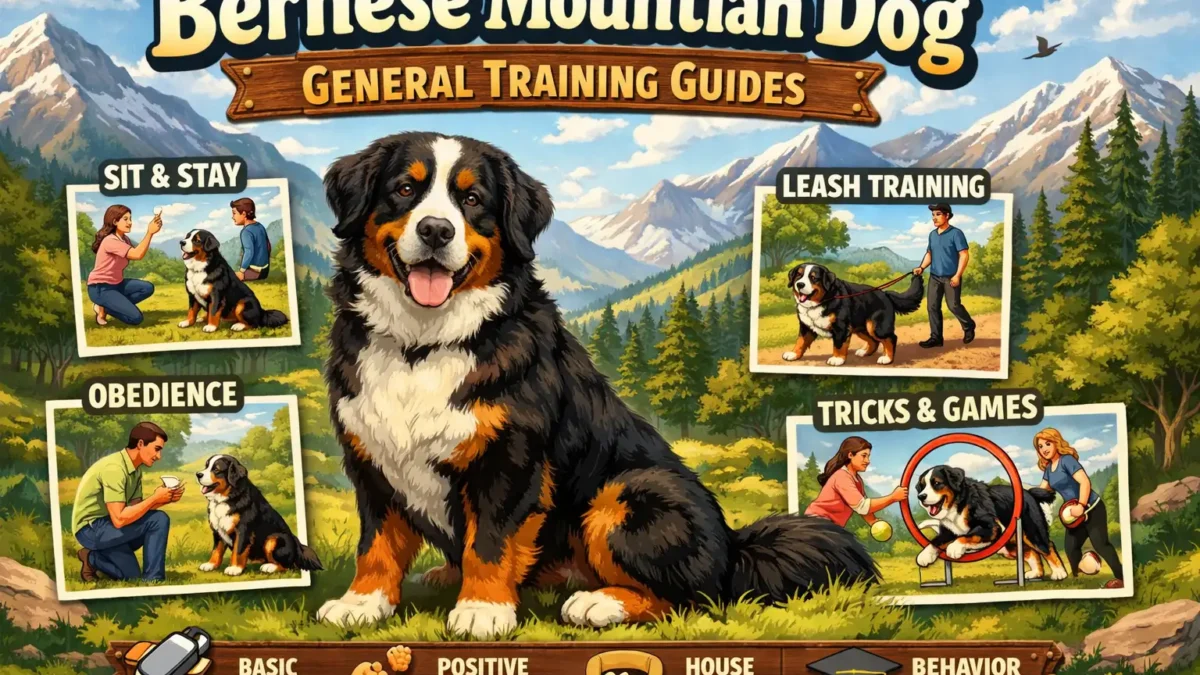
Complete Guide to Bernese Mountain Dog Training
Training a Bernese Mountain Dog is less about strict control and more about building calm cooperation with a very large, emotionally sensitive dog. When people search for “Bernese Mountain Dog training,” they’re usually looking for practical guidance on obedience, manners, and everyday behavior—not competition work or advanced tricks. This guide is designed to meet that exact need.
Bernese Mountain Dogs are known for their gentle nature, loyalty, and strong attachment to their families. At the same time, their large size, slow maturity, and soft temperament mean that common, one-size-fits-all training advice often falls short. Methods that work well for high-drive or more independent breeds can overwhelm a Bernese, while inconsistent or delayed training can quickly turn small behavior issues into serious safety problems simply because of the dog’s size.
This training guide is written for:
- First-time Bernese Mountain Dog owners
- Families raising a Bernese puppy
- Owners of adolescent “teenage” Berners who seem to stop listening
- Adults adopting or rescuing an under-trained Bernese Mountain Dog
Why Training a Bernese Mountain Dog Matters
Bernese Mountain Dogs are gentle by nature, but their size and strength make training very important. A full-grown Bernese can easily weigh as much as an adult human. Without training, even friendly behaviors can become unsafe or stressful for owners and others.
Training is not just about obedience. It helps your Bernese understand the world, feel confident, and stay calm in daily life. Dogs that are not trained often become confused, overwhelmed, or anxious, especially in busy homes, on walks, or around visitors.
Many owners believe Bernese Mountain Dogs do not need much training because they are calm and loving. This is a common mistake. Good training protects both the dog and the people around them, and it makes everyday life much easier.
Below is a simple comparison that shows why training matters so much for this breed.
| Area | Without Proper Training | With Proper Training |
|---|---|---|
| Leash walking | Pulling, hard to control | Calm, steady walking |
| Greeting people | Jumping or leaning due to size | Polite, controlled greetings |
| Confidence | Easily overwhelmed | Calm and relaxed |
| Safety | Risk because of strength | Predictable and manageable |
| Home life | Stressful and chaotic | Peaceful and structured |
Understanding the Bernese Mountain Dog Temperament and Learning Style
Bernese Mountain Dogs are often described as calm, sweet, and loyal. While this is true, their learning style is different from many other breeds. Understanding how they think will help you train them faster and with less stress.
Bernese Mountain Dogs are very people-focused. They care deeply about their owners and want to please them. Because of this, they can be emotionally sensitive. Loud voices, harsh corrections, or too much pressure can confuse or shut them down.
They are also slow to mature, both mentally and emotionally. A Bernese may look like a full-grown adult, but still think and react like a puppy. This is normal for the breed and not a sign of stubborn behavior.
Many training problems start when owners misunderstand these traits. The table below explains common behaviors and what is really happening.
| Trait | What Owners Often Think | What’s Really Happening |
|---|---|---|
| Slow response to commands | “My dog is stubborn” | The dog is processing slowly |
| Avoiding eye contact | “My dog is ignoring me” | The dog feels unsure or overwhelmed |
| Very attached to people | “My dog is needy” | Strong bonding is natural for the breed |
| Shutting down in training | “My dog is lazy” | Too much pressure or stress |
Bernese Mountain Dogs learn best with calm voices, clear steps, and patience. They respond well to food rewards, gentle praise, and short training sessions. Pushing too fast or expecting quick results often leads to frustration for both the dog and the owner.
Puppies need very short lessons. Teenagers may seem forgetful or distracted. Adult Bernese dogs usually learn well once they feel safe and understand what is expected. These changes are part of normal development, not bad behavior.
Step-by-Step Bernese Mountain Dog Training Foundations
Training a Bernese Mountain Dog works best when it is simple, calm, and consistent. This breed does not learn well with long lessons or fast pressure. Short, clear sessions help them understand and stay confident.
Start training in a quiet place, such as your home, before moving to busy areas like sidewalks or parks. Always use the same words for commands and reward your dog as soon as they do the right thing.
Bernese Mountain Dogs learn better with many short sessions, not one long one. This keeps them focused and prevents stress.
The table below shows the best way to structure training sessions.
| Training Element | Best Practice |
|---|---|
| Session length | 5–10 minutes |
| Sessions per day | 1–3 short sessions |
| Best location | Quiet and familiar at first |
| Rewards | Small treats and calm praise |
| Training pace | Slow and steady |
Focus on basic skills first. These include responding to their name, sitting calmly, walking on a loose leash, and coming when called in safe areas. Do not rush into advanced training. Strong basics make everything else easier later.
Training needs change as your Bernese grows. The table below shows what to focus on at each age.
| Age Stage | Main Training Focus |
|---|---|
| Puppy | Name response, sit, gentle leash walking |
| Adolescent | Patience, listening with distractions |
| Adult | Reliability and calm behavior in public |
If your dog seems confused or stops responding, shorten the session or take a break. Bernese Mountain Dogs often shut down when they feel overwhelmed, not when they are being difficult.
Training should feel calm and positive for both you and your dog. Progress may be slow, but steady improvement is the goal.
Common Bernese Mountain Dog Training Problems and Solutions
Even well-natured Bernese Mountain Dogs can develop training problems. Most issues are not caused by bad behavior, but by confusion, excitement, or too much pressure. Knowing the reason behind the problem makes it much easier to fix.
One common issue is leash pulling. Bernese dogs are strong and often excited to walk. Jumping or leaning on people is also common, especially because they are friendly and want attention. Some owners think their dog is being stubborn when the dog is actually overwhelmed or tired.
The table below shows common problems, why they happen, and what you can try first.
| Problem | Likely Cause | First Thing to Try |
|---|---|---|
| Pulling on the leash | Excitement and strength | Walk slower and reward calm steps |
| Jumping on people | Over-friendly greetings | Ask for a sit before attention |
| Ignoring commands | Too many distractions | Practice in quieter places |
| Training going backward | Mental overload | Shorter and fewer sessions |
| Shutting down | Too much pressure | Calm voice and easier steps |
Many training setbacks happen in busy homes, around children, or when visitors arrive. These situations are hard for sensitive dogs. Practice skills in calm settings first, then slowly add distractions.
For more breed-specific training and care guidance, you can also explore the official Bernese Mountain Dog resources provided by the American Kennel Club, which offer reliable, vet-reviewed information for owners and trainers.