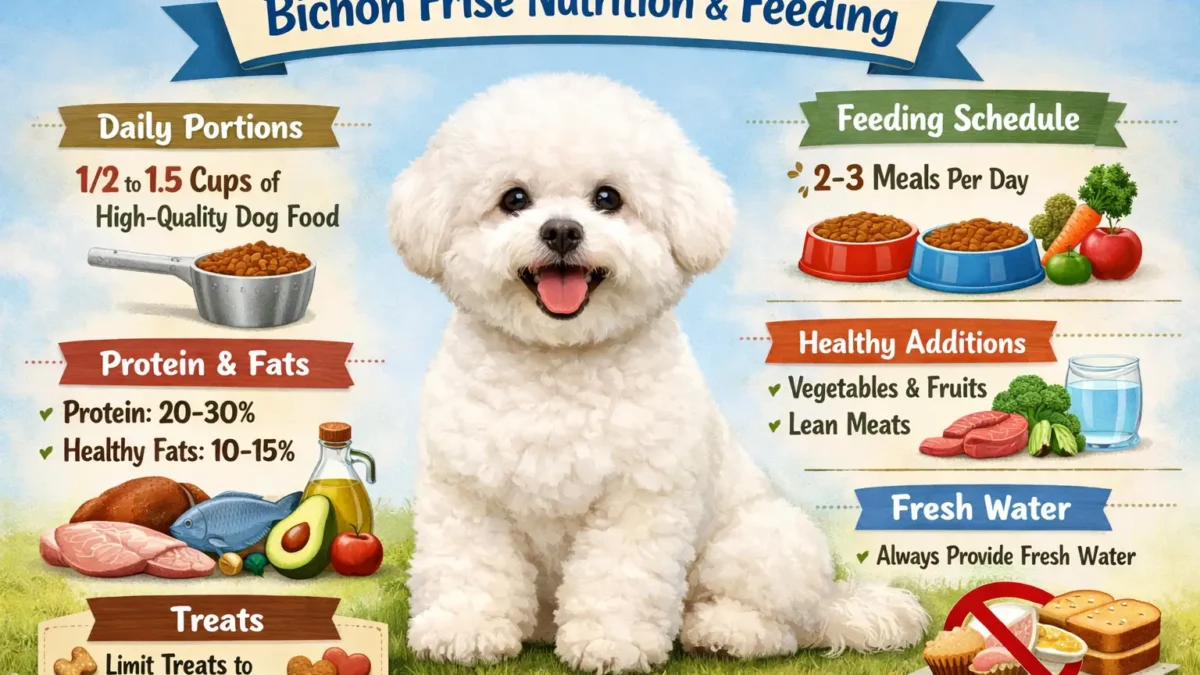
Bichon Frise Dog Nutrition & Feeding Guide
Proper nutrition plays a much bigger role in a Bichon Frise’s health than many owners realize. This small, cheerful breed has a fast metabolism, a compact body, and a coat that depends heavily on dietary quality. Feeding “just enough” or choosing food based only on brand popularity often leads to weight gain, dull coats, digestive issues, or long-term health problems.
This guide is designed to help you understand what a truly healthy diet looks like for a Bichon Frise, not in theory, but in everyday life. Whether you’re raising a puppy, managing an adult dog’s weight, or adjusting meals for a senior Bichon Frise Dog nutrition should support energy levels, digestion, coat condition, dental health, and overall longevity.
Bichon Frises are particularly prone to:
- Weight gain from small portion miscalculations
- Food sensitivities and mild allergies
- Dental issues common in small breeds
- Skin and coat problems when nutrition is unbalanced
A healthy Bichon Frise diet is not about feeding the most expensive food or constantly changing diets. It’s about balance, portion control, consistency, and choosing food that matches your dog’s age, activity level, and individual needs. Even high-quality food can cause problems if it’s overfed, poorly timed, or mismatched to your dog’s lifestyle.
What Do Bichon Frise Dogs Eat? Nutritional Needs Explained
Bichon Frise dogs need simple, balanced food. Because they are small, even small feeding mistakes can cause problems. The goal is to give your dog the right nutrients every day, not too much and not too little.
A healthy diet for a Bichon Frise should support:
- Steady energy (not hyper, not tired)
- Easy digestion and firm stools
- A soft, white coat with healthy skin
- Strong teeth and a healthy weight
The main nutrients your Bichon Frise needs
Here is a simple breakdown of the most important nutrients and why they matter.
| Nutrient | Why it matters for Bichon Frise | Simple owner tips |
|---|---|---|
| Protein | Builds muscles, supports immune system, keeps coat healthy | Look for meat or fish as the first ingredient |
| Fat | Gives energy and keeps skin and coat healthy | Small dogs need fat, but too much causes weight gain |
| Carbohydrates | Provide energy and help digestion | Choose foods with whole grains or vegetables, not fillers |
| Fiber | Helps gut health and stool quality | Helpful for sensitive stomachs |
| Vitamins & Minerals | Support bones, teeth, skin, and immunity | Should come from balanced dog food, not random supplements |
Protein, fat, and carbs in simple words
Protein helps your Bichon Frise stay strong and active. Most healthy adult Bichons do well with moderate protein levels. Very high protein is not needed for most pet dogs.
Fat is important, but this is where many owners overfeed. Too much fat can quickly lead to weight gain in small dogs. Balanced fat levels help the coat stay shiny without adding extra pounds.
Carbohydrates are not bad for dogs when they come from good sources. Rice, oats, sweet potatoes, and vegetables can help give energy and support digestion.
Vitamins, minerals, and supplements
Most complete dog foods already contain the vitamins and minerals your Bichon Frise needs. Giving extra supplements without advice can do more harm than good. Supplements should only be added if a vet recommends them for a specific reason, such as skin problems or joint support in older dogs.
How to read a dog food label (the easy way)
When choosing food:
- Check that the food is labeled as “complete and balanced”
- Look for a clear protein source near the top of the ingredient list
- Avoid foods with many artificial colors or vague ingredients
- Ignore fancy marketing words and focus on ingredients and balance
Good food does not need a long, confusing ingredient list. Simple and clear is usually better.
How Much Should a Bichon Frise Eat? Feeding Amounts and Schedules
Bichon Frise dogs are small, but they gain weight easily. Feeding the right amount is just as important as choosing good food. Even a little extra food each day can lead to weight problems over time.
The best feeding amount depends on:
- Your dog’s weight
- Activity level (active or mostly indoors)
- Age (puppy, adult, or senior)
Daily feeding amounts by weight and activity
Use the table below as a starting guide. These are average ranges, not exact rules. Always watch your dog’s body shape and energy.
| Bichon Frise Weight | Activity Level | Calories per Day | Approximate Food Amount |
|---|---|---|---|
| 5–7 lbs (2–3 kg) | Low activity | 200–250 kcal | ½ to ¾ cup |
| 5–7 lbs (2–3 kg) | Active | 250–300 kcal | ¾ to 1 cup |
| 8–10 lbs (3.5–4.5 kg) | Low activity | 300–350 kcal | ¾ to 1 cup |
| 8–10 lbs (3.5–4.5 kg) | Active | 350–400 kcal | 1 to 1¼ cups |
Food amounts depend on calorie density. Always check the food label and adjust as needed.
How often to feed a Bichon Frise
Feeding smaller meals helps digestion and keeps energy steady.
| Life Stage | Meals per Day | Why it helps |
|---|---|---|
| Puppy (up to 6 months) | 3–4 meals | Supports growth and prevents low blood sugar |
| Adult | 2 meals | Helps weight control and digestion |
| Senior | 2 smaller meals | Easier on digestion and joints |
Avoid free-feeding (leaving food out all day). It often leads to overeating, especially in small dogs.
Watch your dog’s body, not just the bowl
A healthy Bichon Frise should:
- Have a visible waist when viewed from above
- Have ribs you can feel but not see
- Move easily without getting tired fast
If your dog looks round or feels heavy, reduce food slightly. If ribs are too easy to see, increase food a little.
Treats count as food
Treats should make up no more than 10% of daily calories. Too many treats are a common reason Bichon Frises gain weight.
Simple rule:
If treats increase, meals should decrease.
Best Food Choices for Bichon Frise Dogs (Dry, Wet, Fresh, Raw, Homemade)
There is no single “perfect” food for every Bichon Frise. The best choice depends on your dog’s age, health, teeth, activity level, and your daily routine. What matters most is that the food is balanced, safe, and fed in the right amount.
Below is a simple look at the main food types and how they work for Bichon Frise dogs.
Types of dog food and how they compare
| Food Type | Benefits | Drawbacks | Best for |
|---|---|---|---|
| Dry kibble | Easy to store, helps clean teeth, affordable | Can be high in calories if overfed | Most adult Bichon Frises |
| Wet/canned food | Tasty, higher moisture | More expensive, can cause weight gain | Picky eaters, seniors |
| Fresh cooked food | High quality, easy to digest | Short shelf life, higher cost | Dogs with sensitivities |
| Freeze-dried food | Nutrient-rich, easy to store | Expensive, needs rehydration | Owners wanting fresh-style feeding |
| Raw diet | High protein, minimal processing | Safety risks, hard to balance | Only with vet guidance |
| Homemade food | Full ingredient control | Risk of missing nutrients | Only with professional recipes |
Dry kibble works well for most Bichon Frises when portions are controlled. Mixing small amounts of wet or fresh food can improve taste without adding too many calories.
Safe human foods Bichon Frises can eat
Some human foods are safe when given in small amounts:
| Safe Foods (Small Portions) | Why they are okay |
|---|---|
| Cooked chicken or turkey (no skin) | Lean protein |
| Plain rice or oats | Easy on digestion |
| Carrots, green beans | Low-calorie snacks |
| Apples (no seeds) | Fiber and vitamins |
| Plain pumpkin | Helps digestion |
Always keep human food plain. No salt, spices, butter, or sauces.
Toxic foods Bichon Frises must avoid
Some foods are dangerous, even in small amounts:
| Unsafe Foods | Why they are harmful |
|---|---|
| Chocolate | Toxic to dogs |
| Grapes and raisins | Can damage kidneys |
| Onions and garlic | Harm red blood cells |
| Xylitol (sweetener) | Can cause low blood sugar |
| Alcohol and caffeine | Very dangerous |
Never test “small amounts” with these foods. Avoid them completely.
Treats and snacks
Treats should be simple and limited. Many store-bought treats are high in calories. Break treats into small pieces and count them as part of daily food.
Good rule:
- Treats = no more than 10% of daily calories
Special Diets, Common Feeding Problems, and When to See a Vet
Some Bichon Frise dogs need special care with food. This breed can be sensitive, picky, or gain weight easily. Knowing how to adjust the diet can prevent many health problems.
Feeding Bichon Frises with allergies or sensitive stomachs
Signs of food problems may include:
- Itchy skin or red ears
- Loose stool or frequent gas
- Vomiting or poor appetite
Many Bichons do better with simple diets that use:
- One main protein source
- Limited ingredients
- No artificial colors or flavors
If symptoms do not improve after changing food slowly, a vet visit is needed.
Picky eaters and food-obsessed dogs
Some Bichon Frises refuse meals, while others always act hungry.
Helpful tips:
- Feed meals at the same time every day
- Remove uneaten food after 15–20 minutes
- Avoid adding new toppers often
- Do not reward skipping meals with treats
Dogs that seem hungry all the time are often bored, not starving. Extra walks and play can help.
Weight gain and weight loss problems
Bichon Frises gain weight easily because of their small size.
Common causes:
- Too many treats
- Large portion sizes
- Low activity
To help with weight loss:
- Reduce food slightly, not suddenly
- Use low-calorie treats like vegetables
- Increase daily walks
If your dog is losing weight without reason, see a vet right away.
Feeding senior Bichon Frises
Older dogs may:
- Move less
- Have dental pain
- Digest food slower
Senior-friendly food is often:
- Lower in calories
- Easy to chew
- Gentle on digestion
Warm food slightly to improve smell and taste if appetite drops.
Switching dog food safely
Always change food slowly to avoid stomach upset.
Simple switch plan:
- Days 1–3: 75% old food, 25% new food
- Days 4–6: 50% old, 50% new
- Days 7–9: 25% old, 75% new
- Day 10: 100% new food
If diarrhea or vomiting appears, slow the change.
When to see a veterinarian
Contact a vet if your Bichon Frise:
- Stops eating for more than 24 hours
- Has ongoing vomiting or diarrhea
- Loses or gains weight quickly
- Has skin problems that do not improve
A vet or veterinary nutritionist can help create a safe, balanced plan.
For trusted, science-based nutrition standards used by pet food manufacturers and veterinarians, you can also review the official guidelines from the Association of American Feed Control Officials (AAFCO) here:
https://www.aafco.org
Bichon Frise Dog Full Guide: Temperament, Care & Cost 2026
[…] to Human Years (Age Chart) https://petageinhumanyearscalculator.com/blog/bichon-frise-grooming Bichon Frise Dog Nutrition & Feeding Guide Bichon Frise Cost of Ownership: Monthly, Yearly, and Lifetime […]