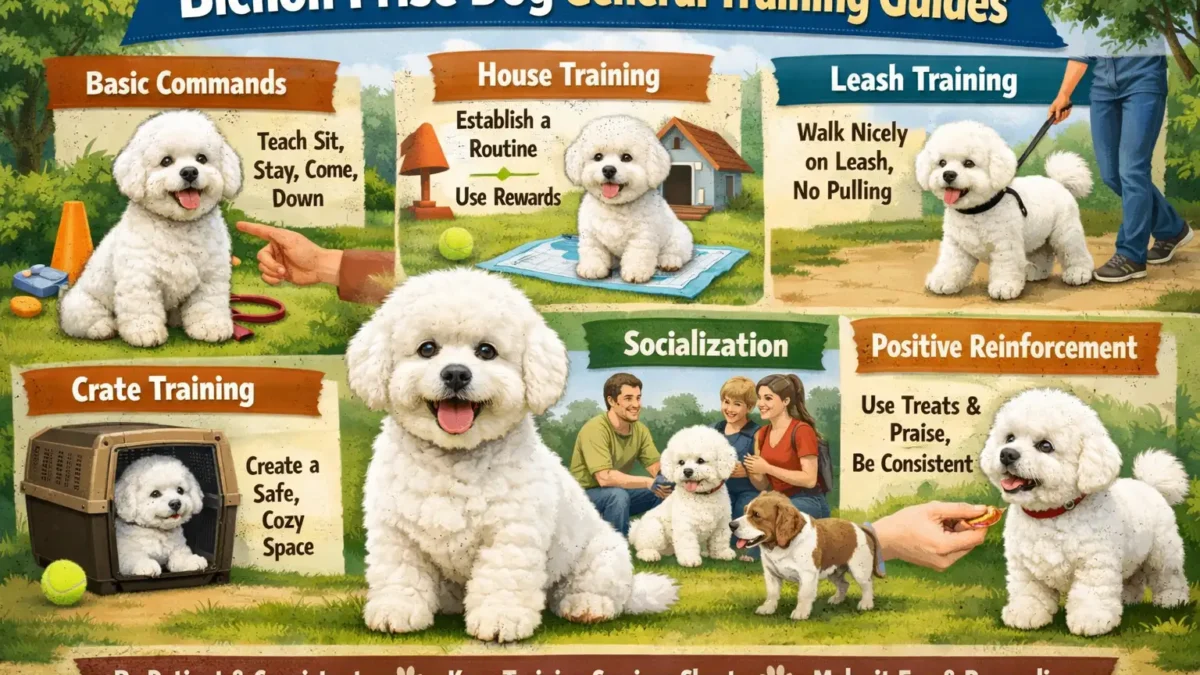
Bichon Frise Training Guide: Practical Tips for Puppies and Adult Dogs
Bichon Frise Training is less about control and more about communication, consistency, and understanding how this breed thinks and feels. Bichons are intelligent, people-oriented dogs with a playful personality and a sensitive nature. When trained correctly, they are eager learners who thrive on praise, routine, and positive interaction. When trained poorly or inconsistently, they can develop common issues such as excessive barking, separation anxiety, or unreliable house manners.
This guide is designed to help both first-time dog owners and experienced handlers build a strong training foundation with a Bichon Frise. Whether you are raising a puppy, working with an adult dog, or correcting problem behaviors, the goal is the same: create clear communication, reliable behavior, and a calm, confident dog that fits well into everyday life.
Unlike some breeds that tolerate harsh corrections or rigid training styles, Bichon Frise dogs respond best to gentle, reward-based training. Their sensitivity means they learn quickly from both good and bad experiences. This guide focuses on practical methods that work in real homes — apartments, busy households, families with children, and multi-pet environments — not just ideal training scenarios.
Throughout this article, you’ll learn how to:
- Understand what motivates a Bichon Frise during training
- Set realistic expectations for puppies versus adult dogs
- Build obedience, manners, and focus step by step
- Prevent common behavior problems before they become habits
Understanding Bichon Frise Behavior and Learning Style
To train a Bichon Frise well, you first need to understand how they think and learn. This breed is smart, social, and very connected to people. They like attention and want to make their owners happy, but they can also get stressed if training feels harsh or confusing.
Bichon Frise dogs learn best when training feels fun, calm, and rewarding. They do not respond well to yelling, punishment, or force. These methods often cause fear or stubborn behavior instead of good learning.
Here are some important behavior traits that affect training:
- Bichons are people-focused and like being close to their owners
- They are sensitive to tone of voice and body language
- They enjoy praise, treats, and play as rewards
- They can lose focus if training is too long or boring
- They may bark or act out when confused, bored, or lonely
Many owners think a Bichon Frise is “stubborn” when the dog is actually overwhelmed or unsure. Clear steps, short sessions, and good timing make a big difference.
How Bichon Frise Traits Affect Training
| Bichon Frise Trait | What It Means for Training |
|---|---|
| Very social | Learns faster with praise and interaction |
| Sensitive nature | Needs gentle correction and calm tone |
| Intelligent | Gets bored with repeated drills |
| Short attention span | Does best with short, frequent sessions |
| Food motivated | Treats work well when used correctly |
Because of these traits, positive reinforcement works best. This means rewarding the behavior you want instead of focusing on mistakes. When rewards come right after the correct action, the dog understands faster.
Training should feel like teamwork, not control. When your Bichon Frise feels safe and understood, learning becomes much easier and faster.
Step-by-Step Bichon Frise Training Basics
This section shows how to train a Bichon Frise step by step. Keep training simple, short, and calm. Small daily practice works better than long sessions.
Start with the Right Training Setup
Before you begin:
- Choose a quiet place with few distractions
- Use small, soft treats your dog loves
- Keep sessions short (5–10 minutes)
- Train 2–3 times a day
- Always end on a success
Puppy vs Adult Bichon Frise Training
Training is similar for all ages, but expectations change.
| Training Area | Puppy Bichon Frise | Adult Bichon Frise |
|---|---|---|
| Attention span | Very short | Longer, but still limited |
| Potty training | Needs frequent breaks | Focus on routine and reminders |
| Commands | Learn basics slowly | Can learn faster with practice |
| Mistakes | Very common | Less common but still happen |
| Patience needed | High | Moderate |
Core Skills to Train First
Focus on these basics before advanced training:
- Name response (looking at you when called)
- Sit and down
- Come when called (indoors first)
- Leash walking without pulling
- Calm behavior at home
Use treats and praise right after the dog does the correct action. This helps your Bichon understand what you like.
Training Time and Weekly Routine
Consistency matters more than length.
| Training Type | Session Length | How Often |
|---|---|---|
| Basic commands | 5–10 minutes | 2–3 times daily |
| Potty training | Very short | Every few hours |
| Leash training | 5–15 minutes | Once daily |
| Focus games | 3–5 minutes | Daily |
If your dog loses focus, stop and try later. Never force training.
House Training Basics
- Take your dog out at the same times every day
- Praise and reward right after potty outside
- Clean indoor accidents fully (no anger)
- Use a schedule, not guessing
Leash and Focus Training
- Start indoors, then move outside
- Walk a few steps, reward calm walking
- Stop if pulling starts
- Practice eye contact with treats
Progress may feel slow, but steady practice brings strong results.
Common Bichon Frise Training Problems and Solutions
Even well-trained Bichon Frise dogs can have problems. This does not mean you failed. Most issues come from confusion, lack of routine, or unmet needs. The good news is that many problems can be fixed with small changes.
Common Problems Owners Face
Here are issues many Bichon Frise owners deal with:
- Too much barking
- Potty accidents after training
- Not listening or ignoring commands
- Crying or stress when left alone
- Pulling on the leash
These behaviors often happen because the dog is bored, nervous, or unsure of what to do.
Quick Problem-Solving Guide
| Problem | Likely Cause | Simple Fix |
|---|---|---|
| Excessive barking | Boredom, attention seeking | Add walks, play, and ignore demand barking |
| Potty accidents | No clear schedule | Set fixed potty times and reward outside |
| Not listening | Too many distractions | Train in quiet areas first |
| Separation anxiety | Too much dependence | Practice short alone times daily |
| Leash pulling | Excitement or poor focus | Stop walking and reward calm steps |
Helpful Training Tips
- Do not punish mistakes; it slows learning
- Be consistent with rules every day
- Keep training calm and predictable
- Reward good behavior more than you correct bad behavior
- Give enough exercise and mental games
Busy Homes and Apartments
In noisy or busy homes:
- Train in short sessions
- Use quiet spaces when possible
- Give your dog rest time
In apartments:
- Focus on calm behavior
- Reward quiet moments
- Give daily walks and playtime
Most problems improve within 2–4 weeks when training is consistent. If nothing changes, it may be time for extra help.
When to Get Professional Help for Bichon Frise Training
Most Bichon Frise dogs improve with time, patience, and daily practice. But sometimes, training problems do not get better on their own. Knowing when to ask for help can prevent stress for both you and your dog.
Signs You May Need Extra Help
You should think about professional training if:
- Your dog shows fear, panic, or shaking often
- Barking or anxiety gets worse, not better
- Your dog growls, snaps, or tries to bite
- Potty accidents continue after weeks of routine
- Your dog cannot relax when alone
These signs do not mean your dog is “bad.” They often mean the dog is scared, confused, or overwhelmed.
When to Act and What to Do
| Behavior | How Long to Wait | What to Do |
|---|---|---|
| Mild training issues | 2–4 weeks | Adjust routine and stay consistent |
| Ongoing anxiety | 2–3 weeks | Contact a certified dog trainer |
| Fearful behavior | Immediately | Seek a positive trainer or behavior expert |
| Aggression signs | Immediately | Contact a professional trainer or vet |
| Severe separation stress | 1–2 weeks | Get professional guidance early |
Who Can Help
- A certified positive reinforcement dog trainer
- A behavior-focused trainer with small dog experience
- A veterinarian if anxiety or fear is severe
Avoid trainers who use fear, yelling, or punishment. Bichon Frise dogs learn best with calm, kind methods.
Getting help early can save time, reduce stress, and lead to better long-term behavior.
For trusted, breed-specific information on Bichon Frise characteristics, behavior, and care from a widely respected authority in dog breeds, you can also visit the American Kennel Club’s Bichon Frise breed page here: https://www.akc.org/dog-breeds/bichon-frise/