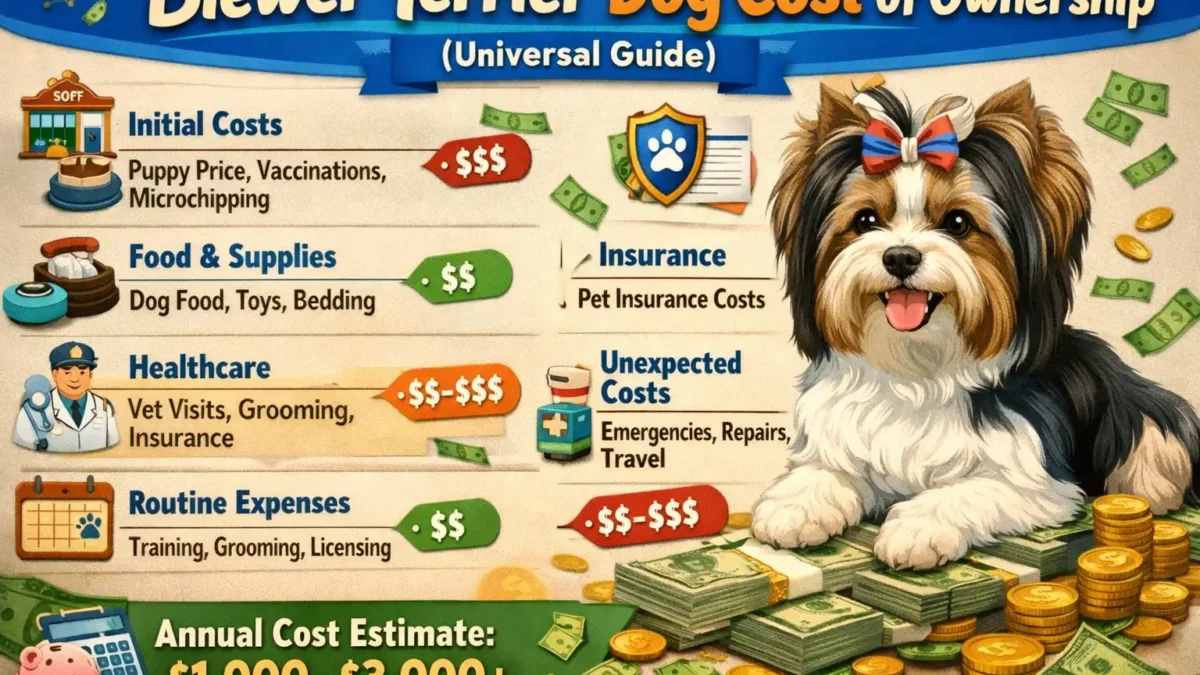
Biewer Terrier Cost of Ownership: Monthly, Yearly & Lifetime Expenses Explained
Owning a Biewer Terrier is not just about the purchase price. While this breed is small in size, the total cost of ownership is often higher than many people expect. This guide is designed to give you a clear, realistic picture of what it actually costs to own a Biewer Terrier, from the first year to long-term care.
Many people assume small dogs are inexpensive. In reality, Biewer Terriers have ongoing costs that can add up quickly. Their long, silky coat needs regular grooming. Their small mouths often require extra dental care. Like many toy breeds, they can also be more fragile, which may increase vet visits or emergency costs over time.
To set expectations clearly, here is a high-level look at typical ownership costs. These are average ranges and can vary by location, lifestyle, and your dog’s individual health.
Table: Biewer Terrier Ownership Cost Overview
- First-year cost: often higher due to vet care, supplies, and training
- Monthly cost: includes food, grooming, preventatives, and routine care
- Annual cost: reflects steady maintenance for a healthy adult dog
- Lifetime cost: based on an average lifespan of 12–15 years
The first year is usually the most expensive. Puppies need multiple vet visits, vaccinations, training, grooming tools, and basic supplies. Adult years tend to be more stable, but costs never drop to zero. Senior years may increase again due to dental work, medications, or age-related health needs.
This article focuses on real ownership costs, not best-case or worst-case extremes. The goal is to help you decide if a Biewer Terrier fits your budget comfortably, not just now, but for many years to come.
Biewer Terrier Puppy Price and First-Year Costs
The first year with a Biewer Terrier is usually the most expensive year. This is when you pay for the puppy itself, early vet care, training, and all the basic items your dog needs to live safely and comfortably.
Puppy price or adoption cost
Most Biewer Terriers come from breeders, and the price is often higher than many small dogs. This is because the breed is rare and carefully bred. Adoption is sometimes possible, but it is less common.
The price you pay at the start does not include medical care or supplies. Many new owners are surprised by how fast costs add up after bringing the puppy home.
First-year vet care and medical costs
Puppies need several vet visits in their first year. These visits are not optional. They protect your dog from serious diseases and help catch health problems early.
Common first-year vet costs include:
- Puppy vaccines
- Deworming
- Microchipping
- Spay or neuter surgery
- General health exams
Supplies and setup costs
Before your puppy comes home, you will need basic items. These are one-time costs, but they matter.
Examples include:
- Crate or playpen
- Bed and blankets
- Bowls and leash
- Collar or harness
- Grooming tools for the coat
- Safe toys and chews
Training and early behavior costs
Training in the first year helps prevent behavior problems later. Even small dogs need training. Puppy classes or basic obedience lessons are common first-year expenses.
First-year cost overview table
Estimated First-Year Biewer Terrier Costs
| Expense Category | Typical Cost Range |
|---|---|
| Puppy price or adoption | High upfront cost |
| Initial vet care | Moderate to high |
| Spay or neuter | One-time medical cost |
| Supplies and setup | One-time setup cost |
| Grooming (first year) | Ongoing |
| Training | Short-term but important |
| Total first-year cost | Highest year of ownership |
The total first-year cost is higher than later years because many expenses happen at once. Planning ahead helps avoid financial stress during this stage.
Monthly and Annual Costs of Owning a Biewer Terrier
After the first year, costs become more regular and predictable. These are the expenses you pay every month or every year to keep your Biewer Terrier healthy, clean, and happy.
Even though this is a small dog, the monthly costs do not disappear. Grooming and health care are the biggest ongoing expenses for this breed.
Food and treats
Biewer Terriers eat small portions, so food costs are lower than large dogs. Still, good-quality food matters. Cheap food can lead to stomach problems, dental issues, and higher vet bills later.
You should also budget for:
- Training treats
- Dental chews
- Occasional supplements (if recommended by a vet)
Routine vet care and preventatives
Healthy adult dogs still need regular vet care. This includes:
- Yearly checkups
- Vaccines
- Flea, tick, and heartworm prevention
These costs are spread out over the year, but they are not optional.
Grooming and coat care
This is a major monthly cost for Biewer Terriers. Their long coat needs regular brushing and professional grooming to prevent matting and skin problems.
Owners usually choose between:
- Professional grooming every few weeks
- A mix of home grooming and salon visits
Either way, grooming is a steady expense.
Toys, supplies, and small replacements
Beds, toys, leashes, and bowls do not last forever. Small dogs still chew, wear things out, and need replacements over time.
Monthly vs annual cost table
Average Monthly and Annual Biewer Terrier Costs
| Expense | Monthly Estimate | Annual Estimate |
|---|---|---|
| Food and treats | Low | Low to moderate |
| Routine vet care | Low | Moderate |
| Grooming | Moderate | High |
| Preventatives | Low | Moderate |
| Toys and supplies | Low | Low |
| Total ongoing cost | Moderate | Moderate to high |
These costs describe a healthy adult Biewer Terrier. Medical issues, travel, or lifestyle choices can raise the total.
Major Cost Factors That Change Biewer Terrier Expenses
Not every Biewer Terrier costs the same to care for. Two owners can have the same breed and still spend very different amounts each year. This section explains why costs go up or down, so you are not surprised later.
Grooming habits
Grooming is one of the biggest cost changers for this breed.
Costs go up if:
- You use professional grooming often
- You keep the coat long
- You skip brushing and need mat removal
Costs go down if:
- You learn basic home grooming
- You keep a shorter, easy-care trim
Health and vet needs
Some Biewer Terriers stay healthy for many years. Others may need extra care.
Costs increase with:
- Dental problems (very common in small dogs)
- Allergies or sensitive digestion
- Accidents or emergency vet visits
A healthy dog with good preventive care usually costs less over time.
Pet insurance or self-paying
Insurance adds a monthly cost, but it can protect you from very large vet bills.
- Insurance can help with emergencies and surgeries
- It may not cover routine care
- Some owners prefer to save money in an emergency fund instead
Lifestyle and living situation
Your daily life also affects costs.
Examples:
- Frequent travel means boarding or pet sitting
- City living often has higher vet and grooming prices
- Multi-dog homes may get small discounts, but costs still add up
Cost factors overview table
What Raises or Lowers Biewer Terrier Costs
| Factor | Cost Effect |
|---|---|
| Frequent professional grooming | Higher |
| At-home grooming | Lower |
| Dental care needs | Higher |
| Pet insurance | Higher monthly, lower risk |
| Emergency vet visits | Much higher |
| Calm indoor lifestyle | Lower |
Understanding these factors helps you plan better and avoid stress.
Lifetime Cost, Hidden Expenses, and Budgeting for a Biewer Terrier
Owning a Biewer Terrier is a long-term financial commitment, not a one-time purchase. This breed often lives 12 to 15 years, so even small monthly costs add up over time.
Lifetime cost overview
When you look at the full picture, the first year is expensive, adult years are steady, and senior years may rise again due to health care needs.
Estimated Lifetime Cost of a Biewer Terrier
| Life Stage | Typical Cost Level |
|---|---|
| First year | High |
| Adult years (per year) | Moderate |
| Senior years (per year) | Moderate to high |
| Total lifetime cost | Significant long-term investment |
This estimate assumes good care, regular vet visits, and proper grooming.
Hidden costs many owners forget
Some costs do not show up right away but are very common over a dog’s life.
Common hidden expenses include:
- Dental cleanings and tooth problems
- Boarding or pet sitting during travel
- Emergency vet visits
- Replacing chewed beds, toys, or grooming tools
- Medications later in life
Planning for these costs helps avoid hard financial choices later.
Simple budgeting tips for owners
Good planning makes ownership easier and less stressful.
Helpful tips:
- Set aside a small emergency fund for vet care
- Budget monthly instead of yearly
- Do not skip grooming or preventive care to save money
- Compare insurance vs saving on your own
Final reality check
Biewer Terriers are loving, beautiful dogs, but they are not low-cost pets. Their size helps with food costs, but grooming, dental care, and vet needs balance that out.
If you can comfortably handle regular expenses and prepare for surprises, a Biewer Terrier can be a wonderful long-term companion.
For more realistic pet cost estimates and tips on planning your budget for dog care, see the ASPCA’s annual cost-of-pet ownership estimates, which outline how much you might expect to spend on food, vet care, grooming, and other essential care over time on their official pet care cost page: https://www.aspca.org/pet-care/general-pet-care/cutting-pet-care-costs aspca.org