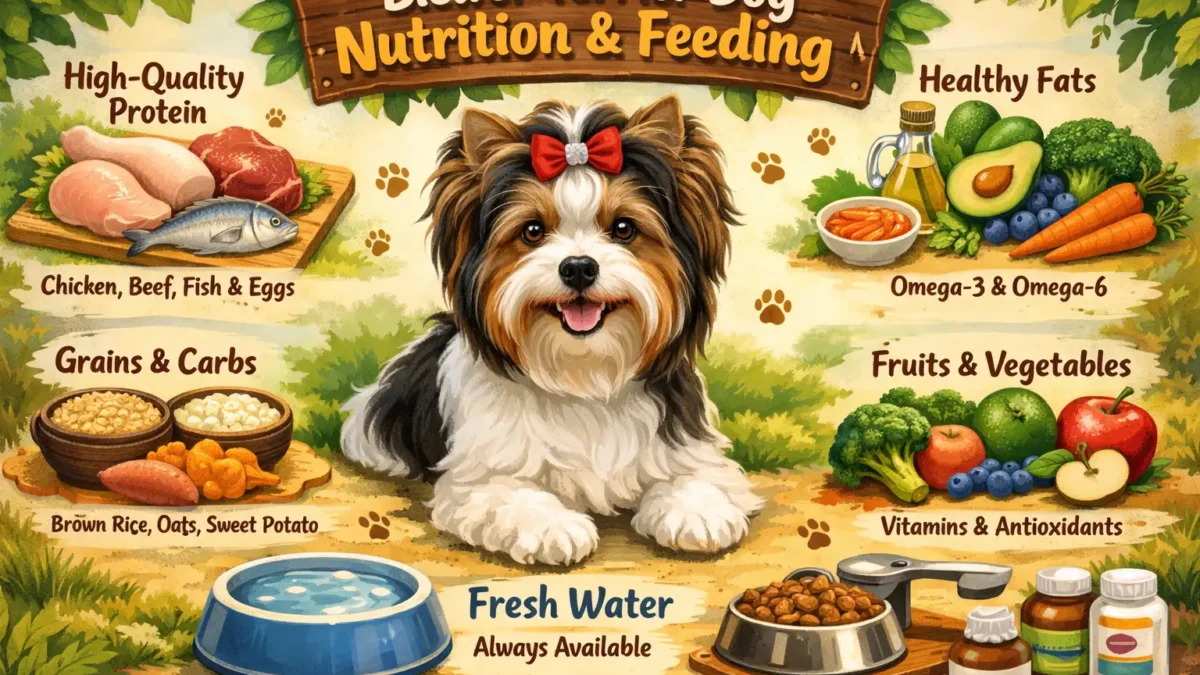
Biewer Terrier Nutrition & Feeding Guide: What to Feed and How Much
Biewer Terriers may be small, but their nutrition needs are very specific. As a toy breed with a fast metabolism, fine bone structure, and often a sensitive digestive system, what you feed them has a direct impact on their health, comfort, and lifespan.
This guide is designed to help you understand what a healthy, balanced diet looks like for a Biewer Terrier, so you can make confident feeding choices whether you’re raising a puppy, caring for an adult, or supporting a senior dog.
Good nutrition for a Biewer Terrier supports:
- Steady energy without hyperactivity or crashes
- Healthy digestion and firm, regular stools
- A strong immune system
- Proper weight and muscle tone
- Skin health and a soft, glossy coat
Because Biewer Terriers are small, even minor feeding mistakes can have big effects. Overfeeding by a few extra treats a day can quickly lead to weight gain. Poor-quality food can show up as loose stool, itchy skin, dull coat, or picky eating habits.
A balanced Biewer Terrier diet is not about trends or fancy labels. It is about:
- High-quality, digestible protein
- The right amount of healthy fats for energy and coat care
- Controlled portions that match body size and activity level
- Essential vitamins and minerals that meet established nutritional standards
Many owners assume that “small dog” means “simple feeding,” but the opposite is true. Small breeds like the Biewer Terrier need carefully measured portions and nutrient-dense food, not table scraps or guesswork.
Best Food for Biewer Terriers: Ingredients, Nutrients, and Food Types
Choosing the best food for a Biewer Terrier can feel confusing. Bags and cans often use big words, but what really matters is what nutrients your dog gets and how easy the food is to digest.
Because Biewer Terriers are small dogs, they need food that is nutrient-dense, easy to chew, and gentle on the stomach.
Key nutrients Biewer Terriers need
A healthy Biewer Terrier diet should focus on the basics below. These nutrients help keep their energy steady, coat shiny, and digestion healthy.
Ideal Nutrient Ranges for Biewer Terriers
| Nutrient | Recommended Range | Why It Matters |
|---|---|---|
| Protein | 22–30% (dry matter) | Supports muscles, energy, and growth |
| Fat | 12–20% | Helps with energy and coat health |
| Fiber | 3–6% | Supports digestion and stool quality |
| Moisture | Higher is better | Helps hydration, especially for small dogs |
Low-quality food often has too little protein or uses hard-to-digest fillers. This can lead to loose stool, low energy, or picky eating.
Understanding dog food ingredients
When reading a dog food label:
- Look for real animal protein (like chicken, turkey, fish) listed first
- Avoid foods with many unnamed meat by-products
- Make sure the food says it is complete and balanced based on AAFCO standards
Small-breed formulas are usually better because:
- Kibble size is easier to chew
- Calories are more concentrated
- Nutrients are adjusted for fast metabolisms
Comparing different types of dog food
Not all food types work the same for every Biewer Terrier. The table below shows the main options.
Dog Food Types Comparison for Biewer Terriers
| Food Type | Pros | Cons | Best For |
|---|---|---|---|
| Kibble | Easy to store, affordable, balanced | Low moisture | Most adult Biewer Terriers |
| Fresh / Gently Cooked | High moisture, very tasty | Higher cost | Picky eaters, seniors |
| Canned / Wet Food | Soft texture, good hydration | Can cause weight gain | Small dogs with dental issues |
| Freeze-Dried | Nutrient-dense, long shelf life | Needs rehydration | Travel or mixed feeding |
| Raw Diet | Natural ingredients | Safety and balance risks | Only with vet guidance |
Grain-free food is not always better. Many Biewer Terriers do fine with grains like rice or oats unless they have a proven allergy.
The goal is not the “perfect” food, but the right food your dog digests well and stays healthy on.
How Much to Feed a Biewer Terrier and How Often
One of the most common questions owners ask is, “How much should my Biewer Terrier eat?”
Because this breed is very small, portion size matters a lot. Even a little extra food each day can lead to weight gain.
The goal is to feed enough for energy and health, but not so much that your dog becomes overweight.
Daily food amount for Biewer Terriers
Biewer Terriers need fewer calories than larger dogs, but they still need high-quality food. The amount depends on body weight and activity level.
Daily Feeding Amount by Weight and Activity
| Dog Weight | Daily Calories (Approx.) | Daily Food Amount* | Notes |
|---|---|---|---|
| 4 lb (1.8 kg) | 180–220 kcal | ½–¾ cup | Lower end for calm dogs |
| 6 lb (2.7 kg) | 240–300 kcal | ¾–1 cup | Most adult Biewers |
| 8 lb (3.6 kg) | 300–360 kcal | 1–1¼ cups | Active dogs need more |
*Food amounts depend on calorie density of the food. Always check the label.
If your dog is gaining weight, reduce portions slowly. If your dog seems thin or low on energy, increase food a little and monitor body condition.
How often to feed a Biewer Terrier
Small dogs do better with smaller meals spread out during the day. This helps keep blood sugar steady and prevents hunger-related behavior.
Feeding Frequency by Age
| Life Stage | Meals Per Day | Why It Matters |
|---|---|---|
| Puppy (under 6 months) | 3–4 meals | Supports growth and energy |
| Adult | 2 meals | Helps maintain healthy weight |
| Senior | 2–3 small meals | Easier on digestion |
Preventing overfeeding in toy breeds
Many Biewer Terriers gain weight because:
- Treats are not counted as calories
- Portions are guessed instead of measured
- Food is left out all day
Use a measuring cup and watch your dog’s shape. You should be able to feel the ribs with light pressure and see a slight waist from above.
After spaying or neutering, your Biewer Terrier may need 10–20% fewer calories, since metabolism often slows down.
Feeding Biewer Terriers at Different Life Stages and Special Needs
A Biewer Terrier’s diet should change as they grow and age. Puppies, adults, and seniors all need different amounts of food and nutrients. Some dogs also need special diets because of weight issues, picky eating, or sensitive stomachs.
Feeding by life stage
The table below gives a simple overview of how feeding needs change over time.
Feeding Biewer Terriers by Life Stage
| Life Stage | Food Focus | Key Nutrition Needs | Common Mistakes |
|---|---|---|---|
| Puppy | Growth and development | Higher protein and fat | Overfeeding treats |
| Adult | Maintenance and energy | Balanced calories | Guessing portion size |
| Senior | Easy digestion | Moderate protein, joint support | Feeding like a young dog |
Puppies need more calories for growth, but too much food can cause fast weight gain.
Adults should stay lean with steady energy.
Seniors often need fewer calories and food that is easier to digest.
Common feeding problems and how to fix them
Many Biewer Terrier owners face similar feeding issues. The table below shows what usually causes them and what to do.
Common Feeding Problems and Diet Adjustments
| Problem | Likely Cause | What to Do | When to See a Vet |
|---|---|---|---|
| Picky eating | Too many treats | Stick to set meal times | If skipping meals |
| Loose stool | Food change too fast | Slow transition | If lasts over 3 days |
| Weight gain | Extra snacks | Reduce portions | If weight keeps rising |
| Low appetite | Stress or illness | Keep meals calm | If appetite drops suddenly |
Switching food safely
When changing your Biewer Terrier’s food:
- Mix new food with old food over 7–10 days
- Start with small amounts of the new food
- Watch stool, energy, and appetite
Fast food changes often cause loose stool or stomach upset, especially in small dogs.
Treats, Human Foods, Common Mistakes, and When to See a Vet
Treats and snacks are a big part of daily life with a Biewer Terrier, but they can also cause problems if used the wrong way. Because this breed is very small, even a few extra bites can add up fast.
Treat guidelines for Biewer Terriers
Treats should make up no more than 10% of daily calories. Most treats should be small, soft, and easy to chew.
Good treat choices include:
- Small training treats
- Freeze-dried meat pieces
- Tiny bits of cooked lean meat
Avoid giving treats all day long or using table scraps as rewards.
Safe and unsafe human foods
Some human foods are safe for Biewer Terriers in small amounts, while others are dangerous. The table below helps you see the difference clearly.
Safe vs Unsafe Human Foods for Biewer Terriers
| Safe in Small Amounts | Unsafe or Toxic Foods | Notes |
|---|---|---|
| Cooked chicken (plain) | Chocolate | Even small amounts are dangerous |
| Plain rice | Grapes and raisins | Can cause kidney failure |
| Cooked carrots | Onions and garlic | Harm red blood cells |
| Apple slices (no seeds) | Xylitol (sweetener) | Extremely toxic |
| Plain pumpkin | Alcohol | Never safe for dogs |
Always introduce new foods slowly and stop if you notice vomiting, diarrhea, or itching.
Hydration needs
Fresh, clean water should be available at all times. Small dogs can get dehydrated quickly, especially if they eat dry kibble only. Wet or fresh food can help increase water intake.
Common feeding mistakes owners make
Many feeding problems come from habits, not bad intentions.
Common mistakes include:
- Free-feeding all day
- Giving too many treats
- Feeding table scraps
- Not measuring portions
- Ignoring slow weight gain
These habits often lead to obesity, picky eating, or digestive issues.
When to see a veterinarian
You should talk to a vet or veterinary nutritionist if:
- Your Biewer Terrier stops eating for more than a day
- Weight changes quickly without a clear reason
- Stool stays loose for several days
- Skin itching or ear problems keep coming back
- You plan to feed a homemade or raw diet
A professional can help rule out health problems and adjust the diet safely.
For trusted guidance on what makes a dog food truly “complete and balanced,” check the official AAFCO pet food guidelines, which explain how nutritional standards are set for dog diets and what to look for on food labels: https://www.aafco.org/consumers/understanding-pet-food/selecting-the-right-pet-food/