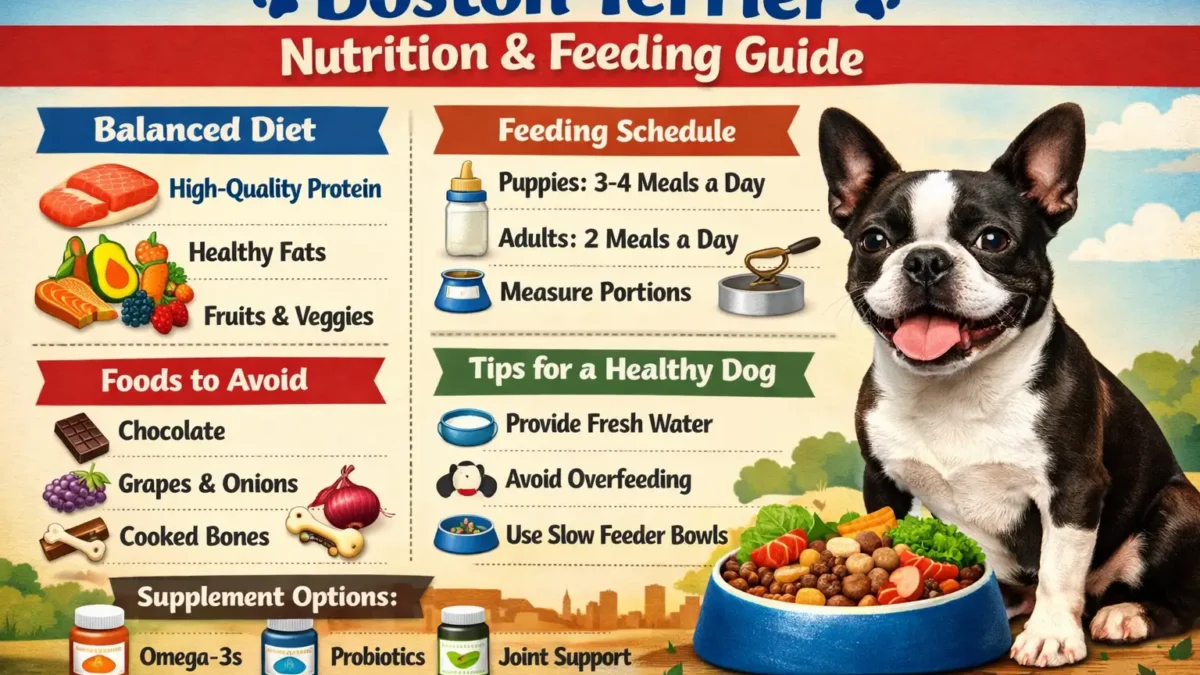
Boston Terrier Nutrition & Feeding Guide
Boston Terrier Nutrition
This guide is designed to help you feed your Boston Terrier with confidence, whether you’re raising a puppy, maintaining an adult, or supporting a senior dog. You’ll learn how to choose appropriate foods, determine realistic portion sizes, and avoid common feeding mistakes that often lead to weight gain, digestive upset, or long-term health issues in this breed.
Rather than promoting trends or brand hype, the focus is on practical, science-aligned nutrition principles that work in everyday life. The goal is to help you build a feeding routine that fits your dog’s age, activity level, and health needs—without unnecessary complexity.
How nutrition affects Boston Terrier health, energy, and lifespan
Boston Terriers have unique traits that make proper nutrition especially important. As a small, muscular, brachycephalic breed, they are prone to specific challenges that are directly influenced by diet.
Weight management is one of the biggest concerns. Even small amounts of overfeeding can quickly lead to excess body fat, which places extra strain on joints, worsens breathing efficiency, and reduces overall stamina. Many Boston Terriers are highly food-motivated, making portion control more important than owners often realize.
Digestive sensitivity is another common issue. Gas, loose stools, and food intolerance are frequently linked to ingredient quality, abrupt food changes, or inappropriate fat levels. Nutrition that supports gut health can dramatically improve comfort and stool consistency.
Because of their flat facial structure, Boston Terriers may also eat quickly or gulp food, increasing the risk of choking or vomiting. Diet texture, feeding schedule, and bowl setup all play a role in safe feeding.
When nutrition is done right, Boston Terriers tend to show clear benefits: steadier energy levels, healthier skin and coat, better digestion, easier weight control, and improved quality of life well into their senior years. The sections that follow break down exactly how to achieve that—step by step, and in a way that works for real owners, not just on paper.
Core Principles of Boston Terrier Nutrition
Understanding basic nutritional needs of Boston Terriers
Boston Terriers are small dogs, but they have strong muscles and steady energy needs. They are not toy dogs, and they are not high-energy working dogs either. This means they need balanced meals—not too heavy and not too light.
Most Boston Terriers do best on food made for small to medium breeds, with controlled calories and easy-to-digest ingredients. Because they can gain weight fast, food quality and portion size matter more than feeding “extra” food.
The goal is simple:
give your dog enough fuel to stay active and healthy without causing weight gain or stomach problems.
Macronutrients Boston Terriers need (protein, fat, carbs)
Macronutrients are the main parts of food that give energy and build the body.
Recommended macronutrient ranges for Boston Terriers
| Nutrient | Good Range | Why it matters |
|---|---|---|
| Protein | 22–28% | Keeps muscles strong and supports daily energy |
| Fat | 10–15% | Provides energy without pushing weight gain |
| Carbohydrates | Moderate | Helps digestion and stool quality |
Protein should come from real meat sources like chicken, turkey, fish, or lamb.
Fat should be controlled, because too much can cause weight gain and loose stools.
Carbs are not bad for dogs, but they should come from gentle sources like rice, oats, or sweet potato.
Micronutrients, supplements, and breed considerations
Micronutrients are vitamins and minerals. Most complete and balanced dog foods already contain enough of these.
Common supplements – needed vs usually unnecessary
| Supplement | Needed? | Simple explanation |
|---|---|---|
| Omega-3 oils | Sometimes | Helps skin, coat, and mild inflammation |
| Probiotics | Situational | Can help dogs with sensitive stomachs |
| Calcium | Rarely | Too much can cause health problems |
| Multivitamins | Usually no | Good food already covers this |
Never add supplements unless there is a clear reason. Too many vitamins can be harmful, especially for small breeds like Boston Terriers.
How to read dog food labels for Boston Terriers
Dog food labels can be confusing, but you only need to understand a few key things.
Dog food label cheat sheet (Boston Terrier focus)
| Label term | What it really means |
|---|---|
| Complete & balanced | Meets nutrition standards for dogs |
| Crude protein | Minimum protein in the food |
| Crude fat | Minimum fat level |
| Grain-free | Not always better or safer |
| Meat by-product | Can be okay, depends on quality |
Ignore fancy words like “premium” or “holistic.”
Focus on:
- clear protein sources
- reasonable fat levels
- food approved for your dog’s life stage
How Much to Feed a Boston Terrier and How Often
Calorie needs by weight and activity level
Boston Terriers do not need a lot of calories, but they do need the right amount. Feeding too much is one of the most common reasons this breed becomes overweight.
How many calories your dog needs depends on:
- body weight
- age
- daily activity (very active vs mostly indoor)
- whether your dog is spayed or neutered
Daily calorie needs for Boston Terriers
| Weight | Low activity (indoor, calm) | Moderate activity (daily walks, play) |
|---|---|---|
| 10 lbs | 220–260 calories | 260–300 calories |
| 15 lbs | 300–340 calories | 340–390 calories |
| 20 lbs | 380–420 calories | 420–480 calories |
| 25 lbs | 450–500 calories | 500–560 calories |
These are daily totals, including treats. If your dog gains weight, reduce food slightly. If your dog loses weight or seems low on energy, increase slowly.
Using body condition score in daily life
The scale does not tell the full story. Body shape matters more than weight alone.
Boston Terrier body condition quick check
| Body area | Healthy sign | Overweight sign |
|---|---|---|
| Ribs | Easy to feel with light touch | Hard to feel |
| Waist | Visible tuck behind ribs | Straight or rounded |
| Belly | Slight upward curve | Hanging or flat |
You should be able to feel ribs without pressing hard. If you cannot, portions are likely too big.
Feeding frequency by life stage
Boston Terriers do best with set meal times instead of free feeding.
Feeding schedule by age
| Life stage | Meals per day | Notes |
|---|---|---|
| Puppy (up to 6 months) | 3–4 meals | Supports steady growth |
| Adult | 2 meals | Helps weight control |
| Senior | 2 smaller meals | Easier digestion |
Regular meal times help prevent begging, stomach upset, and weight gain.
Feeding by size and body type within the breed
Not all Boston Terriers are built the same. Some are lean and athletic. Others are short and stocky.
Lean Boston Terriers may need:
- slightly more food
- higher protein
- close weight tracking
Stocky Boston Terriers may need:
- smaller portions
- fewer treats
- lower fat foods
Always adjust portions slowly and watch body shape, not just the bowl size.
Types of Dog Food and What to Put in the Bowl
Overview of food types for Boston Terriers
There are many dog food types on the market. Each one has good points and limits. What matters most is choosing food that fits your Boston Terrier’s size, digestion, and daily routine.
Dog food types at a glance
| Food type | Good for | Things to watch |
|---|---|---|
| Dry food (kibble) | Easy feeding, dental support | Easy to overfeed |
| Wet food (canned) | Picky eaters, hydration | Higher calories |
| Fresh food | Taste and digestion | Higher cost |
| Freeze-dried | Travel and mixing | Needs water added |
| Raw diet | Experienced owners only | Safety and balance risks |
| Homemade | Full control | Needs expert planning |
Most Boston Terriers do well on high-quality dry food, sometimes mixed with a small amount of wet or fresh food for taste.
Pros and cons of each food type
Dry food is the most common choice. It is easy to measure and store. It also helps slow down eating when paired with a slow-feeder bowl.
Wet food smells stronger and is easier to chew. This can help picky eaters but can lead to weight gain if portions are not controlled.
Fresh and gently cooked foods can be easier on the stomach. These diets work best when they are made by trusted brands that meet dog nutrition standards.
Raw and homemade diets need extra care. Without proper balance, they can cause vitamin or mineral problems, especially in small breeds like Boston Terriers.
Foods Boston Terriers can eat vs foods to avoid
Some human foods are safe for dogs, but many are dangerous.
Safe vs unsafe foods for Boston Terriers
| Safe in small amounts | Never feed |
|---|---|
| Plain chicken | Chocolate |
| Cooked rice | Grapes or raisins |
| Carrots | Onions |
| Apples (no seeds) | Xylitol (found in gum) |
| Plain yogurt | Alcohol |
Always keep human food as a small part of the diet. Dog food should stay the main meal.
Treat and snack guidelines
Treats should support training, not replace meals.
Treat rules for Boston Terrier
| Rule | Why it matters |
|---|---|
| Treats under 10% of daily calories | Prevents weight gain |
| Soft treats | Safer for flat faces |
| Small sizes | Easier digestion |
| Count treats as food | Avoids overfeeding |
Many Boston Terriers act hungry all the time. This does not always mean they need more food. Often, they are just very good at asking.
Special Diets, Common Problems, and Real-Life Boston Terrier Scenarios
Special diets for Boston Terriers
Some Boston Terriers need special diets because of health or lifestyle needs.
Dogs with food allergies or sensitivities may do better on limited-ingredient foods. These use fewer ingredients, which makes it easier to spot what causes itching or stomach trouble.
Boston Terriers with sensitive stomachs or gas often need:
- easy-to-digest proteins
- moderate fat levels
- slow food changes
For overweight Boston Terriers, weight-loss diets focus on:
- lower calories
- higher fiber
- strict portion control
Low-activity dogs usually need fewer calories, while very playful or active dogs may need a little more food each day.
Common feeding mistakes Boston Terrier owners make
Many feeding problems happen even when owners mean well.
Common Boston Terrier feeding mistakes and fixes
| Mistake | Better choice |
|---|---|
| Free feeding all day | Measured meals |
| Too many treats | Count treats as food |
| Feeding table scraps | Stick to dog-safe foods |
| Guessing portions | Use a measuring cup |
Small changes can make a big difference in weight and digestion.
Switching foods safely and fixing problems
Changing food too fast is a common cause of diarrhea and vomiting.
Safe food transition timeline
| Day | Old food | New food |
|---|---|---|
| 1–2 | 75% | 25% |
| 3–4 | 50% | 50% |
| 5–6 | 25% | 75% |
| 7 | 0% | 100% |
If your dog has loose stool, slow the change and give the stomach more time to adjust.
Real owner situations and how to handle them
Some Boston Terriers are picky eaters. Avoid adding new toppings every day. This can train the dog to wait for better food.
Fast eaters may gulp food. Slow-feeder bowls or smaller meals can help prevent choking or vomiting.
If you have more than one dog, feed them separately. This prevents food stealing and stress.
During travel or routine changes, keep food the same. New places already cause stress, and food changes can upset digestion.
Practical Tools, FAQs, and When to See a Professional
Feeding charts, checklists, and simple meal planning
Keeping feeding simple and steady helps Boston Terriers stay healthy.
Sample daily feeding plan for an adult Boston Terrier
| Time | What to feed |
|---|---|
| Morning | Measured breakfast |
| Evening | Measured dinner |
| Treats | Small amounts during training |
Helpful habits:
- use a measuring cup every time
- weigh your dog once a month
- watch body shape, not just appetite
Small dogs change weight fast, so regular checks matter.
Frequently asked Boston Terrier feeding questions
Why is my Boston Terrier always hungry
Boston Terriers love food and beg very well. Hunger signs do not always mean they need more calories. Check body shape before increasing food.
Is grain-free food better for Boston Terriers
Not always. Many dogs do well with grains. Grain-free should only be used if there is a clear reason, like an allergy.
Why does my Boston Terrier have gas
Gas is often linked to food changes, high fat foods, or eating too fast. Slower feeding and simpler ingredients usually help.
Can Boston Terriers eat human food
Some human foods are safe in small amounts, but dog food should always be the main diet.
When to see a vet or dog nutrition expert
You should talk to a vet if:
- your dog keeps losing or gaining weight
- vomiting or diarrhea lasts more than a few days
- skin itching or ear problems keep coming back
- your dog stops eating suddenly
A vet or nutrition expert can help adjust the diet safely.
Final summary and next steps
Good nutrition helps Boston Terriers stay active, comfortable, and happy. Focus on:
- balanced food
- proper portions
- steady feeding routines
Small changes done the right way make a big difference over time.
For more information on how dog foods are tested and labeled to ensure they provide complete and balanced nutrition for dogs, visit the AAFCO consumer guide on selecting the right pet food at https://www.aafco.org/consumers/understanding-pet-food/selecting-the-right-pet-food/aafco.org