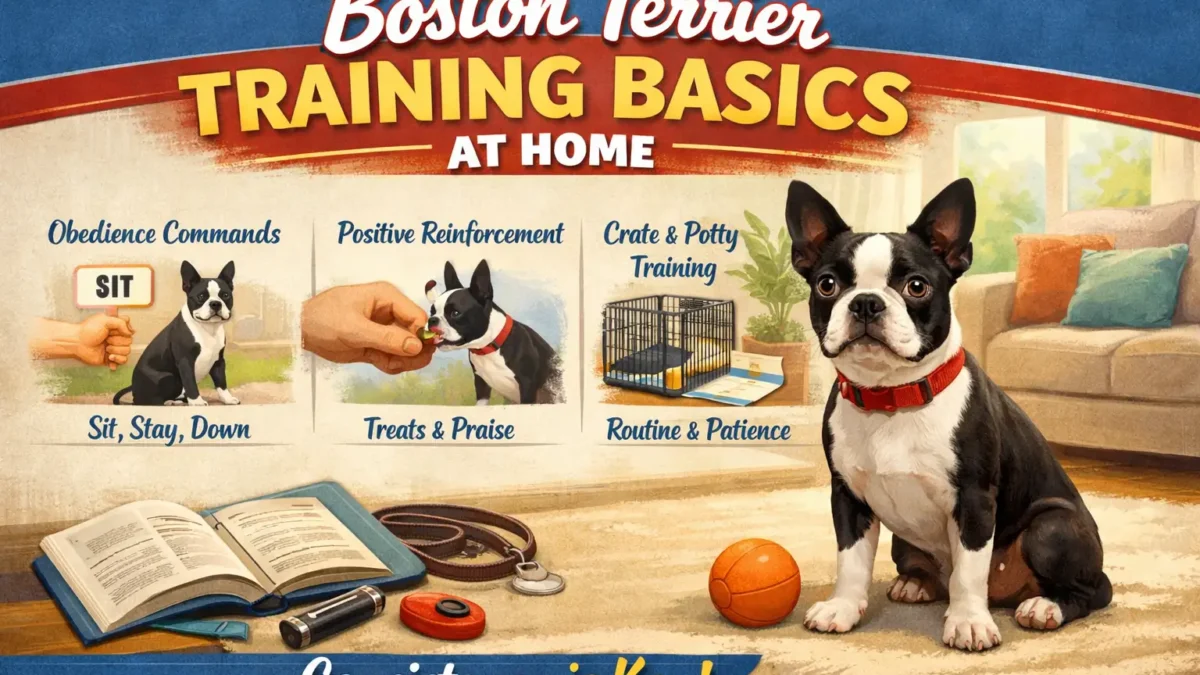
Boston Terrier Training: A Complete Guide for Well-Behaved Dogs
Boston Terrier training is about more than teaching a dog to sit or stay. It’s about helping a smart, people-loving, sometimes stubborn breed learn how to live calmly and confidently in a human world. Whether you’re raising a Boston Terrier puppy or working with an adult dog, good training builds clear communication, prevents behavior problems, and makes daily life easier for both you and your dog.
This guide focuses on general Boston Terrier training, which includes basic obedience, house manners, focus, and everyday behavior at home and on walks. It’s designed for first-time owners who want clear direction, as well as experienced dog owners who want a structured, breed-aware approach that actually works in real homes.
Boston Terriers are known for their intelligence, sensitivity, and strong attachment to their people. These traits make them highly trainable—but only when training is done the right way. Harsh methods, long sessions, or inconsistent rules often lead to frustration, stubborn behavior, or shutdown. In contrast, short, reward-based sessions and clear routines help Boston Terriers learn quickly and stay motivated.
By the end of this guide, you’ll understand how Boston Terriers learn, how to structure training into your daily routine, and how to handle common challenges like distraction, overexcitement, or slow progress. The goal isn’t perfection—it’s a well-behaved, confident Boston Terrier that fits smoothly into your lifestyle.
Why Boston Terrier Training Is Important
Training is important for every dog, but it matters even more for a Boston Terrier. This breed is smart, energetic, and very people-focused. Without clear training, that energy and intelligence can turn into problem behaviors at home.
Good training helps your Boston Terrier understand what is expected. It creates clear rules and routines, which makes dogs feel safe and calm. A trained Boston Terrier is easier to live with, safer in public, and more relaxed around people and other pets.
Training is also important for safety. Simple skills like coming when called, walking politely on a leash, or staying calm around visitors can prevent accidents and injuries. This is especially important because Boston Terriers often live in apartments, busy neighborhoods, or family homes.
Another key reason for training is mental stimulation. Boston Terriers get bored easily. When they are bored, they may bark too much, jump on people, or ignore commands. Training keeps their mind busy and helps release extra energy in a healthy way.
Here is a simple comparison to show why training matters:
| With Proper Training | Without Training |
|---|---|
| Calm behavior indoors | Excessive barking |
| Polite greetings | Jumping on people |
| Better focus | Easily distracted |
| Safer walks | Pulling on the leash |
Training also strengthens the bond between you and your dog. When your Boston Terrier understands you and trusts you, daily life becomes smoother and more enjoyable for both of you.
Understanding Boston Terrier Behavior and Learning Style
Boston Terriers are friendly, smart, and very people-oriented dogs. They love being close to their owners and often want attention. This makes them eager to learn, but it also means they can get distracted easily.
Most Boston Terriers learn best with praise, treats, and play. They do not respond well to yelling or harsh corrections. If training feels stressful, they may shut down, ignore commands, or act stubborn. Calm and positive training helps them stay confident and focused.
Boston Terriers also have a short attention span. Long training sessions can make them bored or restless. Short sessions, done more often, work much better. Many owners see better results with 5 to 10 minutes of training at a time.
Puppies and adult Boston Terriers learn in different ways. Puppies are curious and full of energy, but they get tired quickly. Adult dogs may learn slower at first, but they often have better focus once they understand the routine.
Here is a simple table to explain common Boston Terrier traits and how they affect training:
| Boston Terrier Trait | What It Means for Training |
|---|---|
| Intelligent | Learns fast with clear rules |
| Sensitive | Needs gentle, positive training |
| Stubborn at times | Needs strong motivation |
| Loves people | Responds well to praise |
| Short attention span | Needs short training sessions |
Understanding how your Boston Terrier thinks helps you train with patience instead of frustration. When training matches the dog’s natural learning style, progress becomes faster and more enjoyable.
Step-by-Step Boston Terrier Training Guide
Training a Boston Terrier works best when it is simple, clear, and done every day. You do not need long sessions or special tools. What matters most is being consistent and patient.
Start training in a quiet place with few distractions. Use small treats, praise, or a favorite toy as a reward. Always reward your dog right after they do the correct behavior. This helps your Boston Terrier understand what they did right.
Keep training sessions short. Most Boston Terriers do best with 5 to 10 minutes at a time. You can train several times a day instead of doing one long session.
Basic skills to start with include:
- Sit
- Stay
- Come when called
- Walking calmly on a leash
- Waiting politely instead of jumping
Training should also be part of daily life, not just practice time. Ask your dog to sit before meals, wait at doors, or walk nicely during short walks.
Here is an example of a simple daily training routine:
| Training Activity | Time Needed | How Often |
|---|---|---|
| Obedience practice | 5–10 minutes | 2–3 times a day |
| House manners | Short moments | All day |
| Mental games | 10–15 minutes | Once daily |
| Social exposure | Short sessions | Few times a week |
Progress takes time, and that is normal. Every dog learns at a different speed. This timeline shows what most owners can expect:
| Time Period | What You May See |
|---|---|
| Week 1–2 | Learning basic commands |
| Week 3–4 | Better focus at home |
| Month 2 | More reliable responses |
| Month 3+ | Better behavior in public |
If your Boston Terrier seems stuck, do not rush. Slow progress is better than confusion. Stay calm, keep sessions fun, and celebrate small wins.
Common Boston Terrier Training Problems and Solutions
Even with good training, Boston Terrier owners often face a few common problems. These issues are normal and can usually be fixed with patience and small changes.
One common problem is excessive barking. Boston Terriers may bark when they are bored, excited, or seeking attention. Adding daily mental games and ignoring attention-seeking barking can help reduce this behavior.
Another issue is jumping on people. This often happens because the dog is excited or wants attention. Teaching your Boston Terrier to sit before greetings helps replace jumping with a calm behavior.
Leash pulling is also common, especially in young dogs. This usually means the dog has not learned how to walk calmly. Rewarding your dog for walking beside you instead of pulling makes walks more enjoyable.
Some Boston Terriers appear stubborn during training. In most cases, this means the reward is not motivating enough or the training session is too long. Using better treats and shorter sessions often fixes this problem.
Here is a simple table to match problems with causes and solutions:
| Training Problem | Common Cause | Simple Fix |
|---|---|---|
| Too much barking | Boredom or attention-seeking | More mental activity |
| Jumping on people | Overexcitement | Ask for sit before greeting |
| Leash pulling | No clear walking rules | Reward calm walking |
| Ignoring commands | Low motivation | Use better rewards |
Most training problems improve with time and consistency. If your dog shows fear, stress, or aggression, extra help may be needed.
For more breed-specific background and general care information, you can also visit the American Kennel Club Boston Terrier breed page, which offers helpful insights on temperament, care, and responsible ownership to support your training efforts.
Boston Terrier Dog Full Guide: Temperament, Care, Health & Costs 2026
[…] Boston Terrier Training: A Complete Guide for Well-Behaved Dogs Boston Terrier Age Calculator to Human Years (Age Chart) Boston Terrier Grooming Basics: Complete Care Guide for Owners Boston Terrier Nutrition & Feeding Guide Boston Terrier Cost of Ownership: Complete Expense Guide for Owners […]