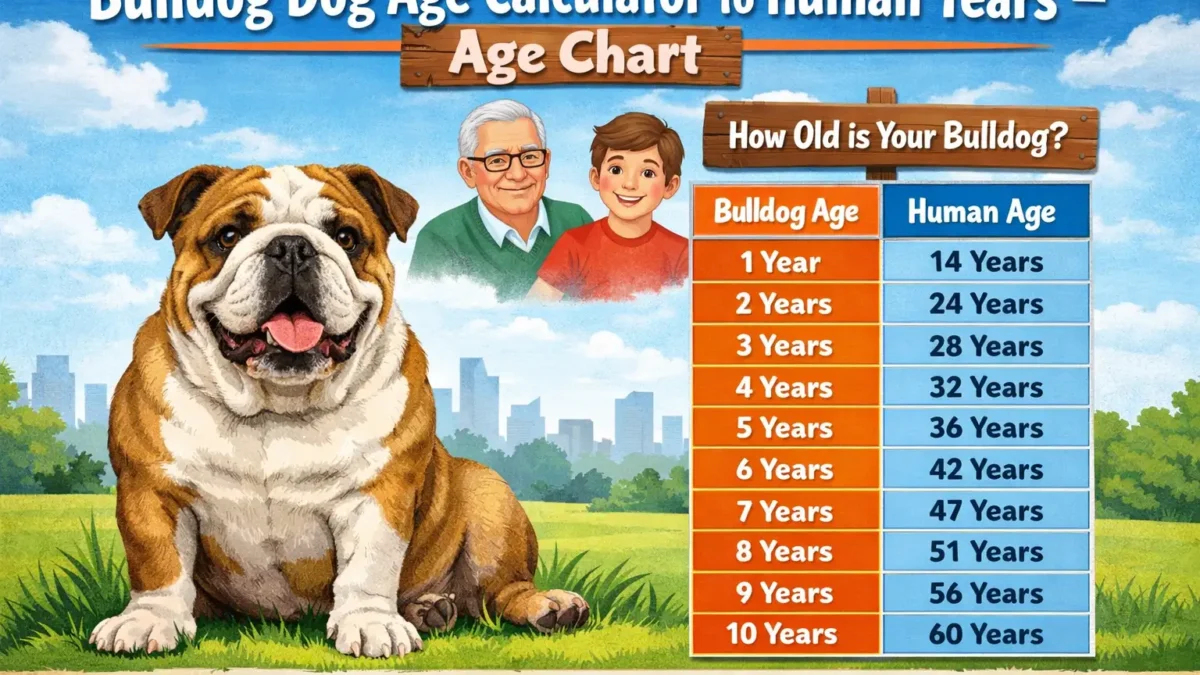
Bulldog Age Calculator to Human Years – Age Chart
Many people still believe that 1 dog year equals 7 human years, but this rule is inaccurate—especially for Bulldogs. Bulldogs age much faster in their early years and experience age-related changes sooner than many other breeds. This is why a Bulldog-specific age calculator is far more reliable than a generic dog age formula.
Here’s what makes Bulldog aging different:
- Fast early development: Bulldogs mature quickly in their first 1–2 years, reaching adult biological stages much sooner than humans.
- Breed-specific health factors: Bulldogs are a brachycephalic (short-nosed) breed, which affects breathing, stamina, and long-term health as they age.
- Shorter average lifespan: Compared to many medium-sized dogs, Bulldogs often enter senior years earlier, making age conversion more complex.
- Non-linear aging: Bulldogs don’t age at a steady pace—early years equal many human years, while later years slow down in comparison.
Because of these factors, converting Bulldog age to human years requires a non-linear, breed-aware approach. This guide uses modern veterinary understanding and aging research to help you estimate your Bulldog’s true age more accurately—whether you’re raising a puppy or caring for a senior dog.
Bulldog Age Calculator: Convert Bulldog Years to Human Years
This helps you quickly find out how old your Bulldog is in human years. You don’t need to do any math or understand complex formulas. Just match your Bulldog’s age and read the result.
A Bulldog age calculator works by:
- Looking at Bulldog growth speed
- Adjusting for shorter Bulldog lifespan
- Converting fast puppy aging and slower adult aging correctly
To give you a quick idea before the full chart, here are real examples most owners look for.
Example Bulldog Age Conversion
| Bulldog Age | Human Age (Approx.) |
|---|---|
| 1 year | about 30 years |
| 3 years | about 40 years |
| 5 years | about 50 years |
| 7 years | about 58 years |
| 10 years | about 65+ years |
These numbers are estimates, not exact science. Every Bulldog ages a little differently based on health, weight, activity level, and care.
Still, this method is far more accurate than the old “7 dog years = 1 human year” rule.
Bulldog Age Chart (Bulldog Years to Human Years)
This Bulldog age chart lets you check your dog’s age in human years at a glance. Many owners prefer a chart because it is fast, clear, and easy to understand.
Use the table below by finding your Bulldog’s age in years. Then look across to see the human age equivalent and the life stage.
Bulldog Age to Human Years Chart
| Bulldog Age | Human Age (Approx.) | Life Stage |
|---|---|---|
| 1 year | 30 years | Puppy |
| 2 years | 36 years | Young Adult |
| 3 years | 42 years | Adult |
| 4 years | 47 years | Adult |
| 5 years | 50 years | Adult |
| 6 years | 54 years | Mature Adult |
| 7 years | 58 years | Senior |
| 8 years | 61 years | Senior |
| 9 years | 64 years | Senior |
| 10 years | 66 years | Senior |
| 11 years | 69 years | Geriatric |
| 12+ years | 71+ years | Geriatric |
Important things to remember:
- Bulldogs age faster early in life than humans.
- Most Bulldogs are considered senior around 7 years old.
- Health, weight, and lifestyle can make a Bulldog age faster or slower than this chart.
This chart gives a helpful estimate, not an exact number. Your Bulldog’s real age may feel younger or older depending on their health and care.
Bulldog Aging Stages: Puppy, Adult, and Senior Years Explained
Understanding your Bulldog’s age is easier when you know what life stage they are in. This helps you provide the right care, notice health changes, and enjoy each stage fully.
Bulldog Life Stages Table
| Life Stage | Bulldog Age Range | What Owners Usually See |
|---|---|---|
| Puppy | 0–1 year | Fast growth, playful, developing joints and muscles, learning social skills |
| Young Adult | 2–3 years | High energy, fully grown, establishing routine, strong personality |
| Adult | 4–6 years | Steady energy, weight gain risk, beginning of early aging signs |
| Senior | 7–10 years | Slower movement, lower stamina, joint stiffness, possible breathing changes |
| Geriatric | 11+ years | Very slow, more sleep, health issues may appear, extra care needed |
Key points to remember:
- Bulldogs grow quickly as puppies but mature sooner than many other breeds.
- Adults need weight control and exercise to prevent health problems.
- Seniors show changes in mobility, energy, and sometimes cognition.
- Every Bulldog ages differently depending on health, lifestyle, and care.
How to Help Your Bulldog Age Healthier and Live Longer
Bulldogs can live a full, happy life if you give them the right care at every age. Focusing on nutrition, exercise, and regular vet checkups can make a big difference.
Bulldog Age-Based Care Checklist
| Bulldog Age | Key Care Focus |
|---|---|
| Puppy (0–1 year) | Monitor growth, support joints, teach safe play, watch breathing |
| Young Adult (2–3 years) | Maintain healthy weight, moderate exercise, socialization |
| Adult (4–6 years) | Watch for early joint or breathing issues, balanced diet |
| Senior (7–10 years) | Support mobility, regular vet visits, adjust exercise for stamina |
| Geriatric (11+ years) | Extra care for joints and breathing, frequent vet monitoring, comfort and rest |
Additional tips for a healthier Bulldog:
- Nutrition: Feed a balanced diet and control portion sizes to prevent obesity.
- Exercise: Moderate daily walks; avoid overheating, especially in hot weather.
- Vet care: Schedule regular checkups and preventive screenings, especially for heart, joints, and respiratory health.
- Lifestyle: Keep your Bulldog indoors in extreme weather and provide a safe, low-stress environment.
- Watch for signs of aging: Slow movement, shortness of breath, stiffness, or behavior changes mean your Bulldog may need extra care or a vet visit.
For more information on Bulldog health, lifespan, and breed-specific care, you can visit the American Kennel Club’s guide to Bulldogs here.