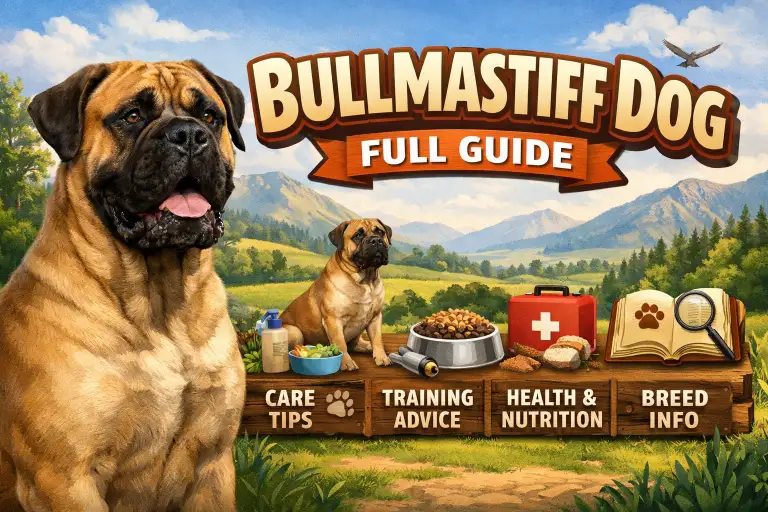
Bullmastiff Dog Breed: Complete Guide For Owner’s
The Bullmastiff was never meant to be flashy, fast, or endlessly energetic. This breed was engineered with a very specific job in mind: silent, controlled guardianship. Developed in 19th-century England, Bullmastiffs were bred to assist gamekeepers in protecting large estates from poachers. The goal wasn’t aggression or pursuit, but the ability to track, confront, and physically stop an intruder without excessive barking or lethal force.
To achieve this, breeders crossed large Mastiffs for size and power with Bulldogs for tenacity and courage. The result was a dog that could move quietly at night, respond decisively when needed, and remain calm and stable the rest of the time. This functional origin explains many modern Bullmastiff traits that surprise new owners: low barking, strong territorial awareness, and an instinct to place themselves between their family and anything unfamiliar.
In today’s homes, the Bullmastiff has transitioned from working estate guardian to family protector and companion, but the underlying mindset remains. This is not a breed that seeks constant attention or stimulation. Bullmastiffs are typically content being near their people, observing rather than reacting, and conserving energy until there’s a reason to act. Their loyalty is deep, their presence imposing, and their confidence quiet rather than showy.
Understanding this purpose-driven background is essential. Many behavioral “problems” attributed to Bullmastiffs—such as stubbornness, aloofness with strangers, or selective listening—are actually expressions of a dog bred to think independently and act only when necessary. Owners who respect this design tend to thrive with the breed; those expecting a universally friendly, eager-to-please dog often struggle.
Bullmastiff Size, Appearance, and Physical Characteristics
The Bullmastiff’s appearance leaves little doubt about its purpose. This is a powerfully built, large guardian breed designed to intimidate by presence alone. Adult males are notably heavier and broader than females, but both sexes share the same defining traits: dense muscle, a wide chest, and a compact frame that emphasizes strength over speed.
One of the most important things prospective owners underestimate is functional strength. Bullmastiffs are not tall and leggy like some working breeds, but their low center of gravity and muscle density make them extremely powerful, even at a relaxed pace. This has real implications for handling, training, and daily management.
Bullmastiff Size & Physical Stats
| Trait | Male | Female |
|---|---|---|
| Height | 25–27 inches | 24–26 inches |
| Weight | 110–130 lbs | 100–120 lbs |
| Build | Heavily muscled, broad | Muscular, slightly lighter |
| Coat type | Short, dense | Short, dense |
The coat is short and close-lying, offering minimal insulation but easy maintenance. Accepted colors typically include fawn, red, and brindle, often paired with a darker facial mask that enhances the breed’s serious expression. Shedding is moderate but consistent, and while grooming demands are low, the coat does little to protect against extreme heat or cold.
The head is one of the Bullmastiff’s most distinctive features: broad, square, and expressive. The muzzle is relatively short, placing the breed in the mild brachycephalic category. While not as extreme as some short-nosed breeds, this structure does contribute to heat sensitivity and exercise limitations, especially in warm or humid climates.
Overall, the Bullmastiff’s physical design prioritizes presence, power, and stability rather than endurance or agility. Owners should expect a dog that moves deliberately, occupies space confidently, and commands attention without needing to demand it.
Bullmastiff Temperament, Personality, and Real-Life Behavior
The Bullmastiff is calm, serious, and confident. This breed does not act wild or noisy. Most Bullmastiffs are quiet dogs that prefer to watch what is happening instead of reacting right away. This behavior often surprises people who expect a large guard dog to be loud or aggressive.
At home, Bullmastiffs are usually gentle and steady with their family. They form strong bonds and like staying close to their people, even if they are not demanding attention. Many owners describe them as “silent shadows” because they follow family members from room to room without getting in the way.
With strangers, Bullmastiffs are naturally reserved. They do not rush to greet new people and may stand still, watching carefully. This is normal and comes from their guarding background. A well-bred and well-socialized Bullmastiff should not be aggressive without reason, but they are always aware of their space and their family.
Bullmastiffs can do well with children, but supervision is important. This is not because the breed is mean, but because of its size and strength. Even gentle movement can knock over a small child by accident. Calm households where children understand how to behave around dogs are the best match.
With other dogs and pets, behavior depends a lot on early socialization. Some Bullmastiffs may be dominant with same-sex dogs, especially if introductions are rushed. Clear rules, calm leadership, and early exposure help prevent problems.
Many myths exist about this breed. Bullmastiffs are often called aggressive, stubborn, or dangerous. In reality, most behavior problems come from poor training, lack of boundaries, or owners who misunderstand the breed’s quiet nature. Bullmastiffs think before they act. They are not fast responders, but when they do respond, they are serious.
Bullmastiff Temperament Traits at a Glance
| Trait | What to Expect |
|---|---|
| Energy level | Low to moderate |
| Barking | Very low |
| Guarding instinct | Strong and natural |
| Stranger tolerance | Reserved, watchful |
| Family bonding | Very strong |
| Independence | Moderate to high |
| Aggression | Low when well-bred and trained |
This temperament makes the Bullmastiff best suited for owners who respect calm leadership and clear rules. People looking for a playful, always-happy dog may find the breed too serious, while those wanting a steady protector often find it ideal.
Bullmastiff Care, Training, Exercise, and Health Needs
Bullmastiffs are not hard dogs to care for, but they do have special needs because of their size and body type. They are calm dogs that enjoy a simple daily routine. Too much activity or rough exercise can actually cause problems, especially when they are young or very old.
Exercise needs are low to moderate. Most Bullmastiffs are happy with one or two calm walks each day and some light play at home. Long runs, jumping, or heavy exercise in hot weather can be dangerous. This breed gets tired faster than many people expect, and pushing them too hard can stress their joints and breathing.
Mental activity is just as important as physical movement. Bullmastiffs like having a purpose. Simple training, calm games, or watching over their home keeps them satisfied. When bored, they may become stubborn or ignore commands rather than act out.
Training a Bullmastiff requires patience and consistency. They are intelligent but independent thinkers. They do not respond well to yelling or harsh corrections. Calm rules, short training sessions, and clear leadership work best. Early training is very important because an untrained adult Bullmastiff can be difficult to control due to sheer strength.
Grooming is simple. The short coat only needs brushing once a week to remove loose hair. Bathing is needed only when dirty. Nails should be trimmed often because heavy dogs put more pressure on their feet. Ears and teeth should also be checked regularly.
Health care is a serious part of Bullmastiff ownership. Like many large breeds, they have a shorter lifespan and higher risk of certain health problems. Joint issues, heart disease, bloat, and some cancers are more common. Heat is also dangerous for this breed, and they should always have shade and water in warm weather.
Bullmastiff Care Requirements Overview
| Care Area | What It Means |
|---|---|
| Exercise | Short daily walks, no heavy running |
| Training | Calm, firm, and consistent |
| Grooming | Low maintenance |
| Heat tolerance | Poor |
| Health risk level | Moderate to high |
| Lifespan | Around 7–9 years |
Owners who plan ahead, choose responsible breeders, and provide regular vet care give their Bullmastiff the best chance at a healthy life.
Is the Bullmastiff Right for You? Cost, Suitability, Pros & Cons, and Alternatives
The Bullmastiff is not a breed for everyone. This dog is calm and loyal, but also very large, strong, and serious. Before choosing a Bullmastiff, it is important to understand how this breed fits into real life, not just how it looks.
Bullmastiffs do best with owners who are confident, calm, and consistent. They are not ideal for people who want an easy or playful dog. Because of their size and health needs, owning a Bullmastiff also means higher long-term costs.
Bullmastiff Suitability Snapshot
| Lifestyle | Is It a Good Fit? |
|---|---|
| Families with children | Yes, with supervision |
| First-time dog owners | Not recommended |
| Apartment living | Possible, if calm walks are given |
| Seniors | Usually not ideal |
| Active or athletic owners | Moderate fit |
| Multi-pet homes | Depends on early socialization |
Cost is another big factor. Bullmastiff puppies are usually expensive, especially from responsible breeders. Vet care can also cost more due to size, joint issues, and emergency risks like bloat. Many owners choose pet insurance because large medical bills are common with this breed.
Bullmastiff Pros & Cons
| Pros | Cons |
|---|---|
| Very loyal to family | Short lifespan |
| Calm and quiet indoors | High medical costs |
| Strong natural guardian | Heat sensitive |
| Low grooming needs | Very strong and heavy |
Some people consider similar breeds before making a final choice. Comparing breeds helps avoid regret later.
Bullmastiff vs Similar Breeds
| Breed | Energy Level | Guarding Instinct | Owner Experience Needed |
|---|---|---|---|
| Bullmastiff | Low to moderate | High | Experienced |
| English Mastiff | Low | Medium | Moderate |
| Cane Corso | High | Very high | Advanced |
| Boerboel | High | Very high | Advanced |
A Bullmastiff is best for people who want a calm protector, not a playful or sporty dog. They do well in quiet homes with clear rules and steady leadership. People who travel often, live in hot climates without cooling, or want a long-living breed should think carefully before choosing one.
For official breed standards, temperament expectations, and responsible breeding guidance, you can also review the Bullmastiff profile provided by the American Kennel Club, which offers reliable, breeder-verified information on this breed.