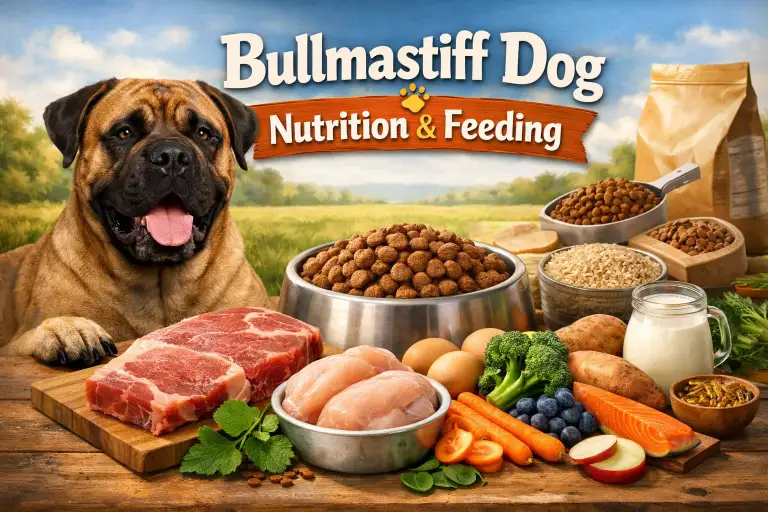
Bullmastiff Dog Nutrition & Feeding Guide
Bullmastiffs are not just “large dogs with big appetites.” They are a powerful, slow-maturing, heavy-boned breed with a metabolism and body structure that makes nutrition especially important. Feeding a Bullmastiff the wrong way — even with good intentions — can quietly lead to obesity, joint damage, reduced mobility, and a shorter, less comfortable lifespan.
Unlike highly active working breeds, most Bullmastiffs are moderate to low-energy dogs that conserve calories efficiently. This means they often gain weight faster than owners expect, especially once adulthood sets in. At the same time, Bullmastiff puppies grow rapidly and place enormous stress on developing bones and joints, making improper nutrition during growth particularly risky.
Diet directly affects:
- Healthy growth rate in puppies
- Joint strength and long-term mobility
- Body weight and muscle-to-fat balance
- Digestive comfort and stool quality
- Energy levels and overall vitality
Many common feeding mistakes — overfeeding, free-feeding, excessive treats, or choosing the wrong food type — don’t cause immediate problems. Instead, they create slow, cumulative damage that often shows up later as stiffness, weight-related illness, or reduced quality of life.
This guide is designed to help Bullmastiff owners make clear, breed-appropriate feeding decisions based on real-world needs, not marketing claims or generic dog-feeding advice.
What to Feed a Bullmastiff: Nutritional Requirements Explained
A Bullmastiff’s diet should support strong muscle, controlled weight, joint protection, and digestive stability. Achieving this isn’t about chasing trendy ingredients — it’s about balance, portion control, and choosing formulations appropriate for large and giant breeds.
Protein is essential for maintaining the Bullmastiff’s dense muscle mass, but more is not always better. Excessively high protein diets paired with excess calories can contribute to unnecessary weight gain rather than lean conditioning. The goal is adequate, high-quality protein, not maximum protein.
Fat provides energy and supports skin and coat health, but Bullmastiffs do not burn calories as aggressively as high-drive working dogs. Diets that are too rich in fat often lead to gradual weight gain, especially in neutered or sedentary adults. Fat intake should be moderate and intentional, not excessive.
Carbohydrates are often misunderstood. Bullmastiffs can digest carbohydrates well when they come from easily digestible, properly processed sources. The issue is not carbs themselves, but calorie overload and poor ingredient quality.
Micronutrients play an outsized role in this breed, particularly during growth. Calcium and phosphorus balance is critical for Bullmastiff puppies. Excess calcium — often caused by supplements or poorly formulated diets — can interfere with normal bone development and increase the risk of skeletal disorders. This is one of the most common and dangerous mistakes owners make with large-breed puppies.
Joint-support nutrients such as omega-3 fatty acids, glucosamine, and chondroitin can support long-term mobility, but they should complement a balanced diet, not compensate for overfeeding or poor portion control.
Learning how to read dog food labels is especially important for Bullmastiff owners. Foods should meet established large-breed standards for growth or adult maintenance, and ingredient lists should be evaluated realistically rather than emotionally. Marketing terms like “premium,” “ancestral,” or “grain-free” do not automatically indicate suitability for this breed.
The best Bullmastiff diet is one that supports steady weight, strong joints, and consistent digestion — not rapid growth, extreme leanness, or constant hunger.
How Much to Feed a Bullmastiff (By Age, Size, and Activity Level)
One of the most common questions Bullmastiff owners ask is: “How much should I feed my dog?”
There is no single perfect amount, but there are safe ranges and clear signs that tell you if you’re feeding too much or too little.
Bullmastiffs gain weight easily. Many look hungry even when they are not. This makes portion control very important.
Daily calorie needs for Bullmastiffs
Bullmastiffs need different calories based on body weight and how active they are. Most adult Bullmastiffs are low to moderately active, not high-energy dogs.
Estimated Daily Calorie Needs for Adult Bullmastiffs
| Body Weight | Low Activity | Moderate Activity |
|---|---|---|
| 45 kg (100 lb) | 1,800–2,000 kcal | 2,200–2,400 kcal |
| 50 kg (110 lb) | 1,900–2,100 kcal | 2,300–2,500 kcal |
| 55 kg (120 lb) | 2,000–2,200 kcal | 2,400–2,600 kcal |
| 60 kg (130 lb) | 2,100–2,300 kcal | 2,500–2,700 kcal |
These numbers are starting points, not strict rules. Neutered dogs, seniors, and couch-loving Bullmastiffs often need calories closer to the lower end.
Feeding by life stage
Bullmastiffs change a lot as they grow. Feeding should change with them.
Bullmastiff Feeding by Life Stage
| Life Stage | Meals Per Day | What to Focus On |
|---|---|---|
| Puppy (2–12 months) | 3 meals | Slow, steady growth and joint safety |
| Adult (1–6 years) | 2 meals | Weight control and muscle support |
| Senior (7+ years) | 2 smaller meals | Easy digestion and lean body mass |
Puppies should never be free-fed. Controlled meals help protect joints and prevent growth problems.
Portion control and body condition
Do not rely only on the feeding guide printed on the food bag. Those guides often overestimate how much a Bullmastiff needs.
A simple body check works better:
- You should feel the ribs under light pressure
- There should be a visible waist when viewed from above
- The belly should tuck up slightly from the side
If ribs are hard to feel or the waist disappears, portions should be reduced.
Feeding habits and safety tips
- Feed adult Bullmastiffs twice a day, not once
- Avoid free-feeding
- Limit treats to no more than 10% of daily calories
- Slow eaters bowls can help prevent gulping
- Rest after meals helps reduce stomach stress
Many Bullmastiffs gain weight slowly over time. Small daily overfeeding adds up fast in this breed.
What this section helps you do
By understanding calorie needs, meal timing, and body condition, you can:
- Prevent obesity
- Protect joints
- Keep energy levels steady
- Avoid common feeding mistakes
Best Dog Food Types for Bullmastiffs (Pros, Cons, and Safety)
There is no single “perfect” food for every Bullmastiff. What matters most is balance, portion size, and safety. Some foods work well for this breed, while others can cause weight gain or stomach trouble if not used carefully.
The goal is to choose a food that supports strong joints, healthy weight, and easy digestion.
Common dog food types for Bullmastiffs
Dog Food Types for Bullmastiffs – Pros and Cons
| Food Type | Benefits | Possible Problems | Best For |
|---|---|---|---|
| Dry food (kibble) | Easy to store, balanced nutrition, affordable | Can be high in calories if overfed | Most adult Bullmastiffs |
| Canned food | Tasty, high moisture | High calories, expensive long-term | Picky eaters, mixed feeding |
| Fresh cooked food | Easy to digest, simple ingredients | Costly, must be well balanced | Sensitive stomachs |
| Freeze-dried food | Nutrient dense, convenient | Very high calories | Small portions only |
| Raw food | Some dogs digest it well | Bacteria risk, balance issues | Only with expert guidance |
| Homemade food | Full ingredient control | Very easy to unbalance | Only with vet planning |
For most Bullmastiffs, a large-breed dry food or a mix of dry and fresh food works best. Very rich diets often lead to weight gain in this breed.
Human foods: what is safe and what is not
Many owners like to share food. This is fine only if done carefully.
Safe vs Unsafe Foods for Bullmastiffs
| Safe in Small Amounts | Never Feed |
|---|---|
| Cooked chicken (plain) | Chocolate |
| Cooked eggs | Grapes or raisins |
| Plain rice | Onions or garlic |
| Carrots | Xylitol (sweetener) |
| Pumpkin (plain) | Cooked bones |
Human foods should be extras, not meal replacements.
Treats and chews for Bullmastiffs
Bullmastiffs love treats, but treats add calories fast.
Good rules to follow:
- Treats should be small and low calorie
- Hard chews must be strong enough for powerful jaws
- Avoid giving treats all day long
- Count treats as part of daily food intake
Many Bullmastiffs gain weight because of treats, not meals.
Choosing the right food safely
When picking a food:
- Choose one made for large or giant breeds
- Avoid foods that promise fast growth or extreme muscle
- Ignore fancy marketing words
- Watch stool quality and body shape after switching
A good food keeps stools firm, energy steady, and weight under control.
Common Bullmastiff Feeding Problems, Special Diets, and FAQs
Many Bullmastiff owners face the same feeding problems. The good news is that most of them can be fixed with small, smart changes. This section helps you understand what is normal, what is not, and when help is needed.
Common feeding problems and how to fix them
Common Bullmastiff Feeding Problems and Solutions
| Problem | Likely Cause | What You Can Do | When to See a Vet |
|---|---|---|---|
| Gaining weight fast | Too many calories or treats | Reduce portions, limit treats | If weight keeps rising |
| Always hungry | Low-fiber food or habit | Add fiber-rich foods, stop table scraps | If begging is extreme |
| Loose stool | Food change too fast | Switch foods slowly over 7–10 days | If diarrhea lasts 3+ days |
| Picky eating | Too many food changes | Stick to one food, set meal times | If appetite drops suddenly |
| Gas or bloating | Eating too fast or rich food | Use slow feeder, avoid fatty foods | If stomach looks swollen |
SpSpecial Diet Needs for Bullmastiffs
| Special Diet Type | Why It’s Needed | Key Tips |
|---|---|---|
| Overweight | Reduce excess fat, maintain muscle | Lower calories, maintain balanced nutrition |
| Sensitive stomach | Prevent digestive upset | Simple, easily digestible foods |
| Food allergies | Avoid allergic reactions | Limited-ingredient diets, monitor for reactions |
| Senior Bullmastiffs | Support digestion and joints | Easier-to-digest foods, joint-support nutrients |
| Low-activity | Prevent weight gain | Avoid high-calorie, high-energy diets |
Note: Never switch to a special diet without watching weight, stool, and energy.
Grain-Free, Raw, and Homemade Diets
| Diet Type | Considerations | Recommendations |
|---|---|---|
| Grain-free | Often unnecessary for Bullmastiffs | Only use if vet recommends |
| Raw food | Bacteria risk, balance issues | Use only with vet guidance |
| Homemade food | Easy to misbalance nutrients | Plan with vet or canine nutrition expert |
When to See a Vet or Nutrition Expert
| Situation | Why Professional Help is Needed |
|---|---|
| Weight changes quickly | Could indicate health or diet issues |
| Appetite suddenly drops | May signal illness or digestive problems |
| Digestive problems do not stop | Could require medical evaluation |
| Planning homemade or raw diet | Needs proper formulation to avoid deficiencies |
Early help prevents long-term problems and ensures your Bullmastiff stays healthy.
Frequently asked questions
Why does my Bullmastiff always seem hungry?
Most Bullmastiffs love food. Hunger does not always mean they need more calories.
Is it normal for Bullmastiffs to gain weight easily?
Yes. This breed has a slow metabolism and needs careful portion control.
How often should I weigh my Bullmastiff?
Once a month is enough for most dogs.
Can Bullmastiffs eat human food every day?
Small amounts are fine, but meals should come from dog food.
Final thoughts for Bullmastiff owners
Good nutrition keeps Bullmastiffs strong, mobile, and comfortable as they age. Feeding the right amount, choosing safe foods, and watching body shape matter more than chasing trends.
Small daily choices make a big difference for this breed.
To learn more about official canine nutrition standards and how commercial dog foods are evaluated for safety and completeness, you can visit the Association of American Feed Control Officials, which sets widely used guidelines for dog food formulation and labeling.