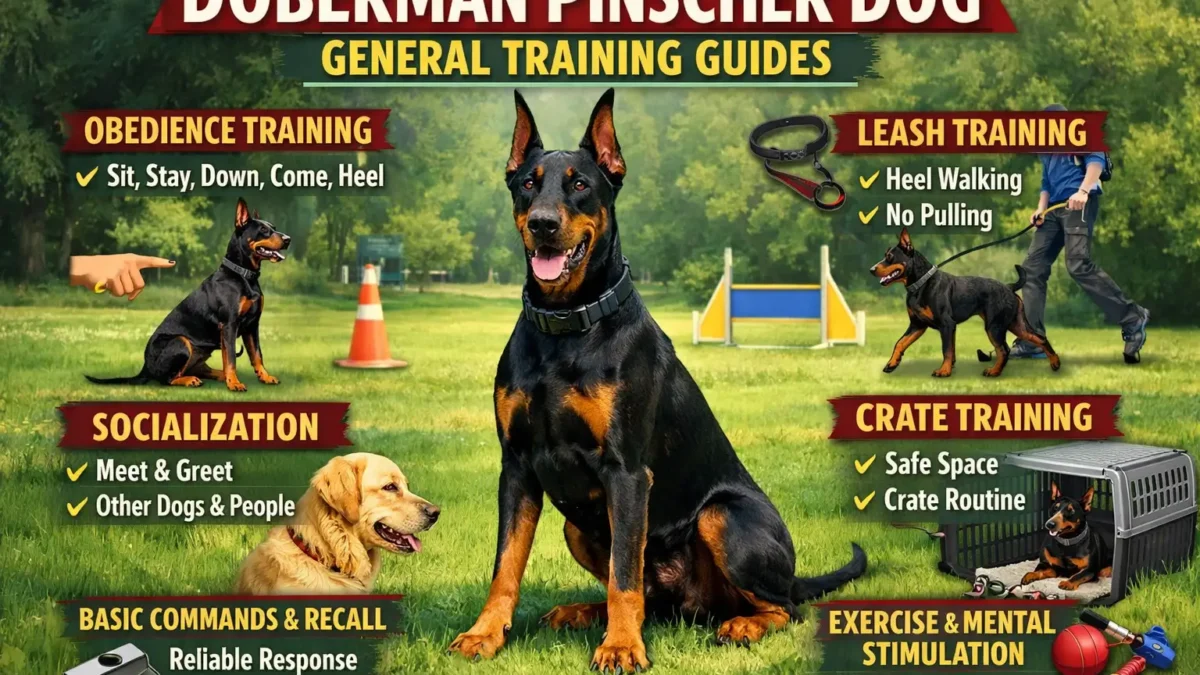
Doberman Pinscher Training Guide: Expert Tips for Puppies & Adults
Doberman Pinschers are intelligent, energetic, and loyal dogs that thrive with proper guidance. Training your Doberman early helps shape them into well-behaved, confident, and obedient companions. Whether you are raising a playful puppy or managing an adult Doberman, understanding their unique traits is key to successful training.
This guide is designed for both first-time and experienced Doberman owners. You will learn step-by-step methods, practical tips, and solutions for common challenges. By the end, you’ll know how to train your Doberman safely and effectively, ensuring a strong bond and a happy, balanced dog.
Key areas covered in this guide include basic obedience, leash manners, socialization, problem-solving, and knowing when to seek professional help.
Why Training Your Doberman Matters
Training your Doberman is not just about teaching commands. It keeps your dog safe, confident, and happy. Dobermans are strong, fast, and protective, so proper training helps prevent accidents and problem behaviors. Training also strengthens the bond between you and your dog and makes everyday life easier.
Even small training steps, like teaching sit or stay, can prevent big problems later. Consistent training helps your Doberman learn self-control, reduces stress, and gives them mental stimulation they need.
Here’s a quick look at the main benefits of training your Doberman:
| Benefit | Description | Example |
|---|---|---|
| Safety | Prevents accidents and injuries | Teaching your dog to stay when cars are near |
| Obedience | Dog listens reliably to commands | Sit, stay, come, leave it |
| Mental stimulation | Keeps your dog engaged and reduces boredom | Puzzle toys and training games |
| Socialization | Helps your dog be comfortable around new people and dogs | Meeting neighbors or other dogs on walks |
Training early, especially during puppyhood, helps prevent fear, aggression, and unwanted behaviors. Even adult Dobermans can benefit from structured training to improve manners, calmness, and confidence.
Understanding Doberman Behavior
Dobermans are smart, alert, and loyal dogs. They learn quickly, but they can also be strong-willed. Understanding their natural behaviors helps you train them more effectively.
Dobermans have traits that can affect training: high energy, protective instincts, and intelligence. Puppies are curious and playful, while adult Dobermans may test limits if not trained consistently. Some dogs may be shy or anxious, so training needs to match their personality.
Here is a quick guide to key Doberman traits and training tips:
| Trait | Description | Training Tip |
|---|---|---|
| Intelligence | Learns commands and tasks quickly | Use short, consistent training sessions |
| Protective | Guards home and family | Start socialization early with people and dogs |
| High Energy | Needs both mental and physical exercise | Combine walks, play, and training exercises |
| Stubborn | Can test rules | Use reward-based motivation and positive reinforcement |
| Anxious or fearful | May react to new situations | Use slow introductions and gentle encouragement |
Understanding these traits allows you to plan training sessions that are fun, safe, and effective. Training is more successful when it matches your dog’s personality and energy level.
Step-by-Step Training Method
Training a Doberman is easier when you break it into stages. Each stage builds on the previous one. Short, consistent sessions work best, especially for puppies. Adult dogs may need slightly longer sessions but still benefit from consistency.
Here’s a clear step-by-step approach:
| Stage | Commands/Skills | Session Tips | Expected Progress |
|---|---|---|---|
| Basics | Sit, stay, come, leave it | 5–15 minutes, 2–3 times/day | 1–3 weeks |
| Leash & Crate | Loose leash walking, crate comfort | 10–15 minutes, 1–2 times/day | 2–4 weeks |
| Socialization | Meeting people, dogs, and new environments | Short sessions in calm settings | 3–6 weeks |
| Advanced Obedience | Impulse control, distance commands | 15–30 minutes, 2 times/day | 4–8 weeks |
Small tips to keep in mind while training:
| Do | Don’t |
|---|---|
| Reward immediately | Delay treats |
| Keep sessions short | Train when dog is tired |
| Be consistent | Use punishment or harsh corrections |
| Make it fun | Overwhelm your dog with too many commands |
Consistency and patience are key. Always use positive reinforcement, praise, and treats to encourage good behavior. Mix mental exercises with physical activity to keep your Doberman motivated and happy.
For more information on Doberman Pinscher care, including health and grooming tips, visit the American Kennel Club’s Doberman Pinscher pagehere to learn more.