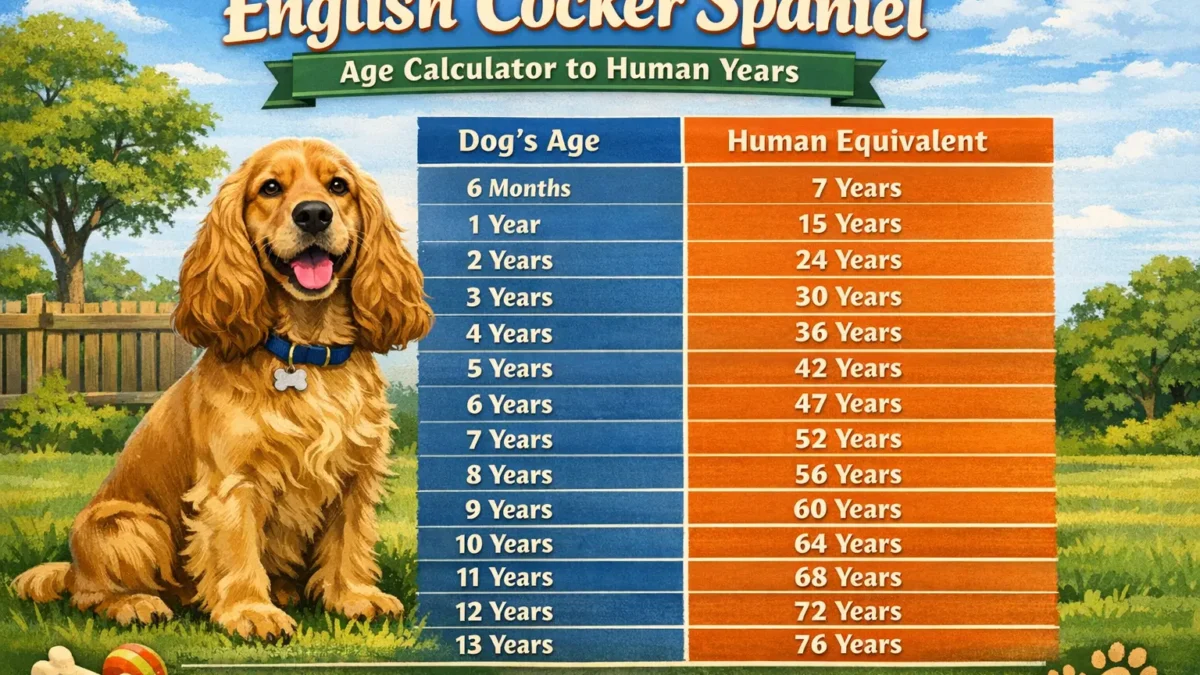
English Cocker Spaniel Age Calculator to Human Years (Age Chart)
Many people still believe that one dog year equals seven human years, but this rule is not accurate—especially for an English Cocker Spaniel.
Dogs age much faster in their early years and then slow down as they reach adulthood. An English Cocker Spaniel is a medium-sized breed, which means its aging pattern sits between small dogs (who often live longer) and large dogs (who age faster).
Here’s what makes dog aging different from human aging:
- Dogs mature very quickly during the first two years of life
- After adulthood, aging slows down and becomes more gradual
- Size and breed play a big role in how fast a dog ages
- Health, diet, and lifestyle can change how quickly signs of aging appear
For English Cocker Spaniels, the first year of life is roughly equal to the teenage years in humans, and the second year moves them into early adulthood. After that, each year adds fewer “human years” than the old 7-year rule suggests.
Most English Cocker Spaniels live between 12 and 15 years, which is considered a good lifespan for a medium-sized dog. Some may live longer with proper care, while others may age faster due to genetics or health issues.
Understanding how your English Cocker Spaniel ages helps you:
- Set realistic health expectations
- Know when your dog is entering adulthood or senior years
- Adjust food, exercise, and vet care at the right time
English Cocker Spaniel Dog Age Calculator (Dog Years to Human Years)
English Cocker Spaniels age fast as puppies, then slow down as adults. That is why the old 7 dog years = 1 human year rule does not work well.
Think of it like this:
- The first 2 years matter the most
- Adult years age more slowly
- Senior years need closer care, not panic
English Cocker Spaniel Age Conversion Table
| Dog Age (Years) | Human Age Equivalent |
|---|---|
| 1 | 15 years |
| 2 | 24 years |
| 3 | 28 years |
| 4 | 32 years |
| 5 | 36 years |
| 6 | 40 years |
| 7 | 44 years |
| 8 | 48 years |
| 9 | 52 years |
| 10 | 56 years |
| 11 | 60 years |
| 12 | 64 years |
| 13 | 68 years |
| 14 | 72 years |
| 15 | 76 years |
How to use this table
- Find your dog’s age on the left
- Read across to see the human age
- Use it as a general guide, not a medical rule
Simple examples
- A 5-year-old English Cocker Spaniel is about 36 years old in human terms
- A 10-year-old English Cocker Spaniel is closer to 56, not 70
- A 12-year-old English Cocker Spaniel is entering senior years
This table gives you a fast answer, but age alone does not tell the full story. Activity level, weight, and health also matter.
English Cocker Spaniel Age Chart by Life Stage
Use the table below to see when your dog is a puppy, adult, or senior.
English Cocker Spaniel Life Stage Chart
| Dog Age (Years) | Life Stage | What This Means |
|---|---|---|
| 0–1 year | Puppy | Fast growth, learning, lots of energy |
| 1–6 years | Adult | Strong body, steady energy, best health years |
| 7–9 years | Mature | Slower movement, early aging signs may start |
| 10+ years | Senior | More rest needed, higher health care focus |
How to understand this chart
- Puppies grow fast and need training and good food
- Adult dogs are in their prime and need regular exercise
- Mature dogs may slow down but are still active
- Senior dogs need comfort, routine, and closer vet care
Not every dog ages the same. Some English Cocker Spaniels act young for a long time, while others slow down earlier. This chart gives a general guide, not a strict rule.
Knowing your dog’s life stage helps you:
- Adjust food and exercise
- Spot aging changes early
- Plan vet visits at the right time
English Cocker Spaniel Aging Signs by Age
Age is not just a number. As your English Cocker Spaniel grows older, you may notice small changes in the body, energy, or behavior. Some changes are normal, while others may need a vet check.
The table below helps you match common signs with age ranges, so you know what is normal and what needs attention.
Common Aging Signs in English Cocker Spaniels
| Age Range | Common Changes You May Notice |
|---|---|
| Puppy (0–1) | Teething, clumsy movement, very high energy |
| Adult (1–6) | Stable energy, strong appetite, playful behavior |
| Mature (7–9) | Slower movement, longer rest time, mild stiffness |
| Senior (10+) | Joint pain, gray fur, hearing or vision changes, less energy |
What these signs mean
- Slowing down does not always mean sickness
- Gray fur and stiffness are common in older dogs
- Sudden changes are more concerning than slow changes
When to talk to a vet
- Trouble walking or standing
- Big changes in eating or weight
- Confusion, anxiety, or sleep problems
- Pain signs like limping or crying
Watching for these signs helps you support your dog early and keep them comfortable as they age.
How to Help an English Cocker Spaniel Age Healthily
Helping your English Cocker Spaniel age well is about daily care, good habits, and early support. Small changes over time can make a big difference in how your dog feels as they get older.
The table below shows what to focus on at each life stage.
Age-Based Care Guide for English Cocker Spaniels
| Life Stage | Care Focus |
|---|---|
| Puppy | Good food, training, vaccines, safe play |
| Adult | Healthy weight, daily walks, dental care |
| Mature | Joint support, regular vet checks, routine |
| Senior | Comfort, gentle exercise, health screenings |
Simple ways to support healthy aging
- Feed the right amount to avoid weight gain
- Keep daily walks short but regular
- Play gentle games to keep the mind active
- Visit the vet more often as your dog gets older
- Watch for pain, stiffness, or behavior changes
Senior dogs may need:
- Softer beds
- Shorter walks
- Easy access to food and water
- Calm routines
Aging is natural, but discomfort does not have to be. With proper care, many English Cocker Spaniels stay happy and active well into their senior years.
For more detailed breed-specific health, lifespan, and care information, you can also refer to the American Kennel Club English Cocker Spaniel breed profile, which provides trusted guidance on breed traits, health considerations, and responsible ownership.