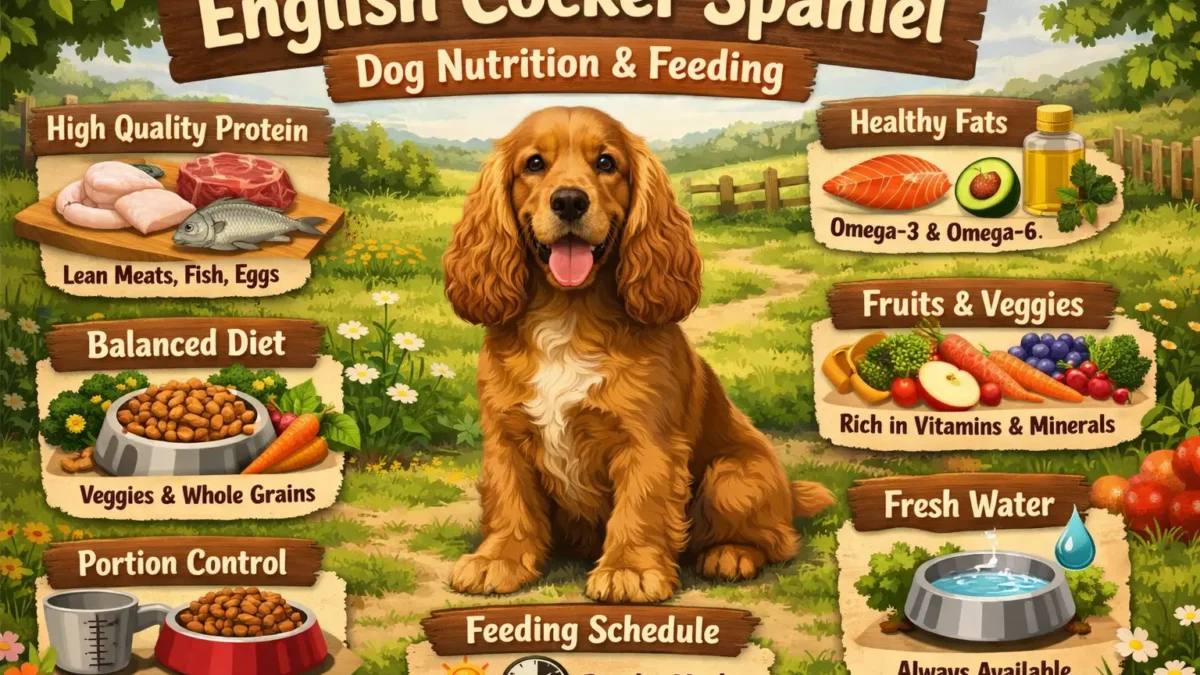
English Cocker Spaniel Dog Nutrition & Feeding Guide: Life Stage, Diet, and Portions
Feeding your English Cocker Spaniel the right diet is one of the most important things you can do to ensure a long, healthy, and happy life. These medium-sized dogs are energetic, affectionate, and prone to certain breed-specific health concerns such as ear infections, obesity, and joint issues. Proper nutrition not only supports their energy levels and weight management but also helps maintain a shiny coat, strong muscles, and overall vitality.
This guide is designed to help you understand the unique nutritional needs of English Cocker Spaniels. You’ll learn how to feed them at every life stage, choose the right type of food, manage portion sizes, and handle special dietary requirements.
Nutrition affects every aspect of your dog’s life. A diet that’s too high in calories can lead to weight gain, putting stress on joints and increasing the risk of diabetes. On the other hand, insufficient protein or essential nutrients can impact muscle maintenance, immune function, and coat quality. Even small adjustments to feeding schedules, portion sizes, or food types can make a big difference in your Cocker Spaniel’s health.
In addition to physical health, nutrition also influences behavior and energy. Well-fed Cocker Spaniels are more alert, playful, and easier to train. Dogs that are overfed or given inconsistent meals may experience energy spikes, digestive upset, or even behavioral issues such as irritability or food guarding.
This guide will equip you with practical advice, easy-to-follow charts, and real-world feeding tips tailored specifically to English Cocker Spaniels. Whether you are feeding a playful puppy, a moderately active adult, or a senior dog, this guide will help you make informed decisions to keep your dog healthy, happy, and thriving.
Nutritional Needs of English Cocker Spaniels
English Cocker Spaniels need a balanced diet to stay healthy, active, and happy. Their food should provide the right amount of protein, fat, carbohydrates, vitamins, and minerals. Puppies, adults, and seniors have different needs, so it’s important to adjust their diet as they grow.
Key Nutrients
- Protein: Helps build muscles and maintain a healthy body.
- Fat: Provides energy and supports a shiny coat.
- Carbohydrates: Give energy and fiber for digestion.
- Vitamins & Minerals: Keep bones, joints, and the immune system strong.
- Special Nutrients: Omega-3 for coat and joint health, glucosamine for joints in older dogs.
Here’s a quick guide for nutrient ranges:
| Life Stage | Protein % | Fat % | Carbs % | Special Notes |
|---|---|---|---|---|
| Puppy | 25–30% | 12–18% | 30–40% | Supports growth and brain development |
| Adult | 22–28% | 10–15% | 30–40% | Maintains energy and healthy weight |
| Senior | 20–25% | 8–12% | 30–40% | Easier to digest, joint support nutrients recommended |
Safe and Unsafe Foods
Knowing what your Cocker Spaniel can and cannot eat is crucial. Some human foods are safe in small amounts, while others can be dangerous.
| Safe Foods | Unsafe Foods |
|---|---|
| Cooked lean meats (chicken, turkey) | Chocolate |
| Carrots, green beans, pumpkin | Grapes and raisins |
| Apples (without seeds) | Onions and garlic |
| Blueberries, strawberries | Xylitol (sweeteners) |
| Plain yogurt | Fatty scraps |
Feeding your dog safe foods as treats or snacks can also help maintain weight and improve digestion. Avoid toxic foods completely, as even small amounts can cause serious health problems.
Feeding Guidelines: How Much and How Often
Feeding your English Cocker Spaniel the right amount is important to keep them healthy and at a good weight. Puppies, adults, and senior dogs all need different portions and feeding schedules. Their activity level also changes how much food they need.
Daily Calorie Needs
| Life Stage | Weight (kg) | Daily Calories (kcal) |
|---|---|---|
| Puppy | 5 | 250–300 |
| Puppy | 10 | 400–500 |
| Adult | 12 | 400–500 |
| Adult | 15 | 450–600 |
| Senior | 12–15 | 350–500 |
Adjust these amounts based on your dog’s activity. Active dogs need more calories, while indoor or less active dogs need less.
Feeding Frequency
| Life Stage | Meals per Day | Notes |
|---|---|---|
| Puppy | 3–4 | Smaller meals help with growth and digestion |
| Adult | 2 | Helps maintain weight and energy |
| Senior | 1–2 | Smaller portions, easier to digest |
Body Condition Score Guide
Use the body condition score (BCS) to make sure your dog is not too thin or overweight.
| BCS Score | Description | Feeding Action |
|---|---|---|
| 1–3 | Underweight | Increase portion, choose high-protein foods |
| 4–5 | Ideal | Keep current portions, monitor weight |
| 6–7 | Slightly Overweight | Reduce portions slightly, avoid high-fat treats |
| 8–9 | Overweight | Reduce calories, increase exercise, consult vet |
Monitoring your dog’s weight and BCS weekly helps you make small adjustments before weight problems develop.
Choosing the Right Food and Diet Type
English Cocker Spaniels can eat different types of dog food. Choosing the right type depends on your dog’s age, activity level, health, and your lifestyle. Each type of food has pros and cons, so it’s important to pick what works best for your dog and your schedule.
Food Types Comparison
| Food Type | Pros | Cons | Best For |
|---|---|---|---|
| Kibble (Dry) | Convenient, long shelf life, helps keep teeth clean | Less moisture, may need more water | Busy owners, adults |
| Canned (Wet) | High moisture, tasty, easy to digest | More expensive, shorter shelf life | Puppies, seniors, picky eaters |
| Raw Diet | High protein, natural ingredients | Needs careful handling, risk of bacteria | Active dogs, owners familiar with raw feeding |
| Fresh/Frozen | High-quality ingredients, no fillers | Expensive, needs refrigeration | Health-conscious owners |
| Freeze-Dried | Long shelf life, retains nutrients | Higher cost, can be less palatable | Travel, supplement to other diets |
| Homemade | Full control over ingredients | Time-consuming, needs careful nutrient balance | Owners who want custom meals |
Treat and Snack Guidelines
| Treat Type | Maximum Daily Amount | Notes |
|---|---|---|
| Commercial dog treats | 10% of daily calories | Use for training or reward |
| Vegetables (carrots, green beans) | Small handful | Low-calorie, healthy snack |
| Fruits (apple slices, blueberries) | Small pieces | Remove seeds; good for antioxidants |
| Lean cooked meat | 1–2 small pieces | High protein, avoid seasoning |
| Human snacks | Avoid chocolate, grapes, onions, fatty foods | Toxic or unhealthy |
Using these tables helps you quickly compare food types and plan healthy treats without overfeeding. It also makes choosing the right diet easier for your dog’s age and activity level.
Special Diets, Common Problems, and Practical Owner Tips
Some English Cocker Spaniels need special diets or extra care to stay healthy. This can be because of allergies, digestive issues, weight problems, or lifestyle differences. Knowing how to manage these situations helps keep your dog happy and healthy.
Special Diet Overview
| Issue | Recommended Approach | Notes |
|---|---|---|
| Weight Management | Low-calorie, high-protein food, portion control | Monitor BCS weekly |
| Food Allergies | Limited-ingredient or hypoallergenic diets | Avoid suspected allergens |
| Sensitive Stomach | Easily digestible diets, avoid sudden changes | Gradually switch foods |
| High-Energy Dogs | Higher calories and protein, more meals | Active breeds, outdoor play |
| Low-Activity Dogs | Lower calories, smaller portions | Apartment or less active dogs |
Troubleshooting Common Feeding Problems
| Problem | Likely Cause | Solution |
|---|---|---|
| Picky eater | Food not appealing or sudden changes | Try gradual food transition, add small toppers |
| Sudden weight gain | Overfeeding, low activity | Adjust portions, increase exercise |
| Loose stool or digestive upset | Diet change, food intolerance | Gradually switch foods, consult vet if persistent |
| Food aggression / resource guarding | Behavioral issue | Feed separately, use positive reinforcement |
Practical Owner Tips
- Always measure portions to avoid overfeeding.
- Monitor body condition score weekly.
- Introduce new foods gradually over 7–10 days.
- Use treats wisely, no more than 10% of daily calories.
- For multiple dogs with different needs, feed separately.
By following these guidelines and using the tables, you can handle most feeding challenges while keeping your Cocker Spaniel healthy and happy.
- Introduction: Why Proper Nutrition Matters
- Nutritional Needs of English Cocker Spaniels
- Feeding Guidelines: How Much and How Often
- Choosing the Right Food and Diet Type
- Special Diets, Common Problems, and Practical Owner Tips
Practical Tools, FAQs, and When to See a Professional
Sample Daily Feeding Framework
| Life Stage | Meals per Day | Example Portion (grams) | Notes |
|---|---|---|---|
| Puppy | 3–4 | 50–120 | Divide total daily calories over meals |
| Adult | 2 | 100–200 | Adjust for activity level |
| Senior | 1–2 | 80–150 | Smaller, easier to digest portions |
Quick Checklist for Feeding
| Task | Frequency |
|---|---|
| Measure food portions | Each meal |
| Monitor body condition score | Weekly |
| Check water intake | Daily |
| Introduce new foods gradually | Over 7–10 days |
| Limit treats | Max 10% of daily calories |
Frequently Asked Questions
| Question | Answer |
|---|---|
| How much should my Cocker Spaniel eat? | Refer to life-stage feeding chart; adjust based on activity and body condition. |
| Can I feed human food as treats? | Only safe foods like carrots, green beans, or apple slices; avoid chocolate, grapes, onions, and fatty scraps. |
| How often should I feed my dog? | Puppies 3–4 times/day, adults 2 times/day, seniors 1–2 times/day. |
| What if my dog refuses to eat? | Try gradual food transition, warm food slightly, or add small toppers; consult a vet if persistent. |
| When should I see a veterinary nutritionist? | Weight issues, allergies, digestive problems, or uncertainty about diet balance. |
Using these tables and checklists makes feeding simple, consistent, and easy to follow. Regular monitoring of weight, portions, and body condition ensures your English Cocker Spaniel stays healthy throughout life.
For more guidance on how to choose a complete and balanced pet food that meets your dog’s nutritional needs, you can visit the AAFCO consumer guide to understanding pet food on the Association of American Feed Control Officials (AAFCO) website.