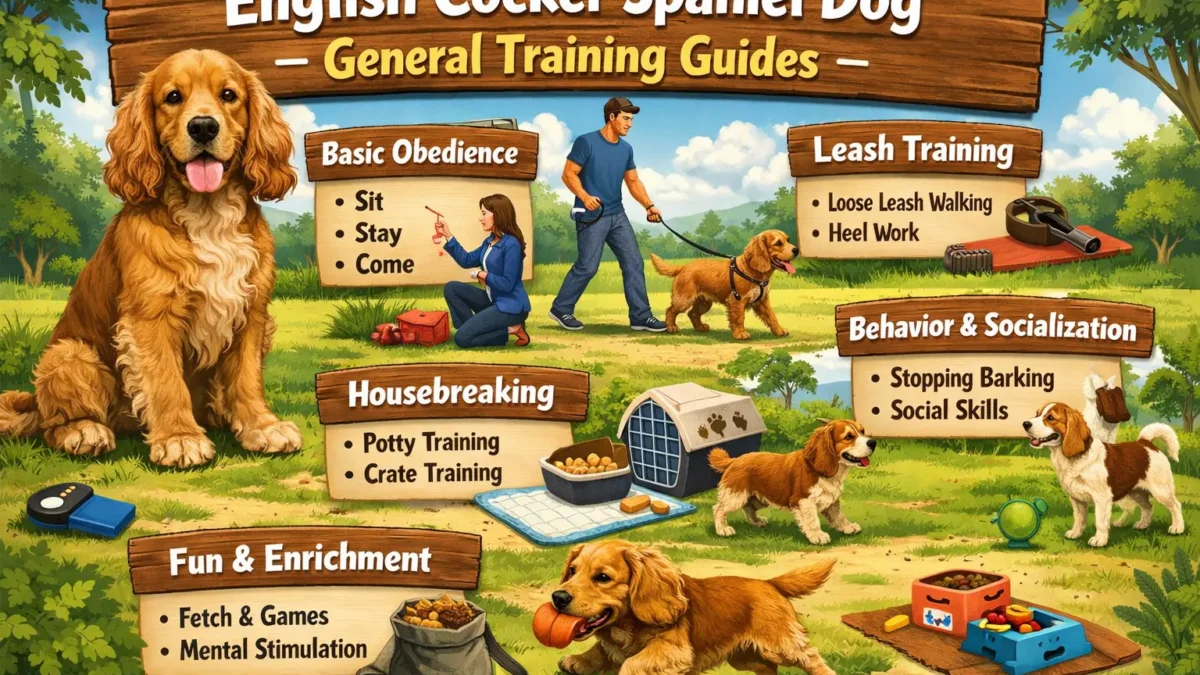
English Cocker Spaniel Training Guide: Simple, Effective Methods That Work
Training an English Cocker Spaniel is rewarding, but it works best when you understand how this breed thinks, learns, and reacts to the world. These dogs are smart, eager to please, and full of energy, which makes them great learners—but also easily distracted if training is rushed or inconsistent.
This guide is designed to help you train your English Cocker Spaniel in a clear, practical way. It works for puppies, adult dogs, and first-time owners, while still offering useful guidance for experienced owners who want better results. The focus is on simple methods you can use at home, not complicated techniques that only work in perfect conditions.
English Cocker Spaniels were bred as active, people-focused dogs. Because of this, they respond best to calm guidance, positive reinforcement, and short, regular training sessions. Harsh corrections or confusing rules often lead to frustration, overexcitement, or anxiety instead of good behavior.
In this article, you’ll learn how to:
- Understand your dog’s behavior and temperament
- Choose training methods that actually work for this breed
- Fix common training problems like pulling, jumping, and poor recall
- Know when professional help is the right choice
Understanding English Cocker Spaniel Behavior and Temperament
English Cocker Spaniels are friendly, loving, and very people-focused dogs. They enjoy being close to their family and often want attention, play, and praise. This makes them easier to train than many breeds—but only when training is done the right way.
These dogs are intelligent and sensitive. They learn fast, but they also feel emotions strongly. Loud voices, harsh corrections, or confusing rules can make them anxious or overly excited. Calm guidance and clear routines work much better.
English Cocker Spaniels were originally bred as working dogs. Because of this, they have:
- High energy levels
- Strong interest in smells and movement
- Short attention spans when bored
Puppies are usually very excitable and curious. Adult dogs often calm down, but they can still struggle with focus, especially outdoors. Homes with kids, other pets, or lots of noise can make training harder if rules are not clear and consistent.
English Cocker Spaniel Traits and Training Impact
| Breed Trait | How It Shows Up | What It Means for Training |
|---|---|---|
| Friendly and social | Follows people, seeks attention | Use praise and rewards often |
| High energy | Zoomies, restlessness, jumping | Short sessions with breaks work best |
| Sensitive nature | Shuts down with harsh correction | Calm voice and gentle handling are important |
| Strong scent drive | Easily distracted outside | Train focus before recall and leash skills |
| Intelligent | Learns quickly, gets bored fast | Keep training varied and fun |
Understanding these traits helps you avoid common mistakes. Many training problems are not bad behavior—they are signs that the dog is confused, overstimulated, or under-trained for the situation.
Best Training Methods for English Cocker Spaniels
English Cocker Spaniels learn best when training is short, positive, and consistent. They enjoy learning, but they can lose focus fast if sessions are too long or boring. Simple routines and clear rewards make a big difference.
Start training as early as possible. Puppies can begin basic training as soon as they come home. Adult dogs can also learn new habits, but they may need more patience at first.
Keep training sessions short:
- 5 to 10 minutes for puppies
- 10 to 15 minutes for adult dogs
- 2 to 4 short sessions spread through the day
Use positive reinforcement. This means rewarding good behavior with treats, praise, or play right away. Rewards should come within a few seconds so your dog understands what they did right.
Focus on these basics first:
- Name response and eye contact
- Sit and stay
- Recall (coming when called)
- Loose leash walking
- Calm behavior around people
Balance physical exercise with mental work. Long walks alone are not enough for this breed. Training games, sniffing games, and simple problem-solving help calm their mind.
Daily Training Routine for English Cocker Spaniels
| Time of Day | Training Focus | Session Length | Example Activity |
|---|---|---|---|
| Morning | Focus and basic obedience | 5–10 minutes | Sit, name response, short leash walk |
| Midday | Mental stimulation | 5–10 minutes | Food puzzle or scent game |
| Evening | Behavior and control | 10–15 minutes | Recall practice or calm walking |
| Night | Calm habits | 3–5 minutes | Settle on mat, gentle praise |
Progress slowly. Increase distractions only after your dog succeeds in quiet places. If your dog struggles, make the task easier instead of repeating commands louder.
Training should feel calm and positive. If your dog becomes wild, frustrated, or tired, it is better to stop and try again later.
Common English Cocker Spaniel Training Problems and Fixes
Even well-trained English Cocker Spaniels can struggle with certain behaviors. Most problems happen because the dog is excited, distracted, or confused—not because they are “bad” or stubborn. Small changes in training usually fix these issues.
Here are the most common problems owners face and what helps in real homes.
Common Training Problems and Simple Fixes
| Problem | Why It Happens in English Cocker Spaniels | What Actually Helps |
|---|---|---|
| Jumping on people | Friendly nature and excitement | Ask for a sit before attention, reward calm greetings |
| Poor recall | Strong interest in smells and movement | Practice recall indoors first, use high-value treats |
| Pulling on leash | High energy and curiosity | Stop walking when pulling, reward loose leash steps |
| Barking for attention | People-focused and easily bored | Ignore barking, reward quiet behavior |
| Overexcitement | Too much stimulation, not enough structure | Short training sessions and calm routines |
| Listening only sometimes | Training done only at home | Practice commands in new places slowly |
| Regression in teens | Normal adolescent phase | Stay consistent, lower difficulty, keep sessions short |
Many owners repeat commands when the dog does not listen. This teaches the dog that commands are optional. Say the command once, wait, then guide or reset if needed.
Another common mistake is training only when the dog is calm. Dogs also need practice when excited, but in small steps. For example, practice sit before meals, walks, or playtime.
If a problem keeps returning, it usually means the training is too hard for the situation. Go back to an easier step and build up again.
When to Get Professional Training Help
Most English Cocker Spaniels improve with regular home training. But some situations need extra support. Getting help early can prevent small problems from becoming serious.
You should consider professional help if:
- Training is not improving after several weeks
- Your dog shows fear, anxiety, or stress during training
- Growling, snapping, or aggressive behavior appears
- Your dog guards food, toys, or space
- Your dog panics when left alone
- You feel overwhelmed or unsure what to do next
Some dogs need a trainer, while others need a veterinary behaviorist. Knowing the difference saves time and money.
Trainer vs Behaviorist: When to Choose Each
| Situation | Dog Trainer | Veterinary Behaviorist |
|---|---|---|
| Basic obedience issues | ✔ Yes | ✘ No |
| Leash pulling or jumping | ✔ Yes | ✘ No |
| Recall problems | ✔ Yes | ✘ No |
| Fear or anxiety | ⚠ Sometimes | ✔ Yes |
| Aggression or biting | ✘ No | ✔ Yes |
| Severe behavior changes | ✘ No | ✔ Yes |
A good trainer should:
- Use positive, reward-based methods
- Have experience with spaniel breeds
- Explain things clearly to owners
- Focus on both dog and owner learning
If your dog’s behavior is sudden, intense, or unsafe, do not wait. A veterinary behaviorist can check for medical causes and create a full treatment plan.
For additional breed-specific training and behavior guidance, you can explore the https://www.akc.org/dog-breeds/english-cocker-spaniel/which provide reliable tips on obedience, temperament, and positive training methods directly from canine experts.