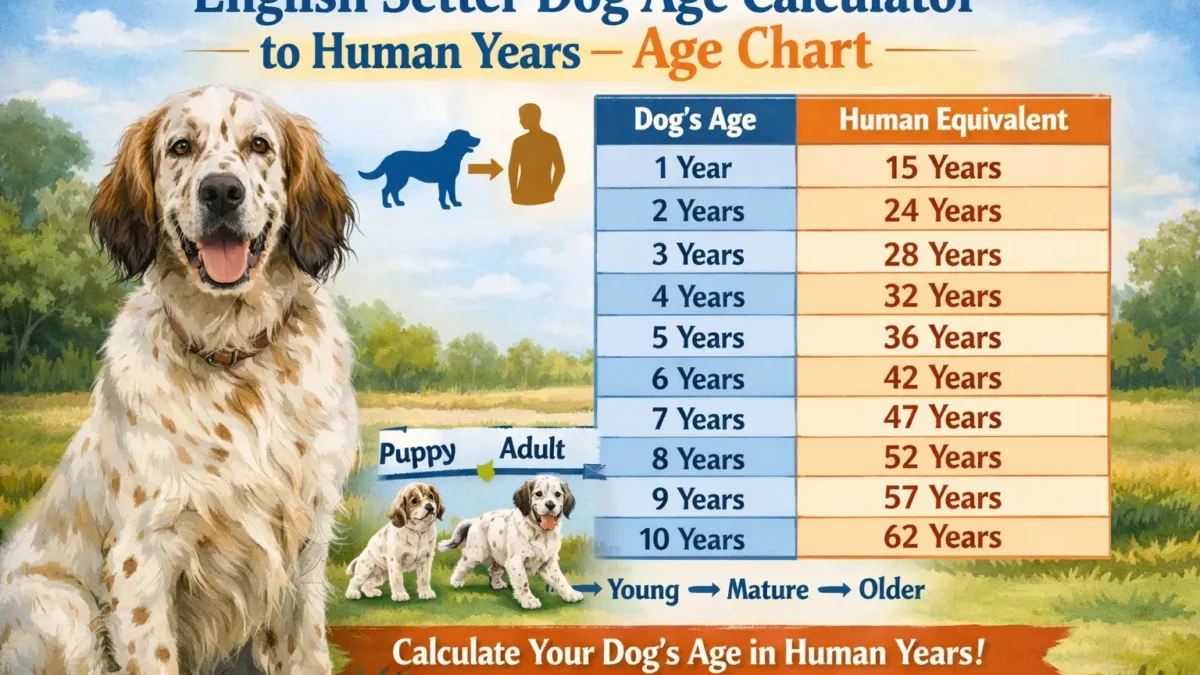
English Setter Age Calculator to Human Years Age Chart
English Setters do not age in a simple, linear way like humans do. Their early development is extremely fast, then aging slows through adulthood, and later accelerates again as they enter senior years. This pattern is especially true for medium–large sporting breeds like the English Setter, which mature earlier than giant breeds but age faster than small dogs.
Understanding this difference is essential before using any age calculator or chart—otherwise, the numbers can be misleading.
Why “1 Dog Year = 7 Human Years” Is Inaccurate
The old “7-year rule” assumes dogs age at a constant pace throughout life. In reality:
- English Setters mature very quickly in the first 12–24 months
- A one-year-old English Setter is closer to a teenager or young adult, not a 7-year-old child
- After adulthood, aging slows, then gradually speeds up again in senior years
This is why modern dog age calculators use non-linear (curved) aging models, not simple multiplication.
English Setter Life Stages at a Glance
While every dog is an individual, English Setters tend to follow a fairly predictable aging pattern typical of medium–large breeds.
English Setter Life Stages Overview
| Life stage | Approximate dog age | What’s happening |
|---|---|---|
| Puppy | 0–12 months | Rapid physical growth, brain development, learning foundations |
| Adolescent | 1–2 years | Sexual maturity, peak energy, full size reached |
| Adult | 3–7 years | Physical prime, stable temperament, best endurance |
| Senior | 8+ years | Gradual slowdown, joint stiffness, sensory and metabolic changes |
This table helps readers quickly identify where their dog fits right now, before moving on to exact human-year conversions.
How Breed Size Affects Aging in English Setters
English Setters sit in the medium–large size category, which matters for aging:
- They age faster than small breeds like Terriers or Toy dogs
- They age more slowly and live longer than giant breeds like Great Danes
- Most English Setters reach senior status around 8 years old, earlier than many small dogs
The Science Behind English Setter Aging
Dogs do not age the same way humans do, and English Setters are a good example of this difference. Their bodies grow fast early in life, slow down during adulthood, and then begin aging faster again as they get older. This creates a curved aging pattern, not a straight line.
To make this easy to understand, think of an English Setter’s life in three simple phases:
- Fast early growth – puppies change quickly in their first two years
- Slower adult aging – adult dogs age more steadily
- Faster senior aging – physical and mental aging becomes more noticeable
This is why modern dog age calculators do not use simple math like “times seven.”
English Setters are considered medium–large dogs, and size plays a major role in how fast a dog ages. Larger dogs generally grow up faster and age sooner than small dogs, even if they look strong and healthy for many years.
Aging Speed by Dog Size
| Dog size group | Early-life aging speed | Aging in later years |
|---|---|---|
| Small dogs | Slower growth | Age more slowly overall |
| Medium–large dogs (English Setter) | Moderate growth | Balanced aging pattern |
| Giant dogs | Very fast growth | Faster aging and shorter lifespan |
For English Setters, this means:
- They mature faster than small breeds
- They usually become seniors earlier than small dogs
- They often age more gracefully than giant breeds
Scientists studying dog aging have also found that dogs age very fast at first, then slow down, and later speed up again. This curved pattern explains why a one-year-old dog feels much older than a seven-year-old child, but a ten-year-old dog does not feel seventy years old in human terms.
Because of this science-based understanding, the most accurate age charts and calculators use breed size and life stage, not one fixed number.
English Setter Age Calculator: Dog Years to Human Years
English Setters do not age at the same speed every year. They grow very fast as puppies, then age more slowly as adults, and later age faster again as seniors. Because of this, good age calculators use curved aging models, not the old “times seven” rule.
The table below shows the most accurate average age conversion for English Setters, based on modern dog-aging research and medium–large breed patterns.
English Setter Dog Age to Human Age Chart
| English Setter age | Human age equivalent |
|---|---|
| 1 year | about 15 human years |
| 2 years | about 24 human years |
| 3 years | about 28 human years |
| 4 years | about 32 human years |
| 5 years | about 36 human years |
| 6 years | about 42 human years |
| 7 years | about 47 human years |
| 8 years | about 51 human years |
| 9 years | about 56 human years |
| 10 years | about 60 human years |
| 11 years | about 65 human years |
| 12 years | about 69 human years |
This chart gives a general estimate, not an exact number. Some English Setters may age a little slower or faster depending on health, diet, exercise, and genetics.
To make the numbers easier to understand, here is how those ages usually feel in real life.
What These Ages Often Look Like in Real Life
| Dog age | Human age feel | What owners usually notice |
|---|---|---|
| 1–2 years | Teen to young adult | Very high energy, playful, curious |
| 3–5 years | Adult in their 30s | Strong, active, steady behavior |
| 6–7 years | Early 40s | Slight slowing after heavy activity |
| 8–9 years | 50s | More rest needed, stiffness after exercise |
| 10+ years | 60s–70s | Senior changes, calmer, needs extra care |
If your English Setter does not match these descriptions exactly, that is normal. Dogs age as individuals, just like people do.
English Setter Life Stages: Puppy to Senior
English Setters usually move through four main stages: puppy, young adult, adult, and senior. Each stage comes with clear changes in energy, body, and behavior.
Puppy and Young Dog Stage
Puppies grow very fast during their first year. Their bodies, brains, and habits are all forming at the same time.
English Setter Puppy Development Timeline
| Puppy age | What is happening |
|---|---|
| 8–12 weeks | Learning about people, sounds, and surroundings |
| 3–4 months | Teething, chewing, fast growth |
| 5–6 months | Better coordination, lots of energy |
| 7–12 months | Near full size, still mentally young |
| 12–24 months | Body matures, behavior slowly settles |
During this stage, English Setters need:
- Good food for steady growth
- Gentle training and social time
- Short but regular exercise
Adult English Setter Years
Most English Setters are considered adults between 3 and 7 years old. This is often their best time in life.
- Energy is strong but more controlled
- Muscles are fully developed
- Behavior is more calm and predictable
Many owners say this is when their English Setter feels the most balanced and enjoyable.
Senior English Setter Years
English Setters usually enter senior years around 8 years old. Aging happens slowly at first, so changes can be easy to miss.
Common Senior English Setter Changes
| Area | Changes you may notice |
|---|---|
| Movement | Stiff joints, slower walking |
| Energy | More sleeping, shorter playtime |
| Senses | Hearing or vision loss |
| Thinking | Confusion, anxiety, slower response |
| Body | Weight gain or muscle loss |
Senior dogs still enjoy life, but they need more comfort, patience, and care.
Watching these signs early helps owners adjust food, exercise, and vet care at the right time.
Helping Your English Setter Age Healthily
Good care is not about doing more—it is about doing the right things at the right age.
Food plays a major role in healthy aging. English Setters should stay lean throughout life because extra weight puts stress on joints and the heart. As dogs age, they often need fewer calories but better-quality nutrition.
Exercise is also important at every age. Young English Setters need regular activity to burn energy, while older dogs benefit from gentle walks and mental games. The goal is movement without strain.
Vet visits become more important as dogs get older. Many age-related problems are easier to manage when caught early.
Age-Based Care Priorities for English Setters
| Life stage | Main care focus |
|---|---|
| Puppy | Balanced growth, training, social time |
| Young adult | Regular exercise, weight control |
| Adult | Fitness, dental care, yearly vet checks |
| Senior | Joint support, comfort, frequent vet visits |
At home, small changes help senior English Setters stay comfortable:
- Soft bedding for joints
- Shorter, more frequent walks
- Ramps or steps for cars and furniture
- Calm routines to reduce stress
Older dogs may slow down, but they still enjoy attention, gentle play, and time with their family. Aging is not a disease—it is a normal part of life.
FAQs About English Setter Age and Dog Years
Many owners worry when their dog slows down or starts acting differently. In most cases, these changes are normal parts of aging.
Common English Setter Age Questions and Simple Answers
| Question | Simple answer |
|---|---|
| How long do English Setters live? | Most live about 10–12 years, some longer with good care |
| When is an English Setter considered senior? | Around 8 years old |
| Do English Setters age faster than small dogs? | Yes, medium–large dogs age faster than small breeds |
| Is the 7-year rule accurate? | No, dogs age faster early and slower later |
| Can two English Setters age differently? | Yes, health, diet, and lifestyle matter |
| Should senior dogs still exercise? | Yes, but shorter and gentler activities |
A common myth is that old dogs cannot enjoy life anymore. This is not true. Senior English Setters still enjoy walks, attention, and time with their family. They may just enjoy things at a slower pace.
Another common worry is that slowing down always means sickness. Aging does cause changes, but sudden or severe changes should always be checked by a veterinarian.
If your English Setter shows pain, confusion, sudden weight loss, or big behavior changes, it is best to speak with your vet.
For more breed-specific health, lifespan, and care information, you can also explore the official English Setter profile from the American Kennel Club, which provides reliable data based on long-term breed standards and research