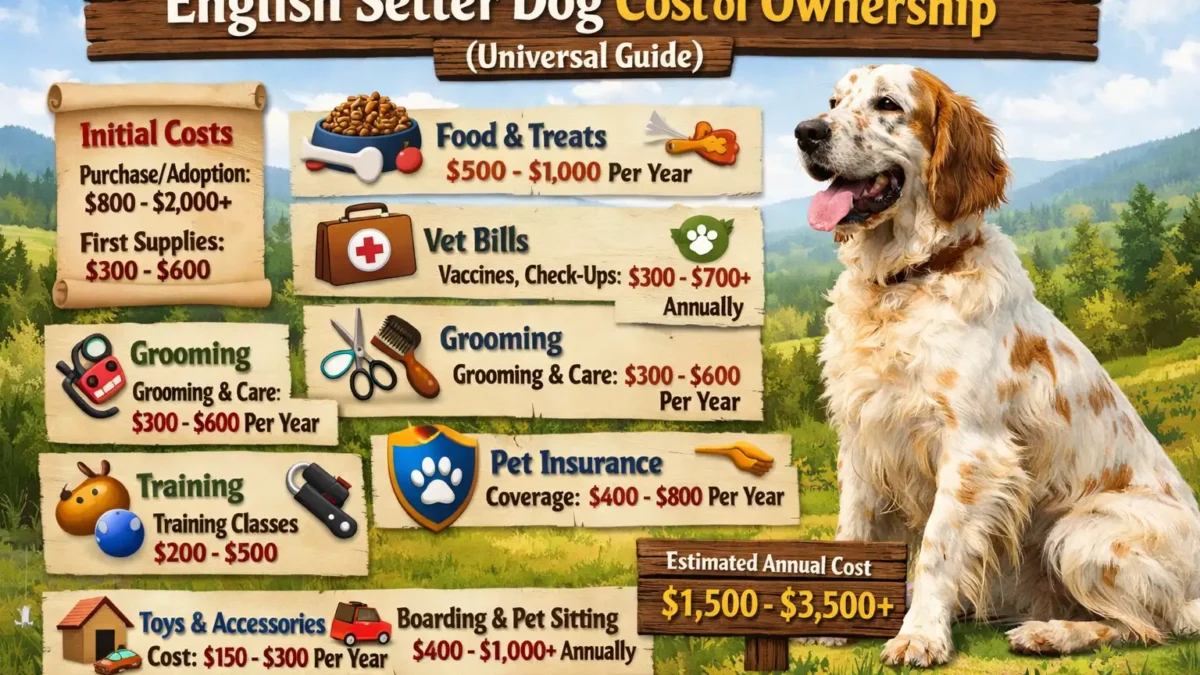
English Setter Cost of Ownership: Complete First-Year, Monthly, and Lifetime Costs
Owning an English Setter is not just an emotional commitment—it’s a long-term financial one. This guide is designed to give you a clear, realistic picture of the true cost of ownership, beyond breeder prices or adoption fees. Whether you’re considering an English Setter puppy, adopting an adult dog, or budgeting for the years ahead, this section sets the financial expectations upfront—before surprises happen.
What this cost guide covers and who it’s for
This cost-of-ownership guide is built for:
- Prospective English Setter owners deciding if the breed fits their budget
- Current owners planning for rising expenses over time
- Families comparing medium-large sporting breeds
- First-time dog owners who want transparent, real-world numbers
Costs in this guide are presented as realistic ranges, not best-case fantasies. English Setters are active, medium-large dogs with ongoing needs that go well beyond food and basic vet care.
Why English Setters cost more than many people expect
English Setters are often underestimated financially because they’re not a “designer breed.” However, their size, energy level, coat care, and veterinary needs place them solidly in the moderate-to-high cost range for dog ownership.
Common reasons owners underestimate costs include:
- Higher food intake than expected for an athletic 45–80 lb dog
- Regular grooming needs due to feathered coats
- Training and enrichment costs for an intelligent, energetic breed
- Preventative care and injury risk linked to active lifestyles
The biggest mistake new owners make is focusing only on upfront costs, instead of annual and lifetime expenses.
At-a-glance: realistic English Setter ownership costs
The table below gives a quick financial snapshot. These are typical ranges, not extremes, and assume responsible care.
| Cost Category | Estimated Range |
|---|---|
| First-year total cost | $2,500 – $4,500 |
| Typical annual cost (after year one) | $1,800 – $3,200 |
| Estimated lifetime cost (12–14 years) | $22,000 – $40,000+ |
These numbers reflect:
- Quality food (not bargain diets)
- Routine veterinary care
- Basic grooming and training
- No major medical emergencies
One-Time and First-Year Costs for an English Setter
The first year with an English Setter is always the most expensive year. This is when most setup, medical, and training costs happen together. Many owners are surprised because these costs do not come all at once—but they add up quickly.
Below is a clear and simple breakdown so you know what to expect before bringing an English Setter home.
One-time startup and setup costs
These are costs you usually pay once at the beginning.
| Expense | Typical Cost Range |
|---|---|
| Adoption fee (rescue) | $200 – $500 |
| Puppy from breeder | $800 – $2,000+ |
| Initial vet exam | $75 – $150 |
| Vaccines (first year series) | $150 – $300 |
| Microchip | $40 – $75 |
| Spay or neuter | $200 – $500 |
| Crate, bed, bowls, leash | $150 – $300 |
| Toys and basic supplies | $75 – $150 |
These costs happen fast, often within the first 2–3 months.
Puppy first-year costs vs adult first-year costs
Puppies cost more than adult dogs during the first year. They need more vet visits, more training, and more supplies.
| Cost Area | Puppy (First Year) | Adult Dog (First Year) |
|---|---|---|
| Vet visits | Higher (multiple visits) | Lower (1–2 visits) |
| Training | Puppy classes + basics | Refreshers only |
| Food | Slightly higher | Moderate |
| Supplies | Many items needed | Fewer items needed |
| Total first-year cost | Higher overall | Lower overall |
A puppy’s first year can easily cost $800–$1,500 more than adopting an adult English Setter.
Total estimated first-year cost
When everything is combined, most owners can expect:
| Scenario | Estimated First-Year Cost |
|---|---|
| Adult English Setter | $1,800 – $3,000 |
| English Setter puppy | $2,500 – $4,500 |
These numbers assume:
- Normal health
- Basic training
- No major medical emergencies
Unexpected health issues or damage to furniture can increase costs.
Why this year feels expensive
The first year feels costly because:
- Many expenses happen close together
- Puppies need extra care and training
- Owners are buying items they will not need again
The good news is that costs usually drop after year one, which we cover next.
Ongoing Monthly and Annual Expenses
After the first year, costs become more steady and predictable. These are the expenses you will pay every month and every year to keep an English Setter healthy, clean, and well cared for.
Even though these costs feel smaller than first-year costs, they add up over time.
Monthly cost breakdown
This table shows what most owners spend each month.
| Monthly Expense | Typical Cost Range |
|---|---|
| Food | $50 – $90 |
| Flea, tick, and heartworm prevention | $25 – $45 |
| Grooming (home or light professional) | $20 – $50 |
| Training or enrichment | $15 – $40 |
| Miscellaneous items (toys, treats) | $15 – $30 |
| Estimated monthly total | $125 – $255 |
Some months may cost less. Others may cost more if grooming or training is needed.
Annual recurring costs
These are costs that usually happen once or a few times per year.
| Annual Expense | Typical Cost Range |
|---|---|
| Routine vet visit and vaccines | $200 – $400 |
| Preventatives (year total) | $300 – $500 |
| Grooming (professional or supplies) | $250 – $600 |
| Training refreshers | $150 – $400 |
| License and registration | $10 – $30 |
| Estimated annual total | $1,800 – $3,200 |
This assumes your dog is healthy and does not need special medical care.
What affects these costs most
Your real cost depends on:
- How active your English Setter is
- Whether you groom at home or use a groomer
- Your location (city costs more than rural areas)
- Your dog’s health as they age
An active English Setter may also need more food, more vet visits, and more enrichment.
Good news for owners
Once you get past the first year:
- Costs are easier to plan
- Big setup purchases are done
- Monthly expenses feel more manageable
Planning for these costs early helps avoid stress later.
Major Cost Drivers and Variations for English Setters
Not all English Setter owners pay the same amount. Some spend much more, and some spend less.
How size and activity level change costs
English Setters are medium-large and very active dogs. Active dogs eat more, play more, and visit the vet more often.
| Factor | Lower Cost | Higher Cost |
|---|---|---|
| Body size | Smaller adult (45–55 lb) | Large adult (65–80 lb) |
| Activity level | Daily walks | Running, hiking, hunting |
| Food amount | Moderate | High |
| Injury risk | Lower | Higher |
A very active English Setter can cost $300–$600 more per year than a calm one.
Living situation and location costs
Where you live matters a lot.
| Living Situation | Cost Impact |
|---|---|
| Rural area | Lower vet and grooming costs |
| Small town | Average costs |
| Big city | Higher vet, grooming, and boarding costs |
| Apartment living | More training and daycare costs |
| House with yard | Lower enrichment costs |
City owners often pay 20–40% more than rural owners.
Veterinary costs and health risks
Most English Setters are healthy, but vet costs can still change fast.
| Type of Care | Typical Cost |
|---|---|
| Routine vet visit | $75 – $150 |
| Emergency vet visit | $500 – $2,000+ |
| Long-term medication | $30 – $100 per month |
| Senior dog care | Higher yearly costs |
One emergency visit can equal several years of routine care.
Pet insurance and cost protection
Pet insurance can help with big bills, but it also adds a monthly cost.
| Insurance Item | Typical Range |
|---|---|
| Monthly premium | $30 – $60 |
| Yearly cost | $360 – $720 |
| Deductible | $250 – $500 |
| Best for | Active dogs, accident risk |
Insurance helps most when:
- The dog is very active
- Emergency care is expensive in your area
- Owners want steady monthly bills
Hidden Costs, Budgeting, and Smart Saving Strategies
Many English Setter owners plan for food and vet visits but forget about extra costs that appear over time. These costs are normal, but they can surprise people who are not prepared.
Hidden costs owners often forget
These costs do not happen every month, but they still matter.
| Hidden Expense | Typical Cost Range |
|---|---|
| Boarding or pet sitting | $30 – $75 per day |
| Dental cleaning | $300 – $800 |
| Replacing chewed items | $100 – $400 per year |
| Emergency vet visit | $500 – $2,000+ |
| Travel costs with dog | $100 – $500 per trip |
Even calm dogs can damage beds, toys, or furniture, especially when young.
How to build a simple and safe budget
A good dog budget plans for regular costs and surprises.
| Budget Type | Suggested Amount |
|---|---|
| Monthly basic care | $150 – $250 |
| Emergency savings fund | $1,000 – $2,000 |
| Yearly extra buffer | $300 – $600 |
Saving a small amount each month makes big vet bills much less stressful.
Ways to save money without hurting care
Saving money is good, but cutting the wrong things can harm your dog.
Safe ways to save:
- Groom at home between professional visits
- Buy food in larger bags if storage allows
- Train early to prevent damage and behavior problems
- Use preventive care to avoid bigger vet bills
Risky shortcuts to avoid:
- Skipping vet visits
- Buying very low-quality food
- Ignoring training and exercise needs
Common money mistakes new owners make
Many owners struggle because they:
- Focus only on puppy price or adoption fee
- Do not save for emergencies
- Underestimate grooming and dental costs
- Assume small problems will stay small
Planning ahead is cheaper than fixing problems later.
Quick Cost Summary, FAQs, and Final Reality Check
This final section brings everything together. If you only read one part, this is the quick money overview of what it really costs to own an English Setter.
Quick cost summary table
| Cost Type | Estimated Amount |
|---|---|
| First-year cost | $2,500 – $4,500 |
| Ongoing yearly cost | $1,800 – $3,200 |
| Monthly average | $150 – $265 |
| Lifetime cost (12–14 years) | $22,000 – $40,000+ |
These numbers assume good care, normal health, and no major long-term illness.
Common cost questions owners ask
| Question | Simple Answer |
|---|---|
| Are English Setters expensive dogs? | They are medium-to-high cost dogs |
| Do English Setters cost more than small dogs? | Yes, mainly due to food and care |
| Is a puppy more expensive than an adult? | Yes, especially in the first year |
| Is pet insurance worth it? | Often yes for active dogs |
| Can costs go down after year one? | Yes, but not disappear |
Final reality check before choosing this breed
An English Setter is a loving, active, and friendly dog—but it is not a low-cost pet.
You should feel comfortable if you can:
- Handle regular monthly costs without stress
- Pay for vet care when something goes wrong
- Save money for emergencies
- Commit to 12–14 years of care
If these costs feel manageable, an English Setter can be a wonderful long-term companion.
For more general data on pet expenses and long-term budgeting, you can also review the American Society for the Prevention of Cruelty to Animals dog cost resources, which provide widely cited estimates for annual and lifetime dog ownership costs used by veterinarians and shelters.