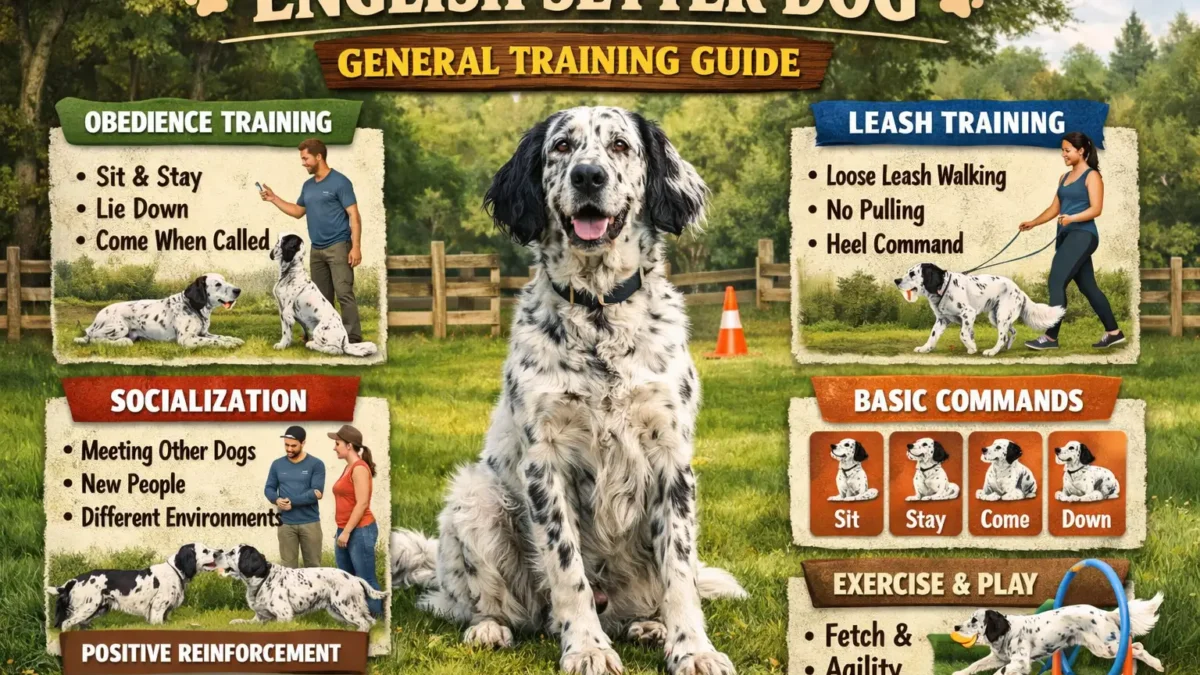
English Setter Training Guide: Practical Obedience & Behavior Tips
Training an English Setter isn’t about forcing obedience—it’s about building reliable communication with a dog that was bred to think independently, follow scent, and work at a distance from humans. This guide is designed to help you train your English Setter in a way that respects those instincts while still creating a well-mannered, responsive companion at home and outdoors.
Whether you’re raising an English Setter puppy, dealing with adolescent “selective hearing,” or retraining an adult dog with little structure, the same core challenge applies: English Setters are intelligent, sensitive, and easily distracted by the world around them. Generic, one-size-fits-all training advice often fails this breed, leading owners to assume their dog is stubborn or untrainable—when in reality, the training approach simply doesn’t match how the dog learns.
This guide focuses on practical, real-world training. You’ll learn how to build focus before demanding obedience, how to train reliably around scent and movement, and how to structure sessions so your English Setter stays engaged instead of overwhelmed. The goal is not perfection, but consistency—clear cues, fair expectations, and steady progress that fits real homes, busy schedules, and dogs at different life stages.
Why This Training Matters
Training an English Setter is not just about good manners. It is about safety, control, and a calm daily life—for both you and your dog.
English Setters are friendly and gentle, but they are also driven by scent and movement. Without training, they can run far, ignore calls, and get into dangerous situations. With the right training, they can enjoy freedom while still staying connected to you.
This section explains why training is so important, especially for this breed.
Training helps your English Setter:
- Stay safe around roads, wildlife, and open spaces
- Listen even when smells and distractions are strong
- Feel calmer and less frustrated at home
- Understand what is expected instead of guessing
When training is missing or rushed, many owners think their dog is “stubborn.” In reality, the dog is confused, overexcited, or simply following instinct.
What training changes in daily life
| Area | With Proper Training | Without Training |
|---|---|---|
| Recall (coming when called) | Dog returns even when distracted | Dog runs off and ignores calls |
| Leash walking | Calm, steady walking | Pulling, zig-zagging, frustration |
| Mental state | Relaxed and focused | Restless, bored, overexcited |
| Safety outdoors | Lower risk of accidents | High risk of roaming or getting lost |
| Owner stress | Clear communication | Daily frustration |
Training also builds trust. Your dog learns that listening to you leads to good outcomes, not pressure or fear. This is especially important for English Setters, who are sensitive and do not respond well to harsh methods.
Good training does not mean long sessions or strict rules. It means clear guidance, fair rewards, and steady practice over time.
Understanding the English Setter’s Behavior
To train an English Setter well, you first need to understand how this breed thinks and reacts. Many training problems happen because owners expect English Setters to behave like other dogs.
English Setters were bred to work far away from people while following scent. This means they are smart, but also easily distracted and sometimes slow to respond when something more interesting is nearby.
Key behavior traits you will notice:
- Strong interest in smells, birds, and movement
- Friendly and gentle with people
- Sensitive to tone, pressure, and harsh corrections
- Independent thinking, especially outdoors
- Slower emotional maturity than some breeds
This does not mean English Setters are hard to train. It means they need training that matches their natural instincts.
How behavior affects training
| English Setter Trait | What Owners Often See | What Training Should Focus On |
|---|---|---|
| Strong scent drive | Dog ignores commands outside | Train focus before freedom |
| High sensitivity | Dog shuts down with yelling | Use calm voice and rewards |
| Independent nature | Selective listening | Short, engaging sessions |
| High energy | Restlessness or boredom | Mental work + physical exercise |
| Slow maturity | Puppy-like behavior longer | Patience and steady practice |
English Setters do best when training feels interesting and fair. Repeating commands, raising your voice, or forcing control often makes them tune out. When training is clear and rewarding, they learn quickly and enjoy working with you.
Step-by-Step Training Method
Training an English Setter works best when you follow clear steps and move at the dog’s pace. This breed learns quickly, but only when training is simple, short, and rewarding.
Before teaching many commands, your dog must learn focus. A dog that cannot focus cannot listen—especially outside.
Basic training rules for English Setters:
- Keep sessions short (5–15 minutes)
- Train every day, not once in a while
- Use rewards your dog truly loves (food, toys, praise)
- Practice first in quiet places before going outside
- Do not rush to off-leash freedom
Start indoors, then slowly add distractions. Skipping steps often causes recall and listening problems later.
Simple training order to follow
| Training Stage | Where to Train | Main Goal | Session Length | What to Expect |
|---|---|---|---|---|
| Stage 1 | Inside the house | Name response, focus | 5–10 minutes | Dog looks at you when called |
| Stage 2 | Yard or quiet area | Basic cues, short recall | 10 minutes | Dog listens with mild distractions |
| Stage 3 | Leash walks | Loose leash, calm walking | 10–15 minutes | Less pulling, better attention |
| Stage 4 | Outdoor areas | Recall with distractions | 15 minutes | Dog returns most of the time |
| Stage 5 | Higher freedom | Reliability testing | Short sessions | Gradual trust building |
Rewards should come immediately after your dog does the right thing. Late rewards confuse the dog and slow learning. Always end training on a good note, even if progress feels small.
English Setters learn best when training feels like a game, not a chore. Calm energy, clear signals, and patience make a big difference.
Common Problems & Fixes
Many English Setter owners face the same training problems. These issues are normal for this breed and do not mean your dog is bad or untrainable. Most problems come from too much freedom too soon, unclear rules, or training in places that are too distracting.
Below are common problems and simple ways to fix them.
| Common Problem | Why It Happens | Simple Fix |
|---|---|---|
| Dog ignores recall outside | Smells are more exciting than you | Use a long leash and high-value treats |
| Pulling on the leash | Dog wants to move fast and explore | Stop walking when pulling starts |
| Listens at home but not outside | Dog has not learned cues everywhere | Practice in new places slowly |
| Seems stubborn or “doesn’t care” | Dog is distracted or confused | Shorter sessions, better rewards |
| Gets overexcited easily | Too much energy, not enough focus | Add mental games and calm training |
Many owners repeat commands over and over. This teaches the dog that listening is optional. Say the command once, wait, and reward when your dog responds.
Another common mistake is training only when there is time. Short daily practice works much better than long sessions once a week.
When to Seek Professional Help
Most English Setters can be trained at home with time and patience. But some situations need extra support. Getting help early can prevent small problems from becoming serious.
You should consider professional help if:
- Your dog shows fear, panic, or shuts down during training
- Aggression appears toward people or other dogs
- Recall training fails after weeks of steady practice
- Your dog becomes more anxious instead of calmer
- Training feels unsafe or overwhelming
Professional trainers can see things owners often miss. They can adjust timing, rewards, and methods to fit your dog better.
When home training is not enough
| Situation | Home Training | Professional Help |
|---|---|---|
| Mild distraction issues | Yes | Optional |
| Fear or anxiety | No | Yes |
| Aggression or snapping | No | Yes |
| No progress after 8–10 weeks | No | Yes |
| Owner feels stuck | No | Yes |
Choose a trainer who uses calm, reward-based methods and understands hunting breeds. Harsh training can damage trust and make behavior worse for sensitive dogs like English Setters.
In some cases, a veterinarian may also help, especially if anxiety or sudden behavior changes appear.
For more breed-specific background and general guidance, you can also review the official American Kennel Club overview of the English Setter, which includes temperament traits and training considerations from a breed-standard perspective.