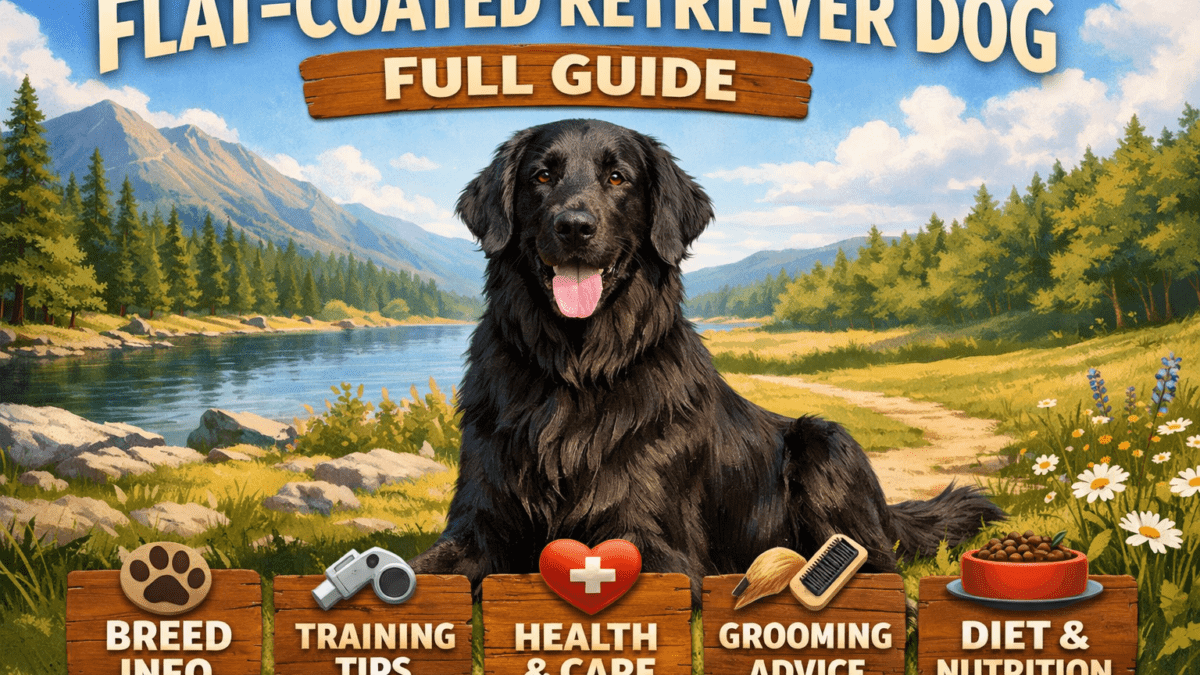
Flat-Coated Retriever Dog Full Guide: Temperament, Care, Costs & Health
The Flat-Coated Retriever is a strikingly elegant, people-loving retriever breed known for its joyful attitude, athletic build, and famously youthful personality. Often called the “Peter Pan of retrievers,” this breed is cherished for staying playful, optimistic, and emotionally open well into adulthood—sometimes longer than owners expect. That enduring puppy-like spirit is exactly what attracts many people to the breed, and also what makes it a poor fit for others.
This guide is designed for readers who want a clear, realistic, and experience-based understanding of what living with a Flat-Coated Retriever is actually like. Rather than repeating generic breed summaries, it focuses on temperament in real-life situations, daily care expectations, long-term health considerations, and the practical costs and commitments involved. The goal is to help you decide not just whether the Flat-Coated Retriever is a wonderful dog—but whether it is the right dog for your lifestyle, household, and energy level.
Flat-Coated Retrievers were developed as working gundogs, and that heritage still shapes nearly every aspect of their behavior today. They are highly social, deeply people-oriented, and happiest when they feel included in everyday life. At the same time, their sensitivity, slow emotional maturity, and high activity needs can surprise first-time owners who expect a calmer, more self-contained retriever.
If you are researching this breed because you want an affectionate family dog, an active outdoor companion, or a retriever with a softer, more expressive temperament, this guide will walk you through the key factors that matter most—before you commit.
Flat-Coated Retriever Temperament, Personality & Suitability
The Flat-Coated Retriever is best known for its happy, friendly, and people-loving nature. This breed is very social and likes to be part of everything the family does. Many owners say their dog always wants to be close, whether that means following them around the house or sitting at their feet.
One important thing to understand is that Flat-Coated Retrievers mature slowly. Even as adults, they often act like puppies. This means lots of excitement, playful behavior, and a strong need for attention. For active homes, this is fun and charming. For quieter homes, it can feel overwhelming.
They are usually gentle, kind, and eager to please. They do best in homes where they get daily interaction, exercise, and mental challenges. Being left alone too often can lead to boredom, barking, or destructive behavior.
Temperament traits at a glance
| Trait | What this means in daily life |
|---|---|
| Friendliness | Very friendly with family, visitors, and strangers |
| Energy level | High energy, needs daily exercise and play |
| Trainability | Smart and willing, but can be easily distracted |
| Emotional sensitivity | Strong emotions, responds best to gentle training |
| Independence | Low; prefers being with people most of the time |
Flat-Coated Retrievers are usually excellent with children because they are playful and patient. However, their excitement and size mean supervision is important around very young kids. They may accidentally knock someone over when happy or excited.
With other dogs, they are generally social and friendly. With smaller pets, they usually do well if raised together, though chasing can happen because of their retrieving instincts.
Lifestyle suitability overview
| Lifestyle | Suitability | Notes |
|---|---|---|
| Families with children | Very good | Best with active families who enjoy outdoor time |
| First-time owners | Moderate | Easy-going but high energy and emotional needs |
| Apartment living | Poor to fair | Possible only with lots of daily exercise |
| Seniors | Poor | Too energetic for most low-mobility owners |
| Active owners | Excellent | Ideal for hiking, running, and outdoor sports |
| Multi-pet homes | Good | Social with proper introductions |
Common myths to know
- Myth: They calm down early like Labradors
Reality: Many stay playful well into adulthood - Myth: Friendly means low training needs
Reality: They still need structure, training, and routine
Size, Appearance, Exercise & Daily Care Needs
Living with a Flat-Coated Retriever means sharing your day with a medium-to-large, active, and athletic dog. This breed is built for movement and work, not for sitting still all day. Knowing their size, energy level, and daily care needs helps avoid surprises later.
Flat-Coated Retrievers have a lean and sporty body, not bulky or heavy. They look elegant when they move and can keep going for long periods without getting tired. Their coat is smooth and flat, with light feathering on the legs, chest, and tail.
Size and physical traits
| Feature | Typical range |
|---|---|
| Height | 22–24.5 inches |
| Weight | 55–75 pounds |
| Build | Lean, athletic, well-balanced |
| Coat type | Flat, dense, weather-resistant |
| Coat colors | Solid black or solid liver |
Because of their size and strength, they do best in homes where there is room to move. They can live in smaller spaces only if their exercise needs are fully met every day.
Flat-Coated Retrievers need a lot of daily activity. A short walk is not enough. They were bred to retrieve on land and water, and they still need that kind of movement to stay calm and happy.
Daily care and activity needs
| Daily need | What to expect |
|---|---|
| Physical exercise | 90–120 minutes per day |
| Mental stimulation | Games, training, problem-solving |
| Brushing | 2–3 times per week |
| Shedding | Moderate, heavier in seasonal sheds |
| Heat tolerance | Fair to low; prefers cooler weather |
Without enough exercise, this breed can become restless. This may show as jumping, chewing, barking, or not listening well. Mental work is just as important as physical activity. Fetch games, scent work, training sessions, and puzzle toys help a lot.
Grooming is not hard, but it must be regular. Their feathering can tangle if ignored. Ears should be checked often, especially after swimming, and nails should be trimmed to avoid cracking.
Health, Lifespan & Long-Term Ownership Considerations
Flat-Coated Retrievers are loving dogs, but they are known to have more health risks than many other retriever breeds. Understanding these risks is very important before bringing one home. This is not to scare owners, but to help them plan and care for the dog in the best way.
The average lifespan of a Flat-Coated Retriever is about 8 to 10 years. Some live longer, especially with good care, healthy weight, and early health checks. Still, this breed is sadly known for a higher risk of certain cancers, which is why responsible breeding and regular vet visits matter so much.
Typical lifespan and care focus
| Area | What owners should know |
|---|---|
| Average lifespan | 8–10 years |
| Senior stage | Often starts around age 6–7 |
| Preventive care | Early screenings and regular vet checks |
| Weight control | Very important for joint and overall health |
| Insurance value | Strongly recommended for this breed |
Cancer is the biggest health concern in Flat-Coated Retrievers. One type, called histiocytic sarcoma, is seen more often in this breed than in many others. Not every dog will get cancer, but the risk is high enough that owners should be prepared emotionally and financially.
Other health issues can also appear, especially as the dog gets older.
Common health issues in Flat-Coated Retrievers
| Condition | Risk level | Notes |
|---|---|---|
| Cancer | High | Main health concern in the breed |
| Hip dysplasia | Moderate | Can affect movement and comfort |
| Elbow dysplasia | Moderate | May cause stiffness or limping |
| Eye problems | Low to moderate | Regular eye checks are helpful |
| Bloat (GDV) | Moderate | Large, deep chest increases risk |
Good breeders test their dogs before breeding. This may include hip and elbow checks and eye exams. Buying from a breeder who does health testing does not guarantee a perfect dog, but it greatly improves the chances of a healthier life.
Long-term ownership also means understanding the emotional side of this breed. Flat-Coated Retrievers form deep bonds with their families. They do not handle long periods alone very well and may struggle with separation stress. They do best in homes where someone is around often or where daily routines are stable.
Cost, Pros & Cons, and Similar Breed Comparisons
Before choosing a Flat-Coated Retriever, it is important to understand the cost, good points, hard parts, and how this breed compares to others.
Flat-Coated Retrievers are not cheap dogs to own. The cost is not just the puppy price. Their health needs, activity level, and care over time can add up.
Typical cost to own a Flat-Coated Retriever
| Cost area | What to expect |
|---|---|
| Puppy price | Medium to high from responsible breeders |
| Food | Higher cost due to size and energy level |
| Grooming | Low to moderate if brushed at home |
| Vet care | Higher than average because of health risks |
| Pet insurance | Strongly recommended |
Medical costs are often the biggest concern. Because this breed has a higher cancer risk, many owners choose pet insurance early to help with future bills.
Pros and cons at a glance
| Pros | Cons |
|---|---|
| Very friendly and loving | High energy every day |
| Great with families and kids | Slow to mature emotionally |
| Playful and fun personality | Needs lots of attention |
| Smart and eager to please | Can struggle when left alone |
| Beautiful, athletic appearance | Higher health risks than other retrievers |
This breed is best for people who enjoy active daily life, like walking, hiking, training, and spending time outdoors. It is not a good choice for owners who want a calm, low-energy dog.
How this breed compares to similar retrievers
| Breed | Energy level | Health risk | Grooming | Best for |
|---|---|---|---|---|
| Flat-Coated Retriever | Very high | High | Moderate | Active, hands-on owners |
| Golden Retriever | High | Moderate | High | Families wanting balance |
| Labrador Retriever | High | Moderate | Low | First-time owners |
| Curly-Coated Retriever | High | Moderate | Low | Independent owners |
| Nova Scotia Duck Tolling Retriever | Very high | Moderate | Moderate | Sport-focused owners |
Flat-Coated Retrievers stand out for their joyful personality and deep emotional bond, but they also ask more from their owners in time, energy, and care.
Final thoughts
The Flat-Coated Retriever is a wonderful dog for the right home. This breed is ideal for people who want a loving companion, enjoy daily activity, and are ready for a strong emotional connection. It may not be the best choice for quiet homes, busy schedules, or owners who want a low-maintenance dog.
For official breed standards, history, and responsible ownership guidance, you can also review the Flat-Coated Retriever information provided by the American Kennel Club.