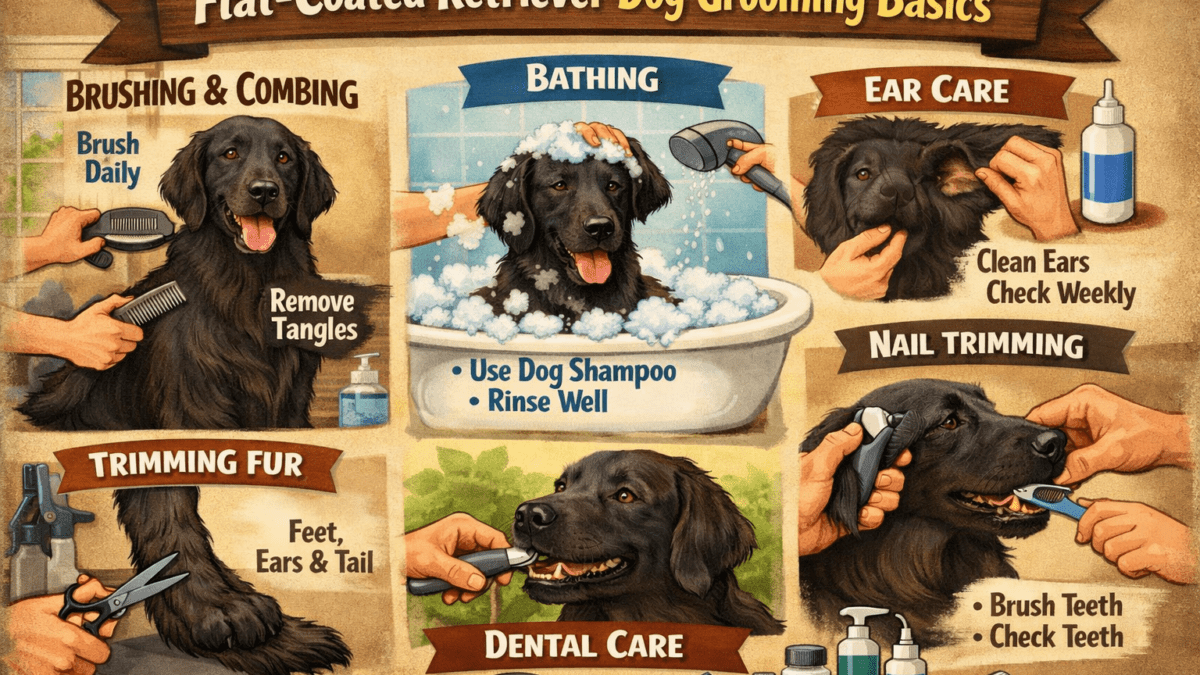
Flat-Coated Retriever Dog Grooming Basics: Complete Coat Care Guide
Flat-Coated Retrievers are known for their sleek, shiny black or liver coats and elegant feathering, but that appearance doesn’t maintain itself without regular grooming. Proper grooming is not just about keeping this breed looking good — it plays a direct role in skin health, comfort, shedding control, and even behavior.
This guide is designed to help Flat-Coated Retriever owners understand how to care for their dog’s coat correctly at home, using safe methods that protect the natural texture of the coat rather than damage it. Many owners underestimate grooming needs because Flat-Coated Retrievers do not have a thick double coat like some retrievers, but their feathered single coat still requires consistent care to prevent tangles, excessive shedding, and skin issues.
Regular grooming helps remove loose hair, dirt, pollen, and debris that collect in the feathering around the ears, chest, legs, and tail. It also allows owners to spot early warning signs such as dry skin, redness, unusual odor, or small mats forming in friction areas. Dogs that are groomed consistently are often more comfortable, less itchy, and easier to handle during brushing, bathing, and nail trimming.
One of the most important grooming principles for Flat-Coated Retrievers is understanding what not to do. Shaving the coat, over-bathing, or using harsh shampoos can disrupt the skin’s natural protective barrier and lead to dull coat texture, increased shedding, or chronic irritation. Proper grooming supports the coat’s natural shine and helps the skin maintain its healthy balance.
Owners who follow a structured grooming routine often notice practical benefits beyond appearance — less hair around the home, fewer tangles after outdoor activity, reduced odor, and a calmer dog that is comfortable being handled. Grooming also strengthens the bond between dog and owner, especially when introduced gradually and done consistently.
To summarize why grooming matters for this breed, the table below highlights the most common benefits and the problems proper grooming helps prevent.
Understanding the Flat-Coated Retriever Coat and Shedding
The Flat-Coated Retriever has a single coat with feathering, not a thick double coat. This means their coat lies flat and smooth on the body, with longer hair around the ears, chest, legs, and tail. Even though the coat looks simple, it still needs regular care to stay healthy and neat.
Because this breed has feathering, dirt, leaves, burrs, and moisture can get trapped easily. These areas also rub against the body when the dog moves, which is why small tangles and mats often start there. Grooming helps keep the coat light, clean, and comfortable.
Flat-Coated Retrievers do shed, but not as heavily as double-coated breeds. Shedding happens all year, with heavier hair loss in spring and fall. During these times, loose hair comes out faster and brushing becomes more important. If shedding seems extreme, it is often a sign of missed grooming, poor diet, skin irritation, or over-bathing.
It is also important to understand that this coat should never be shaved. The coat protects the skin from sun, heat, and dirt. Shaving can make the coat grow back uneven, dull, or patchy and may lead to long-term coat damage.
The table below explains the main coat features of Flat-Coated Retrievers and how they affect grooming.
Flat-Coated Retriever Coat Characteristics and Grooming Impact
| Coat Feature | What It Means | Grooming Impact |
|---|---|---|
| Single coat | No thick undercoat | Easier drying, but still sheds |
| Feathering | Longer hair on ears, legs, tail | Needs regular brushing to avoid tangles |
| Smooth body coat | Hair lies flat on the body | Less matting, but shows dirt easily |
| Seasonal shedding | More hair loss in spring and fall | Extra brushing needed during these months |
| Water-loving breed | Coat gets wet often | Must dry well to prevent odor and skin issues |
Knowing how this coat works makes grooming easier and prevents common mistakes. When owners brush and bathe based on coat type, the dog stays cleaner, sheds less, and feels more comfortable.
Flat-Coated Retriever Grooming Routine at Home
A simple grooming routine at home keeps a Flat-Coated Retriever clean, comfortable, and easy to manage. You do not need fancy tools or daily baths. What matters most is doing the right tasks at the right time.
Most owners do best with regular brushing, occasional baths, and quick checks after outdoor play. This breed loves water, mud, and nature, so light grooming done often works better than heavy grooming done once in a while.
Brushing is the most important step. It removes loose hair, dirt, and small tangles before they turn into mats. Feathering areas like behind the ears, under the chest, behind the legs, and around the tail should always get extra attention. Brushing also spreads natural oils that keep the coat shiny.
Bathing should be done only when needed. Too many baths can dry out the skin and make shedding worse. When you do bathe your dog, always rinse well and dry fully, especially around the ears and feathering. A damp coat can lead to bad smell and skin problems.
Drying matters more than many owners think. Letting a Flat-Coated Retriever stay wet for hours can cause itching and hot spots. Towel-dry first, then air-dry or use a low-heat dog dryer if needed.
The table below shows how often basic grooming tasks should be done.
Flat-Coated Retriever Grooming Frequency Schedule
| Grooming Task | How Often | Why It Matters |
|---|---|---|
| Brushing | 2–3 times per week | Prevents tangles and controls shedding |
| Brushing during shedding season | 4–5 times per week | Removes loose hair faster |
| Bathing | Every 4–8 weeks | Keeps coat clean without drying skin |
| Quick coat check | After outdoor play | Removes dirt, burrs, and moisture |
| Full grooming session | Once a week | Keeps coat healthy and manageable |
Using the right tools makes grooming easier and safer. Harsh or wrong tools can damage the coat or hurt the skin. Flat-Coated Retrievers do best with gentle tools made for medium to long hair.
Grooming Tools for Flat-Coated Retrievers
| Tool | What It Is Used For | Why It Helps |
|---|---|---|
| Slicker brush | Removes loose hair and small tangles | Works well on feathering |
| Pin brush | Smooths coat and finishes brushing | Gentle on skin |
| Metal comb | Checks for hidden mats | Good for ears and tail |
| Dog shampoo | Cleans coat and skin | Must be dog-safe |
| Towels | Drying after baths or swims | Reduces skin problems |
Keeping grooming calm and short helps dogs stay relaxed. Many Flat-Coated Retrievers enjoy grooming once they get used to it, especially if it becomes part of a weekly routine.
Nail, Ear, Teeth, and Skin Care for Flat-Coated Retrievers
Grooming is more than brushing and bathing. Flat-Coated Retrievers also need regular care for their nails, ears, teeth, and skin. These small tasks help prevent pain, infections, and bad smells.
Nail care is important for comfort and movement. Long nails can make walking painful and may cause joint stress over time. Most dogs need nail trimming every few weeks. If you hear nails clicking on the floor, they are too long. Always trim slowly and avoid cutting too deep, as this can cause bleeding and fear.
Ear care is very important for this breed because they have floppy ears and love water. Moisture can get trapped inside the ears, which can lead to infections. Ears should be checked weekly and cleaned only when dirty. Never push anything deep into the ear canal. Redness, strong odor, or constant head shaking are signs to call a vet.
Teeth care helps prevent bad breath and gum disease. Many dogs suffer from dental problems without owners noticing. Brushing the teeth a few times a week can greatly improve mouth health. Dental chews can help, but they do not replace brushing.
Skin checks should be part of every grooming session. Look for redness, flakes, sores, bumps, or strong smells. Early skin problems are easier to fix than long-term ones. Flat-Coated Retrievers that swim often should be dried well to avoid hot spots and irritation.
The table below shows how often these care tasks should be done.
Routine Care Tasks Beyond Brushing
| Care Task | How Often | Why It Is Important |
|---|---|---|
| Nail trimming | Every 3–4 weeks | Prevents pain and walking problems |
| Ear checking | Weekly | Catches infections early |
| Ear cleaning | As needed | Removes dirt and moisture |
| Teeth brushing | 2–3 times per week | Prevents dental disease |
| Skin check | Weekly | Finds issues before they worsen |
Doing these small care steps regularly keeps your dog healthier and more comfortable. It also reduces vet visits caused by preventable problems.
Professional Grooming, Common Mistakes, and Grooming FAQs
Many Flat-Coated Retriever owners groom their dogs at home, but professional grooming can still be helpful at times. A professional groomer can deep-clean the coat, trim feathering neatly, and handle heavy shedding or mats that are hard to manage at home. Most Flat-Coated Retrievers only need professional grooming a few times a year unless they get very dirty or tangled often.
Home grooming works well for regular brushing, light bathing, nail trims, and quick checks. Professional grooming is better when the coat is badly tangled, the dog hates grooming, or the owner feels unsure about tools like dryers or nail clippers.
There are also common grooming mistakes that many owners make without realizing it. Shaving the coat is one of the biggest mistakes. This does not reduce heat and can damage the coat for a long time. Another mistake is bathing too often, which dries out the skin and makes shedding worse. Skipping ear drying after swimming is another common issue that can lead to infections.
Puppies, adult dogs, and senior dogs may need slightly different care. Puppies need short, gentle grooming sessions to help them learn. Seniors may need more patience, softer brushes, and shorter sessions because of joint pain or sensitive skin.
The table below helps owners decide when home grooming is enough and when professional help is better.
Home Grooming vs Professional Grooming for Flat-Coated Retrievers
| Grooming Need | Home Grooming | Professional Grooming |
|---|---|---|
| Regular brushing | Yes | Optional |
| Bathing | Yes | Yes (for deep clean) |
| Nail trimming | Yes (with care) | Yes |
| Heavy shedding | Limited | Better option |
| Mat removal | Small mats only | Best for large mats |
| Nervous dogs | Sometimes hard | Trained handling |
Below are short answers to common grooming questions owners often ask.
Flat-Coated Retrievers do not need haircuts. Their coat should stay natural, with only light trimming of feathering if needed.
They should be brushed several times a week, and more often during shedding seasons.
Most dogs only need a bath every one to two months unless they get dirty.
Shaving is not recommended and can harm the coat and skin.
Regular grooming keeps this breed clean, healthy, and comfortable. With a simple routine and the right tools, most owners can handle grooming at home and use professional help only when needed.
To learn more about official breed standards and general care guidance, you can also visit the American Kennel Club, which provides trusted information about Flat-Coated Retrievers and responsible dog ownership.