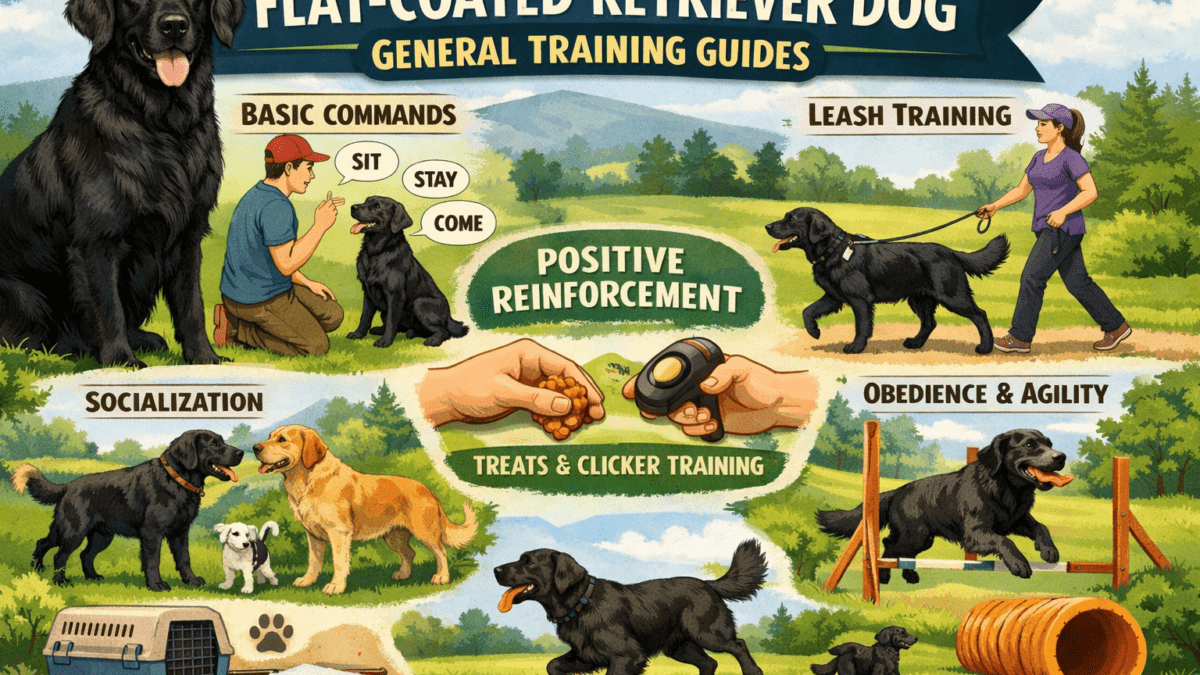
Flat-Coated Retriever Training Guide: Practical Tips for Puppies & Adults
Training a Flat-Coated Retriever is about channeling enthusiasm, not suppressing it. This breed is famously joyful, social, and energetic, which makes training both rewarding and, at times, challenging—especially for first-time owners who expect instant maturity. This guide is designed to give you a clear, practical framework for training a Flat-Coated Retriever at any life stage, from young puppies to high-energy adolescents and adult dogs who still act like oversized pups.
Unlike many breeds that settle quickly, Flat-Coated Retrievers mature slowly—often staying mentally “young” well into adulthood. That means successful training relies on patience, consistency, and an understanding of how excitement, sensitivity, and motivation shape their behavior. Generic obedience advice often falls short with this breed, which is why a breed-aware approach matters.
This article focuses on general, everyday training: building focus, teaching basic manners, managing excitement, and preventing common behavior problems before they become habits. It’s written for family homes, busy households, and active owners who want a dog that’s not just obedient in theory, but reliable in real life—on walks, around guests, and in distracting environments.
Why Proper Training Matters for Flat-Coated Retrievers
Flat-Coated Retrievers are friendly, playful, and full of energy. These traits are wonderful, but without proper training, they can quickly turn into problems. Many behavior issues in this breed are not caused by “bad dogs,” but by a lack of clear rules and guidance.
Training helps your dog understand how to behave safely around people, other dogs, and everyday distractions. A large, excited dog that jumps, pulls on the leash, or ignores recall can easily knock someone over or run into danger. Good training reduces these risks and makes daily life calmer for everyone.
Training is also important for mental health. Flat-Coated Retrievers are smart and social. When they don’t get mental structure, they often become restless, overly excited, or frustrated. This can show up as constant barking, chewing, or wild behavior indoors.
Most importantly, training builds communication. Your dog learns what you want, and you learn how your dog thinks. This creates trust instead of confusion, especially during the long adolescent phase when this breed can seem forgetful or stubborn.
Training outcomes with vs without structure
| With regular training | Without regular training |
|---|---|
| Calm greetings | Jumping on people |
| Better focus on walks | Pulling and lunging |
| Improved recall | Running off when excited |
| Relaxed indoor behavior | Constant restlessness |
| Strong bond with owner | Frustration on both sides |
Proper training does not mean strict control. It means giving your Flat-Coated Retriever clear, fair rules so they can succeed in real life, not just in quiet training sessions.
Understanding Flat-Coated Retriever Behavior & Learning Style
Flat-Coated Retrievers are known for being happy, friendly, and full of energy. They love people and want to be part of everything. This makes them fun dogs, but it also means they can get distracted very easily during training.
This breed is smart, but they are not always calm thinkers. When they feel excited, they may forget what they already know. This is normal for Flat-Coated Retrievers, especially during the teenage stage. Many owners think their dog is being stubborn, but most of the time the dog is simply overexcited.
Flat-Coated Retrievers are also very sensitive. They learn best when training feels positive and safe. Yelling, harsh corrections, or strong leash pulling can make them shut down or become more wild instead of learning faster. Calm voices, clear rewards, and short sessions work much better.
They also take longer to grow up compared to many other breeds. Some Flat-Coated Retrievers act like puppies until they are two or even three years old. Knowing this ahead of time helps owners stay patient and keep training steady.
Breed traits and how they affect training
| Breed trait | What this means for training |
|---|---|
| Very social | Needs early training for calm greetings |
| High energy | Short, frequent sessions work best |
| Easily excited | Distractions should be added slowly |
| Emotionally sensitive | Harsh methods can slow learning |
| Slow to mature | Training must stay consistent for years |
Understanding how your Flat-Coated Retriever thinks helps you train smarter, not harder. When training matches their personality, progress becomes much easier and more enjoyable.
Step-by-Step Flat-Coated Retriever Training Method
Training a Flat-Coated Retriever works best when it is simple, clear, and consistent. This breed learns fast, but only when training fits their energy level and attention span. Long or boring sessions usually lead to frustration for both the dog and the owner.
Start with short training sessions. Five to ten minutes is enough for most dogs. You can train more than once a day, but keep sessions calm and focused. Always end on a success, even if it is something small like a good sit or eye contact.
Rewards are very important for this breed. Flat-Coated Retrievers respond well to food, praise, and play. Give the reward right after the dog does the correct behavior. Good timing helps the dog understand exactly what they did right.
Training should change as your dog grows. Puppies need basic focus and calm handling. Adolescent dogs need help with self-control and distractions. Adult dogs need practice in real-life situations, not just at home.
Training priorities by age
| Age stage | Main training focus |
|---|---|
| Puppy (8–16 weeks) | Name response, focus, gentle handling |
| Young dog (4–9 months) | Leash skills, basic commands |
| Adolescent (9–36 months) | Impulse control, recall with distractions |
| Adult | Practice and maintain good habits |
Consistency matters more than perfection. It is better to train a little every day than to train a lot once a week. Use daily life as training time, like asking for a sit before meals or calm behavior before going outside.
Ideal training session structure
| Training part | Recommendation |
|---|---|
| Session length | 5–10 minutes |
| Sessions per day | 2–4 short sessions |
| Rewards | Small treats, praise, play |
| Training mood | Calm and positive |
| Ending | Stop after success |
When training feels clear and fair, Flat-Coated Retrievers enjoy learning. This helps reduce wild behavior and builds a strong bond between you and your dog.
Common Training Problems, Mistakes & When to Get Help
Even with good training, Flat-Coated Retrievers can struggle with certain behaviors. Most problems come from excitement, too much freedom too soon, or unclear rules. The good news is that many issues can be fixed with small changes.
Jumping on people is very common. These dogs love greeting everyone. Pulling on the leash also happens because they want to reach smells, people, or other dogs fast. Ignoring commands usually means the dog is too excited or distracted, not that they are being stubborn.
Many owners make mistakes without realizing it. Giving attention when a dog jumps, repeating commands too many times, or training for too long can slow progress. Fixing these habits often improves behavior quickly.
The table below shows common problems and the first thing you should try changing.
| Problem | First fix to try |
|---|---|
| Jumping on people | Ignore jumping and reward calm behavior |
| Pulling on leash | Train in quieter areas first |
| Not listening | Use better rewards and shorter sessions |
| Overexcitement | Add calm breaks and reduce chaos |
| Training stalls | Lower difficulty and rebuild success |
Some behaviors are normal, especially during the long teenage stage. However, certain signs mean you should get professional help. Early support can prevent long-term problems and keep your dog safe.
Use this table as a simple guide.
| Sign | What to do |
|---|---|
| No progress after 6–8 weeks | Contact a professional trainer |
| Fear, freezing, or shutdown | Speak to a vet or behavior expert |
| Growling or snapping | Get help immediately |
| Anxiety or panic | Seek professional guidance |
Getting help does not mean you failed. Flat-Coated Retrievers are complex, emotional dogs, and some situations need expert support.
For official breed information and general training guidance, you can also explore the American Kennel Club Flat-Coated Retriever resources, which provide trusted insights on breed temperament, care, and responsible training practices.