German Shepherd Age Calculator: How to Convert Dog Years to Human Years
One of the most common misconceptions in the dog world is the idea that “one dog year equals seven human years.” This rule has been passed down through generations, but it’s an oversimplified approach that doesn’t accurately reflect how dogs age. The aging process for dogs is much more complex and varies depending on breed size, genetics, and other factors.
In reality, the first few years of a dog’s life account for a significant portion of their overall aging, and large breed dogs like the German Shepherd age much faster than small dogs. For instance, a German Shepherd puppy will reach adolescence and adulthood far quicker than a tiny breed like a Chihuahua. As large breeds age, their physical and cognitive abilities decline more rapidly, which is why it’s essential to use a more accurate model to convert dog years into human years.
Overview of German Shepherd Life Stages
The life of a German Shepherd is typically broken down into three main stages: puppyhood, adulthood, and senior years. Each of these stages comes with distinct changes in both physical development and behavioral needs.
- Puppyhood (0-2 years): During this phase, German Shepherds grow rapidly. They develop from small, playful pups to strong, agile young dogs. Their energy levels are high, and they are eager to learn and socialize. This stage is crucial for socialization and training.
- Adulthood (3-6 years): German Shepherds are fully grown during this stage, with well-developed muscles, stamina, and intelligence. They are often in their peak physical condition, performing jobs like herding, guarding, or working with police forces. Their energy levels remain high, but they start to settle into more mature behaviors.
- Senior Years (7+ years): German Shepherds are considered seniors once they reach 7 years old. During this stage, you may notice changes in their activity levels, coat condition, and overall health. Joint stiffness, slower movements, and a more relaxed attitude are common signs that your dog is entering the senior phase.
German Shepherds, being a large breed, tend to have shorter lifespans than smaller breeds. On average, a German Shepherd may live between 9 to 13 years, depending on factors like genetics, diet, exercise, and overall health care.
Why Size and Breed Matter for Lifespan
One of the key factors influencing the aging process in dogs is their size. Larger dog breeds, such as the German Shepherd, age faster than smaller breeds. This is why their lifespan tends to be shorter, with larger dogs often reaching their senior years earlier than small dogs.
The general rule is that the bigger the dog, the faster it will age, with giant breeds like Great Danes experiencing the most rapid aging. Conversely, small breeds such as Dachshunds or Chihuahuas tend to live longer and experience a slower aging process. This difference in lifespan means that German Shepherds will often enter their senior years around age 7, but the signs of aging may start to appear even earlier in terms of reduced energy and physical condition.
Understanding how a German Shepherd ages in relation to human years is crucial for providing the right care at each stage of their life. By recognizing the differences between breeds and their unique aging processes, dog owners can ensure that their German Shepherd gets the appropriate attention, nutrition, and medical care needed for each stage of life.
The Science Behind Dog Aging
German Shepherds, like all dogs, follow a unique growth pattern as they age. Understanding how they grow helps us better understand the aging process and how it relates to human years.
In the first two years of life, German Shepherd puppies experience rapid growth. A puppy that’s only a few months old can already be quite large, growing into an adult-sized dog by the time it’s about 1 to 2 years old. This rapid development in their early years means that the first 2 years of a German Shepherd’s life are equivalent to much more than 14 human years. During this time, their body and mind are developing quickly.
After the initial growth spurt, the rate of aging slows down a little, but it doesn’t stop. From 3 to 6 years, German Shepherds are fully mature and typically in their prime. They’re strong, healthy, and energetic. This stage is often the longest part of their life. It’s when they are most active and capable of doing things like working, playing, and exercising without signs of aging. Their bodies and minds are well-developed, and they are ready to perform any tasks they’re trained to do.
After age 7, the aging process starts to accelerate. You may notice that your German Shepherd starts slowing down. They may not play as much as before, and their energy levels might drop. Their joints might start to hurt, and they could develop other signs of aging, like graying fur or slower movements.
It’s helpful to look at this in terms of milestones. Here is an easy-to-understand table that shows how a German Shepherd’s growth and aging stages match up with human years:
Growth Milestones of a German Shepherd Puppy
| Age in Dog Years | Growth Stage (Human Years Equivalent) | Description |
|---|---|---|
| 0-6 months | 0-10 years | Rapid growth, high energy, learning key skills |
| 6-12 months | 10-16 years | Reaching adolescence, training continues |
| 1-2 years | 16-24 years | Fully grown, mature dog, peak physical condition |
| 3-6 years | 24-40 years | Peak adulthood, healthy, active, high stamina |
| 7+ years | 45+ years | Senior years, beginning signs of aging (slower, less active) |
This table can help you see how your dog’s growth compares to human life stages. It’s a helpful way to track your dog’s development and better understand their needs at different ages.
Epigenetic Aging and the 2019 Methylation Study
A key aspect of dog aging is how scientists study it. The 2019 epigenetic methylation study changed how we understand dog aging. Epigenetics is the study of changes in organisms caused by the modification of gene expression rather than changes to the DNA sequence itself. The 2019 study showed that dogs don’t age in a straight line, like the “7-year rule” suggests. Instead, their aging follows a more logarithmic curve, where they age rapidly at first, then slower as they get older.
This study provides a more accurate way to calculate a dog’s age, including German Shepherds. It shows that the first few years are especially fast for growth and aging, while the later years slow down more gradually. This is why a German Shepherd will go from being a young puppy to an adult in a very short time, but then they will age at a more manageable rate.
With this understanding of dog aging, we can better estimate how old a German Shepherd is in human years, especially as they move past their early growth stages into adulthood and senior years.
German Shepherd Age to Human Age Conversion
The common “7-year rule” is a simple but incorrect way to convert dog years to human years. This model suggests that for every year a dog ages, it’s equal to 7 human years. However, we now know that this doesn’t accurately reflect how dogs, especially large breeds like German Shepherds, age.
Research has shown that dogs age faster in their early years and then slow down later. For example, a 1-year-old German Shepherd is closer to a 15-year-old human in terms of development, but by the time they reach 3 years old, they are closer to a 28-year-old human. After that, the aging process continues but at a slower pace.
To make this more accurate, scientists use a logarithmic model to calculate a dog’s age, which means they age rapidly at first and then the rate slows down. This model gives a much better idea of a dog’s real age in human years.
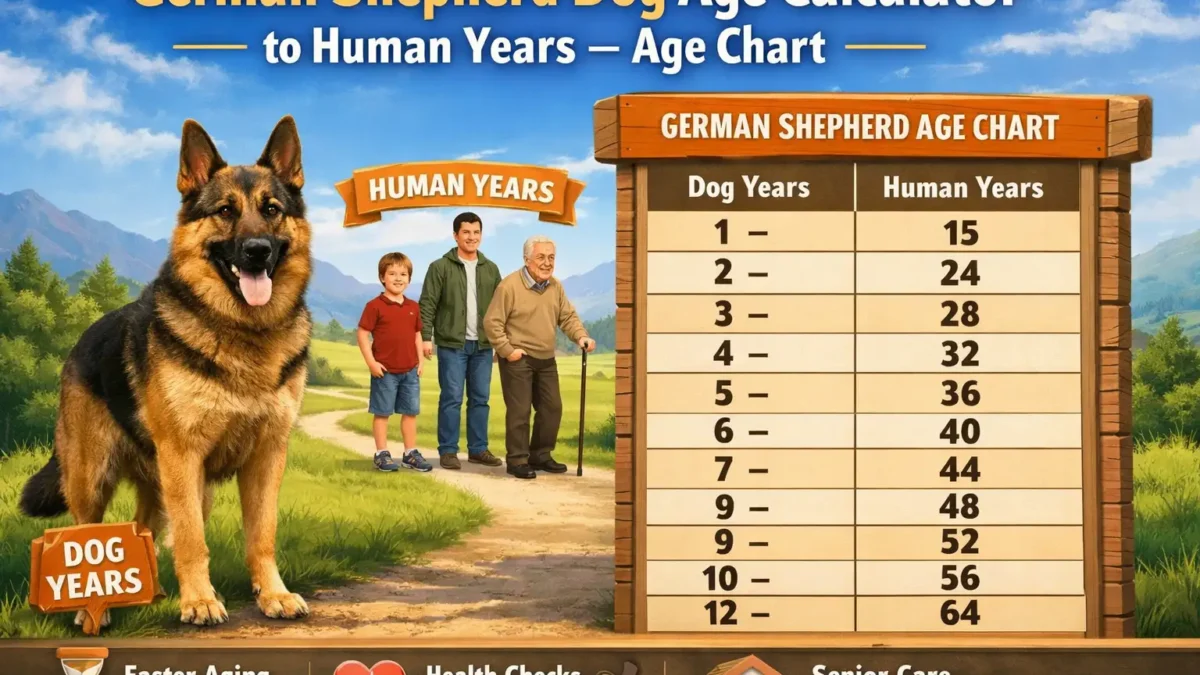
German Shepherd Age Chart
To help you understand how your German Shepherd is aging, we’ve put together a chart that shows the conversion from German Shepherd years to human years. This chart will help you quickly see how your dog’s age compares to human years.
German Shepherd Age to Human Age Chart
| Dog Age (Years) | Human Age Equivalent (Years) |
|---|---|
| 1 | 15 |
| 2 | 24 |
| 3 | 28 |
| 4 | 32 |
| 5 | 36 |
| 6 | 40 |
| 7 | 45 |
| 8 | 49 |
| 9 | 53 |
| 10 | 58 |
| 11 | 62 |
| 12 | 66 |
| 13 | 70 |
| 14 | 74 |
| 15 | 79 |
This chart gives a simple way to check your German Shepherd’s age in human years. As you can see, a 3-year-old German Shepherd is around the same age as a 28-year-old human, and by the time they reach 10, they’re equivalent to a 58-year-old human.
Real Examples
Here are a couple of real-life examples of how the age conversion works:
- A 5-year-old German Shepherd is roughly the same age as a 36-year-old human. This is the age when most German Shepherds are in their prime, full of energy, but starting to show some signs of aging.
- A 10-year-old German Shepherd is like a 58-year-old human. They may begin to show more obvious signs of aging like slower movements or changes in their behavior.
This conversion helps you better understand how your dog’s aging process compares to human aging, and what to expect as they grow older.
German Shepherd Life Stages and Health Considerations
Understanding your German Shepherd’s life stages is important for providing the right care at each age. Just like people, dogs go through different stages of life that bring changes in behavior, physical abilities, and health needs.
Puppyhood (0-2 years)
- This is the fastest growth period. German Shepherd puppies are full of energy and curiosity. They will quickly learn about the world and begin their basic training. During this time, their bodies are developing, and they grow stronger every day.
- Health Considerations: Regular vet visits for vaccinations, deworming, and check-ups are important. Puppy training is essential to help them grow into well-behaved adult dogs.
Adulthood (3-6 years)
- By the time your German Shepherd reaches 3 years old, they are fully grown and in their prime. They will have a lot of energy and need regular exercise. This stage is often the longest part of their life. Your dog will be fully capable of activities like running, fetching, and playing.
- Health Considerations: Keep up with regular vet check-ups to monitor for any health changes. As they mature, ensure their diet and exercise routine are healthy and balanced.
Senior Years (7+ years)
- Once your German Shepherd reaches 7 years old, they enter their senior years. This is when you may start noticing some changes. They might move slower, sleep more, or not have the same energy they had before. German Shepherds can still live active lives during their senior years, but they may need some adjustments to their lifestyle.
- Health Considerations: Senior dogs may need a special diet to keep their joints healthy and prevent weight gain. Regular vet visits become even more important to detect early signs of diseases like arthritis, heart problems, or dental issues.
Life Stage Comparison of German Shepherds
| Life Stage | Age Range (Dog Years) | Key Characteristics | Health Considerations |
|---|---|---|---|
| Puppyhood | 0-2 years | Rapid growth, high energy, playful | Vet visits, vaccinations, basic training |
| Adulthood | 3-6 years | Fully grown, peak energy, strong | Regular check-ups, balanced diet, exercise |
| Senior Years | 7+ years | Slower movements, reduced energy | Special diet, joint care, regular vet visits |
Signs of Aging and Senior Care Tips
As your German Shepherd enters their senior years, you may notice certain changes. These can include slower movement, more sleeping, or changes in appetite. Paying attention to these signs can help you provide the right care as they grow older.
Some common signs of aging include:
- Reduced mobility: Your dog may not jump as high or run as fast as they once did.
- Joint pain: Older dogs often develop arthritis, which can cause stiffness and discomfort.
- Cognitive changes: Senior dogs can experience cognitive dysfunction, which may show as confusion or difficulty following commands.
Senior Care Tips:
- Nutrition: Make sure your German Shepherd has a senior-friendly diet, which can help with joint health and weight management.
- Exercise: While they may not be able to run as fast or as far, regular, low-impact exercise is still important for keeping them healthy.
- Comfort: Make your home more comfortable for your senior dog by providing soft bedding and easy access to their favorite places.
Frequently Asked Questions About German Shepherd Aging
As your German Shepherd ages, you may have a lot of questions about their health and how their age compares to yours. Here are some of the most common questions dog owners have:
How old is my German Shepherd in human years?
To find out your dog’s age in human years, you can use the German Shepherd age chart we shared earlier. For example, a 5-year-old German Shepherd is like a 36-year-old human, and a 10-year-old German Shepherd is like a 58-year-old human.
Why doesn’t the 7-year rule work for German Shepherds?
The “7-year rule” is an old belief that says each dog year equals seven human years. However, dogs, especially large breeds like German Shepherds, age much faster in their early years. They also age slower as they get older. The new scientific model shows that dogs age quickly during the first few years, then at a slower pace.
What is the best way to care for my senior German Shepherd?
When your German Shepherd reaches their senior years, around 7 years old, they may need some extra care. You can help them stay healthy by giving them a special senior dog food that supports joint health and maintaining a steady, low-impact exercise routine. Regular vet visits will also help catch any health problems early.
When Should You Talk to Your Vet About Aging Concerns?
As your German Shepherd ages, you might notice changes in their behavior or health. Some signs of aging are normal, but others could be a sign of a health issue that needs attention. Here’s when to consider talking to your vet:
- If they become less active: While it’s normal for senior dogs to slow down, a sudden change in activity level can be a sign of pain or discomfort.
- If they show signs of confusion: Senior dogs sometimes have difficulty remembering commands or may seem confused in familiar places. This could be a sign of cognitive dysfunction.
- If they experience difficulty walking or climbing stairs: Joint pain from arthritis is common in older dogs. If your dog seems to struggle more than usual, it’s time for a check-up.
Regular vet visits are key to keeping your German Shepherd healthy in their senior years. Your vet can recommend treatments, medications, and care routines that will help them stay as comfortable and healthy as possible.
For more information on how to care for your aging German Shepherd, visit the American Kennel Club’s guide to senior dog care to get expert tips and advice from veterinary professionals.