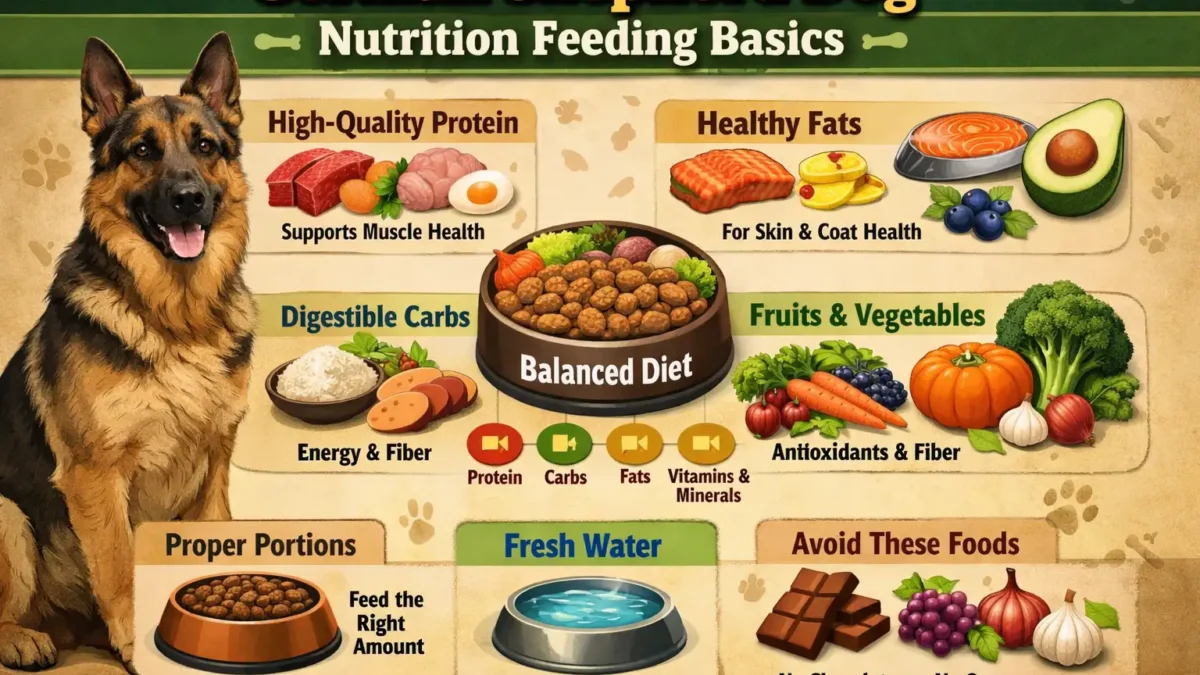
The Ultimate Guide to German Shepherd Dog Nutrition & Feeding
When it comes to owning a German Shepherd, proper nutrition is essential for ensuring your dog’s health, behavior, and longevity. The right diet not only impacts your dog’s energy levels and physical health but also plays a significant role in preventing common health issues such as obesity, digestive problems, and joint issues — all of which are important to consider, especially as your German Shepherd ages.
This guide is designed to provide you with the knowledge you need to make informed decisions about what to feed your German Shepherd at every stage of life, from their puppy years to their senior years. Whether you’re a new dog owner or have years of experience with this intelligent and active breed, understanding the basics of German Shepherd nutrition will help you ensure your dog thrives.
What this guide will help you do:
- Learn about the nutritional needs of German Shepherds, from puppies to seniors
- Understand the key components of a balanced diet for your dog
- Choose the best type of food for your German Shepherd based on their age, size, and activity level
- Avoid common feeding mistakes that can lead to health problems
- Get practical tips on portion sizes, feeding schedules, and more
How proper nutrition affects your German Shepherd’s health, behavior, and longevity
German Shepherds are an active, intelligent breed, and their nutritional needs are specific to support their energy levels, muscle development, and overall well-being. Feeding them the right foods helps:
- Promote healthy growth and development: Proper nutrition is crucial for puppies and adolescents to grow at a healthy rate and develop strong bones, muscles, and joints.
- Support active lifestyles: This breed thrives on physical activity, so providing the right balance of protein, fats, and carbohydrates will ensure they have the energy to exercise and perform well.
- Prevent health issues: Poor nutrition can lead to obesity, digestive problems, and joint issues, which are common in German Shepherds, particularly as they age.
- Boost cognitive function: With their high intelligence, German Shepherds benefit from nutrients that support brain health and memory, keeping them alert and engaged.
By choosing the right foods and feeding your German Shepherd properly, you’ll be laying the foundation for a long, healthy, and active life.
Understanding your dog’s unique nutritional needs
German Shepherds require a diet that is high in protein, balanced in fats, and rich in essential vitamins and minerals. Their active nature means they need more calories compared to less active breeds, and their larger size demands careful attention to portion control and balanced nutrition.
As we dive into the details of this guide, we’ll cover everything you need to know, including the different types of food available, how much to feed, and how to make sure your German Shepherd’s diet is tailored to their specific needs.
Core Principles of German Shepherd Nutrition
When it comes to feeding your German Shepherd, it’s important to understand what nutrients they need and how to provide a balanced diet. German Shepherds are strong, active dogs that need the right mix of food to stay healthy and energetic.
Understanding basic nutritional needs for German Shepherds
German Shepherds require a balanced diet that includes a combination of macronutrients (proteins, fats, and carbs) and micronutrients (vitamins and minerals). These nutrients help keep their body functioning properly, support their muscles, and keep their immune system strong.
- Proteins: Protein is essential for muscle growth and repair. German Shepherds are muscular dogs, so they need a good amount of protein in their diet.
- Fats: Healthy fats provide energy and help keep their coat shiny and healthy. They also support brain function.
- Carbohydrates: Carbs provide energy, especially for active dogs. They help your German Shepherd stay energetic throughout the day.
A proper balance of these nutrients is necessary for your dog to stay healthy, energetic, and free from diseases.
Macronutrients (protein, fats, carbs): Why they matter for your dog
Here’s a simple breakdown of why each of these nutrients is important:
- Protein: Essential for muscle strength and growth. For a German Shepherd, you should aim for high-quality animal-based proteins, such as chicken, beef, or fish.
- Fat: Provides the energy they need for daily activities. Fat also helps maintain a healthy coat and skin.
- Carbohydrates: Though not as important as protein and fat, carbs help maintain energy levels. They are often found in grains, vegetables, and fruits.
Micronutrients (vitamins, minerals) and when supplements are needed
Vitamins and minerals are just as important as macronutrients, though they are needed in much smaller amounts. They help maintain overall health, support bone growth, and ensure the proper functioning of the organs.
- Calcium and Phosphorus: Important for bone health, especially for growing puppies.
- Vitamins A, C, and E: Help boost the immune system and fight infections.
- Omega-3 fatty acids: Support healthy skin and coat.
Your German Shepherd may not always need supplements if they’re eating a well-balanced diet, but in some cases, they might need extra support, especially if they have health issues.
How to read German Shepherd dog food labels and spot marketing vs facts
When shopping for dog food, you may notice that some labels can be confusing. Many brands use words that sound good but don’t always mean the food is high-quality. Here are some tips to help you read dog food labels better:
- Look for named animal proteins (like chicken or beef) as the first ingredient. This means the food contains high-quality meat.
- Avoid vague terms like “meat meal” or “by-product meal.” These can be lower-quality sources of protein.
- Check the fat and protein percentages to ensure they meet the needs of your dog. German Shepherds typically need 18–30% protein and 8–15% fat in their diet.
- Look for added nutrients like vitamins and minerals, which help ensure your dog’s diet is balanced.
How Much and How Often to Feed Your German Shepherd
Feeding your German Shepherd the right amount of food and at the right times is very important. Giving them too much food can lead to obesity, and giving them too little can cause malnutrition. It’s all about finding the right balance for your dog’s age, size, and activity level.
Calculating calorie needs based on weight and activity level
German Shepherds come in different sizes, and each dog has different energy needs. The amount of food they need depends on their weight and how active they are. A young puppy might need more food to support their growth, while an older, less active dog will need less.
Here’s a general guideline for how many calories your German Shepherd might need per day based on their weight and activity level:
| Weight of Dog (lbs) | Active | Less Active |
|---|---|---|
| 30-50 lbs | 1,000-1,400 kcal | 800-1,000 kcal |
| 50-70 lbs | 1,400-1,800 kcal | 1,100-1,400 kcal |
| 70-90 lbs | 1,800-2,200 kcal | 1,400-1,800 kcal |
Active means your dog is very energetic and gets a lot of exercise every day, like running or playing fetch.
Less Active means your dog doesn’t get much exercise, like an older or more laid-back German Shepherd.
Feeding by life stage (puppy, adult, senior) and body condition score
As your German Shepherd grows, their nutritional needs change. Puppies need more calories and protein to support growth, while seniors may need fewer calories and more joint support. Here’s a simple breakdown for feeding your dog at each life stage:
- Puppies: German Shepherd puppies need more food because they are growing fast. They need a high-protein diet to build strong muscles and bones.
- Adults: Adult German Shepherds require a balanced diet to maintain their muscle mass and energy levels. This is the stage when you need to balance their calories based on their activity level.
- Seniors: Senior dogs usually need fewer calories but more support for joint health and digestive function. You might want to look for senior dog food formulas that include extra joint supplements.
Body Condition Score (BCS) is another helpful tool for deciding how much to feed your German Shepherd. BCS is a scale from 1 to 9 that helps you assess if your dog is underweight, overweight, or at a healthy weight. Your vet can show you how to score your dog’s body condition, and then you can adjust how much food they get.
Feeding frequency and portioning based on breed size and activity level
How often you feed your German Shepherd also depends on their age and lifestyle. Here are some simple guidelines:
- Puppies: Feed 3-4 meals a day. Puppies need smaller, more frequent meals to support their fast growth.
- Adults: Most adult German Shepherds do well with 2 meals a day — once in the morning and once in the evening.
- Seniors: Older dogs can also eat twice a day, but you may want to divide the meals into smaller portions to avoid weight gain or digestive issues.
Remember, it’s important to measure your dog’s food to avoid overfeeding. Using a cup or scale to measure their food will help you keep track of portions and prevent weight gain.
Types of Dog Food for German Shepherds and What to Put in the Bowl
There are many types of dog food available for your German Shepherd, and each type has its own benefits and drawbacks. Choosing the right food depends on your dog’s age, health, activity level, and any special needs they might have. Let’s look at the different types of food you can feed your German Shepherd and what’s best for them.
Overview of food types (kibble, raw, fresh, canned, freeze-dried, homemade)
Here’s a quick rundown of the most common types of dog food:
- Kibble: Dry dog food is the most common type. It’s convenient, easy to store, and can help keep your dog’s teeth clean. However, it may not have as much moisture as other types, which can be hard for some dogs to digest.
- Raw food: Some owners choose to feed their dogs a raw diet, which usually includes raw meat, bones, and vegetables. This diet can be more expensive and requires careful planning, but it’s thought to be natural and healthy for some dogs.
- Fresh food: Fresh food is made from real ingredients, like meat and vegetables, and is often delivered frozen or refrigerated. It’s more expensive than kibble, but it’s very nutritious and often easier for dogs to digest.
- Canned food: Wet dog food is more moist than kibble, which can be helpful for dogs with digestive issues. It’s usually more expensive and doesn’t last as long, but many dogs love the taste.
- Freeze-dried food: This food is dehydrated and can be rehydrated with water. It’s more expensive but can be convenient for traveling or picky eaters.
- Homemade food: Some owners prefer to make their dog’s food at home. This allows you to control exactly what your dog eats, but it can be time-consuming and tricky to balance the nutrients properly.
Pros and cons of each food type (health, convenience, cost, safety)
Here’s a table to help you decide which type of food might be best for your German Shepherd:
| Food Type | Pros | Cons |
|---|---|---|
| Kibble | Convenient, affordable, easy to store, helps with dental health | Can be hard to digest, low moisture |
| Raw Food | Natural, high-quality ingredients, often improves coat and energy | Expensive, requires careful preparation |
| Fresh Food | Very nutritious, easy to digest, made with real ingredients | Expensive, needs to be stored properly |
| Canned Food | More moisture, palatable, good for dogs with digestion problems | Expensive, shorter shelf life |
| Freeze-dried | Nutrient-rich, convenient for travel, long shelf life | Expensive, requires water to rehydrate |
| Homemade Food | Control over ingredients, high-quality, fresh food | Time-consuming, must balance nutrients carefully |
Foods German Shepherds can eat vs foods they must avoid
Certain foods are safe and healthy for your German Shepherd, while others can be toxic. It’s important to know what foods are safe and which ones to avoid.
Safe foods include:
- Chicken, beef, turkey, and fish (cooked)
- Carrots, peas, green beans, and sweet potatoes
- Apples (without seeds), bananas, blueberries, and watermelon
- Rice and oatmeal (good for digestion)
Foods to avoid:
- Chocolate
- Grapes and raisins
- Onions and garlic
- Avocados
- Macadamia nuts
- Xylitol (a sugar substitute found in sugar-free gum and candy)
Treat guidelines, including safe human foods
Treats are a fun way to reward your German Shepherd, but it’s important to remember that treats should not replace a balanced meal. When giving treats, keep them small and avoid giving too many. Use treats to reinforce good behavior, but always be mindful of your dog’s overall calorie intake.
Also, certain human foods are safe for German Shepherds in moderation, like carrots, peanut butter, and small amounts of cheese. Just make sure you avoid giving them toxic foods and always stick to dog-safe treats.
Special Diets, Common Problems, and Real-Life Feeding Scenarios
Sometimes your German Shepherd might need a special diet, or you might run into problems when feeding them. This section will help you understand how to manage those situations and what changes to make when your dog has specific needs.
Special diets for German Shepherds (allergies, sensitive stomach, weight management, high-energy working dogs)
German Shepherds can sometimes develop food allergies or sensitivities. If your dog has an allergy, you might need to switch to a food that avoids certain ingredients like chicken, beef, or grains. For example:
- Food allergies: Some German Shepherds are allergic to certain proteins or grains, leading to itchy skin, ear infections, or stomach problems. Switching to a limited-ingredient diet or a hypoallergenic food can help.
- Sensitive stomach: If your dog has digestive issues, like diarrhea or vomiting, you might need to try foods that are easier on their stomach. Look for formulas that include probiotics or prebiotics for better digestion.
- Weight management: If your German Shepherd is overweight, switching to a lower-calorie food with a higher protein-to-fat ratio can help. Make sure to adjust the portion sizes and avoid giving too many treats.
- High-energy working dogs: If your dog is very active, like a working or sport dog, they might need more calories and higher-quality protein to keep their energy up. A diet rich in protein and healthy fats will help fuel their activities.
Common feeding mistakes owners make and how to avoid them
Sometimes dog owners make mistakes when feeding their dogs, even with the best intentions. Here are some common feeding mistakes and how to avoid them:
| Mistake | Solution |
|---|---|
| Overfeeding or underfeeding | Measure your dog’s food and adjust based on activity level |
| Not adjusting food for life stage | Feed puppies more frequently and give seniors fewer calories |
| Giving too many treats | Limit treats and make sure they’re healthy and appropriate for your dog |
| Switching foods too quickly | Gradually transition your dog to new food over a week to avoid digestive issues |
How to switch foods safely and troubleshoot feeding issues
When you switch your dog’s food, do it slowly to avoid upsetting their stomach. Over 7–10 days, mix the new food with the old food, slowly increasing the amount of the new food each day. This helps your German Shepherd’s digestive system adjust.
If your dog has trouble with new food, watch for signs of upset stomach, like vomiting, diarrhea, or a lack of appetite. If these problems continue, talk to your vet to make sure the new food is right for your dog.
Owner scenarios: Feeding picky eaters, multiple dogs, feeding during travel
Some German Shepherds are picky eaters. If your dog doesn’t want to eat, try different feeding times, adding a little bit of wet food to the kibble, or using a food puzzle to make mealtime fun.
If you have multiple dogs, it’s important to feed them separately if one dog is more dominant and tries to steal food. Also, make sure each dog gets the right amount of food based on their size and activity level.
Traveling with your German Shepherd? Bring their regular food with you, and try to stick to their feeding schedule. If you need to switch to a new food while traveling, do it slowly to avoid upsetting their stomach.
For more in-depth information on German Shepherd care, including health tips and training advice, visit the American Kennel Club (AKC) German Shepherd Breed Page.