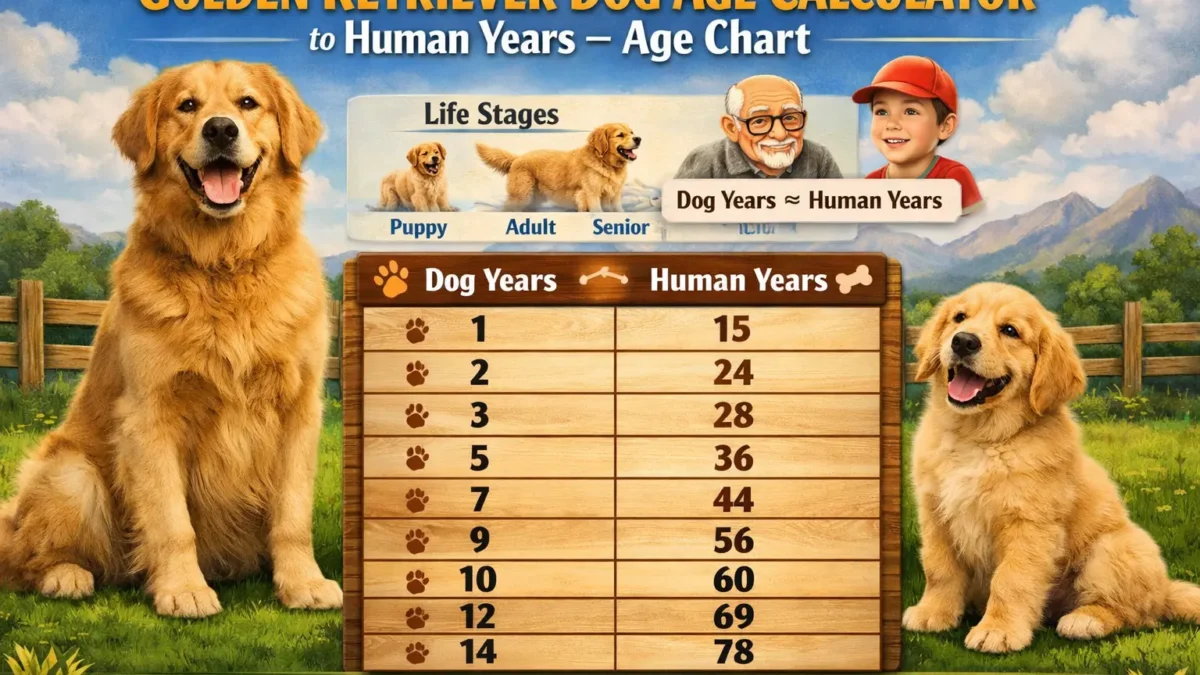
Golden Retriever Age Calculator: Convert Dog Years to Human Years (Age Chart Included)
Golden Retrievers, like all dogs, age at a much faster rate than humans. This leads to the common misconception that one dog year equals seven human years. However, the reality is far more nuanced. Dogs, especially Golden Retrievers, go through rapid developmental phases in their early years, followed by a slower aging process in their later years. Understanding how Golden Retrievers age compared to humans can help you care for them more effectively at each stage of their life.
Why Dog Years Aren’t Just “7 Human Years”
The “7-year rule” is a simplistic method of estimating a dog’s age in human years, but it doesn’t account for the rapid early growth and the slower aging that occurs later in a dog’s life. Research has shown that dogs age exponentially, particularly during their first few years. A Golden Retriever reaches physical maturity much faster than humans, with their most significant growth occurring within the first two years of life.
A study in 2019 introduced the idea of epigenetic aging in dogs. This research found that a dog’s aging process is logarithmic, not linear. For example, the first year of a Golden Retriever’s life is equivalent to roughly 15 human years, and by the time they are two years old, they are closer to 24 human years. From there, aging slows down, and the conversion isn’t as straightforward as the 7-year rule suggests.
Golden Retriever Life Stages and What They Mean for Aging
Golden Retrievers go through three major life stages: puppy, adult, and senior. The way they age in these stages is not uniform and is influenced by a variety of factors, including genetics, diet, exercise, and overall health. Understanding these life stages is crucial for managing their health and well-being at each stage.
- Puppy (0-2 years): This is the rapid growth phase where Golden Retrievers develop from a small, playful pup to a fully grown dog. During this time, their bodies and minds are maturing quickly.
- Adult (3-7 years): During this stage, Golden Retrievers are at their peak physically and mentally. They are fully grown and typically in good health, but they may begin to slow down as they approach their senior years.
- Senior (8+ years): Golden Retrievers are considered seniors when they reach around eight years old. This stage brings slower metabolism, increased health concerns like joint issues or cognitive decline, and the need for extra care.
Why Size and Breed Matter for Lifespan
Golden Retrievers are considered a large breed, and like other large dogs, they tend to have shorter lifespans compared to smaller breeds. The size of a dog significantly impacts its aging process. Larger dogs, like Golden Retrievers, typically age faster than smaller dogs, which means they enter their senior years earlier and may experience age-related health issues sooner.
Golden Retrievers have an average lifespan of 10-12 years, but this can vary based on factors such as genetics, diet, exercise, and overall care. Smaller dogs may live longer, often surpassing 15 years, while larger breeds, like Great Danes, may have a shorter lifespan.
The Science Behind Golden Retriever Aging
As a Golden Retriever grows older, its body and mind go through several changes. Understanding how a dog’s body ages can help you care for them better at each stage of their life. Let’s break it down into simpler parts and take a look at how Golden Retrievers age and how science helps us understand their life stages.
Growth Curves and Life Phases in Golden Retrievers
Golden Retrievers, like all dogs, grow quickly in their first couple of years. During puppyhood, they go from tiny pups to fully grown dogs. Their biggest changes happen in the first two years of life, where they reach their full size and physical abilities. After this, their growth slows down.
Here’s how they typically grow at different stages:
| Life Stage | Description | Age in Dog Years | Human Equivalent |
|---|---|---|---|
| Puppy | Rapid growth, developing physically and mentally. | 0-2 years | 0-24 years |
| Adult | Physically mature, full of energy, peak health. | 3-7 years | 25-50 years |
| Senior | Slower metabolism, joints may ache, health concerns. | 8+ years | 55+ years |
The chart above gives you a rough idea of how a Golden Retriever grows in terms of both dog years and human years. As you can see, the first two years are the most significant in terms of growth.
Size-Based Aging Differences: How Size Affects Longevity
Golden Retrievers are considered a large breed of dog, and, generally, large dogs age faster than smaller ones. Larger dogs reach their senior years earlier and tend to face health problems like joint pain or slower movement sooner than smaller dogs.
For example, a Golden Retriever typically becomes a senior at age 8, while a smaller breed like a Chihuahua might remain active and youthful well into its teens. Larger dogs simply don’t have the same lifespan as smaller breeds, and that’s important to consider when caring for them at different life stages.
| Dog Size | Lifespan (Average) |
|---|---|
| Small Breed | 12-16 years |
| Medium Breed | 10-13 years |
| Large Breed | 8-12 years |
As the table shows, larger breeds like Golden Retrievers generally have shorter lifespans compared to small and medium breeds.
Epigenetic Aging: The 2019 Methylation Study
The 2019 epigenetic methylation study brought new insights into how dogs age. It found that a dog’s aging process follows a logarithmic pattern, meaning that the first few years of a dog’s life are far more intense in terms of aging than the later years. This means that when a Golden Retriever is one or two years old, they have already aged quite a bit compared to humans at the same stage.
This discovery helps us understand why the traditional “one dog year equals seven human years” rule isn’t accurate. Instead, we use a more complex formula based on this study to better calculate a dog’s age in human years.
How the Golden Retriever Age Calculator Works
Now that we understand how Golden Retrievers age, it’s time to talk about how we can convert their age into human years. This is important because it helps us see how a dog’s age compares to our own. To make it simple, we use a formula to calculate the human equivalent of a Golden Retriever’s age.
The Formula for Converting Dog Years to Human Years
The traditional “1 dog year = 7 human years” formula isn’t accurate, as we’ve already discussed. Instead, we use a newer method based on scientific research. According to the 2019 study on canine aging, the first two years of a dog’s life count as 24 human years. After that, each dog year is equal to about 4-5 human years, depending on the dog’s size and breed.
Here’s how it works:
- First year of life = 15 human years
- Second year of life = 9 human years
- Every year after = 4-5 human years
This method gives a more accurate picture of how a dog ages compared to a human.
Golden Retriever Age Chart by Size Category
Golden Retrievers are a medium to large breed, and that means they age at a different rate compared to smaller dogs. The chart below shows how a Golden Retriever’s age in dog years compares to human years based on their size.
| Dog’s Age (Dog Years) | Golden Retriever’s Age in Human Years |
|---|---|
| 1 | 15 |
| 2 | 24 |
| 3 | 28 |
| 4 | 32 |
| 5 | 36 |
| 6 | 40 |
| 7 | 44 |
| 8 | 49 |
| 9 | 53 |
| 10 | 57 |
| 11 | 61 |
| 12 | 65 |
| 13 | 69 |
| 14 | 73 |
As you can see in the chart, a 1-year-old Golden Retriever is about 15 human years old, and by the time they reach 10, they’re roughly 57 in human years. This helps us understand the aging process and take better care of our dogs as they grow older.
Golden Retriever Life Stages and Key Aging Signs
As Golden Retrievers grow, they go through different life stages. Each stage brings its own changes in how they look, behave, and even how they need care. Understanding these stages helps you know what to expect and how to take care of your dog at each age.
From Puppyhood to Senior Years: What to Expect
Golden Retrievers grow very fast when they are puppies. They start as small, playful little dogs and grow into strong, active adults. After they reach adulthood, they start to slow down a bit. As they become seniors, their energy levels drop, and they might start to have health issues like joint pain or vision problems.
Here’s a simple table to show what to expect at each life stage:
| Life Stage | Age Range | What to Expect |
|---|---|---|
| Puppy | 0-2 years | Rapid growth, lots of energy, learning. |
| Adult | 3-7 years | Full size, active, healthy, peak behavior. |
| Senior | 8+ years | Slower movement, more rest, health issues. |
Senior Dog Changes: Aging Effects on Health and Behavior
As your Golden Retriever becomes a senior, you’ll notice some physical and mental changes. They may start moving more slowly, and they could have trouble seeing or hearing. Many senior dogs also start to experience joint pain, especially in their hips and knees. This is common in larger dogs, like Golden Retrievers.
It’s also important to watch for changes in their behavior. Senior dogs might become less active, and they may not play as much as they used to. Some dogs also start to get confused or show signs of memory loss. This is called canine cognitive dysfunction (similar to dementia in humans), and it can affect their ability to recognize commands or remember where they put things (like their toys).
The key to helping your Golden Retriever age gracefully is to give them extra care as they get older. Regular vet visits and good nutrition can help keep them healthy and happy.
How to Help Your Golden Retriever Age Healthily
As your Golden Retriever gets older, it’s important to take extra steps to help them live a happy, healthy life. Senior dogs need special care to manage their health, stay active, and feel comfortable. In this part we’ll go over ways to support your dog as they age, including tips on nutrition, exercise, and vet visits.
Maintaining Health Through Proper Nutrition and Exercise
Just like people, dogs need the right food to stay healthy, especially as they get older. Senior Golden Retrievers may have different dietary needs compared to younger dogs. They might need fewer calories, but more fiber or special vitamins to keep their joints healthy. Your vet can help you choose the right food for your dog’s age and health.
Exercise is also important. Even though your Golden Retriever might not run around as much as they did when they were younger, they still need daily walks and gentle playtime to keep their muscles strong and their heart healthy. Light exercise can also help with weight management, which is key to keeping their joints in good shape.
Here’s a table that breaks down nutrition and exercise needs for Golden Retrievers at different ages:
| Age Stage | Nutrition Tips | Exercise Tips |
|---|---|---|
| Puppy | High protein for growth and energy | Lots of playtime, short walks |
| Adult | Balanced diet, watch weight | Regular walks, active play |
| Senior | Special diet for joints, fewer calories | Light walks, gentle play, avoid heavy exertion |
Preventive Care: Vet Visits, Screenings, and Senior Care
As your Golden Retriever grows older, regular vet visits become even more important. Your vet can help detect early signs of health problems, like joint pain, heart disease, or dental issues. Senior dogs should have check-ups at least once or twice a year. During these visits, your vet may recommend tests like blood work or x-rays to check for problems that are harder to spot at home.
A key part of senior care is keeping your dog comfortable. As they age, Golden Retrievers can develop arthritis or other joint issues, making it harder for them to move. You can help by providing soft bedding, ramps to get in and out of the car or up stairs, and joint supplements if recommended by your vet.
For more information on maintaining your dog’s health at every stage of life, check out the American Kennel Club’s Golden Retriever Health Guide.