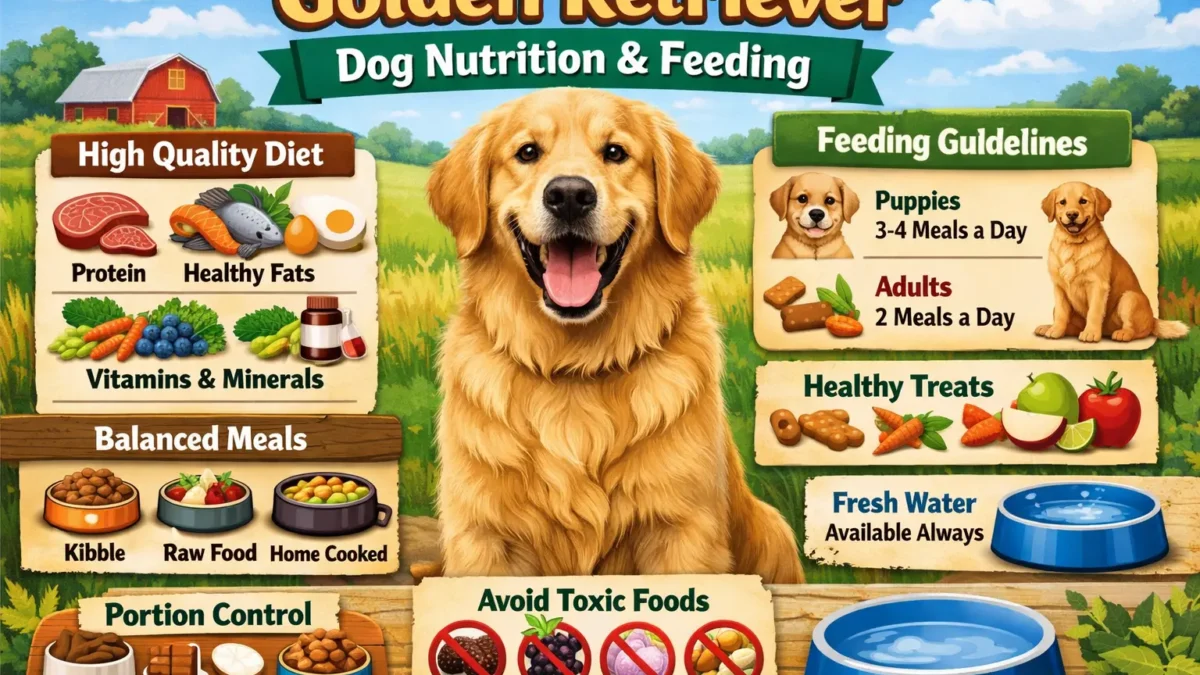
The Ultimate Guide to Golden Retriever Dog Nutrition and Feeding
Golden Retrievers are known for their friendly nature, intelligence, and high energy. Proper nutrition is essential to ensure they live long, healthy lives. This breed has specific dietary requirements that differ from other dogs due to their size, activity level, and potential health concerns like joint issues and skin sensitivities.
In this guide, we will dive into the essentials of Golden Retriever nutrition, covering everything from basic dietary needs to choosing the right food. Whether you’re a new dog owner or a seasoned pet parent, this guide will provide you with the knowledge needed to make informed decisions about your Golden’s diet.
Understanding the importance of nutrition is the first step toward maintaining your Golden Retriever’s well-being. Just like humans, the food your dog consumes directly affects their energy, behavior, and overall health. For Golden Retrievers, the right nutrition helps with maintaining a healthy weight, supporting joint health, and even keeping their shiny coats looking their best.
Core Principles of Golden Retriever Nutrition
To ensure your Golden Retriever stays healthy and strong, it’s important to understand the basics of what they need to eat. Golden Retrievers have unique nutritional needs that support their active lifestyle, large size, and potential health issues like joint problems. Here’s a simple breakdown of the most important nutrients for your Golden Retriever.
Understanding Golden Retriever Nutritional Needs
Golden Retrievers need a balanced diet that includes three main types of nutrients: macronutrients (protein, fats, and carbs) and micronutrients (vitamins and minerals). Each plays a specific role in your dog’s health.
Protein is important for building strong muscles and maintaining healthy skin and fur. Golden Retrievers are active dogs, so they need a good amount of protein in their diet.
Fats provide energy and help with skin and coat health. Omega-3 and Omega-6 fatty acids are particularly good for Golden Retrievers, helping to reduce inflammation and promote a healthy coat.
Carbohydrates are the main source of energy. While Golden Retrievers don’t need too many carbs, they still benefit from some in their diet, as it provides them with energy for play and exercise.
Micronutrients, such as vitamins and minerals, are just as important but needed in smaller amounts. These help keep your dog’s immune system strong, support bone health, and maintain overall wellness.
Breakdown of Golden Retriever Nutritional Needs by Nutrient Type
| Nutrient | Recommended Percentage | Impact on Golden Retrievers |
|---|---|---|
| Protein | 20-30% | Builds and repairs muscles, supports skin and coat health |
| Fat | 8-15% | Provides energy, supports coat and skin health |
| Carbohydrates | 30-50% | Provides energy, supports digestion |
| Fiber | 3-5% | Supports digestion and gut health |
| Vitamins/Minerals | Small amounts | Supports immunity, bone health, and overall wellness |
How to Read Dog Food Labels for Golden Retrievers
When choosing food for your Golden Retriever, understanding the dog food label is key. Look for high-quality protein sources like chicken, beef, or salmon. Avoid foods that list “meat by-products” or vague terms like “animal fat.” These can be lower quality and less nutritious.
Look for dog foods that meet AAFCO (Association of American Feed Control Officials) standards. This ensures that the food is nutritionally balanced for your Golden Retriever’s specific needs.
Key Ingredients to Look for on Golden Retriever Dog Food Labels
| Ingredient | Benefit for Golden Retrievers | Quality Indicators |
|---|---|---|
| Chicken, Beef, Salmon | High-quality protein that supports muscle and skin health | Look for “real meat” listed first |
| Omega-3 & Omega-6 | Supports healthy coat and joints | Should be from fish or plant oils |
| Sweet Potatoes, Peas | Provide healthy carbs and fiber | Look for whole food ingredients |
| Glucosamine, Chondroitin | Supports joint health | Check for joint health additives |
Essential Nutrients for Golden Retrievers
Golden Retrievers also need extra care when it comes to joint health and skin health. Look for dog food that includes glucosamine and chondroitin, which are supplements that help support joint function. Golden Retrievers are known for developing hip dysplasia, so joint health is very important.
Omega-3 fatty acids are another must-have in your Golden Retriever’s diet. They help with inflammation and promote a healthy, shiny coat. You can find omega-3s in fish oil and flaxseed.
How Much and How Often to Feed Your Golden Retriever
Knowing how much to feed your Golden Retriever is key to keeping them healthy. Golden Retrievers can easily become overweight if they eat too much, but underfeeding can lead to malnutrition. This part will guide you on the right amount of food to give, depending on your dog’s age, weight, and activity level.
Feeding Guidelines by Life Stage
Your Golden Retriever’s food needs change depending on their life stage. A puppy needs more energy and nutrients than an adult dog, while seniors may need fewer calories to avoid weight gain.
Puppy: Golden Retriever puppies grow quickly, so they need a lot of nutrients to support their growth. At this stage, they should be fed 3-4 times a day. Look for puppy food that has higher protein and fat content to support their development.
Adult: Once your Golden reaches about 1 year old, they can transition to adult dog food. They need fewer meals, usually 2 times a day. Adult Golden Retrievers require a balanced diet to maintain their weight and keep their energy up for their active lifestyle.
Senior: Older Golden Retrievers (7 years and above) may need fewer calories and more joint support. A senior diet with fewer fats but high in fiber is ideal. You should feed them 2 times a day, just like adults, but be mindful of portion sizes to prevent obesity.
Golden Retriever Feeding Amounts by Life Stage
| Life Stage | Weight Range | Recommended Daily Feeding Amount | Feeding Frequency |
|---|---|---|---|
| Puppy | 8-25 lbs | 1 ½ – 3 cups | 3-4 meals/day |
| Adult | 55-75 lbs | 2 – 3 cups | 2 meals/day |
| Senior | 55-75 lbs | 2 cups or less | 2 meals/day |
Golden Retriever Feeding Portion Sizes
The right portion size is important for keeping your dog at a healthy weight. Generally, Golden Retrievers should eat around 2-3 cups of food per day, depending on their activity level. Active dogs may need more food to fuel their energy, while less active dogs may require less to avoid gaining weight.
You can use your dog’s weight and activity level to figure out the right amount of food. Use the information on the dog food bag as a guideline and adjust based on your dog’s needs.
Golden Retriever Calorie Needs by Weight and Activity Level
| Weight (kg) | Low Activity (calories/day) | Medium Activity (calories/day) | High Activity (calories/day) |
|---|---|---|---|
| 10 kg | 350 calories | 400 calories | 450 calories |
| 20 kg | 650 calories | 700 calories | 750 calories |
| 30 kg | 900 calories | 950 calories | 1,050 calories |
Calorie Needs and Feeding Frequency
Golden Retrievers need different amounts of food based on their activity levels. If your dog is very active, like running or hiking with you, they will burn more energy and need more calories. On the other hand, if your Golden Retriever is more of a couch potato, they will need fewer calories to avoid gaining weight.
It’s important to feed them at least twice a day (for adults and seniors), to avoid overeating in one sitting and help with digestion.
Choosing the Right Type of Food for Golden Retrievers
When it comes to feeding your Golden Retriever, choosing the right type of food is just as important as knowing how much to feed them. There are many options available, and it can be confusing to know which one is best for your dog. This part will explain the different types of dog food, their pros and cons, and how to choose the best one for your Golden Retriever.
Best Food Types for Golden Retrievers
There are several types of dog food to choose from, and each has its advantages and disadvantages. Here are the most common types:
- Kibble (Dry Food): Kibble is the most popular type of dog food. It is convenient, easy to store, and usually more affordable. It can help keep your dog’s teeth clean, but some kibble brands may contain lower-quality ingredients or fillers like corn and wheat.
- Wet Food (Canned Food): Wet food is often more appealing to dogs because it has more moisture and a stronger smell. It can be a good choice for picky eaters or dogs with dental issues, but it can be more expensive and doesn’t keep as long once opened.
- Raw Food: Raw feeding is becoming more popular, especially for dogs with allergies or digestive issues. Raw food contains more natural ingredients and fewer preservatives. However, it can be expensive, difficult to prepare, and some types of raw food carry the risk of bacteria.
- Fresh Food: Fresh food is cooked to retain nutrients and is usually higher in quality than processed kibble. Many pet owners like fresh food because it’s often more nutritious and doesn’t contain fillers. However, it can be expensive, and it needs to be stored properly.
- Freeze-Dried Food: This food is raw food that has been freeze-dried to preserve it. It is easy to store and handle, but it can be more costly than other options.
Pros and Cons of Different Dog Food Types for Golden Retrievers
| Food Type | Pros | Cons | Ideal For |
|---|---|---|---|
| Kibble | Convenient, affordable, helps clean teeth | Can contain fillers, less moisture | Daily feeding, general use |
| Wet Food | More appealing, better for picky eaters | More expensive, short shelf life | Picky eaters, dogs with dental problems |
| Raw Food | Natural, fewer preservatives | Expensive, risk of bacteria, hard to prepare | Dogs with allergies or digestive issues |
| Fresh Food | Nutritious, higher quality ingredients | Expensive, needs refrigeration | Health-conscious pet owners |
| Freeze-Dried Food | Convenient, high-quality | Expensive, not always easy to find | On-the-go feeding, emergency food |
Food Allergies and Sensitivities
Golden Retrievers are prone to certain food allergies or sensitivities, which can cause skin problems, digestive issues, or ear infections. Common allergens for Golden Retrievers include beef, chicken, dairy, and grains like wheat. If you notice your dog itching, vomiting, or having diarrhea after eating, they might be sensitive to certain ingredients in their food.
To avoid these issues, try to find dog food that is specifically made for dogs with food sensitivities. Look for limited ingredient diets that have fewer ingredients and are easier on your dog’s digestive system.
Safe and Unsafe Foods for Golden Retrievers
It’s also important to know which human foods are safe and which are toxic for Golden Retrievers. Many common human foods can cause harm to dogs, including chocolate, grapes, and onions. Always avoid feeding your Golden Retriever these foods, as they can lead to serious health problems.
On the other hand, some human foods are safe for dogs in moderation. Carrots, apples, and peanut butter (without added sugar or xylitol) can be good treats for your Golden Retriever.
Safe vs. Unsafe Foods for Golden Retrievers
| Food | Safe to Eat? | Notes |
|---|---|---|
| Chocolate | No | Toxic to dogs, can cause vomiting, diarrhea, and even death |
| Grapes | No | Can cause kidney failure in dogs |
| Carrots | Yes | Great for teeth and low in calories |
| Apples | Yes | Remove seeds (can be toxic in large amounts) |
| Peanut Butter | Yes | Safe in moderation, ensure no xylitol added |
Common Nutrition Mistakes and Troubleshooting
Feeding your Golden Retriever the right food is important, but there are some common mistakes that many pet owners make. It’s easy to overfeed or underfeed your dog, especially when you’re not sure how much they need. This part will help you avoid these mistakes and give you tips for solving feeding issues like picky eating or food allergies.
Avoiding Feeding Mistakes
One of the biggest mistakes people make is overfeeding their Golden Retriever. Golden Retrievers love to eat, and it’s easy to give them too many treats or extra food. But feeding your dog too much can lead to obesity, which can cause other health problems like joint pain or heart disease.
Another common mistake is underfeeding. If your Golden Retriever isn’t getting enough food, they might not have enough energy, and their coat may look dull. Always make sure you’re feeding your dog the right amount based on their weight and activity level.
When to Seek Veterinary Advice for Feeding Issues
| Symptom/Problem | Potential Cause | When to Visit a Vet |
|---|---|---|
| Picky eating | Low-quality food or food allergies | If picky eating lasts more than a week |
| Excessive weight gain | Overfeeding or poor-quality food | If the dog is gaining weight rapidly |
| Diarrhea after food changes | Food intolerance or allergy | If diarrhea lasts for more than 48 hours |
| Sudden weight loss | Underfeeding or illness | If weight loss is noticeable and quick |
Troubleshooting Feeding Issues
Sometimes, your Golden Retriever might not be eating well or may refuse certain foods. Here are a few things to check if you face this issue:
- Food intolerance: If your Golden Retriever is having stomach problems, like diarrhea or vomiting, it could be from a food they’re allergic to. Try switching to a limited ingredient food to see if it helps.
- Picky eaters: Some Golden Retrievers are just picky eaters. If your dog is refusing food, try offering a variety of foods to see which one they like best. You can also warm up their food slightly to make it more appealing.
- Feeding multiple dogs: If you have more than one dog, you might have to feed them separately to avoid competition for food. Some dogs are more dominant than others, which can make feeding time stressful.
When to Consult a Vet or Nutritionist
If you notice any of the following problems, it’s a good idea to consult a vet or a veterinary nutritionist for help:
- If your Golden Retriever has been refusing food for several days.
- If they are rapidly gaining or losing weight despite following a feeding plan.
- If they show signs of food allergies, such as itching, vomiting, or diarrhea.
A vet can help identify any health issues or food intolerances your dog might have and guide you on the right diet for them.
“For more detailed information on dog food labeling and ingredient quality, check out the AAFCO’s official guidelines on pet food standards.”