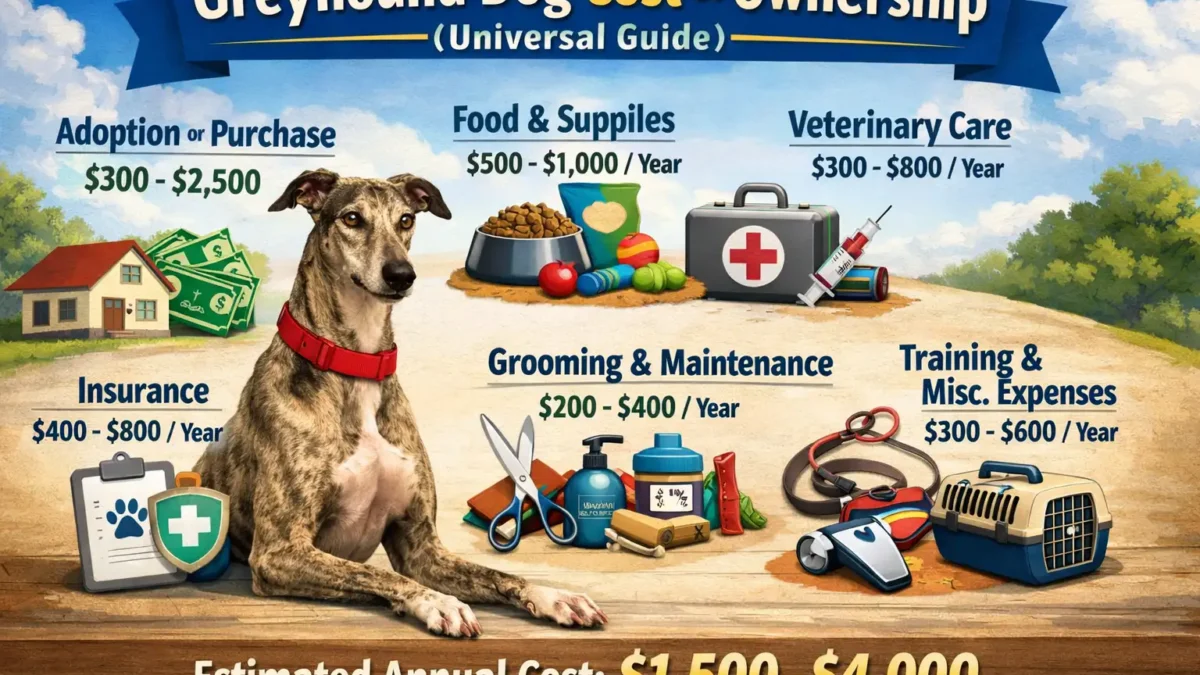
Greyhound Cost of Ownership: How Much Does It Really Cost to Own a Greyhound?
If you’re researching Greyhounds, you’re probably hearing two very different stories: “They’re one of the cheapest dogs to own” and “They come with surprise expenses.”
The truth sits in the middle — and understanding it early is what prevents financial stress later.
A Greyhound is often more affordable than many large breeds, but “affordable” does not mean inexpensive. Ownership costs are shaped by adoption route, health history (especially for retired racers), location, and how well you plan for routine and unexpected care.
This guide looks at total cost of ownership, not just adoption fees. That means accounting for:
- First-year setup and medical care
- Ongoing monthly and annual expenses
- Breed-specific costs (thin skin, dental care, injury risk)
- Long-term and lifetime financial commitment
Quick Greyhound Cost Overview
| Cost Category | Typical Range (USD) | What This Represents |
|---|---|---|
| First-year total | $1,800 – $3,500 | Adoption, setup, initial vet care, first 12 months of upkeep |
| Average monthly cost | $120 – $250 | Food, preventatives, routine care, basic maintenance |
| Average annual cost | $1,400 – $3,000 | Ongoing care after the first year |
| Estimated lifetime cost | $15,000 – $30,000+ | Based on lifespan, health, and care choices |
These figures assume responsible ownership — quality food, routine veterinary care, and realistic budgeting for health and aging. Costs can fall below these ranges, but doing so often involves trade-offs that may impact the dog’s wellbeing.
Why Greyhound Costs Are Often Misunderstood
Greyhounds are calm, low-shedding, and generally quiet, which leads many people to assume they’re cheap to keep. In reality:
- They eat less than many dogs their size, but still require high-quality nutrition
- Their short coat lowers grooming costs, but dental care and nail maintenance can be higher
- Retired racing Greyhounds may arrive with unknown medical histories
- Emergency vet costs can be higher due to their lean build and injury sensitivity
The goal of this article is not to discourage ownership — it’s to help you decide whether Greyhound ownership fits your long-term financial reality, not just your short-term budget.
Greyhound First-Year Costs (Adoption, Setup, and Initial Vet Care)
The first year is the most expensive year of owning a Greyhound. This is when you pay for adoption, basic supplies, and most of the initial vet work. Many new owners underestimate this part, which is why budgeting early is important.
Below is a clear, easy breakdown of what most Greyhound owners spend in the first year.
Adoption or Purchase Costs
Most Greyhounds are adopted through rescue groups, especially retired racing Greyhounds. Buying from a breeder is much less common and usually costs more.
| Type of Greyhound | Typical Cost (USD) | Notes |
|---|---|---|
| Retired racing Greyhound (rescue) | $250 – $600 | Usually includes spay/neuter and basic vaccines |
| Non-racing Greyhound (rescue) | $300 – $800 | May include more health screening |
| Greyhound from a breeder | $1,500 – $3,000+ | Rare, higher upfront cost |
Adoption is not “free,” but it is often much cheaper than buying, and many medical costs are already covered.
One-Time Setup Costs
Greyhounds need some special items, mainly for comfort and safety. These are usually one-time purchases, but some may need replacement later.
| Item | Typical Cost (USD) | Why It’s Needed |
|---|---|---|
| Dog bed (extra padding) | $60 – $150 | Greyhounds have thin skin and little body fat |
| Crate or safe space setup | $70 – $200 | Helps with rest and adjustment |
| Collar, leash, ID tags | $25 – $60 | Daily safety |
| Winter coats or pajamas | $40 – $120 | Important due to short coat |
| Food and water bowls | $15 – $40 | Basic supplies |
| Toys and enrichment | $30 – $80 | Mental stimulation |
First-Year Veterinary Costs
Even healthy Greyhounds usually need vet visits in the first year. Retired racers may need extra checks when they first come home.
| Vet Expense | Typical Cost (USD) |
|---|---|
| Initial vet exam | $75 – $150 |
| Vaccines and boosters | $100 – $250 |
| Spay or neuter (if not included) | $200 – $500 |
| Dental exam or cleaning | $300 – $900 |
| Parasite prevention (year) | $150 – $300 |
Dental care is often one of the biggest surprise costs for Greyhound owners.
Total First-Year Cost Estimate
| First-Year Category | Estimated Range (USD) |
|---|---|
| Adoption or purchase | $250 – $3,000+ |
| Setup supplies | $250 – $600 |
| First-year vet care | $600 – $1,500 |
| Ongoing food and basics | $700 – $1,200 |
| Total first-year cost | $1,800 – $3,500+ |
These numbers are averages. Your real cost depends on your location, your dog’s health, and how prepared you are.
Monthly and Annual Greyhound Expenses
After the first year, Greyhound costs become more regular and easier to plan. These are the monthly and yearly expenses you will pay for most of your dog’s life.
Average Monthly Greyhound Costs
| Monthly Expense | Typical Cost (USD) | What This Covers |
|---|---|---|
| Food and treats | $40 – $80 | Quality dry or mixed diet |
| Flea, tick, and heartworm prevention | $15 – $30 | Monthly protection |
| Routine vet savings | $15 – $40 | Set aside for annual visits |
| Grooming and nail care | $10 – $25 | Nails, bathing supplies |
| Toys and enrichment | $5 – $20 | Replacements and boredom control |
| Average monthly total | $120 – $250 | Most common monthly range |
Greyhounds often eat less than other large dogs, but skipping good food can lead to health problems later, which costs more.
Annual Recurring Greyhound Costs
Some costs do not show up every month, but they still matter because they come once or twice a year.
| Annual Expense | Typical Cost (USD) |
|---|---|
| Annual vet exam and vaccines | $150 – $350 |
| Preventatives (year total) | $150 – $300 |
| Dental care (average per year) | $150 – $400 |
| License and registration | $10 – $30 |
| Replacement supplies | $100 – $300 |
| Average annual total | $1,400 – $3,000 |
Dental care is a big part of Greyhound costs. Many Greyhounds need professional cleanings more often than other breeds.
Monthly vs Annual Cost at a Glance
| Time Frame | Typical Cost (USD) |
|---|---|
| Per month | $120 – $250 |
| Per year | $1,400 – $3,000 |
These numbers assume a healthy adult Greyhound. Puppies, seniors, or dogs with health problems may cost more.
What Makes Greyhound Ownership More or Less Expensive
Not all Greyhounds cost the same to care for. Two people can own Greyhounds and spend very different amounts of money each year. This section explains why costs change and what usually makes ownership cheaper or more expensive.
Cost Differences Based on Living Situation
Where you live and how you live can change your costs a lot.
| Living Situation | How It Affects Cost |
|---|---|
| Apartment living | May need paid dog walkers or daycare |
| House with yard | Fewer walking services needed |
| City / urban area | Higher vet, grooming, and boarding prices |
| Rural area | Lower vet costs, but longer travel for care |
| Multi-dog home | Some costs shared, food and vet costs higher |
Greyhounds do well in apartments, but owners who work long hours may need extra help, which adds cost.
Greyhound Health and Vet Cost Differences
Greyhounds are usually healthy, but they have some breed-specific health needs.
| Health Issue or Care | Typical Cost (USD) | Why It Matters |
|---|---|---|
| Dental cleaning | $300 – $900 | Very common in Greyhounds |
| Injury treatment | $500 – $3,000+ | Thin skin, easy to cut |
| Arthritis or joint care | $200 – $800 per year | More common with age |
| Emergency vet visit | $1,000 – $5,000+ | Accidents can happen |
Emergency care is one of the biggest reasons costs suddenly increase, especially without savings or insurance.
Pet Insurance and How It Changes Costs
Pet insurance does not lower costs, but it can protect you from very large bills.
| Insurance Type | Monthly Cost (USD) | Best For |
|---|---|---|
| Accident-only | $20 – $35 | Injuries and emergencies |
| Accident + illness | $40 – $70 | Most common choice |
| High coverage plans | $70 – $100+ | Older dogs or peace of mind |
Insurance is most helpful when:
- Your Greyhound is young and healthy
- You cannot easily pay a large emergency bill
- You want predictable monthly costs
Why Some Greyhounds Cost More Than Others
A Greyhound may cost more to own if:
- It has dental disease or past injuries
- It needs special food or medicine
- It lives in a high-cost city
- It is older or has chronic health problems
This does not mean Greyhounds are “expensive dogs.” It means costs depend on real-life factors, not just the breed.
Lifetime Cost, Hidden Expenses, and Smart Budgeting for Greyhound Owners
Owning a Greyhound is a long-term promise, not just a monthly bill. Many owners focus on food and vet visits but forget about costs that show up slowly over time. This section helps you see the full picture, from lifetime costs to smart ways to plan ahead.
Estimated Lifetime Cost of Owning a Greyhound
Most Greyhounds live 10 to 14 years. Lifetime cost depends on health, location, and care choices.
| Cost Level | Estimated Lifetime Cost (USD) | What This Usually Means |
|---|---|---|
| Low | $15,000 – $18,000 | Healthy dog, low-cost area, careful budgeting |
| Average | $18,000 – $25,000 | Most typical Greyhound owners |
| High | $25,000 – $30,000+ | Medical needs, senior care, emergencies |
These numbers include food, vet care, grooming, and basic needs over the dog’s life.
Hidden and Often Forgotten Greyhound Costs
Some costs surprise owners because they are not monthly bills, but they still matter.
| Hidden Expense | Typical Cost (USD) | Why It’s Often Missed |
|---|---|---|
| Dental cleanings | $300 – $900 each | Not needed every year, but very common |
| Emergency vet visits | $1,000 – $5,000+ | Accidents happen without warning |
| Boarding or pet sitting | $25 – $75 per day | Travel or emergencies |
| Replacing beds and coats | $50 – $200 | Wear and tear over time |
| Senior care needs | $300 – $1,000+ per year | Arthritis, meds, mobility help |
Many owners say dental care and emergency vet visits are the biggest surprise costs.
How to Build a Smart Greyhound Budget
A good budget does not need to be perfect. It just needs to be realistic.
Simple budgeting tips:
- Set aside $30–$50 per month for vet savings
- Keep an emergency fund or use pet insurance
- Plan for higher costs as your Greyhound gets older
- Do not spend your full budget every month
Ways to Save Money Without Hurting Your Dog
Saving money should never mean skipping care.
Smart ways to save:
- Prevent health problems with good food and routine vet visits
- Brush teeth at home to reduce dental costs
- Trim nails at home if your dog allows it
- Compare vet and insurance prices in your area
Risky ways to “save” that cost more later:
- Skipping vet visits
- Buying very cheap food
- Avoiding dental care
- Waiting too long for medical help
Final Reality Check
Greyhounds are often easier and cheaper to care for than many large dogs, but they are not free or cheap pets. The real cost is manageable when you plan ahead and understand what to expect.
If you can afford:
- The first year
- Regular monthly care
- Unexpected vet bills
For a broader breakdown of average dog ownership expenses across food, veterinary care, and supplies, you can also review the cost data published by the American Society for the Prevention of Cruelty to Animals (ASPCA) on annual dog care costs.