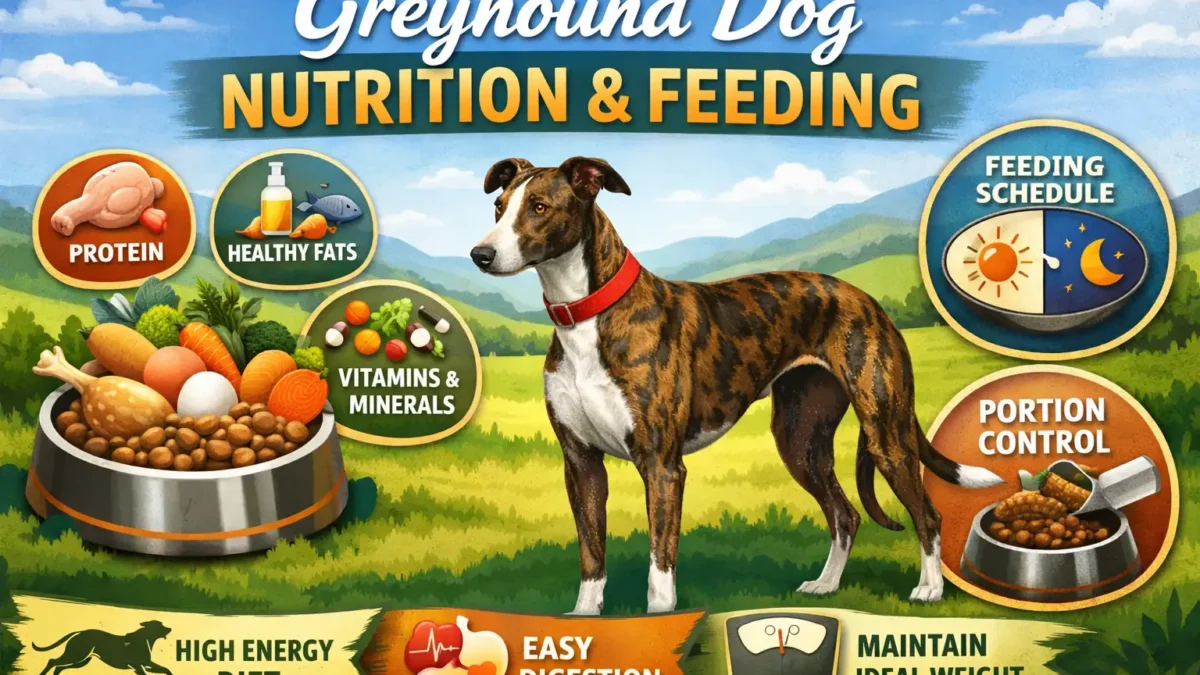
Greyhound Dog Nutrition & Feeding Guide
Greyhound dog nutrition isn’t just a variation of standard dog feeding advice — it’s a category of its own. Many new Greyhound owners worry their dog is too thin, eating too little, or somehow being underfed, when in reality Greyhounds are built very differently from most breeds. Understanding those differences is the foundation of feeding this breed correctly and confidently.
Greyhounds are sighthounds with a naturally lean, athletic body, low body fat, and a metabolism that works a bit faster than average. What looks “skinny” compared to a Labrador or mixed-breed dog is often completely normal for a healthy Greyhound. This is why generic feeding charts, breed-agnostic dog food advice, and well-meaning comments from strangers can easily lead owners to overfeed or choose the wrong type of food.
Nutrition plays a direct role in how well a Greyhound maintains muscle tone, energy levels, digestion, coat quality, and long-term health. Feeding too little can lead to muscle loss and low stamina, while feeding too much — especially the wrong calories — can cause digestive issues, joint stress, and unnecessary weight gain that this breed does not tolerate well.
Another important factor is digestive sensitivity. Many Greyhounds, especially retired racing dogs, have more sensitive stomachs than average. Sudden diet changes, overly rich foods, or inappropriate fat levels can quickly lead to loose stool, gas, or appetite changes. This makes thoughtful food selection and portion control far more important than simply choosing a “high-calorie” or “high-protein” option.
To put these differences into perspective, the table below highlights how Greyhounds compare to a more typical dog when it comes to nutrition and body structure.
Greyhound vs Typical Dog: Nutrition Traits
| Trait | Greyhound | Typical Dog |
|---|---|---|
| Body fat percentage | Very low | Moderate |
| Muscle mass | High and visible | Variable |
| Metabolism | Faster than average | Average |
| Visible ribs | Often normal | Often underweight |
| Digestive tolerance | More sensitive | More forgiving |
| Ideal body shape | Lean and tucked | Filled-out |
Recognizing these traits early helps prevent the most common feeding mistakes Greyhound owners make: panic over normal leanness, unnecessary calorie loading, and frequent food switching. A well-fed Greyhound should look slim, feel strong through the back and thighs, have steady energy, and maintain good stool quality — not resemble a stocky or bulky dog.
What to Feed a Greyhound: Nutritional Needs and Best Food Choices
When feeding a Greyhound, the goal is simple: keep strong muscles, steady energy, and a calm stomach. This breed does best on food that is balanced, easy to digest, and made for lean, athletic dogs — not heavy, filler-rich diets.
You do not need fancy or extreme diets. What matters most is the right nutrients in the right amounts.
Key nutrition needs for Greyhounds (simple breakdown)
Greyhounds need food that supports muscle without adding bad weight.
- Protein helps keep their long, lean muscles strong
- Fat gives energy, but too much can upset their stomach
- Carbohydrates provide fuel, but should be easy to digest
- Fiber helps with stool quality and gut health
- Vitamins and minerals support bones, skin, coat, and organs
A common mistake is choosing food that is too rich or too high in fat because the dog looks thin. This often causes loose stool, gas, or poor appetite instead of healthy weight gain.
Ideal nutrient ranges for Greyhounds
The table below shows general, safe ranges that work well for most adult Greyhounds.
| Nutrient | Recommended Range | Why It Matters |
|---|---|---|
| Protein | ~24–30% | Keeps muscles strong |
| Fat | ~12–18% | Energy without stomach upset |
| Fiber | Moderate (3–6%) | Helps digestion and stool |
| Calcium & minerals | Balanced | Bone and joint support |
These ranges are not extreme. Very high protein or very high fat foods are rarely needed unless advised by a vet.
Choosing the right type of dog food
Greyhounds can do well on different food styles, as long as the food is complete, balanced, and well tolerated.
| Food Type | Pros | Cons | Best For |
|---|---|---|---|
| Dry kibble | Easy, affordable, balanced | Quality varies | Most Greyhounds |
| Fresh food | Very tasty, easy to digest | More expensive | Picky eaters |
| Canned food | High moisture | Can be rich | Mixing with kibble |
| Raw diet | Muscle support | Safety risks | Experienced owners only |
| Homemade food | Full control | Needs vet guidance | Medical diets only |
If you choose kibble, look for:
- Named animal protein (like chicken, turkey, lamb)
- Moderate fat levels
- Clear feeding instructions
- “Complete and balanced” on the label
Avoid switching foods too often. Greyhounds prefer routine, and frequent changes can upset their stomach.
Grain-free and special labels: what to know
Grain-free food is not automatically better for Greyhounds. Some dogs do fine with grains like rice or oats, while others need limited-ingredient diets. Unless your Greyhound has a proven allergy, grains are usually safe.
Do not choose food based only on buzzwords like:
- “Ultra-high protein”
- “Ancestral”
- “Wolf diet”
Always focus on how your dog eats, feels, and digests the food.
How Much to Feed a Greyhound and How Often
One of the most common questions Greyhound owners ask is, “Am I feeding enough?”
Because Greyhounds are naturally lean, many owners worry their dog is underfed when the dog is actually healthy.
The right amount of food depends on weight, activity level, age, and body condition — not looks alone.
Daily calorie needs for Greyhounds
Use the table below as a starting point, not a strict rule. Every Greyhound is a little different.
| Greyhound Weight | Low Activity (home life) | Moderate Activity (daily walks) | High Activity (very active) |
|---|---|---|---|
| 25 kg (55 lb) | ~900 calories | ~1,100 calories | ~1,300 calories |
| 30 kg (66 lb) | ~1,000 calories | ~1,250 calories | ~1,500 calories |
| 35 kg (77 lb) | ~1,100 calories | ~1,350 calories | ~1,600 calories |
If your Greyhound is a retired racing dog, they may need more calories at first, then less once they settle into home life.
How often to feed a Greyhound
Most Greyhounds do best on two meals per day. Puppies need more frequent meals, and seniors often do better with smaller portions.
| Life Stage | Meals Per Day |
|---|---|
| Puppy | 3–4 meals |
| Adult | 2 meals |
| Senior | 2 smaller meals |
Feeding twice a day helps:
- keep energy steady
- reduce hunger stress
- lower the risk of stomach upset
Using body condition instead of looks
Greyhounds are supposed to look slim. Use touch and feel, not just your eyes.
| Body Check | Healthy Greyhound | Possible Problem |
|---|---|---|
| Ribs | Light outline, easy to feel | Sharp or deeply visible |
| Waist | Clear tuck behind ribs | Sunken or no shape |
| Energy | Alert and playful | Low energy or tired |
If ribs are very sharp and hips stick out, the dog may need more food.
If the waist disappears and the dog feels soft, the dog may be overfed.
Water matters too
Greyhounds need fresh water at all times. Dry food diets especially require good hydration. Poor water intake can cause:
- hard stool
- low appetite
- low energy
Always check that your Greyhound drinks well, especially after walks.
Common Greyhound Feeding Problems and Special Diet Needs
Greyhounds are gentle dogs, but their stomachs can be sensitive. Many feeding problems are not serious, but they do need the right fix. Knowing what is normal — and what is not — helps you act early and avoid stress.
Common feeding problems Greyhound owners face
The table below shows common problems, why they happen, and what usually helps.
| Problem | Common Reason | What Usually Helps |
|---|---|---|
| Loose or soft stool | Food too rich or sudden change | Lower fat food, slower switch |
| Won’t eat breakfast | Not hungry in the morning | Bigger evening meal |
| Weight loss | Not enough calories | Increase food slowly |
| Gas or bloating | Food intolerance | Simple ingredient food |
| Low appetite | Stress or routine change | Fixed feeding times |
Many retired racing Greyhounds take time to adjust to home feeding. Skipping meals once in a while is normal. Forcing food usually makes it worse.
Sensitive stomachs and food intolerance
Greyhounds often do better with:
- simple ingredient foods
- moderate fat levels
- slow food changes over 7–10 days
If your Greyhound has long-term loose stool, avoid:
- frequent food switching
- very high-fat diets
- too many treats
Sometimes, less variety works better than more.
Weight gain and muscle care
If your Greyhound needs to gain weight:
- increase calories slowly
- add food, not treats
- choose higher-quality protein
If your Greyhound gains fat too fast:
- reduce portion size slightly
- avoid table scraps
- keep walks regular
Healthy weight gain should improve muscle, not create a round belly.
Picky eaters and skipped meals
Some Greyhounds are picky or eat only once a day. This is common.
Helpful tips:
- feed at the same times daily
- remove uneaten food after 20 minutes
- avoid adding toppings every time
Dogs usually eat better when meals are predictable.
Switching food safely
Always switch food slowly.
| Day | Old Food | New Food |
|---|---|---|
| 1–3 | 75% | 25% |
| 4–6 | 50% | 50% |
| 7–9 | 25% | 75% |
| 10 | 0% | 100% |
Slow changes protect the stomach and reduce loose stool.
Safe Foods, Treats, FAQs, and When to See a Vet
Knowing what Greyhounds can and cannot eat keeps them safe and healthy. Many owners like to share food or treats, but some foods are dangerous, even in small amounts.
Safe and unsafe human foods for Greyhounds
Use this table as a quick safety check before sharing food.
| Safe in Small Amounts | Never Feed |
|---|---|
| Plain cooked chicken | Chocolate |
| Cooked rice | Grapes and raisins |
| Carrots | Onions and garlic |
| Pumpkin (plain) | Xylitol (found in gum) |
| Apples (no seeds) | Alcohol |
| Plain yogurt | Fatty fried foods |
Even safe foods should be plain. No salt, spices, butter, or sauces.
Treat rules for Greyhounds
Treats are helpful for training, but too many can upset the stomach or cause weight gain.
| Treat Type | How Much Is Safe |
|---|---|
| Training treats | Very small pieces |
| Commercial treats | Less than 10% of daily food |
| Human food treats | Rare and small amounts |
If stool becomes loose, cut back on treats first.
Common feeding questions owners ask
Is it normal to see my Greyhound’s ribs?
Yes. Light rib outlines are normal. Sharp bones or low energy are not.
My Greyhound skips meals. Is this okay?
Yes, as long as weight and energy stay normal.
Should I add supplements?
Most Greyhounds do not need supplements if they eat balanced food. Ask a vet first.
Can Greyhounds eat once a day?
Some can, but two meals are usually better for digestion.
When to see a vet or nutrition expert
Contact a professional if you notice:
- fast weight loss
- long-term diarrhea
- vomiting after meals
- loss of appetite for more than 2 days
- sudden behavior or energy changes
A vet or veterinary nutritionist can help adjust food safely.
For official, science-based standards on complete and balanced dog nutrition, you can review the guidelines published by the Association of American Feed Control Officials (AAFCO), which set the nutritional requirements used by most commercial dog foods worldwide.