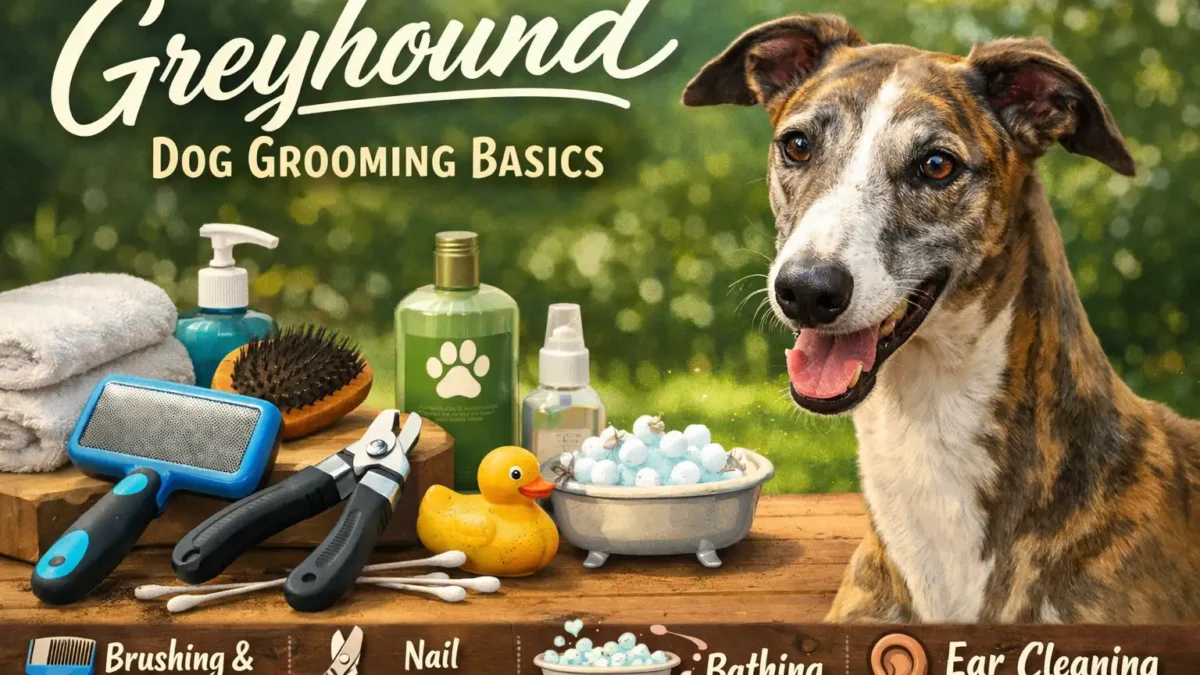
Greyhound Grooming Basics: How to Groom a Greyhound Safely and Correctly
Greyhound grooming is often misunderstood. Because Greyhounds have a short, sleek coat, many new owners assume they require little to no grooming. In reality, Greyhounds are low-maintenance in coat care, but highly sensitive in skin, nails, and overall handling. Grooming isn’t just about keeping them clean—it plays a key role in comfort, injury prevention, and long-term health.
This guide is designed to show you how to groom a Greyhound safely, correctly, and realistically at home, without overcomplicating the process. Whether you’ve just adopted a retired racing Greyhound or are caring for a companion Greyhound, the goal is to help you build a simple routine that protects their skin, keeps nails at a healthy length, and prevents common grooming-related problems.
Unlike many breeds, Greyhounds have thin skin, very little body fat, and low natural skin oils. These traits make them more prone to cuts, pressure sores, dryness, and discomfort if grooming is rushed or done with the wrong tools. They also tend to grow long nails quickly and are well known for dental issues, both of which grooming routines directly affect.
Grooming also has behavioral benefits. Gentle, predictable grooming helps Greyhounds feel secure and relaxed, especially dogs coming from racing or kennel backgrounds who may not be used to close handling. Regular grooming sessions allow you to spot small problems early—like skin tears, cracked nails, or irritated ears—before they become painful or expensive to treat.
If you’re looking for a complicated grooming routine, Greyhounds don’t need one. What they do need is the right approach: light brushing, infrequent bathing, careful nail care, and close attention to skin and teeth. The sections that follow will walk you through exactly how to do that, step by step, in a way that’s safe for your dog and manageable for you.
Understanding the Greyhound Coat, Skin, and Grooming Needs
Greyhounds may look easy to groom because of their short coat, but their body is very different from most dogs. Knowing how their coat and skin work will help you groom them safely and avoid common mistakes.
Greyhounds have a short, single coat. This means they do not have an undercoat like Labradors or Huskies. They shed, but much less than double-coated breeds. Because of this, Greyhounds do not need heavy brushing or deshedding tools.
Their skin is very thin and delicate. Greyhounds also have very little body fat, so there is less padding under the skin. This makes them more likely to get small cuts, scrapes, or sore spots if grooming is rough or tools are too hard. Even normal pressure can cause injury if you are not careful.
Greyhounds also have low natural skin oils. These oils protect the skin and keep it healthy. Bathing too often can wash these oils away and lead to dry, itchy skin. That is why Greyhounds should not be bathed as often as some other breeds.
Shedding in Greyhounds is usually light and steady, not heavy. You may notice a little more hair during seasonal changes, but it is still easy to manage with gentle brushing.
The table below explains key Greyhound coat and skin features and what they mean for grooming.
Greyhound Coat and Skin Characteristics
| Feature | What It Means for Grooming |
|---|---|
| Short, single coat | No heavy brushing or undercoat tools needed |
| Thin skin | Use gentle pressure and soft grooming tools |
| Low body fat | Higher risk of cuts and pressure sores |
| Low natural oils | Avoid frequent baths to prevent dryness |
| Light shedding | Weekly brushing is usually enough |
Because of these traits, Greyhounds do best with a simple, gentle grooming routine. Over-grooming can cause more harm than good. The goal is not to make them look fancy, but to keep their skin healthy, nails short, and body comfortable.
Greyhound Grooming Routine at Home (Step-by-Step)
Grooming a Greyhound at home is simple when you follow a clear routine. You do not need many tools, and you do not need to groom every day. The key is to be gentle and consistent.
How Often Should You Groom a Greyhound?
Greyhounds do best with light grooming done on a regular schedule. Doing a little at a time is better than waiting too long.
| Grooming Task | How Often |
|---|---|
| Brushing | 1–2 times per week |
| Bathing | Every 6–10 weeks or when dirty |
| Nail trimming | Every 2–3 weeks |
| Ear cleaning | Every 2–4 weeks |
| Teeth brushing | Daily or at least 3–4 times a week |
| Skin check | Once a week |
Basic Grooming Tools You Need
You do not need fancy tools to groom a Greyhound. Using soft, gentle tools is very important because of their thin skin.
| Tool | Why It Is Needed |
|---|---|
| Soft bristle or rubber brush | Removes loose hair without hurting skin |
| Dog shampoo (gentle) | Cleans without drying the skin |
| Microfiber or soft towel | Safe drying for thin skin |
| Nail clippers or nail grinder | Keeps nails short and safe |
| Dog toothbrush and toothpaste | Helps prevent dental disease |
Brushing a Greyhound
Brushing helps remove loose hair and keeps the skin healthy. Because Greyhounds have a short coat, brushing is quick and easy.
Use a soft brush and gentle pressure. Brush in the direction the hair grows. Most Greyhounds enjoy brushing if you go slowly. Focus on areas like the neck, chest, and sides. Brushing once or twice a week is usually enough.
Bathing a Greyhound
Greyhounds do not need frequent baths. Too many baths can dry out their skin.
Use lukewarm water and a dog shampoo made for sensitive skin. Avoid human shampoos. Gently massage the shampoo into the coat. Rinse very well, as leftover soap can cause itching.
After the bath, dry your Greyhound with a soft towel. Avoid hot air dryers, as heat can hurt their skin. Make sure your dog is fully dry before going outside in cool weather.
Checking the Skin During Grooming
While grooming, always look at your Greyhound’s skin. Check for small cuts, red spots, dry patches, or sore areas. Greyhounds can get injuries easily, and early care helps prevent bigger problems.
If you see anything that does not look normal or does not heal, contact your veterinarian.
Nail, Ear, Dental, and Skin Care for Greyhounds
Some grooming tasks matter more for Greyhounds than brushing or bathing. Nails, ears, teeth, and skin need extra care because problems in these areas are very common in this breed.
Doing small checks at home can prevent pain and serious health issues later.
Nail Care for Greyhounds
Greyhounds often have long nails, even when they walk a lot. Long nails can cause pain, change how your dog walks, and increase the risk of broken toes.
Nails should be trimmed every 2 to 3 weeks. If you hear nails clicking on the floor, they are too long. Be careful when trimming because Greyhounds usually have a long quick (the pink part inside the nail). If you are unsure, trimming a little at a time is safer.
Ear Cleaning Basics
Greyhounds usually have rose-shaped ears, which fold back. This allows good airflow, but dirt and wax can still build up.
Check ears every few weeks. Clean only if they look dirty or smell bad. Use a dog ear cleaner, never water or cotton swabs deep inside the ear. Wipe gently and stop if your dog seems uncomfortable.
Dental Care and Why It Matters
Dental problems are very common in Greyhounds. Many Greyhounds develop bad breath, tartar buildup, and gum disease early in life.
Teeth should be brushed daily or at least a few times a week using dog toothpaste. Dental chews can help, but they do not replace brushing. Healthy teeth help your Greyhound eat better and avoid infections.
Skin Care and Weekly Checks
Greyhound skin is thin and easy to injure. Small cuts or sores can happen without much warning.
During grooming, check the skin for:
- Red spots
- Dry or flaky areas
- Cuts or scabs
- Sore spots on elbows or hips
Early care helps prevent infections and pain.
Common Trouble Areas to Watch
| Area | Common Problem | Why It Happens |
|---|---|---|
| Nails | Overgrowth | Fast nail growth |
| Teeth | Gum disease | Breed risk |
| Ears | Wax buildup | Folded ear shape |
| Skin | Cuts and dryness | Thin skin, low oils |
If you notice swelling, bleeding, bad smells, or pain, contact your veterinarian.
Grooming Safety, Common Mistakes, and Professional Grooming
Grooming a Greyhound is safe and easy when it is done the right way. Many problems happen when owners rush, use the wrong tools, or try to groom like they would another breed.
Greyhounds need gentle handling, calm movements, and simple routines.
Grooming Safety Tips for Greyhounds
Always groom your Greyhound in a quiet place. Speak softly and move slowly. Because their skin is thin, rough brushing, pulling, or sharp tools can cause injury.
Use only dog-safe products. Human shampoos, strong scents, or harsh cleaners can dry out the skin and cause itching.
Never use hot air dryers. Heat can burn Greyhound skin very quickly. Towel drying is the safest option.
Common Grooming Mistakes Owners Make
Many grooming problems come from good intentions but wrong information.
| Mistake | Why It Is a Problem |
|---|---|
| Bathing too often | Causes dry, itchy skin |
| Using hard brushes | Can scratch or tear skin |
| Letting nails grow too long | Causes pain and walking problems |
| Skipping dental care | Leads to gum disease and tooth loss |
| Shaving the coat | Does not help and can damage skin |
One common myth is that shaving helps Greyhounds stay cool. This is not true. Their short coat already helps with temperature control, and shaving can increase skin injury and sunburn risk.
Grooming at Home vs Professional Grooming
Most Greyhound grooming can be done at home. Some tasks are safer with a professional, especially if you are unsure.
| Grooming Task | At Home | Professional Help |
|---|---|---|
| Brushing | Yes | Optional |
| Bathing | Yes | Optional |
| Nail trimming | Sometimes | Recommended if unsure |
| Dental cleaning | Daily brushing | Vet for deep cleaning |
| Skin injuries | No | Vet needed |
Professional groomers can help with nail trimming and nervous dogs. Veterinarians should be seen for dental disease, skin infections, or injuries.
When to Get Help
You should contact a groomer or vet if:
- Your dog is very scared during grooming
- Nails bleed often during trimming
- Skin sores do not heal
- Ears smell bad or look swollen
- Teeth are loose or gums bleed
For official breed information and general care guidance, you can also visit the American Kennel Club Greyhound breed page, which provides additional background on Greyhound health, temperament, and basic care needs.