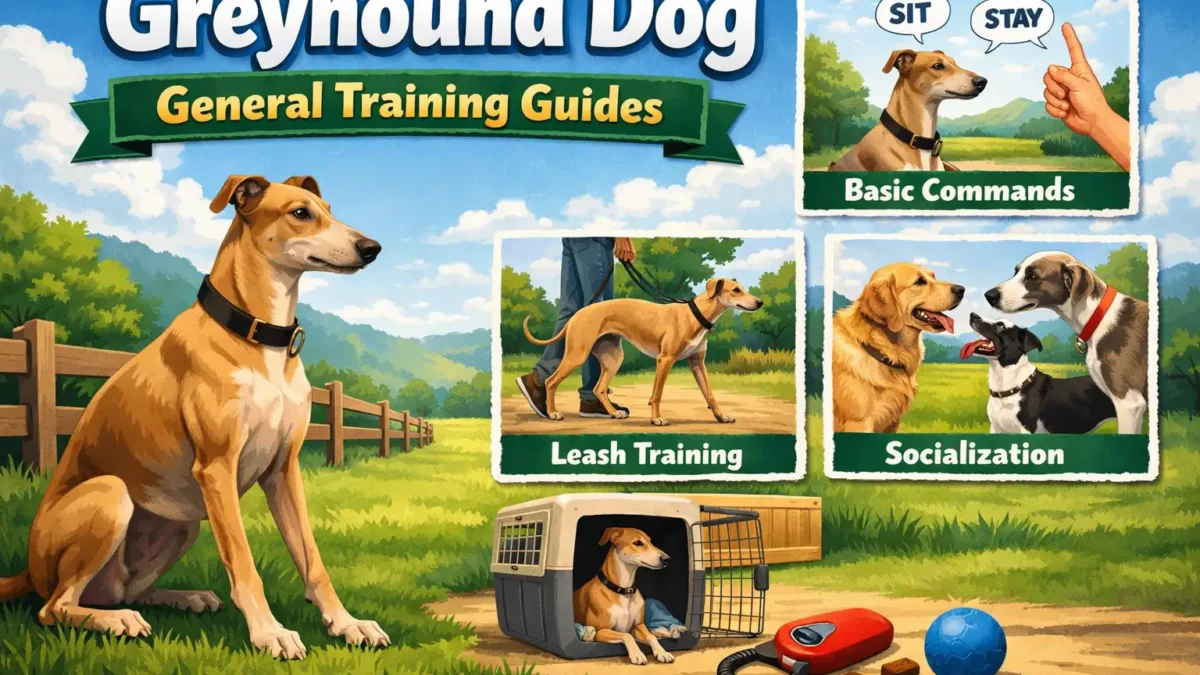
Greyhound Training Guide: How to Train a Greyhound Safely and Effectively
Training a Greyhound is not about teaching more commands—it’s about understanding how this breed thinks, learns, and reacts to the world. While Greyhounds are often described as calm, gentle, or “already trained,” that assumption regularly leads to frustration, safety risks, and stalled progress for new owners.
This guide is designed for real Greyhound households: adopters of retired racing Greyhounds, first-time Greyhound owners, and experienced dog owners who quickly realize that standard obedience advice doesn’t always work with this breed. Greyhounds are intelligent and capable learners, but they are also sensitive, independent, and strongly driven by instinct—especially sight and movement.
Unlike many working or herding breeds, Greyhounds were not bred to respond to constant cues or repetitive drilling. Their training succeeds best when it focuses on motivation, emotional safety, and impulse control, rather than strict obedience or correction-based methods. Short sessions, thoughtful environments, and realistic goals matter far more than intensity.
In this guide, you’ll learn how to approach Greyhound training in a way that prioritizes safety, confidence, and long-term reliability, whether you’re working on leash manners, recall foundations, or everyday household adjustment. The goal is not to turn your Greyhound into a robotic obedience dog—but to build a responsive, manageable companion who can thrive in the real world.
Understanding Greyhound Behavior, Temperament, and Learning Style
To train a Greyhound well, you must first understand why they behave the way they do. Many training problems happen not because the dog is “stubborn,” but because the training method does not match how Greyhounds think and learn.
Greyhounds are sighthounds. This means they react first to what they see, not what they hear. Fast movement can pull their attention away in a second. This is why recall and leash training feel harder than with other breeds.
Most Greyhounds are also very sensitive dogs. Loud voices, harsh corrections, or too much pressure can cause them to shut down. When this happens, the dog may freeze, walk away, or act like they are ignoring you. This is usually stress, not disobedience.
Another important trait is low repetition tolerance. Greyhounds do not enjoy repeating the same action many times. Too many drills can make them bored or confused. They learn better with short sessions and clear rewards.
Many adopted Greyhounds, especially retired racers, also lack early home experience. Things like stairs, slippery floors, mirrors, or household noise may feel scary at first. Training must move slowly and calmly to build confidence.
The table below shows common Greyhound traits and what they mean for training.
| Greyhound trait | What owners often notice | What this means for training |
|---|---|---|
| Strong prey drive | Ignores you when seeing movement | Train impulse control, not blind obedience |
| High sensitivity | Shuts down under pressure | Use calm tone and gentle guidance |
| Low repetition tolerance | Loses interest quickly | Keep sessions short and rewarding |
| Independent thinking | Seems stubborn or selective | Motivation works better than force |
| Limited early exposure | Fear of normal household items | Go slow and build confidence step by step |
When you train with these traits in mind, Greyhounds become easier to guide and much more relaxed. You are not fighting the breed—you are working with it.
How to Train a Greyhound: Step-by-Step Foundations
Training a Greyhound works best when it is simple, calm, and well planned. These dogs do not learn faster by doing more. They learn better when training is clear, short, and rewarding.
Always start training in a quiet place, like inside your home. Once your Greyhound understands a skill there, you slowly practice it in new places with more sights and sounds.
Training should focus on attention first, not commands. If your Greyhound is not focused on you, learning cannot happen.
How long and how often to train
Greyhounds get tired of training very quickly. Short sessions help them stay relaxed and interested.
| Training part | Best choice for Greyhounds |
|---|---|
| Session length | 3 to 5 minutes |
| Sessions per day | 2 to 4 short sessions |
| Training place | Quiet first, then slowly add distractions |
| Rewards | Soft treats, calm praise |
| When to stop | Stop before your dog loses interest |
Ending early is a good thing. It keeps training positive.
What to train first (in the right order)
Many owners try to teach recall or tricks too soon. This often fails because the basics are missing. Greyhounds need a strong foundation before harder skills.
| Order | Skill | Why it matters |
|---|---|---|
| 1 | Name response | Helps your dog notice you |
| 2 | Calm leash walking | Keeps walks safe and stress-free |
| 3 | Focus and eye contact | Builds control around movement |
| 4 | Recall basics | Reduces risk, even on leash |
| 5 | Home confidence | Helps your dog feel safe indoors |
Work on one skill at a time. Do not rush.
Important training tips
Use a calm voice. Loud or angry sounds can scare Greyhounds.
Reward quickly. Give the treat right when the dog does the right thing.
Do not repeat commands many times. Say it once, then help the dog succeed.
Use a leash or long line for safety. Never trust recall too early.
Common Greyhound Training Problems and Practical Solutions
Many Greyhound owners face the same training problems. This does not mean you are doing something wrong. Most issues happen because Greyhounds see the world differently from other dogs.
The good news is that most problems can improve with the right approach, patience, and safety steps.
Why problems happen
Greyhounds react fast to movement. They also feel stress more deeply than many breeds. When training feels confusing, scary, or too fast, progress can stop.
Below are common Greyhound training problems and what actually helps.
| Training problem | Why it happens | What helps most |
|---|---|---|
| Poor recall | Prey drive is stronger than voice | Use long lines and reward focus, not freedom |
| Leash pulling | Visual triggers like cats or birds | Create distance and reward calm walking |
| Freezing or stopping | Stress or confusion | Pause, lower pressure, move to a calmer area |
| Ignoring commands | Dog is overwhelmed or distracted | Reduce distractions and reward attention |
| Fear inside the home | New sounds and surfaces | Slow exposure with praise and treats |
Common mistakes owners make
Many owners repeat commands too many times. This teaches the dog to wait instead of respond.
Some owners try to correct prey drive with force. This often increases fear or stress.
Others move training outside too soon, before skills are strong indoors.
Greyhounds learn best when training feels safe and clear. If your dog is struggling, go back one step. That is not failure—it is smart training.
What progress really looks like
Progress may feel slow at first. Small signs matter:
- Faster name response
- Short moments of eye contact
- Less freezing on walks
- Calm recovery after distractions
When Greyhound Training Requires Professional Help
Some training challenges are too serious to handle alone. Getting help early can protect both you and your Greyhound and can prevent problems from getting worse.
Greyhounds are sensitive dogs. When fear, panic, or unsafe behavior appears, normal training tips may not be enough.
Signs you should get professional help
If you notice any of the signs below, it is time to pause DIY training and ask for support.
| Warning sign | What it may mean | What to do |
|---|---|---|
| Panic, shaking, or hiding | High fear or anxiety | Contact a qualified trainer or vet |
| Snapping or biting | Stress or fear response | Seek a behavior professional immediately |
| Strong prey fixation | Unsafe impulse control | Work with a breed-experienced trainer |
| No improvement after weeks | Training plan not working | Get a training assessment |
| Sudden behavior changes | Possible health issue | Visit a veterinarian first |
Who to look for
Choose a trainer who:
- Has experience with Greyhounds or sighthounds
- Uses calm, reward-based training
- Understands fear and stress behaviors
Avoid trainers who:
- Use harsh corrections or punishment
- Push fast progress without checking stress
- Promise quick fixes
In some cases, a veterinary behaviorist may be needed, especially when fear or anxiety is severe.
Getting help is a smart choice
Asking for help does not mean you failed. It means you care about your dog’s safety and well-being. Many Greyhound owners work with professionals and see big improvements when the right support is added.
For official breed information, temperament details, and care guidance, you can also review the Greyhound breed profile provided by the American Kennel Club.