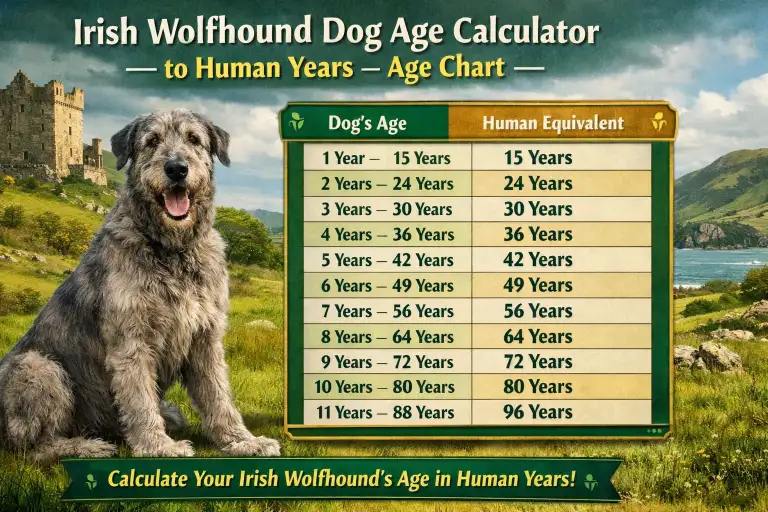
Irish Wolfhound Age Calculator to Human Years (Age Chart Explained)
Irish Wolfhounds do not age in a straight, human-like timeline. As a giant dog breed, they mature extremely quickly in their early years and then move into middle age and senior stages much sooner than smaller dogs—and far sooner than people expect if they rely on the outdated “7 dog years = 1 human year” rule.
An Irish Wolfhound puppy reaches physical adulthood in a fraction of the time it takes a human. By around 18–24 months, most Irish Wolfhounds are already fully grown in size, yet biologically they have passed what would be equivalent to early adulthood in humans. After this rapid start, aging continues at a faster pace than in medium or small breeds, which is why Irish Wolfhounds typically have a shorter overall lifespan.
The main reason for this accelerated aging is size-related biology. Giant breeds place far greater demands on their hearts, joints, bones, and metabolic systems. Rapid growth during puppyhood creates long-term strain on the body, and cellular aging progresses more quickly once maturity is reached. This is why an Irish Wolfhound that appears “young” on the outside may already be entering middle age internally.
This difference in aging speed is also why generic dog age charts are unreliable for Irish Wolfhounds. A conversion model that works reasonably well for a Beagle or Labrador can dramatically underestimate the true biological age of a giant breed. Irish Wolfhounds age faster early, hit senior status earlier, and show age-related changes sooner than most dogs.
Understanding this unique aging pattern is essential before using any Irish Wolfhound age calculator or age chart. Without accounting for giant-breed biology, it’s easy to misjudge life stage, delay important veterinary screenings, or overlook early signs of aging.
The Science Behind Irish Wolfhound Aging
Irish Wolfhounds age faster mainly because of their giant size. Bigger bodies grow fast, work harder, and wear down sooner. This is not a flaw in the breed—it is how biology works.
Here are the key ideas, explained simply:
- Fast growth early in life: Irish Wolfhound puppies grow very quickly. Their bones, joints, and organs have to support a huge body in a short time.
- Higher body stress: A larger heart, heavier bones, and long legs mean more daily strain on the body.
- Shorter adult phase: After reaching adulthood, giant breeds spend less time in their “prime years” than smaller dogs.
- Faster aging inside the body: Modern research shows dogs do not age in a straight line. They age fast early, then slower later. In giant breeds, this early fast-aging phase is even stronger.
Scientists confirmed this in a major 2019 canine aging study, which looked at changes in dog DNA over time. The study showed that dogs age in a curved (logarithmic) pattern, not a simple year-by-year match to humans. Giant breeds like Irish Wolfhounds move through this curve faster than smaller dogs.
This is why simple rules like “1 dog year = 7 human years” are very misleading for Irish Wolfhounds. That rule ignores size, growth speed, and real biology.
Irish Wolfhound Aging Compared to an Average Dog
| Age Point | Irish Wolfhound (Giant Breed) | Average Medium Dog | What This Means |
|---|---|---|---|
| 1 year | Like a young adult human | Like a teenager | Wolfhounds mature very fast |
| 3 years | Middle-aged human | Young adult | Aging gap starts to widen |
| 5 years | Early senior human | Adult human | Senior care often needed |
| 7 years | Senior human | Middle-aged | Big difference in life stage |
This table shows why Irish Wolfhounds should never be judged by average dog aging charts.
Irish Wolfhound Age Calculator and Human Years Chart
An Irish Wolfhound age calculator helps turn your dog’s age into human years in a more accurate way. This is important because Irish Wolfhounds age much faster than smaller dogs, especially in the first few years of life.
Instead of using the old “7 dog years = 1 human year” rule, modern calculators use giant-breed aging science. These models look at how fast Irish Wolfhounds grow, when they reach adulthood, and how early they enter senior years.
Here is how to understand the results in a simple way:
- Irish Wolfhounds age very fast in the first 2 years
- Adult years pass quickly compared to other breeds
- Senior age starts earlier, often around 5–6 years
- Each extra year matters more as the dog gets older
Irish Wolfhound Dog Age to Human Years Chart
| Irish Wolfhound Age | Human Age Equivalent | Life Stage |
|---|---|---|
| 3 months | 5 years | Puppy |
| 6 months | 10 years | Puppy |
| 1 year | 18 years | Young adult |
| 2 years | 28 years | Adult |
| 3 years | 38 years | Adult |
| 4 years | 46 years | Adult |
| 5 years | 55 years | Early senior |
| 6 years | 63 years | Senior |
| 7 years | 70 years | Senior |
| 8 years | 75+ years | Senior |
This chart shows why Irish Wolfhounds should be treated like middle-aged or senior dogs much earlier than most breeds. A 5-year-old Irish Wolfhound is not “young” in biological terms, even if they still look strong.
Always remember: this chart gives an estimate, not an exact number. Health, diet, activity, and genetics can all affect how fast a dog ages.
Irish Wolfhound Life Stages and What Each Age Means
Understanding the life stages of an Irish Wolfhound helps you care for your dog better. Because they are a giant breed, their stages are shorter and changes happen faster than in smaller dogs.
Here’s a simple way to see what happens at each stage:
- Puppy (0–1 year): Rapid growth in bones and muscles. They need a balanced diet and careful exercise to protect joints.
- Young Adult (1–2 years): Fully grown in size, but still learning social and behavioral skills. Energy is high, but their body is already aging faster than smaller dogs.
- Adult (2–5 years): Peak physical condition, but internal aging is faster. Watch for early signs of stress on heart and joints.
- Senior (5–7+ years): Early senior stage begins. Mobility, stamina, and energy may decline. Health checks become very important.
Irish Wolfhound Life Stages Table
| Age Range | Life Stage | Key Changes | Owner Focus |
|---|---|---|---|
| 0–1 year | Puppy | Rapid growth, high energy | Nutrition, joint-safe exercise |
| 1–2 years | Young Adult | Full size, learning behavior | Socialization, mental stimulation |
| 2–5 years | Adult | Physical peak, faster internal aging | Balanced exercise, watch joints & heart |
| 5–7+ years | Senior | Mobility and stamina decline | Vet visits, weight management, gentle exercise |
Knowing these stages helps you plan nutrition, exercise, and vet care at the right time.
How to Help an Irish Wolfhound Age Healthier and Longer
Irish Wolfhounds can live longer and feel better if you take care of their body, diet, and health. Because they are a giant breed, they need extra attention compared to smaller dogs.
Here are the key ways to help your Irish Wolfhound live a healthy life:
- Nutrition and weight control: Feed high-quality food in the right amounts. Avoid overfeeding because extra weight stresses joints and the heart.
- Exercise: Gentle daily walks and controlled play keep muscles strong. Avoid high-impact running, jumping, or stairs for puppies and seniors.
- Vet care: Regular check-ups are important. Giant breeds should have heart checks, joint exams, and senior bloodwork earlier than smaller dogs.
- Lifestyle choices: Neutering, safe living space, and reducing stress can improve quality of life. Avoid slippery floors and provide soft bedding for seniors.
- Watching for age signs: Notice changes in energy, movement, or behavior early. Early detection of problems helps your dog stay comfortable longer.
Age-Based Care Table for Irish Wolfhounds
| Age Range | Key Health Risks | Recommended Care | Daily Focus |
|---|---|---|---|
| 0–1 year | Rapid growth, joint stress | Controlled exercise, proper nutrition | Safe play, balanced diet |
| 1–2 years | High energy, heart load | Socialization, moderate activity | Mental stimulation, observe behavior |
| 2–5 years | Early joint and heart strain | Vet check-ups, balanced exercise | Maintain healthy weight, monitor health |
| 5–7+ years | Arthritis, heart issues, mobility decline | Senior screenings, gentle activity | Soft bedding, easy exercise, nutrition support |
By following these steps, you can help your Irish Wolfhound stay healthy and comfortable through every life stage.
For more detailed information on Irish Wolfhound health and breed-specific care, you can visit the American Kennel Club’s Irish Wolfhound page.