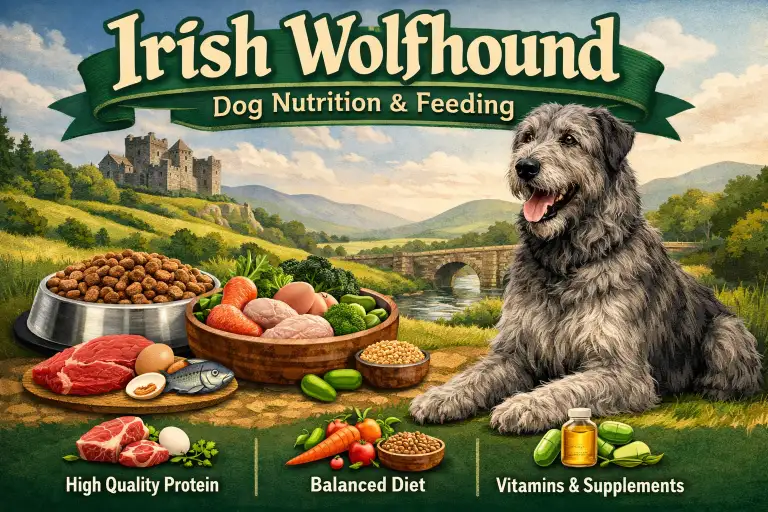
Irish Wolfhound Feeding Guide: Diet, Portions, and Nutrition Tips
Irish Wolfhounds are not just “very large dogs” — they are giant-breed dogs with a unique growth pattern, metabolism, and risk profile, and their nutrition needs reflect that. Feeding an Irish Wolfhound correctly is less about maximizing size or calories and more about controlling growth, protecting joints and the heart, and supporting long-term health.
This guide is designed to help you make practical, evidence-aligned feeding decisions whether you’re raising a fast-growing puppy, maintaining a laid-back adult, or adjusting meals for an aging senior.
Why Irish Wolfhound nutrition is different
Irish Wolfhounds mature slowly and grow rapidly in their first year, often reaching impressive heights long before their bones, joints, and connective tissues are fully developed. This makes them especially sensitive to:
- Overfeeding and excessive calories
- Imbalanced calcium and phosphorus
- Diets that push “rapid growth” instead of controlled development
Unlike smaller breeds, mistakes made early in life can contribute to orthopedic problems, joint stress, and mobility issues later on. Even in adulthood, carrying excess weight places a disproportionate load on joints and the cardiovascular system.
Nutrition’s role in health, lifespan, and quality of life
For Irish Wolfhounds, nutrition directly influences:
- Skeletal development and joint integrity
- Muscle maintenance without excess bulk
- Heart health as they age
- Digestive stability and stool quality
- Energy levels and overall comfort
A well-fed Irish Wolfhound should look lean, tall, and athletic, not bulky or heavy. Ribs should be easily felt, movement should be fluid, and energy should be steady rather than hyperactive or sluggish.
Common misconceptions owners run into
Many well-meaning owners accidentally fall into traps such as:
- “He’s a giant breed, so he needs more food than other dogs.”
- “High protein will make him grow stronger and faster.”
- “If he looks thin, he must be underfed.”
In reality, overfeeding is far more dangerous than slight leanness in this breed. Irish Wolfhounds are meant to be slim, especially during growth, and feeding for size instead of structure often backfires.
What this feeding guide will help you do
By the end of this guide, you’ll understand how to:
- Choose foods that support controlled growth and adult maintenance
- Feed appropriate portions without relying on guesswork or marketing claims
- Adjust meals based on age, activity level, and body condition
- Avoid common feeding mistakes that shorten lifespan or reduce mobility
- Recognize when nutrition issues require professional input
Everything that follows is built around one goal: helping your Irish Wolfhound grow and live well, not just grow big.
Best Diet for an Irish Wolfhound: Protein, Fat, Carbs, and Key Nutrients
Feeding an Irish Wolfhound is not about finding the “richest” food. It is about choosing a balanced diet that supports slow, healthy growth and keeps a very large body strong without putting extra stress on joints and the heart.
Protein: building muscle without forcing growth
Protein helps build and maintain muscle, skin, and the immune system.
Irish Wolfhounds do need good-quality protein, but more is not always better.
What matters most:
- Protein should come from animal sources (meat, fish, eggs)
- Extremely high-protein diets are not needed for this breed
- Puppies especially should not be fed to grow as fast as possible
A steady, controlled intake helps your Wolfhound grow tall and strong, not bulky or heavy.
Fat: energy, skin, and coat support
Fat gives energy and helps keep the skin and coat healthy.
For Irish Wolfhounds:
- Moderate fat levels work best
- Too much fat can lead to fast weight gain
- Overweight giant dogs put much more stress on joints and bones
Healthy fats, especially omega-3 fats from fish oil, can also help with:
- Joint comfort
- Inflammation control
- Skin and coat health
Carbohydrates and fiber: digestion and steady energy
Carbohydrates are not “bad” for dogs. They provide energy and help carry other nutrients.
In Irish Wolfhound diets:
- Carbs should come from easy-to-digest sources
- Fiber helps keep stools firm and digestion regular
- Too much fiber can reduce nutrient absorption
A good balance supports stable energy levels without stomach upset.
Calcium, phosphorus, and mineral balance
This is one of the most important topics for Irish Wolfhound puppies.
Key points:
- Too much calcium can damage growing bones
- The balance between calcium and phosphorus matters more than the exact number
- Adding supplements on top of complete dog food is risky
Never add calcium or bone supplements unless a vet specifically tells you to.
Taurine, omega-3s, and other important nutrients
Some nutrients deserve extra attention in large and giant breeds:
- Omega-3 fatty acids for joints and inflammation
- Taurine for heart health
- Vitamins and minerals should come from a complete and balanced diet, not guesswork
Most healthy Irish Wolfhounds do not need extra supplements if they eat a well-formulated food.
How to read dog food labels without getting confused
Dog food bags often use big words and marketing claims. Focus on:
- Clear protein sources listed early in the ingredients
- “Complete and balanced” for the right life stage
- Large- or giant-breed formulas for puppies and adults
Ignore claims that promise:
- Faster growth
- Extra size
- “Super-muscle” results
Those are red flags for this breed.
How Much to Feed an Irish Wolfhound (Puppy, Adult, Senior)
Feeding the right amount is just as important as feeding the right food. Irish Wolfhounds are very large dogs, but that does not mean they should eat as much as they want. Overfeeding is one of the biggest health risks for this breed.
Why portion control matters in this breed
Irish Wolfhounds grow fast and carry a lot of weight on long bones and large joints. Extra weight puts stress on:
- Hips and elbows
- Spine and joints
- Heart and lungs
A slightly lean Irish Wolfhound is healthier than a heavy one.
Feeding Irish Wolfhound puppies
Puppies need enough calories to grow, but not so much that growth is forced.
Important puppy feeding rules:
- Feed measured meals, not free feeding
- Choose large- or giant-breed puppy food
- Avoid extra calcium or growth supplements
- Expect your puppy to look tall and slim
Fast growth may look impressive, but it increases the risk of joint problems later.
Feeding adult Irish Wolfhounds
Adult Irish Wolfhounds vary a lot in activity level.
- Some are calm and low-energy
- Others stay active and playful
Because of this:
- Two adults of the same size may need very different amounts of food
- Portions should be adjusted based on body shape, not just weight
Feeding senior Irish Wolfhounds
As Irish Wolfhounds age:
- Activity usually decreases
- Muscle mass can slowly drop
- Appetite may change
Senior dogs often need:
- Slightly fewer calories
- Easy-to-digest food
- Careful monitoring of weight and muscle tone
Using body condition instead of guessing
Do not rely only on:
- Cup measurements
- Feeding charts on bags
- “He looks big, so he needs more food”
A healthy Irish Wolfhound should:
- Have ribs you can easily feel
- Have a visible waist when viewed from above
- Move comfortably without stiffness
Small adjustments make a big difference in giant dogs.
Best Dog Food Types for Irish Wolfhounds (Kibble, Raw, Fresh, Homemade)
There is no single “perfect” food for every Irish Wolfhound. The best choice depends on your dog’s age, health, activity level, and your daily routine. What matters most is that the food is complete, balanced, and safe for giant breeds.
Kibble (dry dog food)
Kibble is the most common choice for Irish Wolfhound owners.
Why many owners use kibble:
- Easy to store and measure
- Usually complete and balanced
- More affordable for very large dogs
Things to watch for:
- Choose large- or giant-breed formulas
- Avoid foods made for “rapid growth”
- Check portion sizes carefully
Kibble works well for most Irish Wolfhounds when portions are controlled.
Raw diets
Raw diets are popular but need extra care, especially for giant breeds.
Possible benefits:
- Simple ingredient lists
- High moisture
- Some dogs enjoy the taste
Risks:
- Hard to balance calcium and phosphorus
- Bacteria risk for dogs and humans
- Easy to overfeed calories
Raw feeding should only be done with proper planning and professional guidance.
Fresh and cooked dog food
Fresh dog food is gently cooked and usually delivered or prepared at home.
Pros:
- High moisture
- Often very tasty
- Easy to digest for some dogs
Cons:
- Can be expensive for large dogs
- Portions must be accurate
- Not all brands are well balanced
Always confirm the food is complete for your dog’s life stage.
Canned and freeze-dried foods
These foods are often used as:
- Toppers for picky eaters
- Short-term feeding options
They are usually:
- Higher in moisture
- Higher in calories per serving
For Irish Wolfhounds, portion control is very important with these foods.
Homemade diets
Homemade food gives full control over ingredients, but it is also easy to get wrong.
Common problems:
- Missing vitamins and minerals
- Poor calcium balance
- Long-term health risks
Homemade diets should only be used with a veterinary nutritionist plan.
Dog Food Types for Irish Wolfhounds – Pros and Cons
| Food Type | Pros | Cons | Best For |
|---|---|---|---|
| Kibble | Easy, balanced, affordable | Can be overfed | Most owners |
| Raw | Simple ingredients | Balance & safety risks | Advanced owners |
| Fresh | Tasty, easy to digest | Expensive | Picky eaters |
| Canned | High moisture | High calories | Short-term use |
| Freeze-dried | Convenient | Costly | Travel |
| Homemade | Full control | High error risk | Vet-guided plans |
Safe and unsafe human foods
Irish Wolfhounds can eat some human foods, but portion size matters.
Safe in small amounts:
- Cooked lean meat
- Plain rice
- Carrots
- Apples (no seeds)
Unsafe foods:
- Chocolate
- Grapes and raisins
- Onions and garlic
- Xylitol (artificial sweetener)
Safe vs Unsafe Foods for Irish Wolfhounds
| Safe Foods (Small Amounts) | Unsafe / Toxic Foods |
|---|---|
| Cooked chicken | Chocolate |
| Rice | Grapes / raisins |
| Carrots | Onions / garlic |
| Pumpkin | Xylitol |
| Plain yogurt | Alcohol |
Common Irish Wolfhound Feeding Problems, Special Diets, and Vet Advice
Even when you choose the right food and portion sizes, Irish Wolfhounds can still run into feeding problems. Giant breeds have special needs, so it’s important to spot issues early and know how to respond.
Puppy feeding issues
Puppies grow quickly, but feeding mistakes can lead to joint problems, loose stools, or overweight. Common puppy problems:
- Eating too much too fast
- Getting the wrong calcium/phosphorus balance
- Refusing food after switching brands
Adult and senior feeding problems
Adult and older Irish Wolfhounds can have different challenges:
- Weight gain if activity is low
- Muscle loss if diet lacks protein
- Sensitive stomachs or soft stool
- Picky eating behavior
Special diets
Some Irish Wolfhounds need special diets for health or lifestyle:
- Allergies or food intolerances
- Sensitive stomachs
- Weight loss or gain control
- High-energy working dogs or low-activity pets
Special diets should always be balanced and approved by a vet to avoid nutrient deficiencies.
Switching foods safely
Changing your dog’s food too fast can cause:
- Vomiting
- Loose stool
- Loss of appetite
Rule of thumb: slow transition over 7–10 days. Mix the new food with the old gradually, increasing the new food each day.
When to see a vet
Contact a vet or veterinary nutritionist if you notice:
- Sudden weight gain or loss
- Persistent diarrhea or vomiting
- Appetite changes
- Signs of joint pain or lethargy
Even minor changes can become serious in giant breeds if ignored.
Common Feeding Problems & Solutions for Irish Wolfhounds
| Problem | Likely Cause | What to Try | When to See a Vet |
|---|---|---|---|
| Puppy growing too fast | Overfeeding, high calcium | Reduce portions, use giant-breed puppy food | If joints are swollen or limping |
| Loose stool | Food change, sensitive stomach | Slow transition, try digestible food | If persists > 3 days |
| Overweight adult | Low activity, overfeeding | Reduce portions, increase walks | If weight gain is rapid or persistent |
| Picky eater | Brand change, boredom | Try smaller meals, rotate foods | If appetite loss > 48 hours |
| Vomiting after food change | Sudden switch | Gradual transition over 7–10 days | If vomiting continues |
| Weight loss | Illness, low-calorie diet | Adjust diet, monitor calories | If >10% body weight lost in a month |
For more detailed guidance on canine nutrition standards and balanced diets, you can visit the AAFCO official guidelines: https://www.aafco.org/