Irish Wolfhound Grooming: Basics, Routine, and Care Guide
Irish Wolfhound grooming is best described as low-maintenance but high-importance. These dogs don’t need frequent haircuts or elaborate styling, but they do need consistent, correct grooming to stay comfortable, mobile, and healthy—especially given their giant size and rough coat.
Many owners assume that because Irish Wolfhounds don’t shed heavily, grooming isn’t a priority. In reality, their wiry, dirt-holding coat, large paws, deep chest, and sensitive joints mean neglected grooming problems tend to show up quietly—then suddenly become serious. Matted hair behind the ears, overgrown nails affecting posture, or damp skin trapped under a thick coat can all escalate before owners realize something’s wrong.
This guide focuses on practical grooming basics, not show grooming or hand-stripping for competition. The goal is to help you:
- Keep your Irish Wolfhound clean, comfortable, and odor-free
- Prevent common coat and skin problems before they start
- Maintain nails, ears, and teeth safely in a giant breed
- Know what you can handle at home and when professional help is the better choice
Grooming an Irish Wolfhound is less about appearance and more about health, movement, and long-term comfort. When done correctly, it supports joint health, skin integrity, and even behavior—many giant-breed dogs become restless or irritable when mats pull at the skin or nails alter their gait.
If you’re a first-time owner,Irish Wolfhounds are not difficult to groom, but they do reward consistency and proper technique. If you’ve owned one before, it will help you fine-tune a routine that fits their size, coat, and life stage.
Understanding the Irish Wolfhound Coat and Skin
Irish Wolfhounds have a rough, wiry coat that looks simple but works in a special way. This coat was made to protect them from cold, wind, rain, and rough ground. Because of this, their grooming needs are different from short-haired or fluffy dogs.
Here’s what owners need to understand first.
- Irish Wolfhounds do not shed heavily, but loose hair stays trapped in the coat
- Dirt, mud, and food often get caught in the beard, legs, and chest
- Mats can form quietly, especially behind ears and under the front legs
- Their skin can become dry or irritated if grooming is done the wrong way
The coat is meant to be protective, not soft or shiny. Cutting it too short or shaving it can damage how it works and may cause skin problems.
Key coat and skin traits in simple terms
- Texture: Hard, rough, and slightly coarse
- Length: Medium length, longer on the face and legs
- Shedding: Low, but loose hair stays stuck in the coat
- Mat risk: Medium, mainly in high-friction areas
- Skin type: Can be sensitive and dry if over-bathed
Because Irish Wolfhounds are very large dogs, small grooming issues can turn into big problems. For example, long hair mixed with moisture can trap bacteria close to the skin. Long nails can change how a giant dog stands and walks, putting stress on joints.
Common coat and skin problem areas
- Behind the ears
- Under the collar
- Armpits and inner legs
- Beard and mouth area
- Elbows and pressure points (from lying down)
Checking these spots regularly makes grooming much easier and prevents pain later.
Common Irish Wolfhound Coat and Skin Issues
| Issue | What it looks like | Why it happens | How grooming helps | When to worry |
|---|---|---|---|---|
| Light matting | Small knots or tight hair | Friction, missed brushing | Regular brushing | If mats pull skin |
| Dry skin | Flakes, dull coat | Too many baths, harsh shampoo | Gentle products | Red or itchy skin |
| Dirty beard | Smell, food stuck | Eating and drinking | Rinsing and combing | Skin redness |
| Pressure sores | Bald spots on elbows | Lying on hard floors | Clean skin, soft bedding | Open sores |
| Skin irritation | Red or sore patches | Trapped moisture or dirt | Proper drying | Swelling or discharge |
Important grooming myth to know
Myth: Shaving an Irish Wolfhound keeps them cool
Truth: Shaving removes their natural protection and can make skin problems worse
Their coat helps control body temperature and protect the skin. Trimming is fine, shaving is not.
Irish Wolfhound Grooming Routine at Home
Grooming an Irish Wolfhound at home does not need to be hard or time-consuming. What matters most is doing a few things often, instead of doing everything once in a while. A simple routine keeps the coat clean, the skin healthy, and the dog comfortable.
Because Irish Wolfhounds are very large, short and calm grooming sessions work best. Trying to do too much at once can stress both you and your dog.
What a basic home routine looks like
- Light brushing a few times each week
- Bathing only when needed
- Regular checks of coat, skin, and smell
- Using the right tools (not many tools)
This breed does best with steady care, not heavy grooming.
Irish Wolfhound Grooming Frequency Guide
| Grooming task | How often | Why it matters |
|---|---|---|
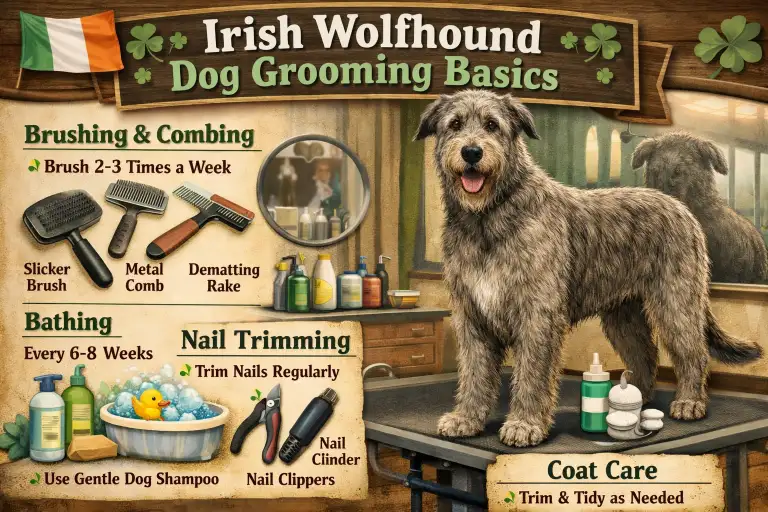
| Brushing | 2–3 times per week | Removes dirt and loose hair |
| Bathing | Every 6–8 weeks | Keeps skin healthy |
| Beard cleaning | 2–3 times per week | Prevents smell and skin sores |
| Coat check | Weekly | Catches mats early |
| Full grooming session | Monthly | Keeps routine on track |
Brushing at home (simple and safe)
Brushing is the most important part of Irish Wolfhound grooming.
- Brush slowly and gently
- Focus on legs, chest, belly, and behind ears
- Do not pull on knots—work them out gently
- Stop if your dog becomes restless
Brushing removes trapped hair and dirt, even though the dog does not shed much.
Bathing your Irish Wolfhound
Irish Wolfhounds do not need frequent baths.
- Too many baths can dry the skin
- Always use dog shampoo, never human shampoo
- Rinse very well—soap left in the coat can irritate skin
- Dry fully, especially in cold weather
Because they are large dogs, many owners bathe them outdoors or use a walk-in shower.
Essential Grooming Tools for Irish Wolfhounds
| Tool | What it is used for | How often |
|---|---|---|
| Slicker brush | Removes loose hair and dirt | Weekly |
| Metal comb | Finds small knots | Weekly |
| Dog shampoo | Gentle skin cleaning | Every 6–8 weeks |
| Large towel | Drying after baths | After bathing |
| Non-slip mat | Keeps dog steady | Every session |
You do not need clippers, fancy sprays, or many brushes. Simple tools used correctly are enough.
Signs your routine is working well
- Coat feels rough but clean
- No strong dog smell
- No tight mats or sore spots
- Dog stays calm during grooming
If you notice bad smells, itchy skin, or knots forming often, the routine may need small changes.
Nails, Ears, Teeth, and Skin Care for Irish Wolfhounds
Taking care of nails, ears, teeth, and skin is just as important as brushing and bathing. Because Irish Wolfhounds are very large dogs, small problems in these areas can cause big issues if ignored. Doing simple checks regularly keeps your dog comfortable and healthy.
Nail Care
- Check nails weekly
- Long nails can hurt joints and change how your dog walks
- Use a large dog nail clipper or grinder
- Trim carefully, avoid the quick (the pink part inside the nail)
- If nervous, do a few nails at a time
Ear Care
- Irish Wolfhounds have folded ears that can trap dirt and moisture
- Look inside weekly for redness, wax, or smell
- Clean with a damp cloth or vet-approved ear cleaner
- Never push cotton deep into the ear canal
Dental Hygiene
- Brush teeth 2–3 times per week if possible
- Use dog-specific toothpaste only
- Check for bad breath, red gums, or broken teeth
- Chew toys can help keep teeth cleaner
Skin Health
- Check coat and skin weekly
- Look for dry patches, redness, mats, or bumps
- Make sure skin is dry after baths
- Watch pressure points like elbows and chest for sores
Nail, Ear, Teeth, and Skin Care Guide
| Area | How often | What to look for | Tips for safety |
|---|---|---|---|
| Nails | Weekly | Long nails, cracks | Trim slowly, avoid the quick |
| Ears | Weekly | Redness, wax, smell | Use dog-safe cleaner, do not insert deep |
| Teeth | 2–3 times per week | Plaque, bad breath | Dog toothpaste only, chew toys help |
| Skin | Weekly | Dry patches, mats, sores | Check high-friction areas, dry after bath |
Simple rules to remember
- Small, regular checks prevent big problems
- Handle gently and reward your dog
- Ask a vet if you notice swelling, bleeding, or bad odor
Common Grooming Mistakes, Professional Grooming, and FAQs
Even with a simple routine, Irish Wolfhound owners can make mistakes that cause discomfort or skin problems. Knowing these common mistakes helps you avoid them and keep your dog happy and healthy.
Common Grooming Mistakes
- Over-bathing – too many baths dry the skin
- Shaving the coat – removes natural protection and can cause sunburn or irritation
- Skipping nail trims – can hurt joints and change walking posture
- Ignoring mats – small knots can turn into painful mats quickly
- Using wrong products – human shampoo or harsh soaps can damage skin
Professional Grooming
While most grooming can be done at home, sometimes it’s better to call a professional:
- Large mats or very dirty coats
- Nail trims that are too difficult at home
- Special baths (medicated shampoos for skin problems)
- Puppies or senior dogs that get stressed easily
Home Grooming vs Professional Grooming
| Task | Can be done at home | Professional recommended | Why |
|---|---|---|---|
| Brushing | Yes | Rarely | Only very large mats may need help |
| Bathing | Yes | Sometimes | Large dogs or medicated baths |
| Nail trimming | Sometimes | Often | Risk of cutting quick |
| Ear cleaning | Yes | Sometimes | If infection or deep canal issues |
| Coat detangling | Sometimes | Often | Tough mats may need tools/experience |
FAQs Owners Ask
- How often should I brush my Irish Wolfhound? 2–3 times per week
- Do I need to shave my dog in summer? No, the coat protects against heat
- Can I use human shampoo? Never, it can dry or irritate skin
- My dog hates baths. What can I do? Use calm, short sessions with treats
- When should I see a groomer or vet? If mats are severe, nails are overgrown, or skin is irritated
Keeping these tips in mind ensures that your Irish Wolfhound stays clean, comfortable, and healthy. Following a routine with regular checks reduces the need for stressful or emergency grooming visits
“For more expert advice on keeping your dog’s skin and coat healthy, visit the American Kennel Club’s guide to dog grooming here.”