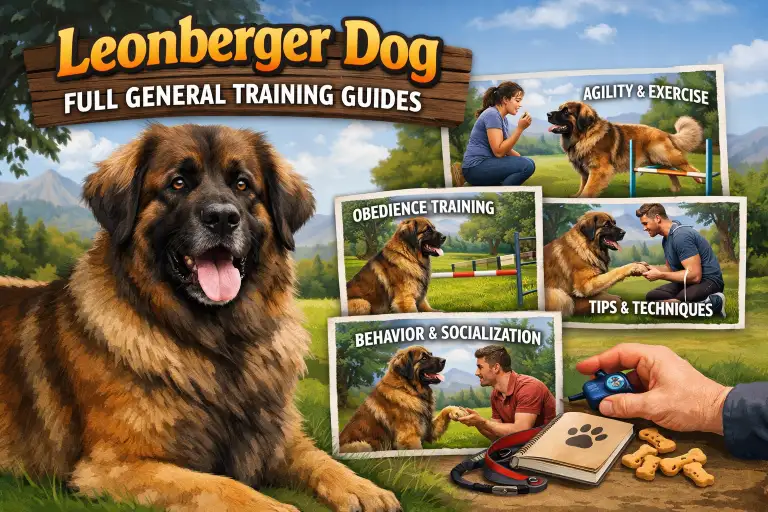
Leonberger Training Guide: How to Train a Leonberger Dog Successfully
Training a Leonberger is not about teaching flashy commands quickly—it’s about building calm control, confidence, and reliability in a very large, slow-maturing, and emotionally sensitive dog. This guide is designed to help you train a Leonberger in a way that fits their size, temperament, and developmental pace, whether you’re starting with a puppy or working with an adolescent or adult dog.
Leonbergers are intelligent and eager to please, but they do not respond well to rushed timelines or force-based methods. Their giant size means small training mistakes can become serious safety issues later, while their gentle nature means harsh handling can cause shutdown, fear, or avoidance rather than improvement. Successful Leonberger training focuses on clarity, consistency, and calm leadership—not pressure.
This guide covers general, everyday training that every Leonberger needs: household manners, leash behavior, impulse control, and cooperation in real-life situations. It is written for family homes, busy environments, and owners who want a reliable companion rather than a competition dog. Throughout the guide, expectations are kept realistic, with special attention to the breed’s long adolescence and physical development.
Why Leonberger Training Is Different (And Why It Matters)
Training a Leonberger is not the same as training a small or medium dog. Their huge size, slow growth, and soft nature change how training should be done and why it matters so much.
A fully grown Leonberger can weigh well over 120 pounds. If a dog that big pulls on the leash, jumps on people, or ignores commands, it can easily knock someone down or cause injury—without meaning to. This is why training is not optional for this breed. It is about safety, not just good manners.
Leonbergers also take longer to grow up mentally. Many act like puppies or teenagers until they are 2–3 years old. This means progress may feel slow, but that is normal. Pushing too hard or expecting fast results often leads to stress, confusion, or fear-based behavior.
Another key point is temperament. Leonbergers are gentle and sensitive. They learn best with calm voices, clear rules, and rewards. Yelling, leash jerks, or harsh corrections often backfire and can make them shut down or avoid training altogether.
Good training helps a Leonberger:
- Stay calm in busy homes and public places
- Walk safely without pulling
- Greet people politely despite their size
- Feel confident instead of anxious or unsure
- Protect their joints by avoiding wild, uncontrolled behavior
Poor or delayed training often leads to problems that are much harder to fix later, especially once the dog is fully grown.
Why Early and Proper Training Matters for Leonbergers
| Factor | Why It Matters |
|---|---|
| Large adult size | Small behavior issues become big safety risks |
| Slow mental maturity | Training takes longer and needs patience |
| Sensitive temperament | Harsh methods cause fear or shutdown |
| Family-oriented nature | Needs clear rules to behave well around people |
| Joint development | Calm, controlled behavior protects growing bones |
At this stage, the goal is not perfection. The goal is to build a strong foundation that keeps your Leonberger safe, confident, and easy to live with as they grow.
Understanding Leonberger Temperament and Learning Style
Leonbergers are big dogs, but they are also very gentle and smart. Knowing how they think and feel makes training much easier and more effective.
These dogs are calm, friendly, and sensitive. They love being with people and want to please, but they can get stressed if training is rushed or confusing. They do not respond well to yelling or force. Instead, they learn best when training is clear, patient, and positive.
Leonbergers are also slow to mature. A puppy may be clumsy and playful, and even as a year-old, they may act like teenagers. This means training should be steady, with short, regular sessions, and lots of praise for small successes.
Some common behavior patterns to know:
- They may resist or seem stubborn, but this is often confusion or fatigue, not bad behavior.
- They can develop separation anxiety if left alone too long without guidance.
- They respond best to food, praise, and play as rewards.
Understanding these traits helps owners set realistic expectations and train in a way that keeps the dog happy and motivated.
Leonberger Learning Style at a Glance
| Trait | How It Affects Training | Best Approach |
|---|---|---|
| Calm and gentle | May not respond to harsh methods | Use positive reinforcement |
| Slow mental maturity | Training takes longer | Short, frequent sessions |
| People-oriented | Wants approval | Praise and attention work well |
| Sensitive | Easily stressed | Avoid yelling or corrections |
| Food/play motivated | Motivates learning | Pair commands with treats or games |
Knowing how a Leonberger thinks and feels gives you a roadmap for success. Training is about guiding them, not forcing them.
Step-by-Step Leonberger Training Approach
Training a Leonberger works best when you follow clear steps and keep things simple. Because they are large and slow to mature, you need patience, consistency, and gentle guidance.
Here is a simple approach to make your Leonberger a well-behaved companion:
- Start with basic commands – sit, stay, down, come. Use treats, praise, and gentle petting to reward good behavior.
- Leash training – teach them to walk calmly without pulling. Use short sessions at first. Stop and wait if they pull, then reward when they walk nicely.
- Impulse control – practice waiting for food, doors, or toys. This teaches patience and reduces jumping or rushing behaviors.
- Socialization – introduce them to different people, animals, and environments. Keep experiences positive to build confidence.
- House manners – prevent jumping on furniture or counters. Reward calm behavior and redirect unwanted actions.
- Progress gradually – increase difficulty slowly. Work on distractions, longer commands, and public spaces as they improve.
Session Tips
- Keep sessions 10–15 minutes for puppies and 15–20 minutes for adolescents/adults.
- Practice 2–3 times a day for consistency.
- End sessions on a positive note to build motivation.
Leonberger Training Expectations by Age
| Age | Focus | Expected Progress | Tips |
|---|---|---|---|
| 8–16 weeks | Basic commands, gentle handling | Sit, down, crate introduction | Short sessions, lots of praise |
| 4–6 months | Leash walking, socialization | Walk calmly, meet new people | Use treats, keep exposure positive |
| 6–12 months | Impulse control, longer commands | Wait for food, calm greetings | Gradually increase distractions |
| 12–24 months | Advanced commands, public spaces | Reliable recall, calm in public | Patience; reinforce consistently |
| 2+ years | Mastery and reinforcement | Confident, obedient adult | Continue regular practice |
Ideal Training Session Structure for Leonbergers
| Session Part | Duration | Focus | Notes |
|---|---|---|---|
| Warm-up | 2–3 min | Attention & focus | Call dog, get eye contact |
| Core Training | 5–10 min | Commands, leash work, impulse control | Short bursts for focus |
| Socialization / Exposure | 5–7 min | New people, pets, environments | Positive reinforcement only |
| Play / Reward | 2–5 min | Treats or games | End on a positive note |
Using this step-by-step approach ensures your Leonberger learns safely, confidently, and at their pace.
Common Leonberger Training Problems and When to Get Help
Even with the best training, Leonbergers can have problems. Knowing what is normal and when to get help makes training safer and easier.
Common Problems
- Pulling on the leash – Their size makes this dangerous. It often happens because they are excited or not taught to walk calmly.
- Jumping on people – Leonbergers are friendly, but a big jump can hurt someone.
- Stubbornness or refusal – Usually not defiance, but confusion, fatigue, or boredom.
- Fear or anxiety – New situations can make sensitive Leonbergers nervous.
- Separation stress – They can get anxious when left alone too long.
How to Fix These Problems
- Use short, calm sessions and reward small successes.
- Be consistent with commands and rules.
- Avoid harsh corrections, which can cause fear or shutdown.
- Gradually introduce new situations and people for socialization.
When to Get Professional Help
Some problems need a trainer or vet behaviorist:
- Aggression or growling that escalates
- Extreme fear or panic
- Persistent leash aggression
- Behavior that puts family safety at risk
Common Leonberger Training Problems and Fixes
| Problem | Why It Happens | Owner Mistake | Correct Approach |
|---|---|---|---|
| Pulling on leash | Excitement or no leash training | Yanking or scolding | Stop and wait, reward calm walking |
| Jumping on people | Excitement | Allowing jumps as greeting | Teach sit or wait before greeting |
| Refusal / stubbornness | Confusion or fatigue | Pushing too hard | Short sessions, reward small steps |
| Fear / anxiety | New situations | Forcing exposure | Gradual introduction with positive reinforcement |
| Separation stress | Attachment / sensitive temperament | Leaving dog alone too long | Short absences at first, gradually increase |
When to Train at Home vs Hire a Professional
| Situation | Home Training OK? | Why / Why Not | Who to Contact |
|---|---|---|---|
| Basic commands | Yes | Can be done with patience | N/A |
| Leash manners | Usually | Only if dog is safe | Trainer if aggression develops |
| Severe fear | No | Can worsen if handled wrong | Vet behaviorist or certified trainer |
| Aggression | No | Safety risk | Professional trainer or behaviorist |
| Anxiety/separation stress | Sometimes | Depends on severity | Trainer or behaviorist |
Using these tips and knowing when to get help keeps your Leonberger safe, confident, and happy.
For more detailed breed information and official guidance on Leonberger care, temperament, and health, you can visit the AKC Leonberger Breed Page.