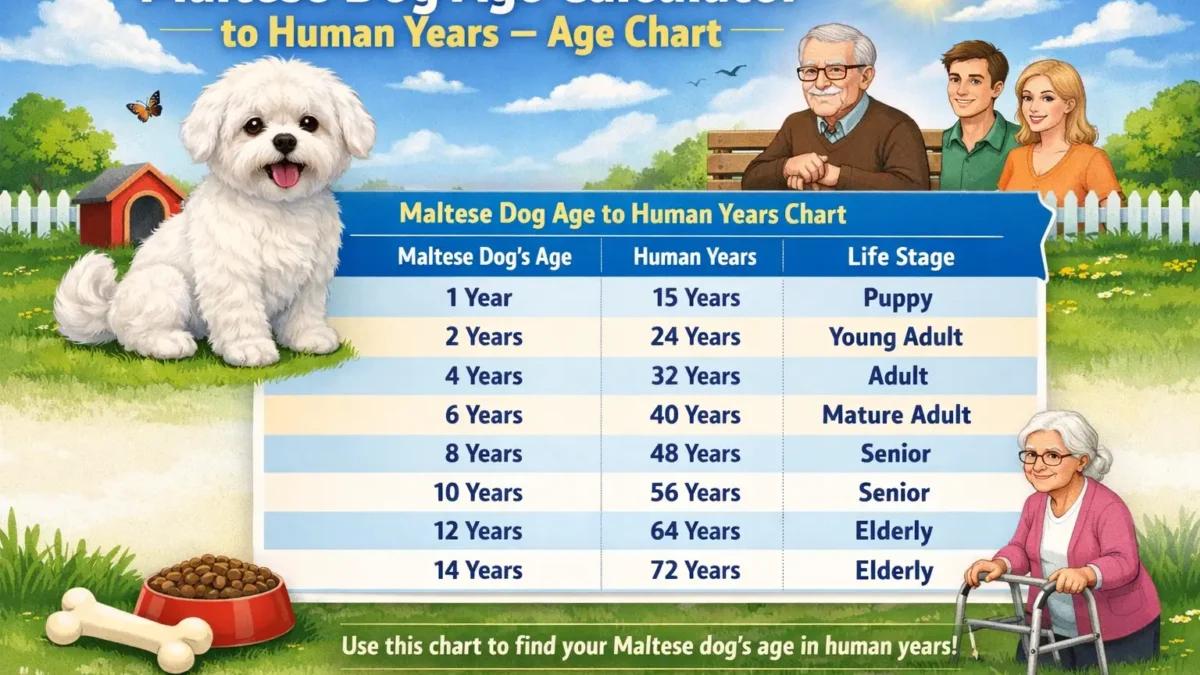
Maltese Dog Age Calculator to Human Years (Age Chart)
A Maltese dog age calculator helps you understand how old your Maltese is in human years using a model designed specifically for small-breed dogs. Unlike generic dog age calculators, a Maltese-focused approach accounts for the breed’s longer lifespan, slower aging after adulthood, and unique development pattern.
Many owners are surprised to learn that converting Maltese dog years to human years is not a simple one-to-seven formula. Maltese dogs mature very quickly during their first year, then age much more gradually compared to humans and large-breed dogs. This is why a one-size-fits-all conversion often gives misleading results.
This calculator works by:
- Recognizing that Maltese dogs reach adulthood earlier than humans
- Slowing the aging rate after the first few years
- Reflecting the longer average lifespan of toy breeds
- Grouping ages into realistic life stages: puppy, adult, and senior
When you use a Maltese dog age calculator, you’re not just getting a number—you’re gaining context. Knowing your dog’s human-age equivalent helps you better understand their energy level, health risks, and care needs at each stage of life.
Maltese Dog Age Chart: Dog Years to Human Years
Most Maltese owners want a fast and clear answer to one question: How old is my Maltese in human years?
That’s exactly what this age chart is for. You don’t need math or formulas—just find your dog’s age and read across.
Maltese dogs age very fast in the first year, then much slower as adults. Because they are a small breed, they usually stay “younger” longer than large dogs.
Maltese Dog Age to Human Years Chart
| Maltese Dog Age (Years) | Human Age Equivalent | Life Stage | What This Age Usually Means |
|---|---|---|---|
| 0.5 | 10 | Puppy | Fast growth, learning basics |
| 1 | 15 | Puppy | Reaches adulthood |
| 2 | 24 | Adult | Full-grown, high energy |
| 3 | 28 | Adult | Mentally mature |
| 4 | 32 | Adult | Stable health and behavior |
| 5 | 36 | Adult | Calm, predictable routine |
| 6 | 40 | Adult | Slight slowdown may begin |
| 7 | 44 | Adult | Middle-aged years |
| 8 | 48 | Senior | Early senior stage |
| 9 | 52 | Senior | More rest needed |
| 10 | 56 | Senior | Clear aging signs |
| 11 | 60 | Senior | Senior care becomes important |
| 12 | 64 | Senior | Slower movement, more naps |
| 13 | 68 | Senior | Higher health monitoring needed |
| 14 | 72 | Senior | Advanced senior stage |
| 15 | 76 | Senior | Very old for the breed |
This chart gives a realistic estimate, not an exact match. Every Maltese is different, and things like diet, exercise, and health care can change how fast a dog ages.
If you want to understand why Maltese dogs age this way and why the old “7 dog years equals 1 human year” rule is wrong, the next section explains the science in very simple terms.
How Maltese Dogs Age Compared to Humans
Many people still think one dog year equals seven human years, but this is not true—especially for Maltese dogs. Maltese are a small breed, and small dogs age very differently than humans and large dogs.
Maltese dogs grow up fast in the beginning. A one-year-old Maltese is already like a teenager in human years. After that, aging slows down a lot. This is why older Maltese dogs often stay active and playful even at ages that sound “old.”
Here is why Maltese aging is different:
- Maltese puppies grow and learn very fast in the first year
- Adult Maltese dogs age slowly for many years
- Small dogs usually live longer than large dogs
- Big dogs age faster and often become seniors earlier
Simple Comparison of Aging
| Aging Factor | Maltese Dogs (Small Breed) | Humans / Large Dogs |
|---|---|---|
| Early growth | Very fast in first year | Slow and steady |
| Adult aging | Slow and gradual | Faster over time |
| Senior stage | Starts later (around 8 years) | Starts earlier |
| Average lifespan | 12–15 years or more | Much shorter (dogs) |
Scientists now use better methods to understand dog aging. Modern research shows that dog aging follows a curved pattern, not a straight line. This means dogs age fast early, then slow down later. This model fits Maltese dogs very well because of their long lifespan and slow senior aging.
Knowing this helps owners make better choices. It explains why a 10-year-old Maltese is not “very old” in the same way a 10-year-old large dog would be.
In the next section, we’ll break down Maltese life stages so you can clearly see what puppy, adult, and senior years look like in real life.
Maltese Life Stages Explained (Puppy to Senior Years)
Maltese dogs go through clear life stages as they grow. Each stage comes with different needs, energy levels, and health changes. Understanding these stages helps you care for your dog the right way at the right time.
Maltese Life Stages Overview
| Life Stage | Maltese Age Range | Human Age Range | What Owners Usually Notice |
|---|---|---|---|
| Puppy | 0–1 year | 0–15 years | Fast growth, teething, high energy |
| Young Adult | 1–4 years | 15–32 years | Playful, strong, learning routines |
| Adult | 5–7 years | 36–44 years | Calm behavior, stable health |
| Senior | 8–11 years | 48–60 years | Slower movement, more rest |
| Advanced Senior | 12+ years | 64+ years | Needs extra comfort and care |
What these stages mean in real life
- Puppy Maltese dogs learn quickly and need training, social time, and safe play
- Adult Maltese dogs are steady, confident, and easier to manage
- Senior Maltese dogs may sleep more and move slower, but many stay happy and alert
Some aging signs are normal, like less energy or gray hair. Other signs, such as sudden weight loss, pain, or confusion, are not normal and should be checked by a vet.
Knowing your Maltese’s life stage helps you choose the right food, exercise level, and health care.
How to Help Your Maltese Dog Age Healthily
Helping your Maltese age well is not about stopping time. It is about keeping your dog comfortable, active, and healthy at every age. Small daily habits can make a big difference, especially as your Maltese gets older.
Maltese Care Needs by Age
| Maltese Age Range | Nutrition Focus | Exercise Needs | Health Priorities |
|---|---|---|---|
| Puppy (0–1 year) | High-quality puppy food | Short play sessions | Vaccines, training, social skills |
| Adult (1–7 years) | Balanced adult diet | Daily walks and play | Dental care, weight control |
| Senior (8–11 years) | Easy-to-digest food | Gentle, regular movement | Joint health, checkups |
| Advanced Senior (12+ years) | Senior-specific diet | Light activity | Comfort, pain management |
Simple tips that help at every age
- Keep your Maltese at a healthy weight to protect joints and heart
- Brush teeth often to prevent dental disease, which is common in small dogs
- Give daily walks and playtime, even for seniors
- Visit the vet at least once a year, twice a year for senior dogs
- Watch for changes in behavior, appetite, or movement
Senior Maltese dogs may need:
- Softer bedding
- Shorter walks
- More rest time
- Extra patience and gentle care
With good food, regular vet care, and lots of love, many Maltese dogs live long and happy lives.
For more official information about the Maltese breed, lifespan, and care needs, visit the American Kennel Club’s Maltese breed profile: https://www.akc.org/dog-breeds/maltese/