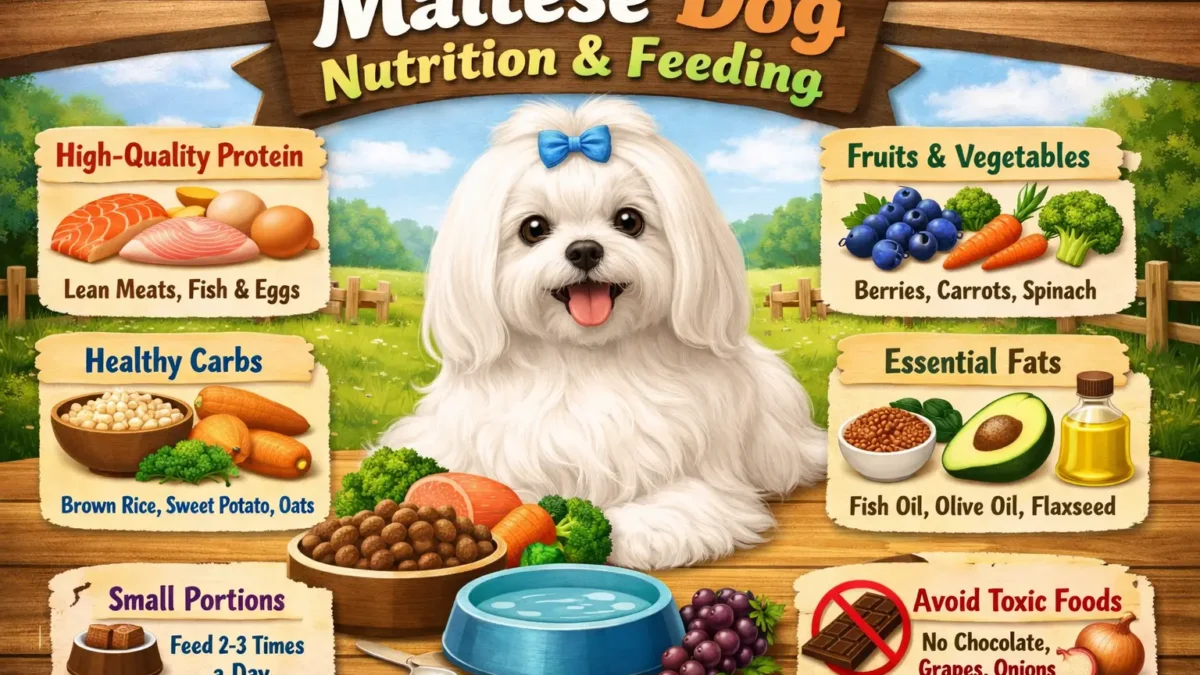
Maltese Dog Nutrition & Feeding Guide: What to Feed, How Much, and Common Mistakes
Maltese dogs may be small, but their nutritional needs are not simple. As a toy breed with a fast metabolism, delicate digestion, and a long life expectancy, a Maltese requires a carefully balanced diet to stay healthy, energetic, and problem-free over the years. Feeding mistakes that might barely affect a larger dog can quickly lead to weight gain, low energy, dental issues, or digestive trouble in a Maltese.
At its core, good Maltese nutrition is about quality, balance, and portion control. These dogs do best on diets that provide enough high-quality protein to maintain lean muscle, healthy fats to support skin and coat, and easily digestible carbohydrates or fiber for steady energy. Because Maltese dogs are prone to issues like hypoglycemia as puppies, picky eating, dental disease, and tear staining, what you feed them—and how you feed them—matters more than many owners realize.
A well-fed Maltese typically shows clear signs of good nutrition:
- A soft, bright white coat with minimal dryness or excessive shedding
- Steady energy levels without hyperactivity or crashes
- Firm, regular stools and minimal digestive upset
- Healthy body weight without rib fat buildup
- Strong appetite without constant begging
Small-breed dogs like the Maltese burn calories faster than large dogs, but they also require far fewer calories overall. This combination makes it easy to overfeed without noticing. Even a few extra treats a day or slightly oversized portions can add up quickly. At the same time, underfeeding or feeding poorly balanced food can leave a Maltese lacking essential nutrients despite eating “enough.”
Another key factor is food size and texture. Maltese dogs have small mouths and closely spaced teeth, so foods designed for large breeds may be difficult to chew properly. Poorly chosen food can contribute to dental plaque buildup, discomfort while eating, or refusal to eat altogether.
This guide focuses on practical, real-life feeding decisions Maltese owners face every day:
- Choosing the right type of food for a small, sensitive dog
- Understanding how much food is truly appropriate
- Avoiding common feeding mistakes that lead to long-term health problems
By understanding the basics of Maltese nutrition first, you’ll be better prepared to make smart choices about portions, food types, treats, and special diets as your dog grows from puppy to adult and into their senior years.
How Much Should a Maltese Eat? Portions, Calories, and Feeding Schedule
This is the most common question Maltese owners ask — and also where most feeding mistakes happen. Because Maltese dogs are very small, even a little extra food can lead to weight gain. On the other hand, feeding too little can cause low energy, weakness, or blood sugar problems, especially in puppies.
The goal is to feed enough for health and energy, but not so much that weight slowly creeps up.
Daily calorie needs for Maltese dogs
Most adult Maltese dogs weigh between 4–7 pounds (1.8–3.2 kg). Their daily calorie needs are low compared to bigger dogs, but they still need nutrient-dense food.
Maltese daily calorie needs (estimated)
| Maltese Weight | Low Activity | Moderate Activity | High Activity |
|---|---|---|---|
| 4 lb (1.8 kg) | 160–180 kcal | 180–200 kcal | 200–220 kcal |
| 5 lb (2.3 kg) | 180–200 kcal | 200–220 kcal | 220–250 kcal |
| 6 lb (2.7 kg) | 200–220 kcal | 220–250 kcal | 250–280 kcal |
| 7 lb (3.2 kg) | 220–250 kcal | 250–280 kcal | 280–310 kcal |
These numbers are daily totals, not per meal. Treats should be included in this total, not added on top.
Feeding schedule and portions by life stage
How often you feed matters just as much as how much you feed.
| Life Stage | Meals per Day | General Portion Guidance |
|---|---|---|
| Puppy (2–4 months) | 3–4 meals | Small, frequent meals to prevent low blood sugar |
| Puppy (4–10 months) | 3 meals | Gradually increase portions as they grow |
| Adult | 2 meals | Split daily food into morning and evening |
| Senior | 2 small meals | Slightly smaller portions, easier digestion |
Puppies need more frequent meals, not bigger meals. Adults do best on a steady routine. Seniors often need slightly fewer calories but higher-quality food.
Portion size tips for Maltese owners
- Always check the calories per cup or per can on the food label
- Use a measuring cup or kitchen scale, not guessing
- If your Maltese is spayed or neutered, they may need 10–20% fewer calories
- Treats should make up no more than 10% of daily calories
How to tell if you are feeding the right amount
A healthy Maltese should:
- Have a visible waist when viewed from above
- Have ribs you can feel easily but not see
- Move easily without tiring quickly
If your dog feels round, heavy, or is always hungry, portions may need adjusting. If ribs stick out or energy is low, they may need more food.
Small changes matter for small dogs. Adjust portions slowly and give the body time to respond.
Best Food for Maltese Dogs: Kibble, Wet, Fresh, Raw, and Homemade
Choosing the right food for a Maltese can feel confusing. Pet stores and websites offer many options, and every brand claims to be the best. The truth is that there is no one perfect food for every Maltese, but there are clear guidelines that help you choose wisely.
The best food for a Maltese should be:
- Made for small or toy breeds
- Easy to chew and digest
- High in quality protein
- Balanced and complete for daily feeding
Below is a simple breakdown of the most common food types and how they work for Maltese dogs.
Dog food types for Maltese dogs: pros and cons
| Food Type | Benefits | Downsides | Best For |
|---|---|---|---|
| Dry food (kibble) | Easy to store, helps clean teeth, affordable | Can be dry or hard if kibble is too large | Most adult Maltese dogs |
| Wet food (canned) | Soft, tasty, good for picky eaters | Higher cost, can cause dental buildup | Seniors or picky eaters |
| Fresh food | High moisture, very digestible | Expensive, short shelf life | Sensitive stomachs |
| Freeze-dried | Nutrient-dense, long shelf life | Needs rehydration, costly | Travel or rotation feeding |
| Raw diet | High protein, shiny coat | Safety risks if not balanced | Only with vet guidance |
| Homemade food | Full ingredient control | Easy to unbalance nutrition | Only with nutritionist help |
Many Maltese owners use a mix of kibble and wet food to balance taste, texture, and dental health.
Choosing the right kibble for a Maltese
Kibble works very well for most Maltese dogs if chosen correctly. Look for:
- Small or toy breed kibble size
- Crunchy texture that is not too hard
- Clear calorie information per cup
Avoid large-breed kibble. It is often too big and hard for a Maltese to chew properly.
How to read a dog food label for Maltese dogs
Food labels can be confusing, but a few basics help a lot.
| Label Item | What It Means | Why It Matters for Maltese |
|---|---|---|
| Complete & balanced | Meets daily nutrition needs | Safe for long-term feeding |
| Protein source listed first | Main ingredient by weight | Supports muscles and energy |
| Calories per cup | Energy amount | Prevents overfeeding |
| Small breed formula | Designed for fast metabolism | Better portion control |
| AAFCO statement | Meets nutrition standards | Confirms food quality |
Avoid foods that rely heavily on fillers or make extreme claims like “miracle” or “cure-all.”
Do Maltese dogs need supplements?
Most Maltese dogs do not need supplements if they eat a balanced commercial food. Adding vitamins without need can actually cause problems.
Supplements may help only if:
- Your vet recommends them
- Your Maltese has a medical condition
- You feed a homemade diet under guidance
When in doubt, food quality matters more than supplements.
Safe Foods, Treats, and Common Feeding Mistakes for Maltese Dogs
Maltese dogs love food, but not everything that is safe for humans is safe for them. Because they are small, even tiny amounts of the wrong food can cause health problems. Knowing what is safe — and what is not — helps keep your Maltese healthy for years.
Safe human foods Maltese dogs can eat
Some human foods are safe when given in small amounts and prepared plainly (no salt, sugar, or spices).
| Food | Safe Portion | How Often | Notes |
|---|---|---|---|
| Cooked chicken | Small bites | 2–3 times/week | No skin or bones |
| Cooked turkey | Small bites | Occasionally | Plain only |
| Carrots | Few slices | Often | Good low-calorie snack |
| Apples | Few small pieces | Occasionally | Remove seeds |
| Blueberries | 2–3 berries | Occasionally | High in antioxidants |
| Plain rice | Small spoon | As needed | Helps upset stomach |
| Plain pumpkin | 1–2 teaspoons | Occasionally | Aids digestion |
Always introduce new foods slowly and watch for stomach upset.
Foods Maltese dogs must never eat
Some foods are dangerous or toxic, even in small amounts.
| Food | Why It’s Dangerous | Risk Level |
|---|---|---|
| Chocolate | Toxic to dogs | Very high |
| Grapes & raisins | Can cause kidney failure | Very high |
| Onions & garlic | Damage red blood cells | High |
| Xylitol | Causes low blood sugar | Extremely high |
| Alcohol | Nervous system damage | Very high |
| Cooked bones | Can splinter | High |
| Fatty foods | Pancreatitis risk | High |
If your Maltese eats any of these, contact a vet right away.
Treat rules for Maltese dogs
Treats should be rewards, not meals.
- Treats should be no more than 10% of daily calories
- Choose small, soft treats made for small dogs
- Break treats into tiny pieces
- Avoid giving treats all day long
Dental chews can help teeth, but they also add calories. Use them carefully.
Common feeding mistakes Maltese owners make
Many health problems come from simple feeding habits.
Common mistakes include:
- Free-feeding (food left out all day)
- Too many treats or table scraps
- Guessing portion sizes
- Feeding large-breed food
- Changing food too fast
Small dogs feel these mistakes faster than big dogs.
How to fix feeding problems early
- Feed meals at the same time each day
- Measure food every time
- Reduce treats if weight starts to rise
- Switch foods slowly over 7–10 days
Good habits now prevent vet visits later.
Special Diets, Common Problems, and Real Maltese Feeding Scenarios
Maltese dogs are loving and smart, but they can be sensitive when it comes to food. Many owners face feeding problems at some point. The good news is that most issues can be improved with the right diet and simple changes.
Feeding Maltese puppies, adults, and seniors
Maltese dogs need different food as they age.
- Puppies need more meals each day to keep blood sugar stable
- Adult Maltese dogs need steady portions to avoid weight gain
- Senior Maltese dogs often need fewer calories and easier-to-digest food
Always switch food slowly when changing life stages.
Diets for common Maltese health issues
Some problems are very common in this breed.
| Problem | Likely Cause | What to Try | When to See a Vet |
|---|---|---|---|
| Picky eating | Too many treats or food changes | Fixed meal times, no topping | If eating stops for 24 hours |
| Soft stool | Food sensitivity | Simple diet, slow food change | If lasts more than 2 days |
| Tear staining | Genetics, diet myths | Clean water, balanced food | If eyes are red or painful |
| Weight gain | Overfeeding, treats | Reduce portions, more walks | If weight keeps increasing |
| Low weight | Not enough calories | Slight portion increase | If ribs show clearly |
Avoid jumping between foods too often. This often makes picky eating worse.
Feeding a Maltese with a sensitive stomach
If your Maltese has a sensitive stomach:
- Choose food with simple ingredients
- Avoid fatty foods
- Switch foods slowly over 7–10 days
- Feed smaller meals
Many dogs improve just by slowing down changes.
Real-life Maltese feeding situations
Here are problems owners often mention:
- “My Maltese won’t eat breakfast”
This is often learned behavior from too many treats. Stick to meal times. - “My Maltese seems hungry all the time”
Small dogs beg easily. Check portions and treat count. - “My Maltese eats fast”
Use slow-feeder bowls or spread food out. - “I have more than one dog”
Feed separately so each dog eats the right amount.
When to see a vet or nutrition expert
You should get professional help if:
- Your Maltese suddenly stops eating
- Weight changes quickly
- Vomiting or diarrhea keeps happening
- You want to feed homemade or raw food
A vet or pet nutritionist can help prevent serious problems.
Final thoughts for Maltese owners
Feeding a Maltese well does not need to be complicated. Focus on:
- Quality food
- Correct portions
- Regular feeding times
- Fewer treats
Small dogs feel small mistakes quickly, but they also improve quickly with good care.
For official nutrition standards and feeding guidance used by veterinarians and pet food manufacturers, you can review the complete dog food nutrient profiles published by the Association of American Feed Control Officials, which explain what “complete and balanced” nutrition really means for dogs of all sizes and life stages.