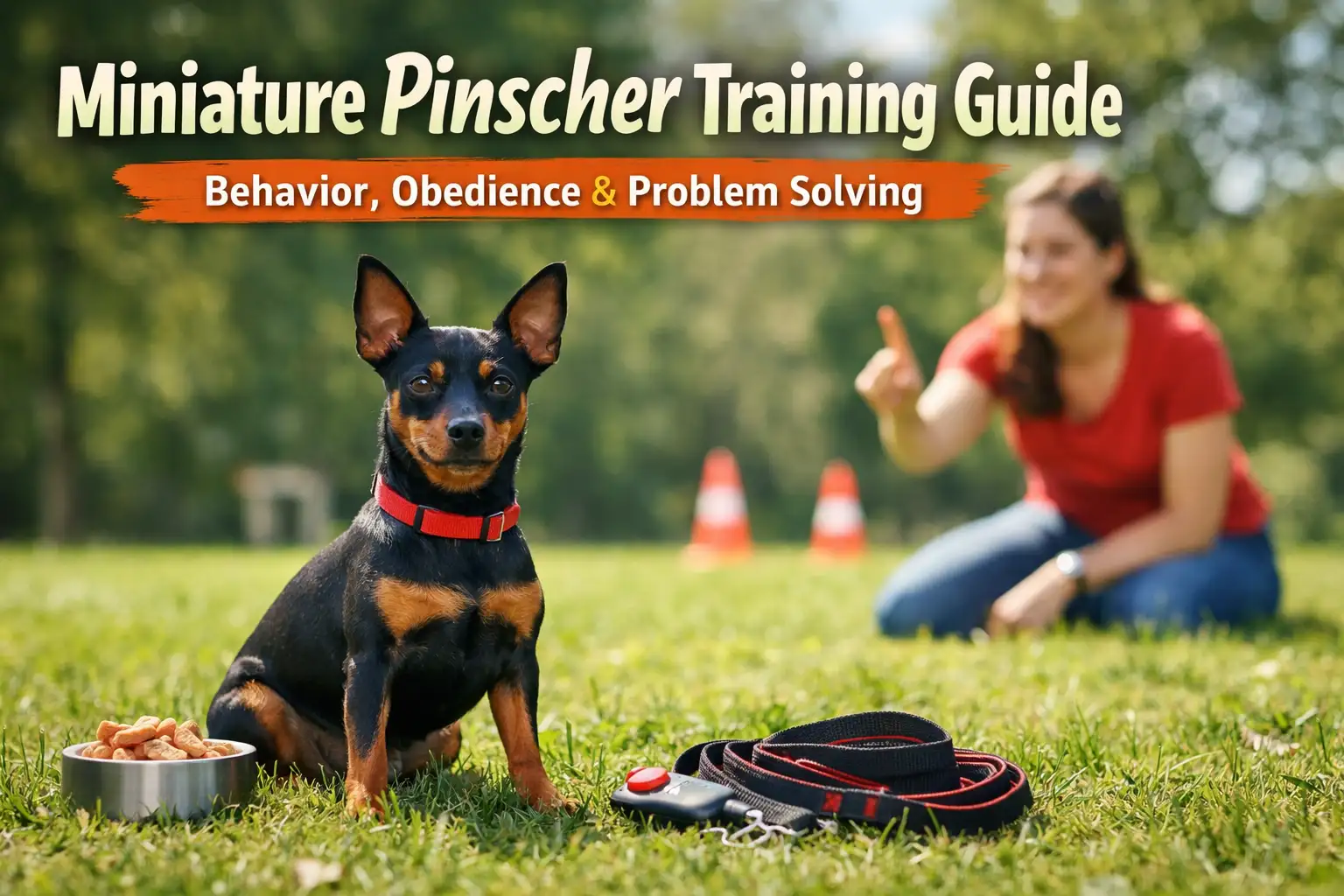
Miniature Pinscher Training Guide: Behavior, Obedience, and Problem Solving
Training a Miniature Pinscher isn’t just about teaching commands—it’s about understanding a bold, spirited, high-energy dog who thinks fast, reacts fast, and learns fast when training is done right. Min Pins are confident, independent thinkers with a mischievous streak, which is exactly why owners often describe them as “tiny dogs with a big personality.” Without proper guidance, that personality can quickly turn into stubbornness, barking problems, poor recall, and endless power struggles. With the right approach, though, they become incredibly loyal, obedient, and fun companions to live with.
In this guide, you’ll learn how to work with your Miniature Pinscher’s natural instincts instead of fighting against them. We’ll focus on reward-based, science-supported training methods that build trust and motivation while preventing frustration—for both you and your dog. Whether you’re training a young puppy, an adopted adult, a stubborn Min Pin who never learned rules, or an energetic dog living in a busy household, you’ll find clear steps, realistic expectations, and practical solutions.
By the end, you’ll understand how your Miniature Pinscher thinks, how long training realistically takes, and how to create a calm, well-mannered dog who still keeps that lively Min Pin spark everyone loves. Let’s start by understanding what makes this breed behave the way it does.
Understanding Miniature Pinscher Behavior and Temperament
Miniature Pinschers are small dogs with a big, brave heart. They are confident, smart, and full of energy. They love to stay busy, explore, and watch everything happening around them. This makes them fun and exciting dogs, but it also means they need good training and clear rules.
They learn very fast, but they also get bored fast. When they are bored, they may bark, chew things, or ignore commands. This does not mean they are bad. It means they need mental exercise, play, and short training sessions that keep their mind active.
Min Pins can also be independent. Sometimes they want to do things their own way. Gentle training, patience, and rewards work much better than shouting or punishment. Positive training helps them trust you and listen better.
Here is a simple table to help understand their behavior and how it affects training:
| Behavior Trait | What It Means | How It Affects Training |
|---|---|---|
| Energetic | Loves to move and play | Short, fun, and frequent training sessions |
| Independent | Likes making own choices | Needs clear rules and calm patience |
| Alert and Watchful | Notices every sound and movement | Start training in quiet places at first |
| Very Smart | Learns fast but gets bored easily | Training should be simple, fun, and changing |
When you understand these traits, training becomes easier. You don’t fight their nature; you work with it. That’s how you build a happy, confident, and well-behaved Miniature Pinscher.
Step-by-Step Miniature Pinscher Training Guide
Training a Miniature Pinscher works best when it is simple, calm, and consistent. Use short training times, lots of praise, and small tasty treats. Always train in a quiet place first so your dog can focus. When your Min Pin understands the command, then slowly add distractions.
Keep sessions short because Mini Pins learn fast but get bored quickly. End training on a happy note so your dog feels excited to learn next time. Never shout or punish. Reward good behavior, ignore bad behavior when safe, and guide your dog to do the right thing.
Here is an easy training plan to follow:
| Age / Stage | Session Length | How Many Times a Day | Training Goal | What to Expect |
|---|---|---|---|---|
| Puppy | 3–5 minutes | 2–3 times daily | Learn basic commands and build focus | Puppy learns fast but may get distracted |
| Young Adult | 5–10 minutes | 1–2 times daily | Better listening and control | More focus, better behavior |
| Adult | 10 minutes | 1 time daily or every other day | Keep skills strong and behavior stable | More calm response and good habits |
Start with simple commands like sit, stay, come, and leash walking. Use happy voice, treats, and praise. Practice every day if possible. If your dog makes mistakes, stay patient and try again. Training is not about being perfect. It is about getting a little better every day.
Solving Common Miniature Pinscher Behavior Problems
Many Miniature Pinscher owners face the same problems: barking, pulling on the leash, biting or nipping, not listening, or having trouble staying alone. The good news is that most of these problems can be fixed with calm training, patience, and the right plan.
Before correcting a behavior, always ask: why is my dog doing this? Dogs do not “misbehave” for no reason. They bark because they feel alert or stressed. They pull because they are excited. They nip because they are over-energized or not trained yet. When you understand the reason, it becomes easier to solve the problem.
Here is a simple troubleshooting table to help you:
| Problem | Likely Cause | What To Do | What NOT To Do |
|---|---|---|---|
| Too much barking | Over-alert, bored, or anxious | Teach quiet command, give more exercise, reward calm behavior | Do not shout, it makes barking worse |
| Leash pulling | Too much excitement | Use short walks at first, reward walking beside you | Do not yank the leash |
| Biting or nipping | Teething, excitement, lack of training | Give chew toys, teach gentle play, stop play when biting happens | Do not hit or scare the dog |
| Not listening | Too many distractions or unclear training | Train in quiet place, use treats, keep sessions short | Do not repeat commands angrily |
| Trouble staying alone | Separation anxiety | Practice short alone times slowly, leave toys or puzzles | Do not lock or punish for crying |
If you stay calm and train step by step, most Miniature Pinscher behavior problems get better over time. Consistency is the key. Practice a little every day instead of trying to fix everything in one day.
When to Get Professional Help and How Long Training Takes
Every Miniature Pinscher learns at a different speed. Some learn very fast, while others take a little more time. This depends on their age, past experiences, personality, and how consistent the training is. Training is not magic. It is slow progress, small wins, and patience.
Most owners want to know, “How long will it take?” Here is a simple idea of what you may see with regular training:
| Time Period | What You May Notice | When to Worry |
|---|---|---|
| 1 to 2 weeks | Dog starts to understand commands, better focus | No worry yet, just keep training |
| 1 month | Better listening, fewer mistakes, calmer behavior | If there is zero improvement |
| 2 to 3 months | Good habits forming, stronger obedience | If behavior is getting worse |
| Longer time | Most daily problems under control | If aggression, fear, or anxiety is strong |
You should consider professional help if:
- Your Miniature Pinscher shows aggression or tries to bite
- Barking or anxiety is very severe
- Training feels too stressful or confusing
- You feel unsafe or unsure what to do
A certified dog trainer or veterinary behavior professional can help you safely guide your dog. Getting help is a smart choice, not a failure. It protects both you and your dog.
You can also learn more about Miniature Pinscher behavior and care from trusted experts like the American Kennel Club here: https://www.akc.org/dog-breeds/miniature-pinscher/
Miniature Pinscher Dog Guide 2025: Temperament & Care
[…] Miniature Pinscher General Training Guides […]