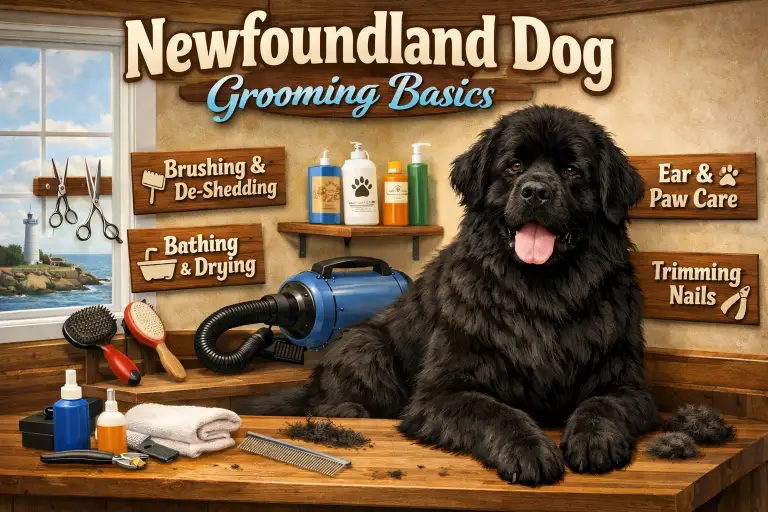
Newfoundland Dog Grooming Basics
Newfoundland dogs are not just “big dogs that need more brushing.” They are a giant, double-coated, water-loving breed, and their grooming needs directly affect their comfort, skin health, mobility, and overall quality of life. Regular grooming is not cosmetic — it is a form of ongoing health care for this breed.
Because of their size and coat density, small grooming issues can escalate quickly in Newfoundlands. Light tangles can turn into painful mats, moisture trapped in the coat can lead to hot spots or infections, and overgrown nails can strain joints that are already supporting a heavy body. Grooming also allows owners to spot problems early, long before they become veterinary emergencies.
Many owners underestimate grooming because Newfoundlands are known for their gentle temperament and thick, “natural” coats. In reality, neglected grooming is one of the most common reasons Newfoundlands develop chronic skin issues, discomfort, and mobility problems later in life.
What Proper Grooming Prevents in Newfoundlands
| Issue prevented | How grooming helps | What owners notice when grooming is skipped |
|---|---|---|
| Severe matting | Regular brushing removes loose undercoat before it tangles | Hard, painful mats behind ears, under legs, and on the chest |
| Hot spots & skin infections | Drying and coat maintenance reduce trapped moisture | Red, oozing patches, constant licking or scratching |
| Excess odor | Clean, dry coat limits bacteria and yeast growth | Strong “wet dog” smell even when the dog seems clean |
| Joint strain | Proper nail length supports healthy posture and movement | Slipping, reluctance to walk, visible discomfort |
| Hidden injuries | Hands-on grooming reveals lumps, sores, and parasites | Problems go unnoticed until they become severe |
For Newfoundland owners, grooming should be viewed as preventive care, not an optional chore. A consistent routine reduces long-term stress on both the dog and the owner and makes professional grooming visits safer and more effective when they are needed.
Understanding the Newfoundland Double Coat and Shedding
Newfoundlands have a true double coat designed to protect them in cold water and harsh weather. This coat is one of their defining traits — and the main reason grooming can feel overwhelming if owners don’t understand how it works.
The outer coat is long, coarse, and water-resistant, helping repel moisture and dirt. Beneath it lies a dense, soft undercoat that provides insulation. When these two layers are not maintained properly, loose undercoat becomes trapped, leading to heavy shedding, matting, overheating, and skin irritation.
Newfoundlands shed year-round, with intense seasonal shedding (“blowing coat”) typically occurring once or twice a year. During these periods, grooming demands increase significantly. Skipping brushing during shedding season is one of the fastest ways a Newfoundland’s coat becomes unmanageable.
Newfoundland Coat Characteristics and Grooming Impact
| Coat component | Primary function | Grooming impact | Risk if mishandled |
|---|---|---|---|
| Outer coat | Repels water and dirt | Needs regular brushing to stay open and functional | Becomes brittle, tangled, and traps debris |
| Undercoat | Insulation and temperature control | Must be removed gradually during shedding | Compacts into painful mats and blocks airflow |
| Coat density | Protection in cold climates | Requires sectioned, thorough brushing | Superficial brushing misses trapped hair |
| Natural oils | Skin and coat barrier | Gentle products preserve oil balance | Over-bathing strips oils and irritates skin |
A critical misconception is that shaving a Newfoundland helps with heat or shedding. In reality, shaving disrupts the coat’s natural insulation system, increases sunburn risk, and often causes uneven or poor coat regrowth. Proper grooming manages shedding far more effectively than shaving ever could.
Understanding the coat is the foundation of successful Newfoundland grooming. Once owners know why the coat behaves the way it does, the grooming routine becomes more logical, predictable, and manageable.
Newfoundland Dog Grooming Routine at Home
Grooming a Newfoundland at home can feel like a big job, but it becomes much easier when you follow a clear routine. You do not need to do everything in one day. The goal is regular care, not perfection.
Because Newfoundlands are large and have very thick coats, short and frequent grooming sessions work better than long, tiring ones. Most problems happen when grooming is skipped for weeks and then rushed.
Newfoundland Grooming Frequency at a Glance
This table shows how often most Newfoundland dogs need each grooming task. It gives owners quick answers without guessing.
| Grooming task | How often | Why it matters |
|---|---|---|
| Brushing | 3–4 times per week | Prevents mats and controls shedding |
| Heavy deshedding | Weekly (daily during shedding season) | Removes loose undercoat before it tangles |
| Bathing | Every 6–8 weeks | Keeps skin clean without drying it out |
| Nail trimming | Every 3–4 weeks | Protects joints and helps movement |
| Ear cleaning | Every 2–4 weeks | Prevents infections in floppy ears |
This schedule may change during seasonal shedding, illness, or old age, but it works well for most healthy adult Newfoundlands.
Essential Grooming Tools for Newfoundland Dogs
Using the right tools makes grooming faster and safer. The wrong tools can damage the coat or hurt the dog.
| Tool | What it is used for | Why it’s important | What to avoid |
|---|---|---|---|
| Slicker brush | Daily and weekly brushing | Removes loose hair from topcoat | Very sharp or cheap slickers |
| Undercoat rake | Heavy shedding periods | Pulls out loose undercoat safely | Using it on dry, matted hair |
| Wide-tooth metal comb | Checking for hidden mats | Finds tangles brushing misses | Plastic combs that bend |
| Dog shampoo (gentle) | Bathing | Protects skin oils | Human shampoo |
| High-velocity dryer (optional) | Drying thick coat | Prevents damp skin and hot spots | Air drying only |
Many owners buy too many tools. A few good tools used often are better than many tools used rarely.
Brushing and Deshedding at Home
Brushing is the most important grooming task for a Newfoundland.
Always brush all the way down to the skin, not just the top of the coat. Light brushing only smooths the surface and leaves loose undercoat trapped underneath. This trapped hair is what causes mats and skin problems.
Work in small sections. Start at the back legs or chest and move slowly. If you hit a tangle, stop and gently work it out. Pulling or rushing will make your dog hate grooming.
During shedding season, you may see large clumps of hair come out. This is normal. Removing this loose hair helps your dog stay cooler and more comfortable.
Bathing a Newfoundland Safely
Newfoundlands do not need frequent baths, but when they do, it must be done correctly.
Use lukewarm water and a dog-specific shampoo made for sensitive skin or double coats. Wet the coat fully, which takes time because water-resistant hair repels water at first.
Rinse very well. Leftover shampoo is a common cause of itching and dandruff.
Drying is just as important as bathing. A damp Newfoundland coat can trap moisture against the skin and lead to hot spots. If possible, use a dryer made for dogs. If not, towel dry thoroughly and keep your dog in a warm, dry space until fully dry.
Preventing Mats Before They Become a Problem
Mats do not form overnight. They build slowly when loose hair is ignored.
Common mat areas on Newfoundlands include:
- Behind the ears
- Under the collar
- Chest and armpits
- Back legs and tail
Check these spots every time you brush. If you find a small tangle, fix it right away. Waiting turns small knots into painful mats that may need to be shaved by a professional.
Regular brushing is not just about looks. It keeps your Newfoundland comfortable, mobile, and pain-free.
Extra Grooming Care: Nails, Ears, Skin, and Coat Health
Grooming a Newfoundland is not only about brushing and bathing. Nails, ears, skin, and coat health are just as important. These areas are often ignored, but problems here can cause pain and serious health issues if left untreated.
Because Newfoundlands are very large dogs, small grooming problems can affect their whole body.
Nail Care for Newfoundland Dogs
Newfoundlands are heavy dogs. Long nails change how they stand and walk. This puts extra pressure on joints, hips, and knees.
Nails should be trimmed before they touch the floor when the dog stands. If you hear nails clicking on hard floors, they are too long.
Trim a little at a time. If you are nervous, ask a groomer or vet to show you how. Cutting too short can cause bleeding and fear.
Regular nail trims help your dog move more easily and reduce joint pain as they age.
Ear Cleaning for Floppy, Moist Ears
Newfoundlands have floppy ears that trap moisture and air. This makes ear infections more likely, especially after swimming or bathing.
Check ears every week. Healthy ears should look pink and smell clean.
Clean ears only with a dog ear cleaner. Never use cotton swabs deep in the ear. Wipe gently and stop if your dog shows pain.
If ears smell bad, look red, or have thick discharge, see a vet. These are signs of infection.
Skin and Coat Health in Newfoundlands
Thick coats can hide skin problems. Grooming helps you spot trouble early.
Hot spots, yeast infections, and allergies are common in Newfoundlands. Moisture trapped in the coat is a major cause.
Always dry your dog fully after baths or swimming. Never leave damp fur close to the skin.
Common Skin and Coat Problems in Newfoundlands
This table helps owners quickly understand what to watch for.
| Problem | Early signs | Common grooming causes | What to do |
|---|---|---|---|
| Hot spots | Red, wet patches, licking | Damp coat, trapped mats | Dry coat fully, see a vet |
| Yeast infection | Strong smell, greasy skin | Poor drying, humid weather | Vet treatment needed |
| Allergies | Itching, redness, hair loss | Harsh shampoo, over-bathing | Switch products, see vet |
| Dry skin | Flakes, dull coat | Too many baths | Bathe less, use gentle shampoo |
| Hidden sores | Lumps, scabs | Mats hiding skin | Brush thoroughly, vet check |
Warning Signs Owners Should Not Ignore
During grooming, watch for:
- Constant scratching or licking
- Red or swollen skin
- Bad smells from coat or ears
- Pain when touched
- Sudden hair loss
These signs mean grooming alone is not enough. A vet visit is needed.
Regular grooming helps owners catch health problems early, when they are easier and cheaper to treat.
Professional Grooming, Safety, and Common Newfoundland Grooming Mistakes
Even with good home care, most Newfoundland dogs still need professional grooming at times. This breed is very large, very strong, and has a coat that can be hard to manage without proper equipment and experience.
Knowing what you can safely do at home and when to get help keeps your dog comfortable and prevents serious mistakes.
Home Grooming vs Professional Grooming for Newfoundlands
This table helps owners decide what is realistic to do at home and when a professional groomer is the safer choice.
| Grooming task | Safe for most owners at home | When a professional is better | Risk if done wrong |
|---|---|---|---|
| Regular brushing | Yes | If mats are severe | Painful mat pulling |
| Deshedding | Sometimes | Heavy shedding seasons | Skin irritation |
| Bathing | Yes, with space and time | If drying fully is hard | Hot spots, infections |
| Nail trimming | Sometimes | Thick or dark nails | Bleeding, fear |
| Mat removal | No | Always recommended | Skin injury, coat damage |
| Full coat trim | No | Always recommended | Uneven regrowth, injury |
Professional groomers have strong dryers, large tables, and training that make grooming safer for giant breeds like Newfoundlands.
Grooming Newfoundland Puppies, Adults, and Seniors
Puppies should start grooming early with short, gentle sessions. This helps them feel calm and safe as adults.
Adult Newfoundlands need steady grooming routines to control shedding and prevent mats.
Senior Newfoundlands may need extra care. Arthritis, weak balance, and sensitive skin mean grooming should be slower and more gentle. Many older dogs benefit from professional help.
Seasonal Grooming and Heavy Shedding
Newfoundlands shed all year, but shedding becomes very heavy once or twice a year. This is called “blowing coat.”
During this time:
- Brushing should be more frequent
- Loose hair should be removed slowly
- Skipping grooming will cause fast matting
Seasonal grooming is normal and not a sign of poor health.
Grooming Mistakes
| Common Mistakes / Safety Rule | Explanation / Why it Matters |
|---|---|
| Shaving the coat to reduce heat | Damages the coat, increases sunburn risk, poor regrowth; proper brushing works better |
| Bathing too often | Strips natural oils, dries skin, can cause irritation |
| Using human shampoo | Harsh pH for dogs, damages skin and coat |
| Brushing only the top layer of fur | Leaves undercoat trapped, causes mats and tangles |
| Waiting too long between grooming sessions | Small tangles become painful mats, harder to manage |
| Use dog-specific grooming products | Protects coat and skin health |
| Keep grooming sessions calm and short | Prevents stress and fear in the dog |
| Dry the coat fully after baths or swimming | Prevents hot spots, yeast, and skin infections |
| Stop if your dog shows pain or stress | Avoids injury and negative grooming experiences |
| Never force grooming | Protects dog from fear, stress, and accidental injury |
When to See a Groomer or Veterinarian
See a professional groomer if:
- Mats are tight or close to the skin
- Grooming takes too long or causes stress
- You cannot dry the coat fully
See a veterinarian if:
- Skin is red, wet, or painful
- There is a strong smell from ears or skin
- Hair loss or sores appear
Early help prevents bigger problems later.
For official breed standards and additional care guidance, you can also visit the American Kennel Club Newfoundland breed page, which provides trusted information on the breed’s coat, temperament, and general care needs.