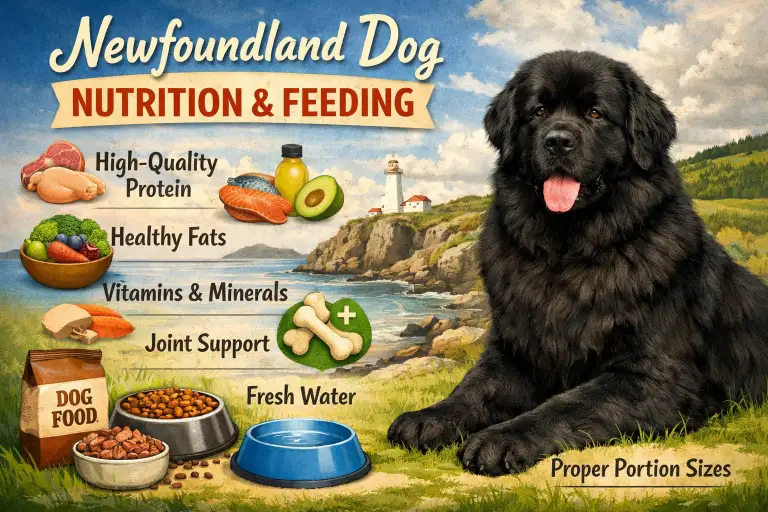
Newfoundland Dog Nutrition & Feeding Guide
Feeding a Newfoundland dog correctly is not just about keeping them full — it directly affects how long they live, how comfortably they move, and how well their massive bodies are supported over time. As a giant breed, Newfoundlands place far more stress on their joints, heart, and metabolism than average-sized dogs, which makes nutrition one of the most important parts of responsible ownership.
This guide is designed to help Newfoundland owners understand what to feed, how much to feed, and why certain dietary choices matter more for this breed than for others. Whether you’re raising a fast-growing puppy, maintaining a calm adult, or supporting a senior Newfoundland with joint stiffness, the right diet can slow age-related decline and prevent avoidable health problems.
Poor nutrition in Newfoundlands commonly leads to issues such as excessive weight gain, joint damage from rapid growth, digestive problems, and reduced mobility later in life. On the other hand, balanced feeding supports controlled growth, strong bones, healthy muscles, a dense waterproof coat, and steady energy levels without unnecessary strain on the body.
Because Newfoundlands grow large and mature slowly, they do not benefit from trendy or extreme feeding approaches. Instead, they thrive on diets that prioritize balance, moderation, and long-term joint and metabolic health. This article focuses on practical, science-aligned feeding principles that real owners can apply day to day — not marketing claims or one-size-fits-all advice.
Core Nutritional Needs of a Newfoundland Dog
At their core, Newfoundland dogs have the same fundamental nutritional needs as all dogs, but the scale of their size changes how those needs should be met. Calories, protein levels, mineral balance, and fat content all need to be adjusted to support a large frame without pushing growth or weight too far, too fast.
Protein is essential for maintaining the Newfoundland’s heavy muscle mass and overall body structure. Adult Newfoundlands need adequate, high-quality protein to support muscle maintenance, immune function, and tissue repair. For puppies, protein must be sufficient but not excessive, as overly rich diets can accelerate growth and increase the risk of orthopedic problems in giant breeds.
Fat provides concentrated energy and supports skin and coat health — particularly important for a breed known for its thick, water-resistant coat. However, too much fat can quickly push a Newfoundland into excess weight. Most Newfoundlands do best on moderate fat levels that support energy needs without encouraging rapid weight gain.
Carbohydrates and fiber play an important role in digestion and gut health. While dogs do not have a strict carbohydrate requirement, digestible carbs can provide steady energy and help regulate stool quality. Fiber supports healthy digestion, but excessive fiber can contribute to loose stools, a common complaint among Newfoundland owners.
Mineral balance is especially critical for this breed, particularly calcium and phosphorus. In Newfoundland puppies, improper calcium levels — whether too high or too low — can interfere with normal bone development and increase the risk of joint and skeletal disorders. This is one of the main reasons giant-breed–specific puppy formulas are often recommended.
Omega-3 fatty acids, along with essential vitamins and trace minerals, support joint health, inflammation control, skin integrity, and overall longevity. These nutrients are best obtained through a well-formulated diet rather than routine supplementation, unless directed by a veterinarian.
When evaluating dog food, owners should look beyond marketing terms and focus on whether the food meets established nutritional standards and is appropriate for large or giant breeds. A well-balanced commercial diet formulated for large dogs usually provides all required nutrients without the need for additional supplements, which can sometimes do more harm than good in a dog of this size.
How Much to Feed a Newfoundland Dog (By Age, Size, and Activity)
One of the most common questions Newfoundland owners ask is: “Am I feeding my dog too much or too little?”
Because Newfoundlands are very large dogs, even small feeding mistakes can quickly lead to weight gain, joint stress, or poor growth in puppies. The goal is to feed enough for health and strength, but not so much that excess weight builds up.
There is no single perfect amount for every Newfoundland. How much your dog needs depends on body weight, age, and daily activity level.
Daily calorie needs for Newfoundland dogs
The table below shows estimated daily calorie needs for adult Newfoundlands. These numbers are starting points, not exact rules. Always adjust based on your dog’s body shape and energy level.
| Dog Weight | Low Activity (calm, indoor) | Moderate Activity (daily walks) | High Activity (working, swimming) |
|---|---|---|---|
| 100 lb (45 kg) | ~1,800 calories | ~2,200 calories | ~2,600 calories |
| 120 lb (54 kg) | ~2,000 calories | ~2,400 calories | ~2,900 calories |
| 150 lb (68 kg) | ~2,300 calories | ~2,800 calories | ~3,300 calories |
Low-activity dogs spend most of the day resting.
Moderate dogs get regular walks and play.
High-activity dogs include working or water-rescue Newfoundlands.
If your dog is gaining weight, reduce food slightly.
If ribs are easy to see, increase food slowly.
Feeding Newfoundlands by life stage
Newfoundlands change a lot as they grow. Puppies, adults, and seniors should not eat the same way.
| Life Stage | Meals per Day | Main Feeding Focus |
|---|---|---|
| Puppy | 3–4 meals | Slow, steady growth |
| Adult | 2 meals | Weight maintenance |
| Senior | 2 smaller meals | Joint and digestion support |
Puppies should never be free-fed. Controlled portions help protect growing joints.
Adult dogs do best on a steady routine with two meals a day.
Senior Newfoundlands usually need fewer calories but higher nutrient quality.
Why puppy overfeeding is dangerous in Newfoundlands
Newfoundland puppies grow fast, but growing faster is not better. Too many calories or too much calcium can force bones to grow before joints are ready. This raises the risk of joint disease later in life.
A healthy Newfoundland puppy should look lean, not chunky.
A slightly slim puppy is safer than an overweight one.
Using body condition instead of the food bag
Dog food bags often recommend portions that are too large for many Newfoundlands. The best way to check feeding accuracy is by looking at your dog’s body shape.
| What You Notice | What It Means | What To Do |
|---|---|---|
| Ribs clearly visible | Underweight | Increase food slowly |
| Ribs felt but not seen | Ideal weight | Keep current portions |
| No waist, heavy padding | Overweight | Reduce portions |
You should be able to feel the ribs under light pressure, but not see them clearly. From above, your dog should have a gentle waist.
Feeding schedule and bloat awareness
Newfoundlands are at risk for bloat, a serious stomach condition. Feeding habits matter.
Helpful habits include:
- Feeding two meals per day instead of one large meal
- Avoiding hard exercise right before and after meals
- Using slow feeders if your dog eats too fast
Small routine changes can lower risk and improve digestion.
Adjusting food for lifestyle changes
Neutered dogs, older dogs, and calm indoor Newfoundlands often need fewer calories.
Working or very active dogs may need more food during busy seasons.
Always adjust slowly. Sudden changes can upset digestion.
Best Dog Food Types for Newfoundlands (And What to Avoid)
Choosing the right food for a Newfoundland can feel confusing. There are many options, and each one claims to be the best. The truth is that no single food type is perfect for every Newfoundland. The best choice depends on your dog’s age, health, activity level, and your ability to feed safely and consistently.
What matters most is balance, quality, and portion control.
Common dog food types for Newfoundlands
The table below shows the most common food types and how they compare for a giant breed like the Newfoundland.
| Food Type | Benefits | Downsides |
|---|---|---|
| Dry kibble | Easy to store, lower cost, complete nutrition | Quality varies by brand |
| Canned food | Very tasty, adds moisture | High calories, costly |
| Fresh food | Easy to digest, simple ingredients | Expensive, short shelf life |
| Raw diet | High taste appeal | Safety and balance risks |
| Freeze-dried | Convenient, nutrient dense | Very calorie rich |
| Homemade | Full control of ingredients | Needs expert planning |
Many Newfoundland owners use high-quality kibble as the base diet, sometimes mixed with small amounts of wet or fresh food for taste. This approach keeps feeding simple and balanced.
Large-breed formulas matter
Newfoundlands should eat foods made for large or giant breeds, especially during puppy growth. These formulas control calories and mineral levels to protect joints and bones.
Foods made for small or very active breeds are often too rich and can lead to fast growth or weight gain in Newfoundlands.
Grain-free vs grain-inclusive diets
Grain-free diets became popular, but they are not required for most Newfoundlands. In some dogs, long-term grain-free feeding has been linked to heart problems.
Unless your dog has a medical reason to avoid grains, grain-inclusive foods are usually safe and well tolerated.
Safe and unsafe foods for Newfoundland dogs
Some human foods are safe for dogs, while others are very dangerous. The table below highlights common examples.
| Safe Foods (Small Amounts) | Unsafe or Toxic Foods |
|---|---|
| Plain cooked chicken | Chocolate |
| Cooked rice | Grapes and raisins |
| Carrots | Onions and garlic |
| Pumpkin | Xylitol (sweetener) |
| Plain yogurt | Alcohol |
Even safe foods should only be treats, not meal replacements. Too many extras can unbalance your dog’s diet and cause weight gain.
Treats and snacks for giant dogs
Treats should make up less than 10% of your Newfoundland’s daily calories. Large dogs gain weight easily, and treats add up fast.
Good treat habits include:
- Using small, low-calorie treats
- Breaking treats into pieces
- Counting treats as part of daily food
Avoid feeding table scraps regularly. They often contain fat, salt, and spices that dogs do not need.
Special Diets, Common Feeding Problems, and Practical Owner Advice
Even with good food and correct portions, some Newfoundlands still have feeding problems. This is normal. Giant dogs can be sensitive to changes, and small mistakes can show up fast as weight gain, loose stool, or poor appetite. The key is to notice problems early and fix them slowly.
Feeding Newfoundlands with sensitive stomachs
Many Newfoundlands have soft stool or gas. This is often caused by fast food changes, rich foods, or too many treats.
Helpful tips include:
- Switching foods slowly over 7–10 days
- Choosing simple recipes with fewer ingredients
- Avoiding fatty table scraps
- Keeping meal times regular
If loose stool lasts more than a few weeks, a vet visit is needed.
Weight gain and weight loss problems
Newfoundlands gain weight easily. Extra weight puts stress on joints and the heart.
The table below shows common weight problems and what usually helps.
| Problem | Common Cause | What Helps |
|---|---|---|
| Gaining weight | Too much food | Reduce portions |
| Always hungry | Low fiber diet | Change formula |
| Losing weight | Not enough calories | Increase food slowly |
| Weak muscle tone | Low protein | Improve food quality |
Never crash-diet a Newfoundland. Changes should be slow and steady.
Feeding dogs with joint issues or older age
Senior Newfoundlands often move less and burn fewer calories. They still need good protein, but usually less food overall.
Helpful feeding habits include:
- Slightly smaller portions
- High-quality protein sources
- Omega-3 fats for joints
- Keeping body weight lean
A slim senior dog is usually more comfortable than a heavy one.
Picky eaters and meal refusal
Some Newfoundlands skip meals or only eat at night. This is often caused by too many treats or free feeding.
What usually works:
- Feeding at set times
- Picking up food after 20 minutes
- Cutting back on treats
- Avoiding constant food changes
Healthy dogs will not starve themselves.
Feeding multiple dogs in one home
| Topic | Issue / Risk | Practical Steps / Advice |
|---|---|---|
| Feeding multiple dogs | Dogs may eat too fast or steal food | – Feed dogs separately – Measure each portion – Use slow feeders if needed Helps control calories and reduce stress |
| Switching foods safely | Fast switches can cause diarrhea | – Days 1–3: Mostly old food – Days 4–6: Half old, half new – Days 7–10: Mostly new food |
| When to see a veterinarian | Health concerns during feeding | Contact a vet if your Newfoundland: – Refuses food >2 days – Loses weight without reason – Has ongoing diarrhea or vomiting – Shows sudden behavior changes |
For official, science-based nutrition standards used by veterinarians and pet-food manufacturers, you can review the guidelines published by Association of American Feed Control Officials, which set minimum nutritional requirements for complete and balanced dog foods.