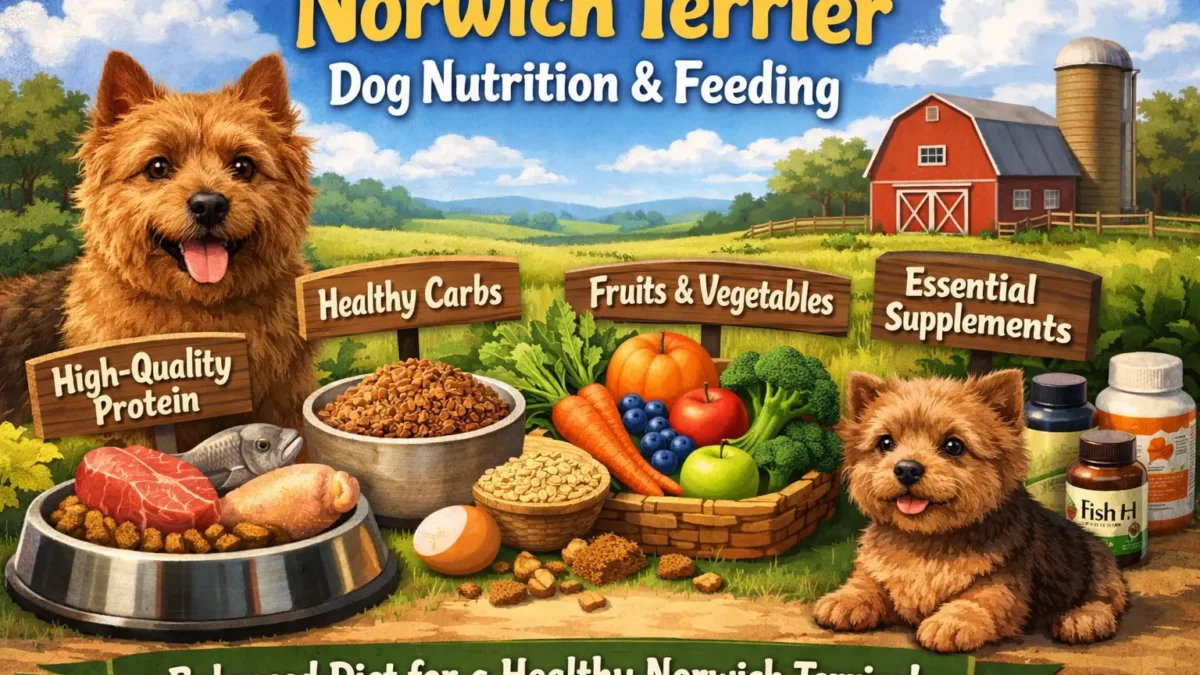
Norwich Terrier Nutrition & Feeding Guide
Norwich Terriers may be small, but Norwich Terriers nutrition needs are not simple. This is an active, alert terrier with a fast metabolism, strong food motivation, and a real risk of weight gain if feeding is not handled carefully.
This guide is designed to help you make smart, safe feeding choices for your Norwich Terrier—whether you have a puppy, an adult dog, or a senior.
A good diet helps a Norwich Terrier nutrition:
- Maintain steady energy without becoming hyper or overweight
- Keep a healthy coat and skin
- Support digestion and firm stools
- Protect joints as they age
- Live longer with fewer diet-related health problems
Because Norwich Terriers are small dogs, even small feeding mistakes matter. Just a few extra treats a day or slightly oversized portions can slowly lead to obesity, which puts stress on joints, the heart, and internal organs.
Many Norwich Terrier owners also notice:
- Their dog always seems hungry
- Weight gain happens faster than expected
- Digestive upset when switching foods
- Picky eating or food obsession
All of these issues are closely tied to nutrition and feeding habits.
What to Feed a Norwich Terrier: Core Nutrition Needs Explained
A Norwich Terrier does best on a balanced, simple, and high-quality diet. Because this breed is small and active, every bite matters. Too much food, the wrong nutrients, or poor-quality ingredients can quickly lead to weight gain or stomach problems.
Below are the key nutrition needs to understand before choosing food.
Protein: the most important nutrient
Protein helps your Norwich Terrier:
- Build and keep lean muscle
- Stay energetic and alert
- Support healthy skin and coat
Look for dog food where animal protein (like chicken, turkey, lamb, or fish) is listed first on the ingredient label.
Fat: energy, but in the right amount
Fat gives energy and helps keep the coat shiny, but too much fat can cause weight gain in small dogs.
A Norwich Terrier needs moderate fat, not a high-fat diet meant for large working dogs.
Carbohydrates and fiber: for digestion
Carbs give quick energy, while fiber helps digestion and stool quality.
Good sources include:
- Brown rice
- Oats
- Sweet potatoes
- Pumpkin
Too much low-quality filler can cause gas or loose stool.
Vitamins and minerals: small dog, big needs
Vitamins and minerals support:
- Bone strength
- Immune health
- Nerve and muscle function
A complete dog food should already include these in the right amounts.
Ideal nutrient ranges for Norwich Terriers
| Nutrient | Recommended Range | Why It Matters |
|---|---|---|
| Protein | 22–30% | Muscle strength, energy |
| Fat | 10–18% | Energy, skin, coat |
| Fiber | 3–6% | Digestion, stool control |
| Calories | Small-breed dense | Smaller portions, better control |
These ranges are general guidelines. Your dog’s age and activity level still matter.
Grain-free vs grain-inclusive food
Most Norwich Terriers do not need grain-free food.
Unless your vet has diagnosed a grain allergy, grain-inclusive diets are safe and often better for digestion.
How to read a dog food label (quick tips)
- Check for an AAFCO “complete and balanced” statement
- The first ingredient should be a real meat source
- Avoid foods that rely heavily on unnamed meat meals or fillers
- Ignore flashy marketing words like “premium” or “natural” without proof
If a food meets AAFCO standards, it means it provides all required nutrients when fed as directed.
How Much to Feed a Norwich Terrier (Portions, Calories, and Schedule)
Feeding the right amount is just as important as choosing the right food. Norwich Terriers are small dogs, so overfeeding can happen very easily. Even a little extra food each day can lead to weight gain over time.
Daily calorie needs for a Norwich Terrier
Most adult Norwich Terriers need about 300 to 450 calories per day, depending on size and activity level.
Here is a simple guide.
| Weight | Low Activity | Moderate Activity | High Activity |
|---|---|---|---|
| 10 lbs (4.5 kg) | ~300 calories | ~350 calories | ~400 calories |
| 12 lbs (5.5 kg) | ~330 calories | ~380 calories | ~430 calories |
| 14 lbs (6.5 kg) | ~360 calories | ~420 calories | ~470 calories |
If your dog spends most of the day indoors, stay closer to the lower range.
Portion size examples (dry vs fresh food)
Calories matter more than cups. Still, these examples help owners visualize portions.
| Feeding Type | Approximate Daily Amount |
|---|---|
| Dry kibble | ½ to ¾ cup per day |
| Fresh food | 180–250 grams per day |
| Canned food | ¾ to 1¼ cans (small cans) |
Always check the calorie label on your dog’s food, as different brands vary.
Feeding schedule by age
- Puppies: 3–4 meals per day
- Adult Norwich Terriers: 2 meals per day
- Seniors: 2 smaller meals per day
Splitting meals helps prevent hunger spikes and begging.
Why Norwich Terriers always seem hungry
This breed is very food-motivated. Acting hungry does not always mean they need more food. Stick to measured portions and avoid free-feeding.
Use body condition, not just the bowl
You should be able to:
- Feel the ribs easily, but not see them
- See a small waist when looking from above
If ribs are hard to feel, reduce portions slightly.
Best Dog Food Types for Norwich Terriers
Norwich Terriers can do well on several types of dog food, as long as it is high-quality and balanced. Choosing the right type depends on your dog’s taste, lifestyle, and any special health needs.
Kibble (dry food)
- Convenient and easy to store
- Helps keep teeth cleaner than soft foods
- Check that the first ingredient is real meat
Wet or canned food
- More palatable for picky eaters
- Higher moisture content helps with hydration
- Usually more expensive than dry food
Fresh or refrigerated diets
- Made from real meat, vegetables, and grains
- Often free from artificial additives
- Can be expensive but very nutritious
Raw or freeze-dried diets
- High in protein and low in fillers
- Can be safe if prepared properly
- Must follow hygiene rules to avoid bacteria
- Best used under guidance from a vet or nutritionist
Homemade diets
- Lets you control every ingredient
- Must be carefully balanced to provide all nutrients
- Consult a veterinary nutritionist before feeding regularly
Treats and human foods
- Small dogs need very few extra calories from treats
- Safe treats: small pieces of cooked chicken, carrot, apple
- Avoid toxic foods: chocolate, grapes, onions, garlic, avocado
Table: Dog Food Types for Norwich Terriers – Pros & Cons
| Food Type | Pros | Cons | Best For |
|---|---|---|---|
| Kibble | Convenient, long shelf life, dental benefits | Lower moisture, sometimes fillers | Everyday feeding |
| Wet/Canned | Tasty, high moisture | Expensive, may spoil faster | Picky eaters |
| Fresh | Real ingredients, balanced | Costly, shorter shelf life | Small-breed health-focused owners |
| Raw/Freeze-dried | High protein, low fillers | Needs careful prep, hygiene risk | Active dogs, under vet guidance |
| Homemade | Full control | Must be balanced, time-consuming | Owners wanting custom meals |
Special Diets, Feeding Problems, and Real-Life Norwich Terrier Scenarios
Even with the best food, Norwich Terriers can face feeding challenges. Small size, fast metabolism, and breed-specific quirks make it important to know how to handle allergies, picky eating, weight issues, and food transitions.
Puppies and seniors
- Puppies need frequent, smaller meals with higher protein and calories to grow properly
- Senior Norwich Terriers may need fewer calories, joint support, and easily digestible food
Food allergies and sensitivities
- Common signs: itchy skin, digestive upset, or recurring ear infections
- Often require limited ingredient diets or hypoallergenic dog foods
Weight management
- Small dogs gain weight quickly
- Use body condition scoring to adjust portions
- High-energy dogs may need more food than low-activity ones
Picky eaters and fast eaters
- Picky eaters: try warming food slightly or mixing wet with dry
- Fast eaters: use puzzle feeders or smaller, frequent meals
Switching foods safely
- Transition slowly over 7–10 days
- Start by mixing 25% new food with 75% old food
- Gradually increase new food to prevent upset stomach
Table: Common Feeding Problems & Diet Adjustments
| Problem | Likely Cause | Suggested Diet Adjustment |
|---|---|---|
| Itchy skin | Allergies, food sensitivities | Limited ingredient or hypoallergenic diet |
| Loose stool or diarrhea | Sudden food change, rich food | Gradual food transition, smaller meals |
| Weight gain | Overfeeding, low activity | Adjust portion, increase exercise |
| Picky eating | Taste preference, boredom | Mix wet & dry, try small tasty toppers |
| Fast eating | Hunger, competition with other dogs | Puzzle feeders, split meals into 2–3 servings |
When to see a veterinarian or nutritionist
- Persistent itching, vomiting, or diarrhea
- Rapid weight gain or loss despite proper feeding
- Chronic picky eating or poor growth in puppies
Feeding problems are normal for Norwich Terriers, but observing your dog daily and making small, careful adjustments can prevent bigger health issues.
Practical Tools, Sample Meals, FAQs, and When to See a Professional
To make feeding your Norwich Terrier easier, it helps to have charts, checklists, and sample meal frameworks. These tools let you plan meals, track portions, and spot problems early.
Sample Daily Feeding Framework
| Life Stage | Meal 1 | Meal 2 | Meal 3 (if puppy) |
|---|---|---|---|
| Puppy (2–6 months) | 1/4 cup kibble + wet topper | 1/4 cup kibble | 1/4 cup kibble |
| Adult | 1/3 cup kibble | 1/3 cup kibble | — |
| Senior | 1/4 cup kibble | 1/4 cup kibble | — |
- Adjust portion based on activity and body condition score
- Puppies need more meals; adults and seniors usually eat twice a day
Quick Reference: Safe and Unsafe Foods
| Safe Foods | Foods to Avoid |
|---|---|
| Cooked chicken | Chocolate |
| Carrots | Grapes and raisins |
| Apples (no seeds) | Onions and garlic |
| Plain rice or oats | Avocado |
| Small cheese pieces | Macadamia nuts |
Common Questions Owners Ask
- How often should I feed my Norwich Terrier?
Puppies 3–4 times/day, adults 2 times/day, seniors 2 smaller meals/day - Can I feed human food?
Only safe foods in small amounts. Avoid toxic foods listed above. - My dog seems hungry all the time. Is this normal?
Yes, Norwich Terriers are food-motivated. Stick to measured portions and feeding schedule. - How do I switch foods safely?
Mix new food with old gradually over 7–10 days. Start with 25% new, 75% old, and increase slowly.
When to consult a veterinarian or nutritionist
- Persistent digestive issues, itching, or vomiting
- Sudden weight gain or loss
- Puppies not growing properly or seniors losing muscle
- Planning raw or homemade diets
Sample Checklist for Feeding Success
| Task | Frequency |
|---|---|
| Measure food portions | Every meal |
| Check body condition | Weekly |
| Adjust meals for activity | As needed |
| Rotate safe treats | Occasionally |
| Track food reactions | Continuous |
For reliable, expert-backed guidance on small-breed dog nutrition, you can visit the American Kennel Club’s nutrition resources: https://www.akc.org/expert-advice/nutrition/