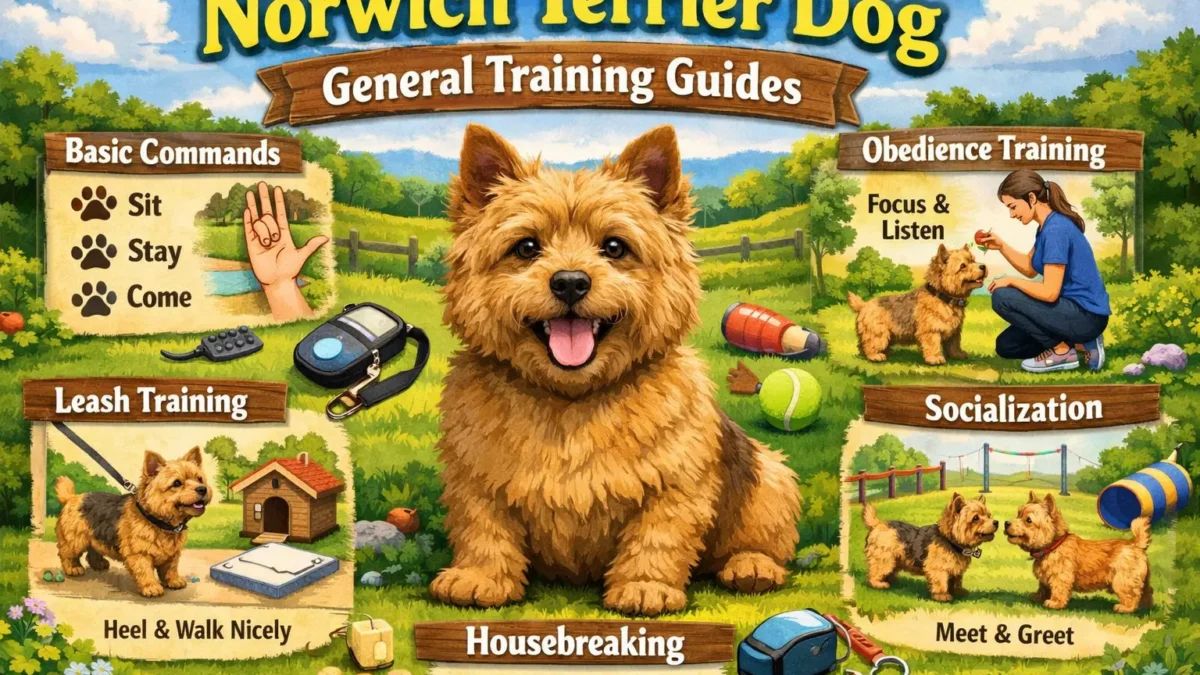
Norwich Terrier Training Guide: Practical Tips for a Well-Behaved Dog
Training a Norwich Terrier is both rewarding and challenging. This small terrier is smart, curious, and full of personality. With the right approach, they can learn good manners and become a well-behaved companion. But they do not train the same way as many other small dogs.
Norwich Terriers were bred to work. They think for themselves, move fast, and stay alert. This means they learn quickly, but they also get bored easily and may ignore commands if training feels repetitive or unclear. Understanding this early helps owners avoid frustration.
This guide is written for:
- First-time Norwich Terrier owners
- Puppy owners starting training from scratch
- Owners struggling with barking, pulling, or selective listening
- Anyone who wants practical, real-life training advice
You will learn how to train your Norwich Terrier in a clear, simple, and realistic way. The focus is on building good habits, preventing common behavior problems, and helping your dog succeed in everyday life.
Understanding Norwich Terrier Behavior and Temperament
Norwich Terriers are small, but they think like big working dogs. Their behavior comes from what they were bred to do. When you understand this, training becomes much easier.
They are smart and quick learners. At the same time, they are independent. This means they may ask, “Why should I do this?” before listening. This is not bad behavior. It is normal terrier thinking.
They are also alert and curious. Many Norwich Terriers bark to warn their owners. They like to chase moving things and may dig if bored. These traits do not mean your dog is “naughty.” They mean your dog needs clear training and enough mental work.
Here is a simple way to understand common Norwich Terrier traits and how they affect training:
| Norwich Terrier Trait | What Owners Often Think | What It Really Means | Training Adjustment Needed |
|---|---|---|---|
| Stubborn | My dog refuses to listen | Dog is confused or not motivated | Use better rewards and shorter sessions |
| High energy | My dog is hyper | Dog needs mental exercise | Add training games and brain work |
| Barking | My dog is aggressive | Dog is alert and vocal | Teach quiet cues and calm behavior |
| Chasing | My dog ignores me | Strong prey drive | Train recall in low-distraction areas first |
| Independent | My dog is dominant | Dog likes to think for itself | Be consistent and patient |
Puppies usually show these traits in playful ways. Adult dogs may show them as habits. Both can learn with the right training plan.
The key point is this: Norwich Terriers do best with calm, clear, and positive training. Harsh methods often make them shut down or ignore you.
Step-by-Step Norwich Terrier Training Basics
Training works best when it is simple and clear. Norwich Terriers learn fast, but only when training makes sense to them. Short, happy sessions work much better than long ones.
You can start training as soon as your dog comes home. Puppies and adult dogs both learn well, but they may move at different speeds. The key is being patient and consistent.
Use rewards your dog truly likes. This can be small food treats, praise, or play. Always reward right after your dog does the correct behavior. This helps your dog understand exactly what you want.
Here are general training session guidelines that work well for most Norwich Terriers:
| Dog Age | Session Length | Sessions Per Day | Best Training Time |
|---|---|---|---|
| Young puppy | 3–5 minutes | 3–4 times | After play or potty |
| Older puppy | 5–10 minutes | 2–3 times | When calm and focused |
| Adult dog | 10–15 minutes | 1–2 times | Before walks or meals |
Start with basic skills before moving to harder ones. Skipping basics often causes problems later.
| Skill | Why It Matters | Common Owner Mistake | When to Start |
|---|---|---|---|
| Name response | Builds focus | Saying name too often | First week |
| Sit | Teaches calm behavior | Repeating commands | Early training |
| Loose leash walking | Safer walks | Pulling back on leash | After basic focus |
| Recall | Keeps dog safe | Practicing in busy areas | After leash skills |
| Waiting calmly | Builds impulse control | Rushing progress | Early and ongoing |
Train in a quiet space at first. Slowly add distractions as your dog improves. If your dog stops listening, it usually means training is too hard or too long.
Common Norwich Terrier Training Problems and Solutions
Many Norwich Terrier owners face the same training problems. The good news is that most of these issues are normal for this breed and can be fixed with the right approach.
Problems usually happen when training is unclear, too long, or not rewarding enough. Small dogs can also get away with bad habits because people think the behavior is “cute.” Over time, those habits become harder to change.
Here are common training problems and what actually helps:
| Problem | Why It Happens | What Not to Do | What Works Better |
|---|---|---|---|
| Excessive barking | Dog is alert or bored | Yelling or punishment | Teach quiet cue and add mental exercise |
| Pulling on leash | Dog is excited or curious | Pulling leash back | Reward walking calmly beside you |
| Ignoring recall | Distractions are too strong | Calling name over and over | Practice recall in quiet areas first |
| Digging | Natural terrier instinct | Scolding after the fact | Redirect to play and digging toys |
| Selective listening | Inconsistent training | Changing rules | Be clear and reward correct behavior |
If your dog suddenly stops listening, take a step back. Make training easier and shorter. Many problems improve once the dog understands what is expected.
Training should feel calm and fair. When dogs feel confused or pressured, behavior often gets worse, not better.
When to Get Professional Help with Norwich Terrier Training
Most Norwich Terriers improve with basic training and patience. But sometimes, extra help is the safest and smartest choice. Getting help early can prevent small problems from becoming serious ones.
You should consider professional help if your dog shows fear, anxiety, or behavior that gets worse over time. These issues are not caused by stubbornness. They are often signs of stress or confusion.
Here are signs you should not ignore:
| Behavior Sign | How Long Is Too Long | Why It Matters |
|---|---|---|
| Growling or snapping | More than a few weeks | Can turn into aggression |
| Extreme fear | No improvement after training | May need behavior support |
| Constant barking | Training not helping | Can signal stress or anxiety |
| Refusing food during training | Ongoing issue | Dog may feel overwhelmed |
| Sudden behavior changes | Immediate concern | Could be health-related |
A good trainer should use kind, reward-based methods. Avoid trainers who rely on fear, pain, or force, especially with small terriers. If fear or aggression is involved, a certified behavior specialist or veterinarian should be consulted.
Training is not about being perfect. It is about helping your Norwich Terrier feel safe, calm, and understood.
For additional expert guidance on small dog training, you can check out the American Kennel Club’s training resources here: https://www.akc.org/expert-advice/training/.