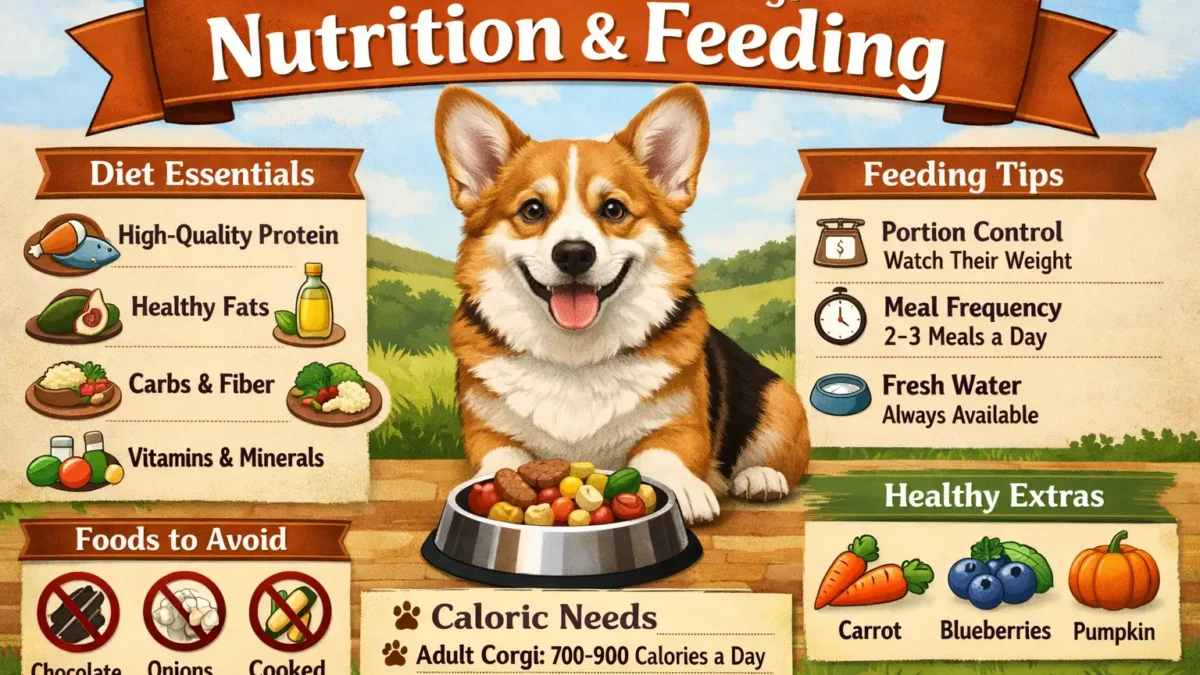
Pembroke Welsh Corgi Diet and Feeding Guide
Pembroke Welsh Corgis may be small dogs, but their nutrition needs are very specific. Their long body, short legs, and strong appetite mean that what you feed—and how much you feed—directly affects their weight, joints, spine, and overall health.
This guide is designed to help you feed your Corgi the right way, whether you are a first-time owner or have raised dogs before. You will learn how to choose the right food, avoid common feeding mistakes, and keep your Corgi fit instead of overweight.
Why diet matters so much for Corgis:
- Corgis gain weight easily due to a slower metabolism
- Extra weight puts stress on the spine, hips, and joints
- Obesity increases the risk of back problems and early arthritis
- Overfeeding often happens without owners realizing it
Many Corgis act hungry all the time. This does not always mean they need more food. In most cases, it means portions, calories, or treats are not well balanced.
Good nutrition helps your Corgi:
- Maintain a healthy body weight
- Protect joints and the spine
- Stay active and playful
- Have better digestion and stool quality
- Live a longer, healthier life
A proper Corgi diet is not about feeding less—it is about feeding smarter. The goal is to give enough nutrients for energy and health without excess calories.
Core Nutritional Needs of a Pembroke Welsh Corgi
A healthy Pembroke Welsh Corgi diet is all about balance. Your Corgi needs the right mix of protein, fat, fiber, vitamins, and minerals every day. Too much or too little of any one thing can lead to weight gain, low energy, or health problems.
Because Corgis are prone to obesity, their food must give strong nutrition without extra calories.
Here are the main nutrients your Corgi needs and why they matter.
Protein helps build and maintain muscles.
Fat provides energy and keeps the skin and coat healthy.
Carbohydrates and fiber support digestion and help your dog feel full.
Vitamins and minerals support bones, joints, immunity, and organ health.
Many owners think “more protein is always better,” but that is not true for Corgis. The goal is moderate protein and controlled fat, not extreme levels.
Below is a simple table to help you understand what a balanced Corgi diet usually looks like.
Ideal Nutrient Ranges for Pembroke Welsh Corgis
| Nutrient | Recommended Range | Why It Matters |
|---|---|---|
| Protein | 22–28% (adult) | Maintains muscle without excess calories |
| Fat | 10–14% | Provides energy but helps control weight |
| Fiber | 3–6% | Supports digestion and helps reduce hunger |
| Omega-3 fatty acids | Present | Supports joints, skin, and coat |
| Calcium & Phosphorus | Balanced ratio | Supports bones and spine health |
These ranges are general guidelines. Healthy adult Corgis usually do best within these levels when eating a complete and balanced dog food.
When choosing dog food, always check the label and make sure it says the food is complete and balanced for your dog’s life stage. This means it meets recognized nutrition standards and is not missing key nutrients.
Avoid foods that rely heavily on fillers, added sugars, or vague ingredients. A good food should list real protein sources and have clear nutritional information.
How Much to Feed a Pembroke Welsh Corgi
Feeding the right amount is one of the most important steps in keeping your Corgi healthy. Overfeeding can quickly lead to weight gain, while underfeeding can affect energy and growth in puppies.
Corgis’ feeding needs depend on weight, age, and activity level. Puppies, adults, and senior dogs all have different calorie requirements.
Daily Calorie Needs for Pembroke Welsh Corgis
| Weight (lbs) | Low Activity | Average Activity | High Activity |
|---|---|---|---|
| 10–15 | 300–350 kcal | 350–400 kcal | 400–450 kcal |
| 15–20 | 350–400 kcal | 400–450 kcal | 450–500 kcal |
| 20–25 | 400–450 kcal | 450–500 kcal | 500–550 kcal |
| 25–30 | 450–500 kcal | 500–550 kcal | 550–600 kcal |
Calories are a guideline. Use your dog’s body condition score to adjust. You should be able to feel the ribs without pressing hard, and your Corgi should have a noticeable waist from above.
Feeding Amounts by Life Stage
| Life Stage | Meals per Day | Portion Notes |
|---|---|---|
| Puppy (up to 12 months) | 3–4 | Feed smaller meals to avoid digestive upset |
| Adult (1–7 years) | 2 | Split total daily calories into two meals |
| Senior (7+ years) | 1–2 | Reduce calories slightly if activity is lower |
Tips for portion control:
- Measure food with a cup or scale; don’t guess
- Reduce treats if your Corgi is gaining weight
- Monitor weekly weight and body shape, not just scale numbers
Best Foods and Feeding Choices for Pembroke Welsh Corgis
Choosing the right food is key to keeping your Corgi healthy, happy, and at a safe weight. Different food types have pros and cons, and understanding them helps you make the best choice for your dog. You also need to know which human foods are safe and which are toxic.
Dog Food Types: Pros and Cons
| Food Type | Pros | Cons |
|---|---|---|
| Kibble (Dry) | Convenient, affordable, helps clean teeth | Can be high in carbs or fillers |
| Wet/Canned | Tasty, high moisture | More expensive, can spoil quickly |
| Fresh/Prepared Meals | Nutrient-rich, high-quality ingredients | Costly, short shelf life |
| Raw | High protein, natural diet | Risk of bacteria, must balance nutrients |
| Homemade | Full control of ingredients | Time-consuming, easy to miss nutrients |
Safe vs Toxic Human Foods
| Safe Foods | Foods to Avoid | Toxic Foods |
|---|---|---|
| Cooked chicken | Onions | Chocolate |
| Carrots | Garlic | Grapes & raisins |
| Pumpkin | Avocado (pit) | Macadamia nuts |
| Blueberries | Nuts (salted or large amounts) | Xylitol (in sugar-free gum) |
| Plain rice | Dairy (if lactose intolerant) | Alcohol |
Treat Guidelines
- Use small, low-calorie treats for training
- Limit treats to 10% of daily calories
- Avoid giving table scraps that are fatty or sugary
- Reward with vegetables like carrot sticks or apple slices (no seeds)
By picking the right food type and feeding safely, you help your Corgi maintain healthy weight, shiny coat, strong joints, and high energy.
Special Diets, Common Feeding Problems, and Practical Owner Guidance
Sometimes, Corgis need special diets or extra attention to stay healthy. Some may be overweight, have allergies, sensitive stomachs, or picky eating habits. Knowing how to handle these problems keeps your dog happy and prevents long-term health issues.
Common Corgi Feeding Problems and Solutions
| Problem | Cause | How to Fix |
|---|---|---|
| Overweight | Overfeeding, too many treats, low activity | Reduce portions, increase exercise, track calories |
| Always Hungry | High-energy food, not enough fiber | Add fiber-rich vegetables, measure portions, split meals |
| Picky Eater | Bored with food, spoiled | Rotate food types, avoid adding extras, feed on schedule |
| Loose Stool | Sensitive stomach, sudden diet change | Gradually switch foods, feed digestible diet, consider probiotics |
| Fast Eater | Risk of choking or vomiting | Use slow feeder bowl, divide meals, supervise eating |
Special Diets
- Overweight Corgis: Low-calorie kibble, measured meals, frequent walks
- Sensitive stomachs or allergies: Limited ingredient diets, novel protein sources, avoid triggers
- High-energy or working Corgis: Higher protein and fat, may need extra meals
- Senior Corgis: Lower calories, joint support nutrients like glucosamine and omega-3
Practical Owner Tips
- Feed multiple dogs separately if their needs differ
- Avoid free-feeding; scheduled meals prevent overeating
- Introduce new foods gradually over 7–10 days
- Track your Corgi’s body condition and adjust as needed
- Use treats for training, not as the main diet
Practical Tools, FAQs, and When to See a Professional
Keeping your Pembroke Welsh Corgi healthy is easier when you have simple tools and clear guidance. This section gives you charts, sample meal ideas, and answers to common owner questions. It also tells you when it’s important to check with a veterinarian or canine nutritionist.
Sample Daily Feeding Framework for an Adult Corgi
| Meal | Portion | Notes |
|---|---|---|
| Morning | Half of daily kibble | Include small piece of carrot or apple as treat if needed |
| Evening | Half of daily kibble | Monitor eating speed; use slow feeder if needed |
| Treats | Up to 10% of daily calories | Use for training or positive reinforcement only |
Weekly Weight & Body Condition Checklist
| Check | How to Do It | Goal |
|---|---|---|
| Weigh your Corgi | Use the same scale weekly | Keep within healthy weight range |
| Body condition | Feel ribs and check waist from above | Ribs should be felt but not seen; visible waist |
| Activity | Monitor play and walks | Active and energetic, not lethargic |
Frequently Asked Questions
| Question | Answer |
|---|---|
| My Corgi is always hungry. Is this normal? | Often caused by small portions or low-fiber diet. Split meals and add safe vegetables. |
| Can I feed my Corgi human food? | Some human foods are safe (carrots, pumpkin, blueberries). Avoid chocolate, grapes, onions, garlic, and xylitol. |
| How do I switch foods safely? | Gradually mix new food over 7–10 days, increasing the new food each day. |
| My Corgi gained weight despite normal feeding. | Check treats, table scraps, and activity. Adjust portions and increase exercise. |
When to See a Veterinarian or Nutritionist
- Sudden weight gain or loss
- Persistent loose stool or vomiting
- Signs of food allergy (itchy skin, hair loss, ear infections)
- Poor appetite or picky eating that lasts more than a few days
Using these tools, checklists, and guidelines helps you stay on top of your Corgi’s health, adjust diet quickly if needed, and know when to seek professional advice.
For more detailed information on feeding and caring for your dog, visit the American Kennel Club’s dog nutrition and health resources here.