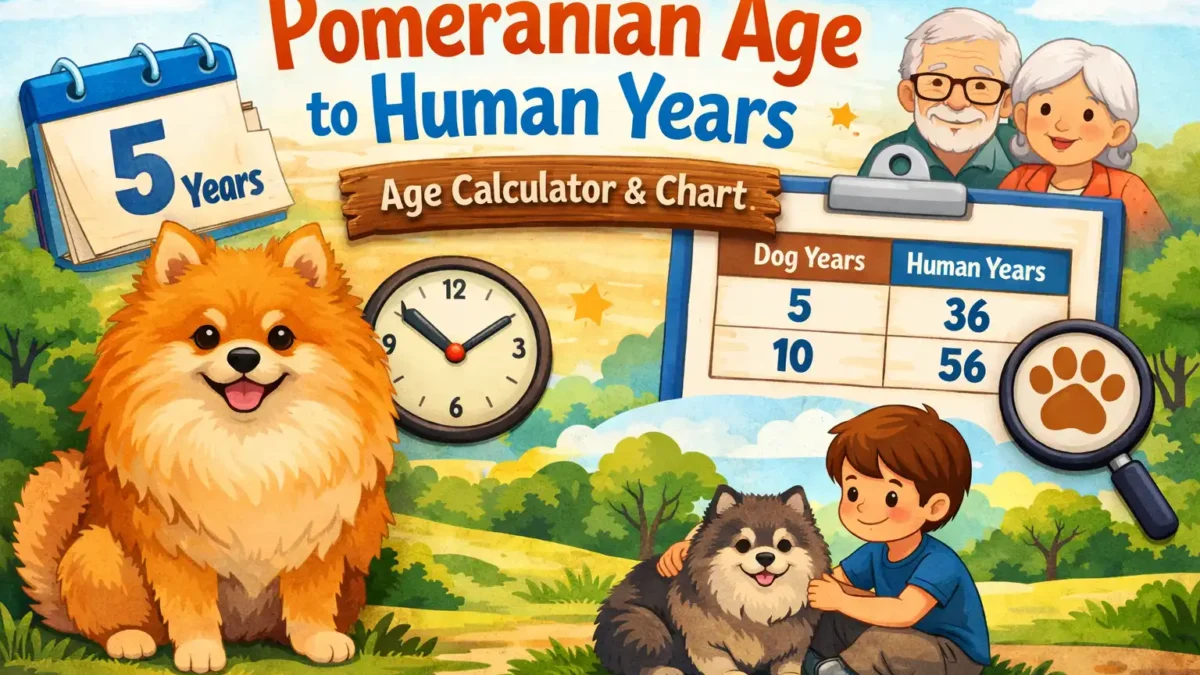
Pomeranian Age to Human Years Calculator and Age Chart
Many pomeranian owners ask a simple question: how old is my pomeranian in human years? The answer is not as simple as multiplying the dog’s age by seven. Dogs age in a very different way than humans, and small breeds like pomeranians follow their own aging pattern.
This guide explains how a pomeranian age to human years calculator works and how to read an age chart correctly. It helps you understand your dog’s real life stage, whether your pomeranian is a playful puppy, a calm adult, or entering senior years. Knowing this makes it easier to care for your dog in the right way at the right time.
The calculator and chart in this article are based on modern research and small-breed aging patterns. They give a more realistic picture of your pomeranian’s age compared to a human, instead of using outdated rules that often confuse owners.
How Pomeranians Age Compared to Humans
Pomeranians do not age at the same speed as humans. They grow up very fast in their first years and then age more slowly later in life. This is why the old idea of “one dog year equals seven human years” is not correct, especially for small dogs like pomeranians.
Here is what makes pomeranian aging different:
- the first year of life equals many human years
- early growth is fast, both in body and mind
- after adulthood, aging slows down
- small dogs usually live longer than large dogs
Because of this, a pomeranian may be mature at a young age but still stay active and healthy for many years.
| Dog age stage | What happens | Why it matters |
|---|---|---|
| puppy stage | fast growth and learning | needs care and training |
| young adult | body is fully grown | energy is high |
| adult years | aging slows down | steady health with care |
| senior years | gradual changes | needs extra support |
Understanding this difference helps owners read age charts correctly and avoid wrong expectations about their dog’s health and behavior.
Pomeranian Age Chart to Human Years
An age chart makes it much easier to understand how old your pomeranian is in human years. Instead of guessing, you can look at your dog’s age and see where they fit on the human age scale.
Small dogs like pomeranians age quickly in the early years. After that, the aging process slows down. This chart follows that pattern and gives a more realistic result than the old seven-year rule.
| Pomeranian age (years) | Human age equivalent |
|---|---|
| 1 | about 15 years |
| 2 | about 24 years |
| 3 | about 28 years |
| 4 | about 32 years |
| 5 | about 36 years |
| 6 | about 40 years |
| 7 | about 44 years |
| 8 | about 48 years |
| 9 | about 52 years |
| 10 | about 56 years |
| 12 | about 64 years |
| 14 | about 72 years |
| 16 | about 80 years |
For example, a 5-year-old pomeranian is similar to a human in their mid-30s. A 10-year-old pomeranian is closer to a human in their mid-50s. These numbers are estimates, not exact ages, because every dog is different.
Use this chart as a guide to understand your dog’s life stage and care needs, not as a strict rule.
Pomeranian Life Stages and Aging Signs
Knowing your pomeranian’s life stage helps you understand their needs and behaviour. Each stage comes with physical and mental changes that are normal for this breed.
Here is how pomeranian life stages usually look:
| Life stage | Age range | Common signs |
|---|---|---|
| puppy | 0–1 year | fast growth, high energy, learning rules |
| young adult | 1–4 years | playful, confident, full energy |
| adult | 5–8 years | calmer, steady habits |
| senior | 9+ years | slower movement, more rest |
As pomeranians get older, you may notice small changes. These changes happen slowly and are part of normal aging.
Common aging signs include:
- sleeping more than before
- less interest in long walks
- slower reactions
- mild weight gain or loss
- graying fur around the face
Not every pomeranian ages the same way. Some stay active for many years, while others slow down earlier. Paying attention to these signs helps you adjust care and keep your dog comfortable.
How to Help a Pomeranian Age Healthily
Helping your pomeranian age well is about simple daily care and early attention to changes. Small dogs can live long lives, but good habits make those years healthier and more comfortable.
Here are basic ways to support your pomeranian at every age:
| Age group | Care focus | What helps most |
|---|---|---|
| puppy | growth and learning | balanced food, gentle training |
| adult | maintenance | regular exercise, healthy weight |
| senior | comfort and health | softer activity, vet checkups |
Good food is important at every stage. Feed the right amount and avoid too many treats, as weight gain can cause health problems. Daily walks and short play sessions keep both the body and mind active.
As your pomeranian gets older, regular vet visits become more important. Early checks can catch problems before they become serious. Mental activity, like simple games or learning new tricks, also helps keep older dogs alert and happy.
With the right care, many pomeranians stay playful and loving well into their senior years.
For more detailed, veterinarian-reviewed information on dog aging and lifespan, you can read the American Kennel Club guide on dog years and aging, which explains how age and size affect dogs over time:
https://www.akc.org/expert-advice/health/how-to-calculate-dog-years-to-human-years/.
Related Article