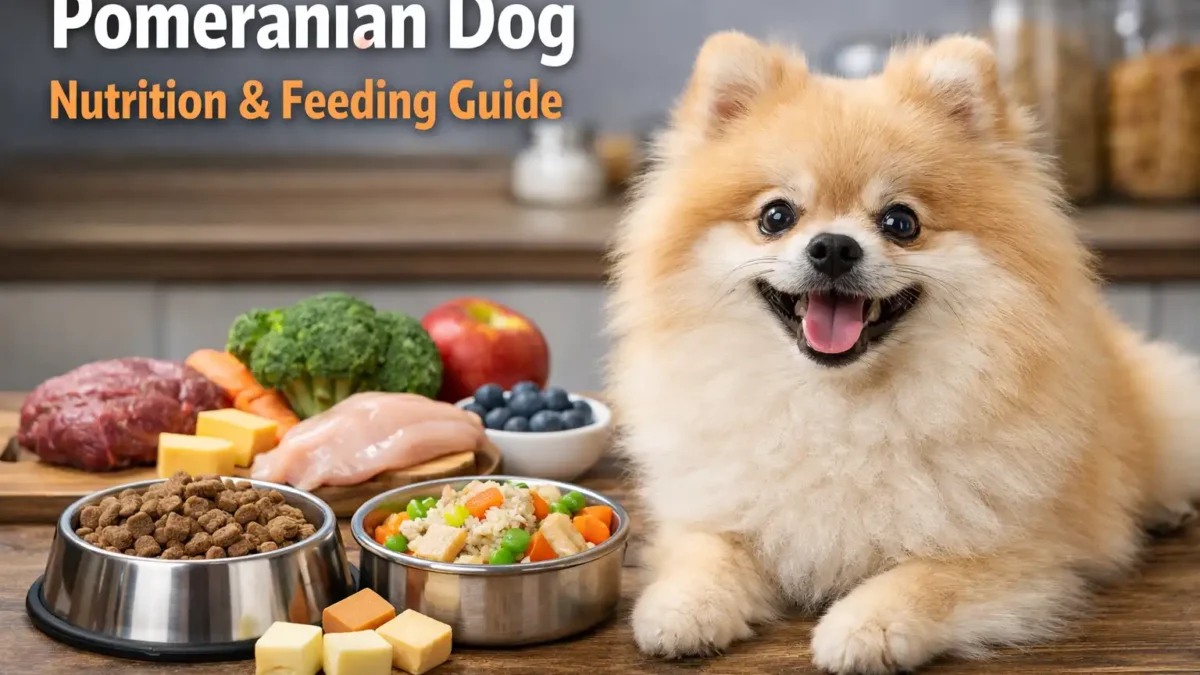
Pomeranian Dog Nutrition and Feeding Guide
Pomeranian dog nutrition is about more than just filling the bowl. It is about giving your dog the right balance of nutrients so they stay healthy, active, and comfortable every day. Because pomeranians are small dogs with fast metabolisms, their feeding needs are very different from medium or large breeds.
This feeding guide is made for everyday owners. It is helpful whether you have a pomeranian puppy, an adult dog, or a senior. The goal is to help you understand what your dog really needs, without confusion or complicated feeding rules.
Good nutrition supports many parts of a pomeranian’s life. It helps maintain a healthy weight, keeps the coat thick and shiny, supports digestion, and provides steady energy. Poor feeding habits, even small ones, can lead to problems like weight gain, low energy, dental issues, or stomach upset.
Pomeranians also tend to eat small portions, but those portions must be high in quality. Because they burn energy quickly, they need food that is rich in nutrients, not empty fillers. Feeding too much or too little can affect their health faster than it would in a larger dog.
This article will help you understand:
- what pomeranians should eat
- how much food they actually need
- how feeding changes with age and lifestyle
- how to avoid common feeding mistakes
By the end, you will feel more confident making daily feeding choices that support your pomeranian’s long-term health and wellbeing.
What Do Pomeranians Eat and Their Nutritional Needs
Pomeranians eat small amounts of food, but their food needs to be rich in nutrients. Because they are small dogs with fast metabolism, every bite matters. Feeding low-quality food can quickly lead to weight gain, low energy, or stomach problems.
A healthy pomeranian diet is balanced. This means it has the right mix of protein, fats, carbohydrates, vitamins, and minerals. Each of these plays a role in keeping your dog strong and active.
Here is a simple breakdown of what pomeranians need and why it matters:
| Nutrient | Why it is important for pomeranians |
|---|---|
| Protein | builds muscles and keeps the coat healthy |
| Fat | gives energy and supports skin and coat |
| Carbohydrates | helps with digestion and steady energy |
| Vitamins | support immunity and overall health |
| Minerals | help bones, teeth, and nerves |
Protein is very important for pomeranians. It helps keep their muscles strong and their coat fluffy. The protein should come from real animal sources like chicken, turkey, fish, or lamb.
Fats give pomeranians energy. Healthy fats also keep the skin soft and the coat shiny. Too little fat can make the coat dry, while too much can cause weight gain.
Carbohydrates help with digestion and energy, but pomeranians do not need large amounts. Simple, easy-to-digest carbs like rice or sweet potato are usually better than heavy fillers.
Vitamins and minerals support many body functions. Most good-quality dog foods already include the right amount, so extra supplements are not always needed unless a vet suggests them.
When choosing food, it is also important to read the dog food label. Look for real meat listed first. Avoid foods that rely heavily on fillers or vague ingredients. Simple and clear ingredient lists are usually a safer choice.
Feeding the right nutrients helps your pomeranian stay active, maintain a healthy weight, and avoid common problems like low energy or poor digestion.
How Much Should a Pomeranian Eat and How Often
Knowing how much to feed a pomeranian is very important. Because they are small dogs, even a little extra food can lead to weight gain. Feeding too little can cause low energy and weakness. The goal is to give the right amount based on weight, age, and activity level.
Most pomeranians need fewer calories than bigger dogs, but those calories must be high quality. An active pomeranian will need more food than one that mostly stays indoors.
Here is a simple feeding guide based on body weight. These are general daily calorie ranges. Your dog may need a little more or less.
| Pomeranian weight | Daily calories (approx.) |
|---|---|
| 1–2 kg | 100–160 calories |
| 2–3 kg | 160–220 calories |
| 3–4 kg | 220–280 calories |
It is also important to feed your pomeranian the right number of meals each day.
| Life stage | Meals per day |
|---|---|
| Puppy | 3–4 small meals |
| Adult | 2 meals |
| Senior | 2 smaller meals |
Puppies need more frequent meals because their bodies are growing fast. Adult pomeranians do well on two meals a day. Senior dogs often do better with smaller portions that are easy to digest.
You can also check if you are feeding the right amount by looking at your dog’s body. You should be able to feel the ribs gently but not see them clearly. If your pomeranian feels too round or gains weight quickly, reduce the portion slightly. If the dog seems thin or always tired, they may need a little more food.
Avoid free feeding, where food is left out all day. This makes it harder to control portions and can lead to overeating. Set meal times help with digestion and healthy habits.
Best Food Choices for Pomeranians
Choosing the right food is one of the most important parts of pomeranian dog nutrition. Because pomeranians are small, their food must be easy to chew, easy to digest, and full of good nutrients.
There are different types of dog food available. Each has its own benefits and limits. The best choice depends on your dog’s age, health, and lifestyle.
Here is a simple comparison to help you understand common food options.
| Food type | Good points | Things to watch |
|---|---|---|
| Dry food (kibble) | easy to store, helps teeth, affordable | low moisture, must be high quality |
| Wet food | tasty, easy to chew, more moisture | can be costly, spoils faster |
| Fresh food | high-quality ingredients, good digestion | needs refrigeration, more expensive |
| Raw food | natural ingredients | safety risks if not prepared properly |
| Homemade food | full control over ingredients | must be balanced carefully |
Dry food made for small or toy breeds is often a good choice for pomeranians. The pieces are small, which makes chewing easier. Always choose food where real meat is listed first.
Wet food can be helpful for picky eaters or older pomeranians with dental problems. Some owners mix a small amount of wet food with dry food to improve taste.
Fresh and homemade diets can work well, but they must be balanced correctly. Feeding unbalanced homemade food for a long time can lead to vitamin or mineral problems. A vet should guide these diets.
It is also important to know which human foods are safe and which are dangerous.
| Safe foods (small amounts) | Foods to avoid |
|---|---|
| cooked chicken | chocolate |
| plain rice | onions |
| carrots | grapes |
| apples (no seeds) | xylitol |
Treats should be given in small amounts. Too many treats can cause weight gain and reduce interest in normal meals. Treats should never replace proper food.
Choosing the right food helps support good digestion, a healthy coat, steady energy, and long-term health.
Common Feeding Problems, Special Diets, and Practical Tips
Many pomeranian owners face feeding problems at some point. These issues are common and usually easy to fix once you understand the cause.
Some pomeranians are picky eaters. This often happens when dogs are given too many treats or table scraps. Try feeding at the same time every day and remove the bowl after 15–20 minutes if the food is not eaten. This helps build a healthy routine.
Weight gain is another common problem. Because pomeranians are small, extra calories add up fast. Measure food carefully and limit treats. If your dog is not very active, they may need fewer calories than the feeding guide suggests.
Some pomeranians have sensitive stomachs or food allergies. Signs include loose stool, itching, ear problems, or gas. In these cases, simple diets with fewer ingredients often work better. If symptoms continue, a vet should help guide food choices.
Here are common problems and what usually helps:
| Problem | What can help |
|---|---|
| picky eating | fixed meal times, fewer treats |
| weight gain | smaller portions, more play time |
| sensitive stomach | simple, easy-to-digest food |
| food allergies | vet-guided diet change |
When switching dog food, do it slowly. Mix a small amount of the new food with the old one and increase it over 7–10 days. Switching too fast can cause stomach upset.
Water is also very important. Fresh, clean water should always be available. Dry food-fed pomeranians especially need enough water to stay hydrated.
You should talk to a vet if:
- your pomeranian refuses food for more than a day
- there is sudden weight loss or gain
- stomach problems do not improve
- you want to try homemade or special diets
Good feeding habits, simple routines, and careful portions make a big difference. With the right approach, most pomeranian feeding problems can be managed easily.
For additional, trusted guidance on feeding small dogs, you can read the American Kennel Club nutrition advice, which explains balanced diets and feeding basics in a clear, owner-friendly way:
https://www.akc.org/expert-advice/nutrition/feeding-your-dog/.
Related Article